Gilang Muhammad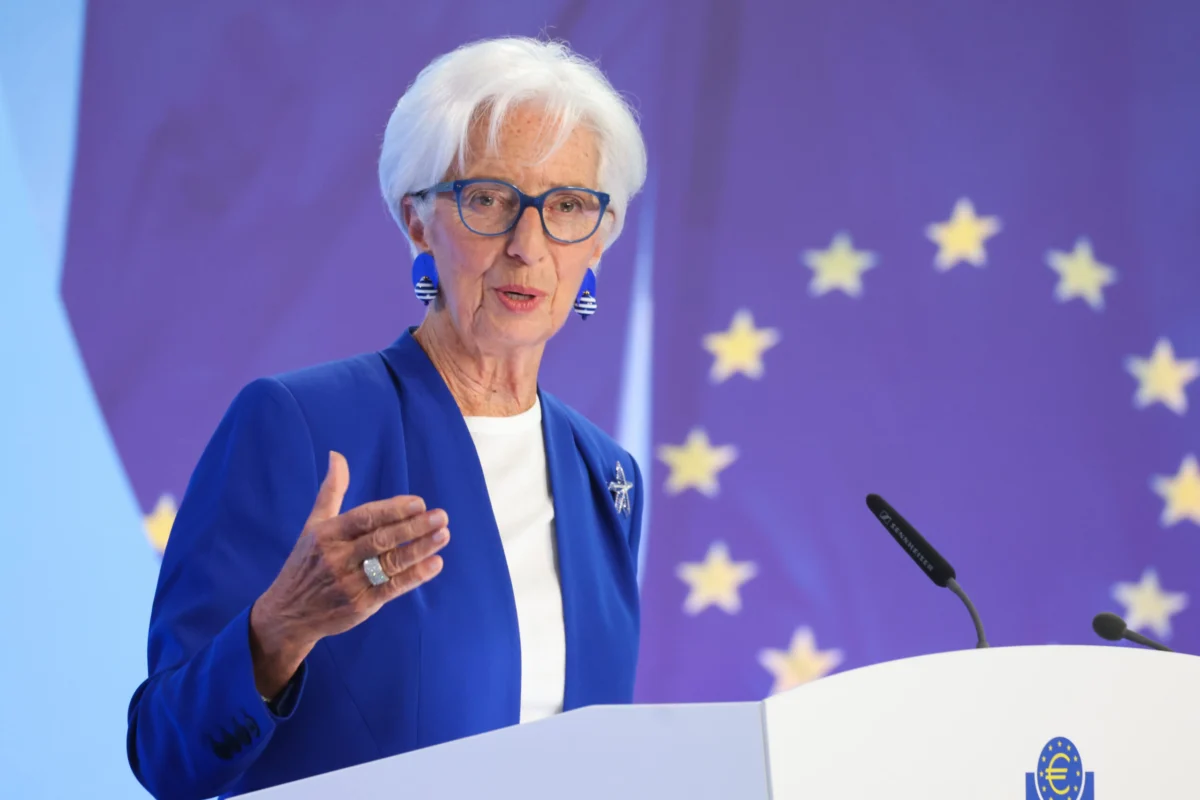
The European Central Bank (ECB) President, Christine Lagarde, has indicated a willingness to consider an early departure from her current term, which is slated to conclude in October 2027, to potentially engage in French politics. This revelation, made during an interview with French newspaper Les Echos, has ignited a fervent debate across financial markets and political circles regarding the stability of the Eurozone’s monetary policy leadership and the future direction of France. Lagarde’s statements underscore a deep-seated concern for France’s role within the European Union, particularly in light of the country’s increasingly fragmented political landscape and the rising prominence of Eurosceptic voices ahead of the 2027 presidential elections.
Lagarde’s Calculus: A "European Voice" for France
Lagarde articulated her motivation for a potential foray into national politics by emphasizing the necessity of a "European voice" in the upcoming French presidential debate. She explicitly stated, "If this debate were to present a perspective that diminishes France’s place within Europe, I think it would be necessary to explain why this would be a painful path for our country and our citizens." This declaration suggests a profound commitment to France’s European integration, a cornerstone of its post-war identity and economic prosperity. Her concern appears to be rooted in the potential for a political shift that could undermine France’s influence and commitment to the EU, thereby jeopardizing its economic stability and international standing.
When pressed on whether she would consider personal involvement in the campaign, either by supporting a candidate or running herself, Lagarde responded with a reflective, "I’m going to ask myself some questions." This ambiguity leaves open the possibility of her directly entering the political fray, a move that would represent a significant pivot from her current technocratic role at the helm of the Eurozone’s central bank. Such a transition would undoubtedly send ripples through both European financial markets and the French political establishment, which is already grappling with profound ideological divisions.
The 2027 French Presidential Landscape: A Looming Shift?
The backdrop to Lagarde’s deliberations is the highly anticipated 2027 French presidential election, which is shaping up to be a pivotal moment for the nation and the wider European project. Current polls suggest that Jordan Bardella, the leader of the far-right National Rally party, is a leading contender to succeed President Emmanuel Macron. Macron, who was first elected in 2017 and re-elected in 2022, is constitutionally barred from seeking a third consecutive term.
The French electoral system involves two rounds of voting: the first round typically takes place in April, followed by a runoff between the top two candidates if no single candidate secures over 50% of the vote. Macron famously faced the National Rally (previously known as the Front National) in the runoff stages of both his 2017 and 2022 victories, highlighting the enduring electoral strength of the far-right in France. However, with Macron out of the picture, the political dynamics are poised for a significant realignment, potentially favoring candidates from outside the traditional centrist establishment.
The National Rally’s Vision for France and Europe
Jordan Bardella’s platform, and that of the National Rally, is characterized by a strong Eurosceptic stance and a desire to fundamentally alter France’s relationship with the European Union. Bardella has pledged a "realignment of France’s place in the European Union," advocating for a vision where the European Commission and the EU are "back at the service of nations and no longer the other way around." This rhetoric resonates with a segment of the French electorate that feels national sovereignty has been eroded by European integration, particularly concerning issues like immigration, economic policy, and trade agreements.
Specific proposals from the National Rally often include strengthening border controls, prioritizing national law over EU directives, and reducing contributions to the EU budget. While the party has softened some of its more radical anti-EU positions over time, such as explicitly advocating for a "Frexit," its core philosophy remains deeply critical of the current architecture of European integration. A French presidency led by Bardella could trigger significant diplomatic tensions within the EU, potentially disrupting policy consensus on crucial issues ranging from defense and foreign policy to economic governance and climate change. Such a scenario would represent a substantial challenge to the cohesion and future direction of the bloc, especially given France’s historical role as a co-founder and driving force of European integration.
Market Reaction and ECB Stability

The mere suggestion of Lagarde’s early departure has already demonstrated its potential to unsettle financial markets. The euro experienced a sell-off in February following a Financial Times report that Lagarde was contemplating an early exit from the ECB. At that time, the ECB swiftly responded by stating that no such decision had been made. In response to Lagarde’s latest remarks to Les Echos, the ECB again declined to comment, maintaining its characteristic institutional silence on speculative personnel matters.
Lagarde’s current term as ECB President is a critical period for the Eurozone, as the institution navigates ongoing economic volatility, including persistent inflationary pressures and geopolitical uncertainties. The ECB’s primary mandate is to maintain price stability, a task that requires strong, consistent leadership. Any uncertainty regarding the tenure of its president can create market instability, as investors seek clarity on the future direction of monetary policy. A premature exit by Lagarde could lead to a period of leadership transition, potentially raising questions about the continuity of the ECB’s strategy and its commitment to its inflation targets, which currently aim for a symmetrical 2% over the medium term.
Despite her political musings, Lagarde reiterated her short-term commitment to her role at the ECB. She stated, "My term ends in October 2027. And I believe my mission is to maintain price stability. As we are once again in a period of turbulence, I believe the captain of the ECB ship must remain on board." This commitment aims to reassure markets and stakeholders that, for now, her focus remains squarely on fulfilling the ECB’s mandate amidst a complex economic environment characterized by lingering inflation, interest rate adjustments, and global geopolitical risks.
France’s Precarious Fiscal Position
Lagarde’s concerns about France’s economic future are not unfounded. The French government is currently grappling with significant fiscal challenges, attempting to implement contentious budget cuts totaling at least 4 billion euros (approximately $4.6 billion). These austerity measures are part of a broader strategy to rein in public debt and reduce the country’s public deficit to the 3% of GDP benchmark mandated by the European Union by 2029. This 3% threshold is a key component of the EU’s Stability and Growth Pact, which aims to ensure fiscal discipline among member states.
French Finance Minister Roland Lescure recently reaffirmed the state’s commitment to achieving a 5% deficit target in the short term, as an intermediary step towards the 2029 goal. In an interview, Lescure stressed the urgency of passing this year’s budget, cautioning against allowing the debates surrounding the 2027 election to derail crucial fiscal reforms. He articulated a clear preference for decoupling the budget process from political campaigning: "There’s a win-win one in which we focus on the budget, they let us pass it, we find a compromise that… [not all parties will be happy with], but at least that’s going to make sure we have a budget. And on the other hand, the big debates about 2027 and beyond take place. We can decorrelate both, [but] if we don’t, and if one becomes the hostage of the other — the budget hostage to the campaign — it’s not going to work." Lescure’s plea for "reason to prevail" highlights the deep political divisions that make consensus on fiscal policy increasingly difficult in France.
Political Fragmentation and Governance Challenges
The difficulty in passing economic reforms is exacerbated by France’s increasingly fragmented parliament. Since President Macron’s re-election in 2022, France has seen five different prime ministers, a clear indicator of the challenges faced by the executive in securing stable legislative majorities. This political instability complicates the government’s ability to implement long-term economic strategies and respond effectively to fiscal pressures. The current political climate often necessitates complex negotiations and compromises across various political factions, making bold, decisive action on contentious issues like budget cuts exceptionally arduous.
Lagarde herself acknowledged these structural challenges, stating to Les Echos: "France will have to make courageous decisions on difficult issues. Presidential candidates have a duty to examine these issues and propose solutions." She also expressed confidence in the French populace, asserting, "And, contrary to what I often hear from politicians, the French people are perfectly aware of the situation and they expect a discourse of truth and solutions." This perspective suggests that Lagarde believes a candid and transparent discussion about France’s economic realities and the necessary, albeit difficult, reforms is paramount, and that the public is ready to engage with such a dialogue.
Broader Implications and Future Outlook
Lagarde’s potential political ambitions and her vocal concerns about France’s trajectory carry significant implications beyond the immediate term. Even if she remains at the ECB until her term concludes, her engagement in the French presidential debate, as she hinted, could take the form of "frank discussions" with candidates. She envisions herself contributing a "French and a European voice" to these discussions, emphasizing France’s decisive role in the continent’s economic future. "Without this European environment and these European roots, the economic outlook is, at the very least, clouded," she warned, underscoring the intrinsic link between France’s national prosperity and its commitment to the European project.
The confluence of these factors – a potential leadership vacuum at the ECB, the rise of Eurosceptic nationalism in a core EU member state, and France’s pressing fiscal challenges – presents a complex and potentially turbulent outlook for the Eurozone. The 2027 French presidential election is not merely a domestic political event; it is a critical juncture that will undoubtedly shape the future of European integration, economic stability, and the global geopolitical landscape. Lagarde’s willingness to step into this charged environment signals the profound concerns felt at the highest levels of European leadership about the direction France, and by extension, Europe, is heading. The coming years will reveal whether her "European voice" can indeed sway the course of French politics and safeguard the nation’s place within the European family.