Lina Wu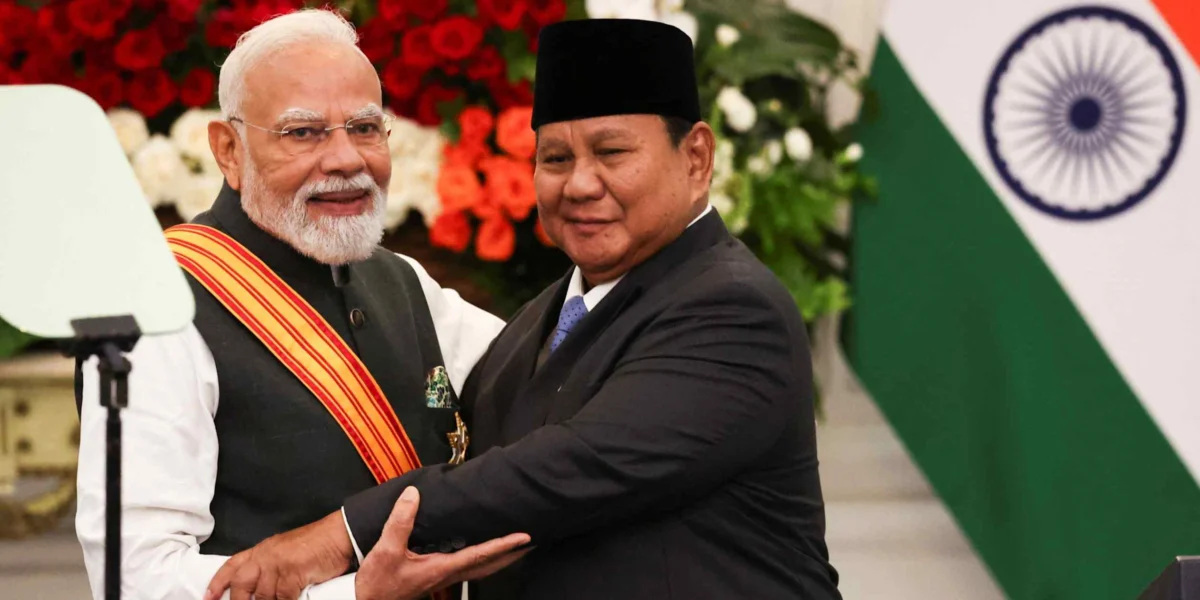
TOKYO — A clock that had long stood still has begun to tick again between two of Asia’s great powers. The recent high-level meeting between Indian Prime Minister Narendra Modi and Indonesian President Prabowo Subianto in Jakarta on July 7th, 2026, signals a renewed impetus to strengthen bilateral relations, driven by a shared ambition to bolster their respective manufacturing sectors and navigate the complex geopolitical and economic landscape of the 21st century. This engagement underscores a strategic alignment aimed at fostering industrial growth, enhancing trade, and potentially reshaping regional economic dynamics, particularly in the face of evolving global supply chains and increasing competition.

The summit, held at the Merdeka Palace in Jakarta, was more than just a diplomatic courtesy; it represented a pragmatic approach to addressing common economic challenges. Both India and Indonesia, despite their substantial populations and growing economies, have identified manufacturing as a critical engine for job creation, technological advancement, and overall economic resilience. For decades, both nations have grappled with the complexities of scaling up their industrial capabilities to compete on the global stage, often relying heavily on primary commodity exports or facing limitations in value-added production. This shared objective forms the bedrock of their renewed diplomatic efforts.
A Shared Imperative: Revitalizing Manufacturing Sectors

The importance of manufacturing for both New Delhi and Jakarta cannot be overstated. In India, the "Make in India" initiative, launched in 2014, aimed to transform the country into a global manufacturing hub. While progress has been made, particularly in sectors like automotive, pharmaceuticals, and textiles, the ambition to significantly increase manufacturing’s share in GDP (currently hovering around 15-17%) remains a persistent challenge. Factors such as infrastructure deficits, regulatory hurdles, and skilled labor shortages have historically impeded faster growth.
Indonesia, with its vast archipelago and a population exceeding 270 million, faces similar, albeit distinct, challenges. The nation has historically been a major exporter of natural resources, including coal, palm oil, and minerals. President Joko Widodo’s administration has been pushing for downstream processing of these resources to add value and create more sophisticated industries. However, attracting foreign direct investment, developing specialized industrial zones, and ensuring competitive production costs are ongoing priorities.

The July 7th meeting provided a platform for leaders to discuss concrete strategies for mutual support. While specific details of the manufacturing cooperation agreements were not immediately disclosed, the tenor of the discussions, as evidenced by joint press conferences and official statements, pointed towards a focus on:
- Technology Transfer and Skill Development: Sharing best practices and technologies to enhance production efficiency and innovation. This could involve joint training programs, research collaborations, and the establishment of centers of excellence.
- Supply Chain Integration: Exploring opportunities to integrate Indian and Indonesian businesses into each other’s supply chains, reducing reliance on external markets and fostering regional economic interdependence.
- Investment Promotion: Creating a more conducive environment for bilateral investment in manufacturing sectors, potentially through streamlined regulatory processes and investment incentives.
- Infrastructure Development: Cooperating on infrastructure projects that support manufacturing, such as logistics networks, ports, and energy supply.
A Timeline of Growing Engagement

The current surge in bilateral engagement is not an isolated event but rather a culmination of years of evolving diplomatic and economic ties. While India and Indonesia have long-standing historical and cultural connections, their economic partnership has seen periods of acceleration and deceleration.
- Early Post-Independence Era (1950s-1970s): Both nations, newly independent, focused on nation-building and establishing their identities on the global stage. Diplomatic relations were established, and there was a sense of solidarity among developing nations. Trade remained relatively modest.
- Growing Economic Ties (1980s-2000s): As both economies opened up, trade and investment began to pick up. India’s liberalization in the 1990s provided new opportunities for its businesses to explore international markets, including Southeast Asia. Indonesia also saw increased foreign investment. However, manufacturing remained a less prominent focus in bilateral trade.
- Strategic Partnership (2000s-Present): The 21st century has witnessed a more deliberate effort to elevate the relationship. In 2005, India and Indonesia signed a "Strategic Partnership" agreement, which provided a framework for broader cooperation across political, economic, and security domains. This period saw increased high-level visits and dialogues.
- Focus on Manufacturing (2010s-2020s): With the rise of global manufacturing shifts and the increasing recognition of manufacturing’s role in economic prosperity, both countries have intensified their focus on this sector. India’s "Make in India" and Indonesia’s industrial diversification efforts have created a more aligned agenda. The July 2026 meeting represents a significant step in translating this shared focus into tangible action.
Supporting Data and Economic Context

The economic rationale for deepening manufacturing ties is supported by several key indicators. As of 2025, India’s manufacturing sector contributed approximately $470 billion to its GDP, employing tens of millions of people. Its export of manufactured goods, while growing, still represents a smaller proportion of its total exports compared to some East Asian economies. Indonesia, meanwhile, had a manufacturing sector contributing around $220 billion to its GDP, with a strong emphasis on resource-based industries and consumer goods.
Bilateral trade between India and Indonesia has been steadily growing. In the fiscal year 2023-24, bilateral trade reached approximately $25 billion, with India primarily exporting refined petroleum products, machinery, and chemicals, while importing coal, palm oil, and certain industrial raw materials. The potential for expanding this trade through increased intra-industry trade in manufactured goods is substantial. For instance, India could become a significant market for Indonesian processed agricultural products, while Indonesia could benefit from Indian expertise and investment in sectors like automotive components, pharmaceuticals, and electronics.

Inferred Statements and Reactions
While direct quotes from all relevant parties may not be available in this initial report, the context of the meeting allows for logical inferences about their perspectives.

- Prime Minister Narendra Modi: Likely emphasized India’s commitment to becoming a global manufacturing powerhouse and invited Indonesia to be a key partner in this endeavor. He would have highlighted India’s large domestic market, skilled workforce, and growing technological capabilities as attractive propositions for Indonesian investment and collaboration.
- President Prabowo Subianto: Would have underscored Indonesia’s desire to move up the value chain and diversify its economy beyond commodity exports. He likely expressed keen interest in attracting Indian investment in manufacturing, particularly in areas where India has demonstrated strength, such as automotive parts, IT hardware, and pharmaceuticals. He may have also stressed the importance of reciprocal market access for Indonesian products.
- Industry Leaders: Representatives from Indian and Indonesian business chambers and manufacturing associations likely expressed optimism about the potential for increased collaboration. They would have called for clear policy frameworks, reduced bureaucratic hurdles, and robust dispute resolution mechanisms to facilitate cross-border investments and trade. Concerns might have been raised about logistics, customs procedures, and ensuring a level playing field for both domestic and foreign manufacturers.
- Geopolitical Analysts: Observers of regional geopolitics would likely view this deepening of ties as a positive development for ASEAN and the broader Indo-Pacific region. Increased manufacturing cooperation between two major Asian economies can contribute to greater regional stability and economic resilience, offering an alternative to over-reliance on existing global supply chain hubs.
Broader Impact and Implications
The strategic alignment between India and Indonesia on manufacturing has several significant implications:

- Reshaping Supply Chains: As global supply chains are reconfigured due to geopolitical shifts and a desire for greater resilience, closer collaboration between India and Indonesia could lead to the emergence of new regional manufacturing hubs. This could offer diversification options for global companies seeking alternatives to traditional manufacturing centers.
- Economic Growth and Job Creation: Successful implementation of joint manufacturing initiatives will undoubtedly contribute to economic growth in both nations, creating much-needed employment opportunities, particularly for the youth demographic, which is a significant segment in both countries. For example, a 2024 report by the Confederation of Indian Industry (CII) projected that a sustained increase in manufacturing’s share in India’s GDP by 5 percentage points could create over 10 million new jobs. Indonesia, with its large youth population, stands to benefit similarly.
- Technological Advancement: Collaboration in manufacturing will foster the exchange of knowledge and technology, potentially leading to innovation and the development of higher-value products. This can accelerate the transition from basic manufacturing to more sophisticated, knowledge-intensive industries.
- Regional Influence: A stronger economic partnership between India and Indonesia can enhance their collective influence in regional forums like ASEAN and the G20. It demonstrates their commitment to pragmatic cooperation and their capacity to shape regional economic agendas.
- Competition and Diversification: While cooperation is the theme, it also implies increased competition within certain manufacturing sub-sectors. However, this competition can also drive efficiency and innovation, ultimately benefiting consumers. Furthermore, by diversifying their manufacturing bases, both countries can reduce their vulnerability to external economic shocks.
The renewed commitment from India and Indonesia to bolster their manufacturing sectors, underscored by the recent summit, marks a pivotal moment in their bilateral relationship. As both nations navigate the complexities of global trade, technological advancement, and geopolitical realignments, their shared vision for industrial growth promises to be a significant driver of their future economic prosperity and regional stability. The success of these initiatives will hinge on sustained political will, effective policy implementation, and robust engagement from the private sector in both countries. The "clock" that has begun to tick again between these two Asian giants may well herald a new era of mutually beneficial industrial development.