Gilang Muhammad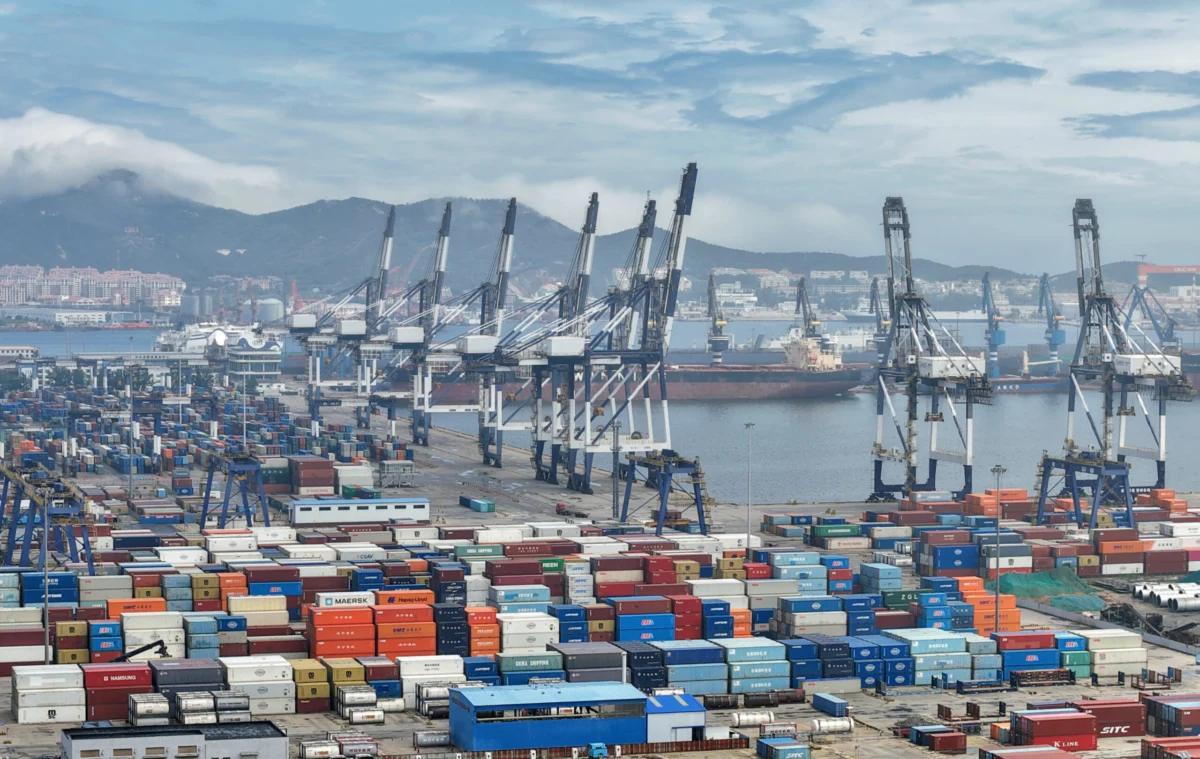
China’s economic growth in the second quarter of 2026 decelerated to its weakest pace since late 2022, underscoring persistent structural challenges and intensifying demands for robust policy interventions. Gross Domestic Product (GDP) expanded by a modest 4.3% in the April to June period, falling short of economists’ consensus forecast of 4.5% in a Reuters poll and marking a notable decline from the 5% growth recorded in the first quarter. This subdued performance, announced by the National Statistics Bureau on Wednesday, places Beijing’s full-year growth target range of 4.5% to 5% — already its least ambitious in decades — under considerable strain, exacerbated by escalating trade tensions with key partners like the United States and the European Union, alongside stubbornly sluggish domestic demand.
Economic Performance Under Scrutiny
The 4.3% growth rate signals a critical juncture for the world’s second-largest economy, which has navigated a complex recovery path post-pandemic. While the first quarter had offered a glimmer of hope with a stronger-than-expected rebound, driven largely by a post-COVID consumption surge and robust exports, the second quarter’s figures reveal a more entrenched set of economic headwinds. The slowdown is primarily attributed to an accelerating slide in investments and persistently subdued consumer spending, contrasting sharply with a resilient export sector buoyed by global demand for AI-related hardware.
Economists are largely in agreement that the disappointing figures necessitate a more proactive stance from policymakers. Tianchen Xu, a senior economist at Economist Intelligence Unit, articulated this urgency, stating, "Given the disappointing growth, we expect stimulus measures to be ramped up significantly in the third quarter." Xu specifically highlighted the potential for a policy rate cut, a crucial tool for stimulating investment demand and injecting liquidity into the economy. Such a move would aim to reduce borrowing costs for businesses and consumers, encouraging capital expenditure and household spending.
The Investment Conundrum: A Steepening Decline
Perhaps the most alarming indicator from the latest data is the precipitous decline in urban fixed-asset investment (FAI). This critical barometer of economic health, encompassing real estate development, manufacturing expansion, and infrastructure projects, slumped by 5.7% in the first six months of the year compared to the same period last year. This figure was considerably worse than the 4.9% drop anticipated in a Reuters poll, signaling a deeper malaise than previously estimated.
The FAI decline is multi-faceted. Xu attributed the steepening slump to several interconnected factors, including local governments diverting resources towards urgent debt restructuring efforts. Many local government financing vehicles (LGFVs) are under immense pressure, with vast amounts of hidden debt accumulated over years of infrastructure spending and property market support. This fiscal strain limits their capacity to initiate new projects, thereby choking off a traditional engine of growth. Additionally, a perceived "shortage of eligible projects in the pipeline" further hampers investment, suggesting a lack of commercially viable or strategically important ventures ready for immediate capital deployment. "Boosting infrastructure investment will be a key focus for stabilizing growth," Xu emphasized, implying that central government-backed projects might be necessary to fill the void left by struggling local authorities.
Sector-specific data painted an even starker picture. Investment in real estate, a sector historically responsible for a significant portion of China’s GDP, plunged by a staggering 18%. This ongoing crisis, characterized by developers defaulting on debts, unfinished housing projects, and a lack of consumer confidence, continues to cast a long shadow over the broader economy. Infrastructure investment, traditionally a reliable counter-cyclical tool, also fell by 2.4%, while manufacturing investment, despite Beijing’s push for high-tech self-reliance, saw a 1.2% decline.
Sarah Tan, an economist at Moody’s Analytics, pointed to another contributing factor: Beijing’s ongoing campaign to rein in excess capacity and curb bruising price wars across various industries. While intended to foster higher-quality, sustainable growth, this campaign is expected to weigh on private investment in the near term as companies adjust to new regulatory landscapes and market dynamics. The government’s structural reforms, while necessary, create short-term friction that dampens private sector enthusiasm for expansion.
Subdued Consumption and Labor Market Strains
While investment faltered, consumption showed mixed signals. Retail sales in June grew by 1%, a rebound from a 0.6% drop in May and exceeding economists’ forecasts for a 0.1% fall. The May decline had marked the first monthly contraction since late 2022, primarily driven by tepid consumer demand and aggressive discounting by merchants struggling to move inventory. The June uptick, while positive, remains fragile and indicative of a consumer base still grappling with economic uncertainties.
Household income growth has also faced downward pressure. Morgan Stanley’s analysis revealed that pay cuts remain a top concern for Chinese households, leading the bank to revise its income growth forecast for the next 12 months down to 5% from a previous estimate of 5.8%. This income squeeze directly impacts consumer purchasing power and willingness to spend, perpetuating the cycle of subdued demand.

The labor market presents a nuanced picture of "two-speed growth." Workers in companies with significant overseas revenue, particularly those benefiting from the global AI investment boom, reported more optimistic job prospects. In contrast, employees at domestically focused firms expressed greater apprehension, reflecting the uneven recovery across sectors. The urban unemployment rate, which excludes migrant workers returning to rural areas, held steady at 5% in June, remaining within the leadership’s five-year target of less than 5.5%.
However, a more comprehensive survey conducted by Professor Li Daokui’s team at Tsinghua University paints a grimmer picture. This survey, which includes individuals jobless for the past two years and no longer covered by official labor force statistics, estimated China’s broad unemployment rate at a much higher 10.2%. Worryingly, more than half of the approximately 24 million long-term unemployed individuals are aged 16 to 24, highlighting a persistent youth employment crisis. Beijing had controversially discontinued the release of the youth unemployment rate in 2023 after it surged to a record 21.3%, only to reinstate it months later with a revised methodology and a lower reported rate. The official youth unemployment rate reportedly fell to 15.6% in May, the lowest level in nearly a year, but discrepancies between official and broader estimates continue to raise questions about the true extent of joblessness among young people.
The Export Lifeline and Global Dynamics
Amidst the domestic challenges, exports continue to be a rare bright spot, acting as a crucial buffer against a more severe economic downturn. China’s export growth in June surpassed expectations, recording its strongest rise since late 2021. This surge was primarily powered by robust global demand for chips, computers and parts, and power equipment, driven largely by the ongoing worldwide investment in Artificial Intelligence infrastructure. Surging tech-related imports further confirm a deepening AI infrastructure cycle within China itself, with automotive and consumer goods exports also contributing to the momentum.
David Chao, a global market strategist at Invesco, highlighted the "global AI buildout" as a key factor offsetting headwinds from geopolitical conflicts, particularly the Middle East. However, this export strength is simultaneously straining relations with key trade partners. Larry Hu, chief China economist at Macquarie, noted that China’s trade surplus with the European Union widened by 24% in the first half of the year, predominantly fueled by increased shipments of machinery and vehicles. Despite a three-month trade truce, this growing surplus elevates the risk of a renewed China-EU trade conflict, with the EU increasingly scrutinizing Chinese industrial subsidies and potential dumping practices.
Policy Outlook and Debates
The second quarter’s disappointing figures have intensified the debate among economists regarding the necessity and timing of further policy stimulus. Some, like Tianchen Xu, advocate for immediate and significant measures, including interest rate cuts, to re-energize investment and consumption. The National Statistics Bureau itself acknowledged an "acute" imbalance between excess supply and sluggish demand, explicitly urging policymakers to step up "counter- and cross-cyclical adjustments" to stabilize the economy.
However, not all economists share the same urgency for aggressive intervention. Zhiwei Zhang, president and chief economist at Pinpoint Asset Management, suggested that the weaker headline growth might not trigger a meaningful policy shift in the immediate months. He argued that the strong first quarter performance and resilient exports could still keep the annual growth target within reach, providing policymakers with "more wiggle room" on near-term stimulus, as echoed by David Chao of Invesco. This perspective suggests Beijing might opt for more targeted, incremental adjustments rather than a broad-based stimulus package, prioritizing structural reforms over short-term growth boosts.
The People’s Bank of China (PBOC) has historically demonstrated a cautious approach to monetary easing, balancing growth imperatives with financial stability concerns, particularly regarding debt levels. Any significant policy rate cut would need to be carefully calibrated to avoid exacerbating existing property market risks or fueling excessive speculation. Fiscal policy, including potential increases in government borrowing, is also on the table. Li Daokui, a professor of economics at Tsinghua University and former central bank advisor, earlier this week called for a "substantial expansion in government borrowing," suggesting a need to more than double this year’s planned 12 trillion yuan ($1.7 trillion) in new debt issuance. Such a move would allow for increased public spending on infrastructure and social welfare, directly stimulating demand.
Broader Implications and Outlook
The deepening supply-demand imbalance within the Chinese economy poses significant long-term challenges. The paradox of robust industrial production and exports, primarily driven by the global AI investment boom, coexisting with weakening consumption and private investment amid a prolonged property downturn and volatile energy prices, highlights a structural fault line. The economy is operating on two distinct speeds, with the external sector largely detached from the internal struggles of households and domestic businesses.
The intensity of the pullback in investment, which saw urban investment slump for the first time in decades last year (falling 3.8% from a year earlier and deepening to 4.1% in the first five months), has been described by Professor Li Daokui as "unprecedented." This trend, historically a cornerstone of China’s economic model, signals a fundamental shift that requires more than just cyclical adjustments.
Looking ahead, China’s economic trajectory will hinge on several critical factors: the efficacy and scale of any forthcoming policy stimulus, the government’s ability to navigate the delicate balance between debt restructuring and growth, and the evolution of global trade relations. While the export sector provides a much-needed lifeline, an over-reliance on external demand risks intensifying trade protectionism and neglecting the urgent need to rebalance the economy towards domestic consumption and high-quality, sustainable investment. The coming quarters will be pivotal in determining whether Beijing can successfully steer its economy through these turbulent waters and achieve its ambitious, albeit tempered, growth targets.