Clara Shinta
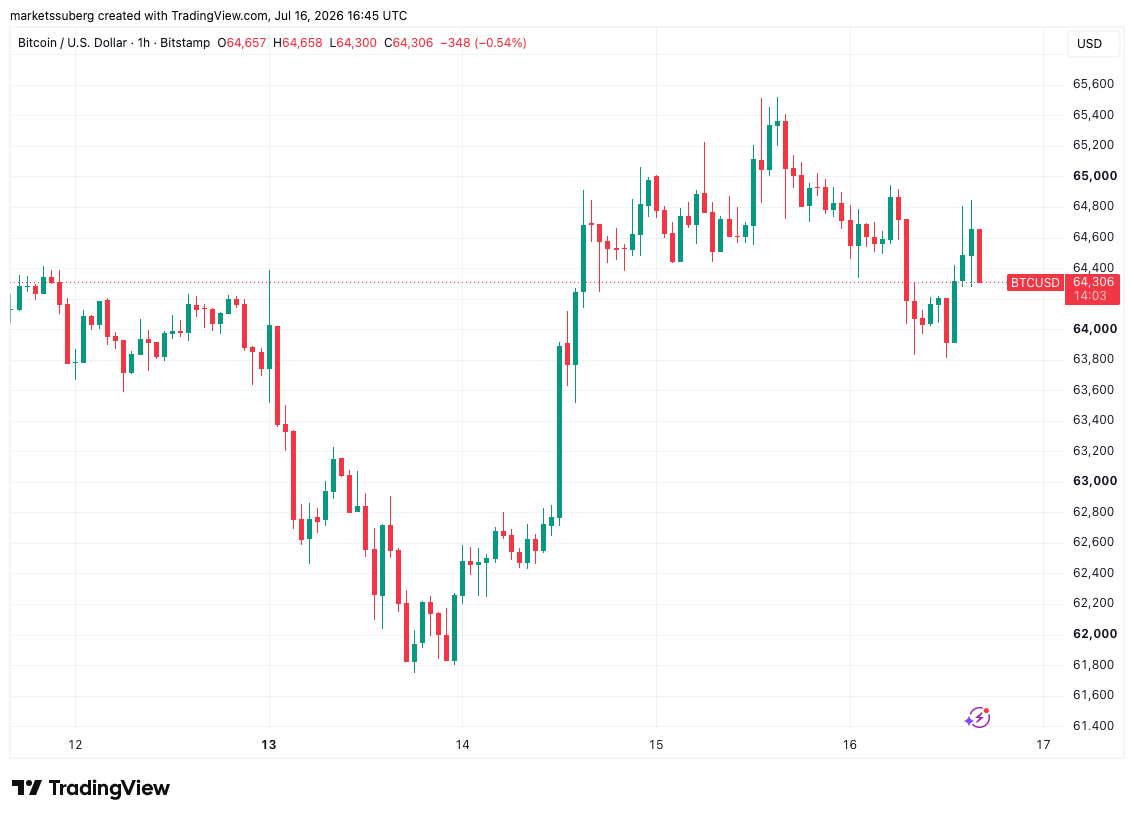
Bitcoin (BTC) experienced a notable cool-off on Thursday, mirroring a broader downturn in U.S. stock markets, particularly the technology sector. This reversal came despite two consecutive days of encouraging lower-than-expected inflation data, which had initially fueled optimism among investors. The world’s leading cryptocurrency, BTC, saw its value dip by 1.5% from its three-week highs, settling around the $64,500 mark, as tech-led selling tempered the gains derived from improved inflation figures.
The preceding days had painted a more optimistic picture for risk assets. Data released for June indicated a decline in both the Consumer Price Index (CPI) and the Producer Price Index (PPI), suggesting that inflationary pressures were easing. Such data typically bodes well for markets, as it can alleviate concerns about aggressive monetary policy tightening by central banks, thereby making growth-oriented assets more attractive. Indeed, following these positive inflation reports, both cryptocurrency and equity markets had initially rallied, with Bitcoin reaching its three-week peak. However, this bullish momentum proved to be short-lived, as a significant sell-off in technology stocks quickly put the brakes on further upside.
Tech Sector Turmoil: Micron Leads the Decline
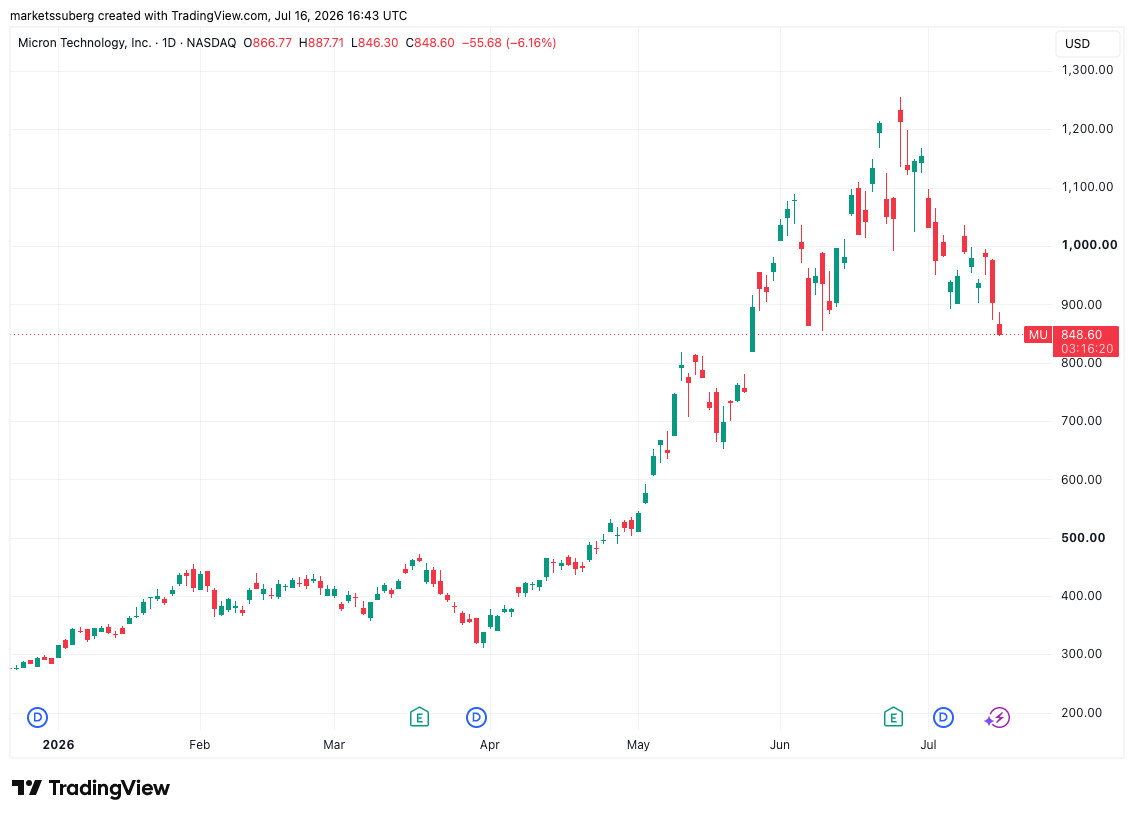
The primary catalyst for Thursday’s market correction was a sharp downturn in the technology sector, with several prominent tech stocks facing considerable pressure. A focal point of this sell-off was Micron Technologies, a key player in the semiconductor industry, which saw its stock plummet by 15% in a single trading session. This substantial drop contributed to Micron being down more than 30% from its record high achieved on June 22nd, just weeks prior.

Micron’s performance is often seen as a bellwether for the broader tech industry, particularly within the semiconductor space, which is critical for various technological advancements, including artificial intelligence and data centers. Its significant decline signals potential concerns about demand, profit margins, or a broader cooling in the tech hardware market. The rapid and steep fall of such a prominent company sent ripples across the entire tech sector, prompting investors to reassess their positions in other growth-oriented stocks.
Market analysis from trading resource The Kobeissi Letter highlighted the extent of Micron’s decline, underscoring the swift erosion of value from its recent peak. This sentiment was echoed by broader market observations, indicating that the tech sector’s "historic rally" of the preceding months was now facing a period of significant profit-taking.
Retail Investors Lock In Gains Amidst Tech Rally
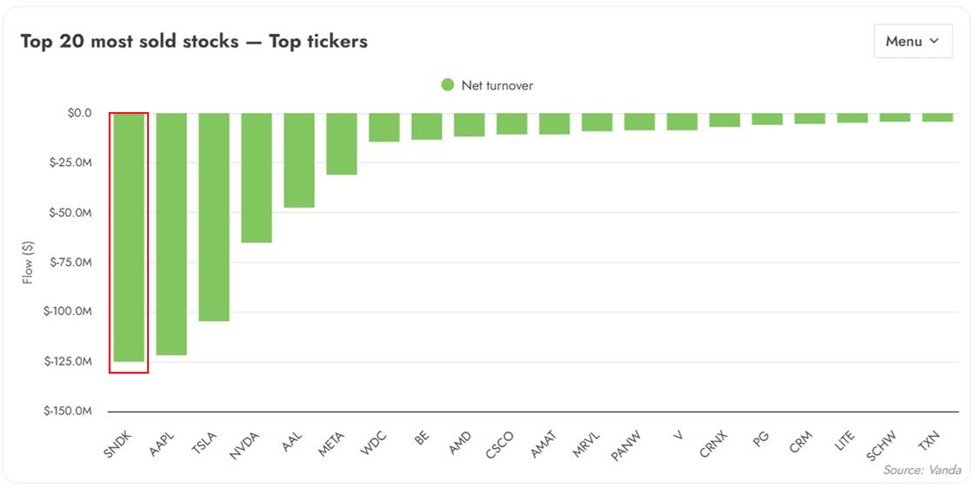
Further exacerbating the tech sell-off was a discernible trend of profit-taking by retail investors. The Kobeissi Letter, in a recent commentary on X (formerly Twitter), pointed out that retail investors had been actively offloading shares in major tech giants. Specifically, sales of Tesla and Apple stocks collectively hit $200 million over the past two weeks. This activity contributed to a record surge in total retail turnover in single stocks, which climbed to an unprecedented $370 billion, a significant increase from $220 billion recorded at the start of 2026.
This data suggests a strategic shift among individual investors, who appear to be capitalizing on the substantial gains accumulated during what has been described as a "historic tech rally." After months of robust performance driven by factors such as the artificial intelligence boom and expectations of a more accommodative interest rate environment, many retail participants are choosing to de-risk and secure profits. This widespread profit-taking behavior, especially in high-flying tech names, creates selling pressure that reverberates across the market, impacting correlated assets like Bitcoin. The narrative here is one of market participants exercising caution and rebalancing portfolios after an extended period of upward momentum.
Bitcoin’s Technical Landscape Signals Caution
The tech sector’s woes inevitably impacted Bitcoin, an asset often categorized as "risk-on" due to its volatility and sensitivity to broader market sentiment. Following its initial gains post-inflation data, BTC/USD struggled to maintain momentum, ultimately experiencing a "rejection" from key technical resistance levels.
Data from TradingView illustrated Bitcoin’s retreat, with BTC/USD circling $64,500 after failing to sustain its climb beyond this threshold. This dip marked a 1.5% decrease from its three-week highs, indicating a loss of upward traction.
Market commentators and analysts quickly turned to technical indicators to interpret Bitcoin’s price action. Exitpump, a prominent market commentator, highlighted the significance of the Anchored Volume-Weighted Average Price (AVWAP) as measured from Bitcoin’s previous peak of $82,000 in early May. According to Exitpump, this AVWAP level served as a critical resistance point, suggesting that a retest of this level would likely cap any further upside and result in a "stronger rejection." The $82,000 level represents a significant turning point in Bitcoin’s recent history, having marked the beginning of a local downtrend. The inability of the current rebound to decisively break past the AVWAP from that high suggests that bears remain in control at these levels.
Adding to this cautious sentiment, trader and analyst Rekt Capital observed that BTC/USD was "showing initial signs of rejection" from its 50-month Exponential Moving Average (EMA) at $65,900. The 50-month EMA is a long-term technical indicator often used to identify major trends and potential support or resistance levels. A rejection from such a significant long-term moving average suggests that Bitcoin is encountering substantial selling pressure and struggling to establish a sustainable upward trend.
Rekt Capital further reiterated a recurring theme in their analysis: the current price behavior of Bitcoin bears a striking resemblance to patterns observed during the 2022 bear market. This comparison implies that the current recovery might be a temporary reprieve within a larger corrective phase. Rekt Capital had previously warned that the next macro bottom for Bitcoin might not materialize until later in the year, suggesting that investors should prepare for continued volatility and potential downside before a definitive long-term recovery takes hold. The 2022 bear market was characterized by extended periods of consolidation, sharp corrections, and a general loss of investor confidence, a scenario that some analysts believe could be repeating in 2026.
Broader Market Implications and Future Outlook
The confluence of positive inflation data, a subsequent tech sector sell-off, and Bitcoin’s technical rejection presents a complex picture for investors. While easing inflation generally signals a healthier economic environment and potentially less aggressive monetary policy from the Federal Reserve, the fragility of the equity markets, particularly in the tech sector, suggests underlying caution.
The retail investor profit-taking trend, as highlighted by The Kobeissi Letter, indicates a shift in market psychology. After a period of exuberant gains, investors are becoming more discerning, prioritizing capital preservation over aggressive growth bets. This could lead to a broader market rebalancing, where capital rotates out of high-growth, high-risk assets and into more defensive or value-oriented sectors.
For Bitcoin, its continued correlation with the tech sector underscores its position as a risk-on asset. Despite narratives of Bitcoin as "digital gold" or an inflation hedge, its price action frequently mirrors that of growth stocks, especially during periods of market volatility. This intertwined relationship means that Bitcoin’s recovery path will likely remain influenced by the performance of traditional equity markets, particularly the Nasdaq-100, which is heavily weighted towards technology companies.
The technical analyses from Exitpump and Rekt Capital paint a conservative short-to-medium-term outlook for Bitcoin. The "rejection" from key resistance levels, coupled with comparisons to the 2022 bear market, suggests that further consolidation or even a deeper correction could be on the horizon before a sustainable bullish trend can be established. Investors will be closely watching for a definitive break above these resistance levels or a clear indication of strong support at lower price points to gauge the market’s next significant move.
In conclusion, while June’s lower-than-expected inflation data offered a glimmer of hope for a market rally, the subsequent tech sector sell-off, led by Micron’s significant decline and widespread retail profit-taking, quickly overshadowed these positive developments. Bitcoin, in its role as a key risk asset, felt the immediate impact, retreating from its three-week highs and facing technical rejections. The interplay of macroeconomic data, sector-specific pressures, and evolving investor sentiment continues to shape a cautious market environment, with many analysts anticipating further volatility before a clear direction emerges for both traditional equities and the cryptocurrency market later in 2026.