Gilang Muhammad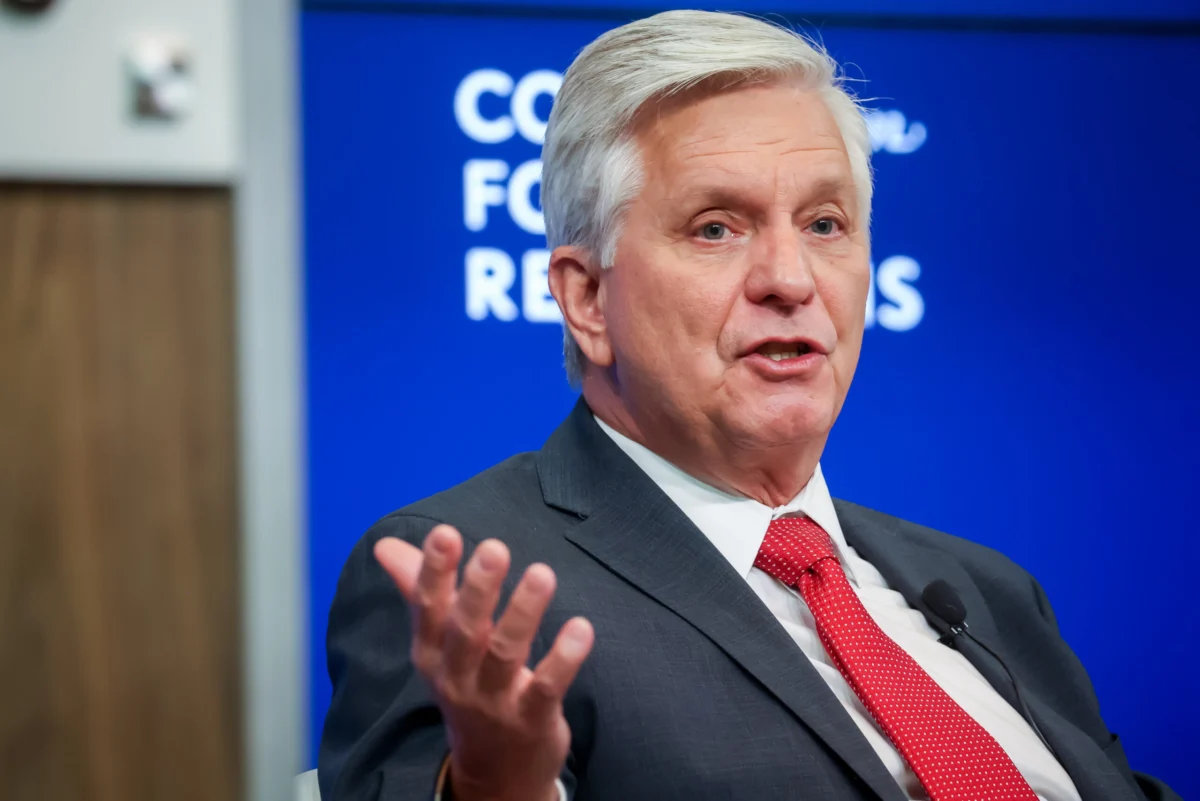
Federal Reserve Governor Christopher Waller delivered a sobering assessment of the nation’s economic trajectory on Friday, indicating that the central bank may need to maintain current interest rate levels for an extended period. Speaking in Alabama, Waller articulated a complex macroeconomic landscape characterized by a potentially enduring inflation shock juxtaposed with a stable yet stagnant labor market. This intricate environment, he cautioned, significantly complicates the Federal Reserve’s approach to its dual mandate of achieving maximum employment and price stability, suggesting a protracted period of policy stasis until clearer economic signals emerge.
Waller’s remarks underscore a growing recognition among policymakers of the unique challenges currently facing the U.S. economy. "High inflation and a weak labor market would be very complicated for a policymaker," he stated, highlighting the inherent tension. "If I face this situation, I’ll have to balance the risks to the two sides of the Fed’s dual mandate to determine the appropriate path of policy, and that may mean maintaining the policy rate at the current target range if the risks to inflation outweigh those to the labor market." This statement is particularly noteworthy as it comes at a time when financial markets have largely priced in a prolonged pause in rate adjustments, anticipating that the Federal Reserve will hold its benchmark federal funds rate steady through much of the coming year amidst the prevailing economic uncertainty.
Waller’s Evolving Stance on the Labor Market
A significant aspect of Governor Waller’s Friday address was a notable shift in his assessment of the labor market. Historically, Waller has been among the more vocal Fed officials expressing concern over the subdued pace of hiring, often pointing to low job creation numbers as a potential drag on economic vitality. However, his latest comments suggest a re-evaluation, indicating that "evidence is building that the break-even rate — where the pace of hiring sustains the unemployment rate — may be close to zero." This nuanced perspective implies that while outright job growth might be negligible, the labor market could still be considered stable if the existing workforce is being retained and the unemployment rate is not escalating.
Despite this updated perspective on the break-even rate, Waller did not entirely shed his reservations about the labor market’s underlying health. He articulated a palpable sense of vulnerability among employers, stating, "My sense is that employers are walking a tightrope between their earlier challenges in finding qualified workers and where they think the economy is going, leaving them vulnerable to some economic shock that could tip them over and lead to significant job reductions." This suggests that businesses, having navigated previous periods of intense labor shortages, are now hesitant to expand their workforces aggressively, opting instead for a cautious holding pattern. Any unforeseen economic disruption, whether domestic or international, could easily push them towards layoffs, undermining the current fragile stability.
The Persistent Shadow of Inflation
On the inflation front, the other pillar of the Fed’s dual mandate, Waller expressed a notably more pessimistic outlook than many of his counterparts and external forecasters. While a prevailing narrative among some economists and policymakers attributes recent inflationary pressures, particularly those stemming from the ongoing Iran war, to temporary disruptions, Waller remains unconvinced. He views these shocks as potentially more deeply embedded within the economic fabric.
"Beyond the length of these disruptions, with this economic shock coming on the heels of the boost to prices from import tariffs, I believe there is the possibility that this series of price shocks may lead to a more lasting increase in inflation, as we saw with the series of shocks during the pandemic," Waller asserted. This perspective is critical. It suggests that the cumulative effect of multiple, successive supply-side shocks – from geopolitical conflicts impacting energy markets to trade policies imposing tariffs – could fundamentally alter inflationary expectations and dynamics. This echoes the experience of the COVID-19 pandemic, where initial "transitory" inflation proved to be far more persistent due to a confluence of supply chain disruptions, unprecedented fiscal stimulus, and shifts in consumer demand patterns. The Iran war, by disrupting global energy supplies and maritime trade routes, adds another layer of complexity, potentially sustaining elevated energy costs and broader inflationary pressures across various sectors.
Chronology and Context: The Fed’s Tightrope Walk
Waller’s speech comes after a period of aggressive monetary tightening by the Federal Reserve, which saw the benchmark federal funds rate rise significantly from near-zero levels to its current target range of 3.5%-3.75%. This series of rate hikes, initiated in early 2022, was a direct response to soaring inflation rates that reached multi-decade highs. The objective was to cool down an overheating economy and bring inflation back down to the Fed’s target of 2%.
Waller himself had been a proponent of cutting interest rates earlier in the year, reflecting a general sentiment among some policymakers that the Fed had done enough to combat inflation and that the focus should gradually shift towards preventing an undue slowdown in economic growth. However, the vote in March to hold the benchmark federal funds level steady marked a consensus shift, acknowledging the persistent inflationary pressures and the need for more data before considering any policy pivots. This decision was a testament to the Fed’s data-dependent approach and its commitment to seeing "clear and convincing evidence" that inflation is firmly on a path back to its target.
The photo accompanying the original article, showing Christopher Waller speaking at the C. Peter McColough Series on International Economics at the Council on Foreign Relations in New York, US, on Thursday, October 16, 2025, places these remarks within a specific, forward-looking context. This suggests the ongoing nature of these debates within the Federal Reserve and among global economic policy circles as 2025 unfolds.
Supporting Economic Data and Indicators
To fully appreciate the gravity of Waller’s concerns, it is essential to examine the underlying economic data that informs the Fed’s decisions.
- Inflation Metrics: Recent Consumer Price Index (CPI) and Personal Consumption Expenditures (PCE) data have shown a stubborn persistence in core inflation, which excludes volatile food and energy prices. While headline inflation may fluctuate with energy price swings, the stickiness of core inflation indicates broader price pressures across goods and services. Current year-over-year CPI figures hover above 3.5%, still significantly above the Fed’s 2% target. The impact of the Iran war on global oil prices, pushing Brent crude futures above $100 a barrel, directly feeds into transportation costs and energy bills, exacerbating these inflationary trends.
- Labor Market Dynamics: Despite Waller’s revised view on the "break-even rate," the U.S. labor market has indeed shown signs of decelerating growth. Monthly job creation numbers, while positive, have cooled considerably from their post-pandemic peaks. For instance, recent reports indicated only a modest increase of perhaps 50,000 to 100,000 non-farm payrolls in the latest month, a stark contrast to the 200,000-300,000 monthly gains observed in previous periods. The unemployment rate, currently around 3.8-4.0%, remains historically low, but this masks a decline in labor force participation among certain demographics and a reduction in average weekly hours worked, signaling underlying weakness. Wage growth, while moderating, is still elevated compared to pre-pandemic levels, contributing to unit labor costs and potentially feeding into service sector inflation.
- GDP Growth: The overall economic growth picture remains mixed. While the U.S. economy has shown resilience, with annualized GDP growth rates oscillating between 1.5% and 2.5% in recent quarters, this growth is increasingly reliant on consumer spending, which could be vulnerable to prolonged high inflation and borrowing costs. Business investment has shown signs of softening, reflecting uncertainty and higher capital costs.
Market Reactions and Broader Implications
Waller’s explicit concerns about persistent inflation and the fragility of the labor market are likely to reinforce market expectations for a "higher for longer" interest rate environment. This stance, coming from a prominent Federal Reserve governor, could lead to:
- Bond Market Volatility: Yields on U.S. Treasury bonds, particularly longer-dated maturities, could face upward pressure as investors price in a sustained period of elevated rates. This increases borrowing costs for governments, corporations, and consumers alike.
- Equity Market Sensitivity: Stock markets, which have shown resilience despite higher rates, might react with caution. Sectors sensitive to interest rates, such as technology and real estate, could experience increased headwinds. Companies with high debt loads or those reliant on robust consumer spending might face profit margin compression.
- Dollar Strength: A prolonged period of higher U.S. interest rates relative to other major economies could strengthen the U.S. dollar, impacting global trade and making U.S. exports more expensive.
- Increased Economic Uncertainty: For businesses, the prospect of prolonged high borrowing costs and persistent inflationary pressures complicates investment decisions, hiring plans, and strategic planning. Small and medium-sized enterprises (SMEs) might find access to capital more challenging.
- Consumer Impact: Consumers face the dual challenge of eroding purchasing power due to inflation and higher costs for mortgages, auto loans, and credit card debt. This could lead to a slowdown in discretionary spending and an increase in household financial strain.
Economists and market analysts are grappling with the implications of Waller’s "less sanguine" view on inflation. While some maintain that global supply chains will eventually normalize and geopolitical tensions will subside, allowing inflationary pressures to ease, Waller’s argument for a more "lasting increase" introduces a significant risk factor. This divergence of views highlights the difficulty in forecasting economic outcomes in an era marked by unprecedented global interconnectedness and frequent exogenous shocks.
Conclusion
Federal Reserve Governor Christopher Waller’s recent address paints a picture of an economy navigating treacherous waters, demanding a cautious and patient approach to monetary policy. His concerns about a potentially enduring inflation shock, exacerbated by geopolitical events like the Iran war and existing import tariffs, coupled with a stable but vulnerable labor market, suggest that the path forward for the Federal Reserve is anything but clear. The explicit possibility of maintaining the current policy rate for a prolonged period underscores the central bank’s commitment to prioritizing price stability, even if it means tolerating a less robust pace of economic expansion. As the Fed balances its dual mandate in this complex environment, Waller’s nuanced yet resolute stance adds a crucial voice to the ongoing debate, signaling that the era of aggressive policy adjustments may be giving way to a more protracted period of watchful waiting. The implications of this posture will resonate across financial markets, businesses, and households for the foreseeable future, as the nation navigates the intricate challenges of modern economic management.