Ella Zulfa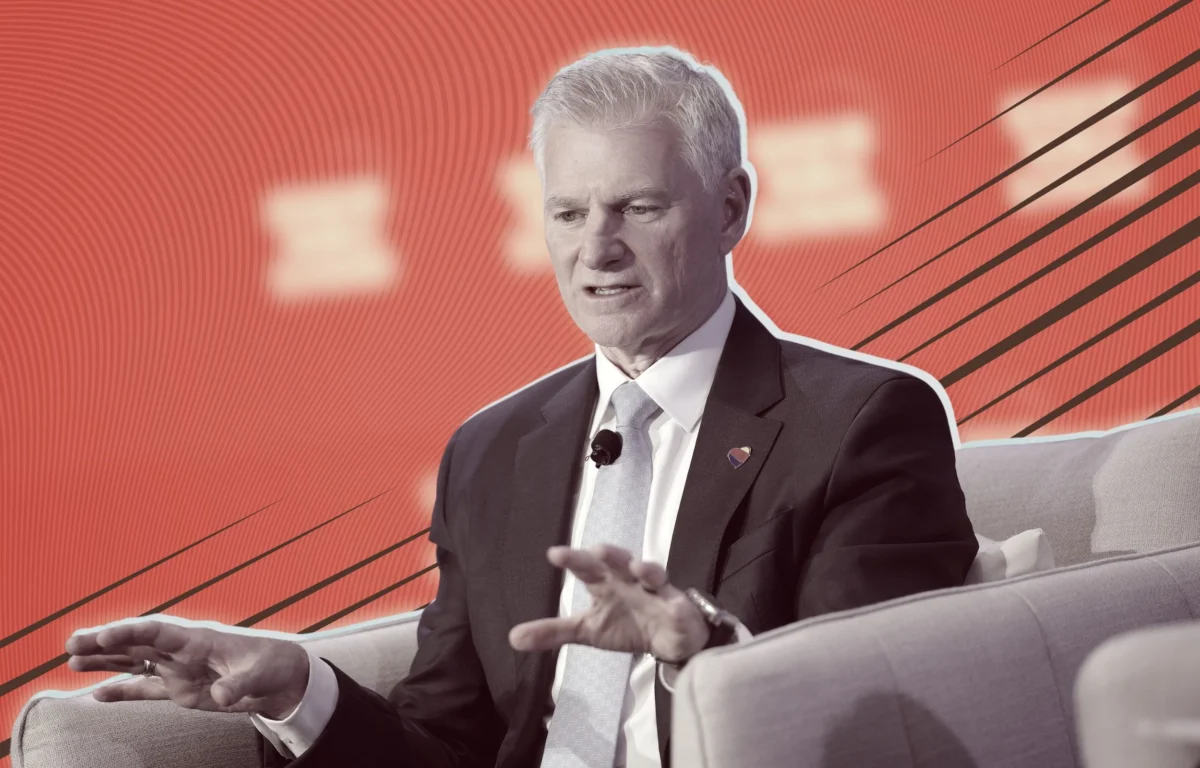
In the high-stakes arena of executive recruitment, where résumés are meticulously scrutinized and interview performance is dissected, a seemingly simple act of courtesy has emerged as a powerful, albeit unwritten, hiring criterion. Southwest Airlines CEO Bob Jordan recently highlighted this crucial aspect of candidate evaluation at the Semafor World Economy Summit, revealing how a candidate’s demeanor towards non-executive staff can decisively impact their job prospects, even for senior positions. This anecdote underscores a growing trend among leading companies to prioritize cultural fit and interpersonal skills, recognizing that true character is often revealed in how individuals interact with everyone, regardless of their perceived status.
The incident, recounted by Jordan earlier this week, involved a candidate vying for a “very senior position” within Southwest Airlines. This individual had evidently excelled in the formal interview sessions with the airline’s executive leadership. Their qualifications, experience, and responses during structured discussions painted a picture of a highly capable and desirable candidate, positioning them as a strong contender for the role. The initial assessment suggested a clear frontrunner who possessed the technical acumen and strategic vision expected of an executive.
However, the hiring process at Southwest Airlines extends beyond the boardroom. Following the formal interviews, Jordan’s team engaged in a crucial post-interview debriefing, a process designed to gather holistic feedback on each candidate. During this comparative analysis, a stark contrast in the candidate’s behavior emerged. While the candidate had undoubtedly impressed the senior executives, their interactions with other members of the Southwest team, specifically the receptionist at the company’s building, were reportedly dismissive and rude. This single observation, a departure from the polished persona presented to leadership, proved to be a significant red flag.
“They did not get the job because they treated one group of folks one way, and they treated that receptionist another way,” Jordan stated, emphasizing the decisive nature of this behavioral discrepancy. This revelation offers a compelling insight into Southwest’s hiring philosophy, suggesting that the airline views how an individual treats individuals across all levels of an organization as a direct reflection of their core values and suitability for the company’s ingrained culture. The executive’s polite and professional demeanor towards those in positions of power, juxtaposed with disrespect towards an employee perceived as having less organizational influence, was interpreted as a fundamental misalignment with Southwest’s ethos.
The Southwest Airlines Culture: A Foundation of Service and Low Ego
Southwest Airlines has long cultivated a distinctive corporate culture, one that Bob Jordan described as deeply valuing individuals who exhibit "low ego" and who "seek to serve others before they serve themselves." This philosophy is not merely a set of platitudes; it is actively integrated into the company’s operational framework and, critically, its hiring practices. Jordan’s comments suggest that these core traits are believed to manifest consistently in an individual’s interactions. The underlying principle is that genuine humility and a service-oriented mindset will naturally extend to all individuals encountered, not selectively to those deemed important.
The airline’s deliberate hiring process is structured to expose these underlying characteristics. Jordan articulated that "You can tell when somebody is not a fit," underscoring that the interview and onboarding procedures are intentionally designed to surface moments where a candidate’s true character is revealed, beyond their prepared responses. This approach acknowledges that superficial charm or well-rehearsed answers can mask deeper behavioral patterns that may not align with the company’s long-term vision and employee relations.
Southwest’s commitment to cultural fit is not a recent development; it is a well-documented aspect of their success. Historically, the airline has been exceptionally selective. Even prior to the global pandemic, the Harvard Business Review reported that Southwest hired fewer than 2% of applicants. This stringent selection process has allowed the company to meticulously build a workforce that not only possesses the necessary skills but also embodies the company’s foundational values.
Culture as a Competitive Differentiator
Executives at Southwest have consistently framed their unique culture as a significant competitive advantage. The argument is that employees who authentically embrace and live by the airline’s values are instrumental in making Southwest a preferred employer and, consequently, a preferred choice for travelers. This perspective suggests that a positive and supportive internal environment directly translates into enhanced customer experiences.
Jordan further connected this emphasis on culture to tangible business outcomes. He highlighted Southwest’s practice of "going overboard treating our employees like family." This internal commitment, he explained, is the primary mechanism for ensuring that the same spirit of care and dedication flows down to passengers. When employees feel valued, respected, and treated with kindness by their employer, they are more likely to extend that same positive energy and exceptional service to customers. This creates a virtuous cycle where internal culture directly fuels external customer satisfaction and loyalty.
Evolving Hiring Strategies: Beyond Traditional Metrics
The emphasis on behavioral indicators and cultural alignment in hiring is not exclusive to Southwest Airlines. Several other prominent CEOs have publicly shared their innovative approaches to assessing candidates’ suitability beyond their résumés and formal interview performance. These methods often involve observing how candidates interact in less controlled or more revealing environments.
United Airlines CEO Scott Kirby, for instance, unveiled his unique hiring test earlier this month. In a podcast interview with McKinsey chief Bob Sternfels, Kirby described a process where a select group of pilots shadows candidates throughout their day. These pilots then provide feedback on whether they would personally want to spend an extended four-day trip with the candidate. Crucially, these pilots possess veto power over hiring decisions, even for technically proficient candidates. This strategy aims to gauge a candidate’s likability, collaborative spirit, and overall compatibility for long-term working relationships, particularly in roles that require close team integration.
Another intriguing approach is employed by Duolingo CEO Luis von Ahn. In an interview with The Burnouts podcast, von Ahn revealed that he leverages the insights of taxi drivers to evaluate job candidates. He reportedly compensates taxi drivers extra to provide feedback on how a candidate behaved during their ride to the interview. The driver’s assessment of the candidate’s courtesy, respect, and general demeanor can significantly influence, or even derail, a job offer. This method taps into candid, unsolicited observations made in a neutral setting, free from the pressure of a formal interview.
A more classic, yet still revealing, tactic was used by former Charles Schwab CEO Walt Bettinger. As recounted in The New York Times, Bettinger would take candidates out for breakfast and discreetly instruct the restaurant staff to intentionally mishandle their order. The purpose was to observe the candidate’s immediate reaction to an inconvenient setback and assess how they navigated the frustration. Bettinger described this as “another way to get a look inside their heart rather than their head,” emphasizing his desire to understand a candidate’s innate character and resilience when faced with unexpected challenges.
The Underlying Rationale: Assessing True Character
These diverse strategies, while differing in execution, share a common objective: to move beyond superficial assessments and glean authentic insights into a candidate’s character. In today’s competitive job market, technical skills and academic achievements can often be replicated. However, qualities such as empathy, humility, resilience, and genuine respect for others are harder to feign and are increasingly recognized as the bedrock of successful long-term employees and cohesive team dynamics.
The Semafor World Economy Summit provided a platform for business leaders to articulate these evolving hiring philosophies. Bob Jordan’s anecdote about the receptionist serves as a powerful reminder that in the pursuit of top talent, the most telling moments often occur outside the formal interview room. For job seekers, this means understanding that every interaction, from the moment they step onto a company’s premises to their final departure, contributes to their overall evaluation. Demonstrating consistent respect and courtesy to everyone encountered, regardless of their role, is no longer just good manners; it is a strategic imperative for career advancement in an era where cultural fit is paramount. The unwritten interview, it appears, is often the most critical one.