Reynand Wu
Global equity markets are poised for a substantial negative open, with futures indicating losses exceeding 1%, as a direct consequence of the breakdown in negotiations between the United States and Iran over the weekend. This diplomatic impasse has immediately triggered a sharp increase in crude oil prices, with Brent crude gapping significantly higher, surpassing the critical $100 per barrel mark in early Monday trading. Analysts at Danske Research Team anticipate a pronounced "catch-down" effect in European indices, which had displayed relative resilience and even outperformance at the close of last week, despite a visible underlying risk appetite that saw cyclical stocks and semiconductor companies leading gains over more defensive sectors. The unfolding situation underscores the fragile interplay between geopolitics, commodity markets, and global financial stability.
Immediate Market Repercussions and Anticipated European Catch-Down
The most immediate and tangible impact of the failed US-Iran talks has been observed in the energy markets. Brent crude, the international benchmark for oil prices, opened with a significant price gap on Monday morning, climbing above $100 per barrel. This abrupt surge reflects heightened supply concerns given the continued inability to reintegrate Iranian oil into global markets under existing sanctions. Equity futures across major global indices are mirroring this negative sentiment, pointing to an opening significantly south of -1%. This downturn follows a widespread sell-off across Asian markets during their trading hours, which were the first to react to the news of the diplomatic failure.
Adding a layer of complexity to the European market outlook is the expectation of a "catch-down" effect. On Friday, March X (assuming a recent date), US markets had already shown weakness, with the S&P 500 closing down by -0.1% and high-yield credits registering a -0.4% decline, despite what were described as solid inflation figures. In stark contrast, the pan-European Stoxx 600 index closed up 0.4%, and the OMX Nordic index surged by 1.3%. This divergence suggests that European markets may not have fully priced in the nascent geopolitical risks or the preceding US market weakness. Consequently, the Danske Research Team posits that a delayed and amplified negative reaction is likely in European markets today, as they align with global sentiment and react to the oil price shock and the broader implications of the failed talks.
The Diplomatic Stalemate: A Deeper Dive into US-Iran Negotiations
The failure of the latest round of negotiations between the United States and Iran represents a significant setback in efforts to revive the Joint Comprehensive Plan of Action (JCPOA), commonly known as the Iran nuclear deal. This landmark agreement, originally signed in 2015 by Iran and the P5+1 group (China, France, Germany, Russia, the United Kingdom, and the United States), aimed to restrict Iran’s nuclear program in exchange for sanctions relief.
A Brief Chronology of the JCPOA and its Unraveling:
- July 2015: The JCPOA is finalized, establishing a framework for international monitoring of Iran’s nuclear activities in exchange for the lifting of economic sanctions.
- January 2016: Implementation Day, marking the official start of the deal, as Iran curtails its nuclear program and international sanctions begin to be lifted.
- May 2018: The Trump administration withdraws the United States from the JCPOA, citing Iran’s ballistic missile program and regional activities as reasons for abandoning the deal. This move re-imposes stringent sanctions on Iran, particularly targeting its oil exports and financial sector.
- 2019-2020: Iran gradually begins to reduce its compliance with the JCPOA’s restrictions, increasing uranium enrichment levels and developing advanced centrifuges, arguing that the remaining parties to the deal have not sufficiently compensated for the US withdrawal.
- January 2021: Upon taking office, the Biden administration signals its intent to re-enter the JCPOA, initiating indirect talks with Iran through European mediators.
- April 2021 onwards: Multiple rounds of talks commence in Vienna, aiming to bring both the US and Iran back into full compliance with the agreement. Key sticking points include the sequencing of sanctions relief and Iranian nuclear rollbacks, as well as the US demand for additional commitments from Iran.
- Recent Weekend: The latest round of negotiations concluded without an agreement, with reports indicating persistent disagreements on crucial issues, particularly the scope of sanctions relief and guarantees that a future US administration would not again withdraw from the deal.
The breakdown in these critical talks has profound implications. For the US, it means a continued absence of a verifiable mechanism to constrain Iran’s nuclear program, potentially increasing regional instability. For Iran, it signifies the continuation of debilitating economic sanctions, further straining its economy and limiting its ability to export oil legally on the global market.
Global Oil Markets React to Supply Uncertainty
The immediate spike in Brent crude prices is a direct reflection of the market’s assessment of continued, if not exacerbated, supply tightness. Iran possesses the world’s fourth-largest proven crude oil reserves and the second-largest natural gas reserves. Under full sanctions, a significant portion of its potential oil exports, estimated to be around 2-2.5 million barrels per day (bpd), remains off the global market. The prospect of these barrels returning to circulation had been a key factor in recent oil price dynamics, offering a potential relief valve amidst already high prices driven by a combination of factors:
- Robust Post-Pandemic Demand Recovery: Global oil demand has largely rebounded from the COVID-19 lows, often outpacing supply adjustments.
- OPEC+ Production Discipline: The Organization of the Petroleum Exporting Countries and its allies (OPEC+) have maintained a cautious approach to increasing output, often falling short of their agreed-upon targets due to capacity constraints or deliberate policy.
- Geopolitical Tensions Elsewhere: Other regional conflicts and instabilities, unrelated to Iran, also contribute to a general risk premium in oil prices.
- Underinvestment in New Capacity: Years of underinvestment in oil and gas exploration and production have limited the industry’s ability to quickly scale up supply.
The failure of the US-Iran talks removes the immediate hope of Iranian oil returning to the market, thus reinforcing the bullish sentiment for crude prices. A sustained period of oil prices above $100 per barrel could have far-reaching consequences for global economies, exacerbating inflationary pressures already grappling with supply chain disruptions and strong consumer demand.
Equity Market Dynamics: Asia’s Sell-off and Friday’s Divergence
Asian markets, being the first to react to the news, experienced a broad sell-off. Major indices such as Japan’s Nikkei 225, Hong Kong’s Hang Seng, and South Korea’s KOSPI all registered significant declines. This immediate reaction underscores the interconnectedness of global financial markets and the rapid transmission of geopolitical shocks. Investors in Asia quickly moved to de-risk portfolios, anticipating the broader implications of higher energy costs and increased global uncertainty.
The divergence observed on Friday between US and European markets is particularly noteworthy. While the S&P 500 edged lower by 0.1% and high-yield corporate bonds saw a 0.4% decline, European benchmarks like the Stoxx 600 and OMX Nordic managed to close higher by 0.4% and 1.3% respectively. This discrepancy could be attributed to several factors:
- Timing of News Flow: European markets may have closed before the full extent of the US-Iran talks’ difficulties became widely disseminated or before US investors had fully digested the implications.
- Sectoral Mix: The strong performance of specific sectors in Europe might have temporarily offset broader concerns.
- Relative Optimism: There might have been lingering optimism in Europe regarding the potential for a breakthrough in the talks, or perhaps a more delayed reaction to rising inflation concerns that had already begun to weigh on US sentiment.
The anticipated "catch-down" in European markets on Monday is essentially a market correction, where European indices adjust to reflect the new global risk landscape and align with the negative sentiment already prevalent in Asia and partially priced into US markets on Friday.
Sectoral Performance and Shifting Risk Appetite
Despite the overall negative closing in US markets on Friday, an interesting pattern of sectoral performance emerged, indicative of persistent risk appetite throughout the week. The technology sector, despite ongoing pressure on software stocks, demonstrated resilience, largely driven by a strong performance in semiconductors. This "semis" strength more than compensated for software weakness, aligning with Danske Research’s views on the sector’s underlying fundamentals and demand. Materials and real estate sectors also fared well, suggesting investors were still willing to allocate capital to economically sensitive areas. Conversely, defensive sectors such as healthcare and staples, typically sought during periods of uncertainty, experienced sell-offs. This indicated that, up until the weekend’s diplomatic failure, the prevailing sentiment among investors was one of "risk-on," favoring growth-oriented and cyclical assets over safer havens.
However, the failure of the US-Iran talks is likely to shift this dynamic significantly. The surge in oil prices, coupled with broader geopolitical uncertainty, typically prompts a rotation out of cyclical and growth stocks and into defensive sectors. Investors tend to seek safety in companies with stable earnings, strong balance sheets, and consistent dividend payouts during times of heightened volatility. The observed strengthening of the US Dollar, often considered a safe-haven currency, further supports the notion of a flight to safety. This shift in risk appetite could see the recent outperformance of semiconductors, materials, and real estate reverse, as investors prioritize capital preservation over growth speculation.
Broader Economic Implications: Inflation, Monetary Policy, and Global Stability
The implications of the failed US-Iran talks extend far beyond immediate market movements.
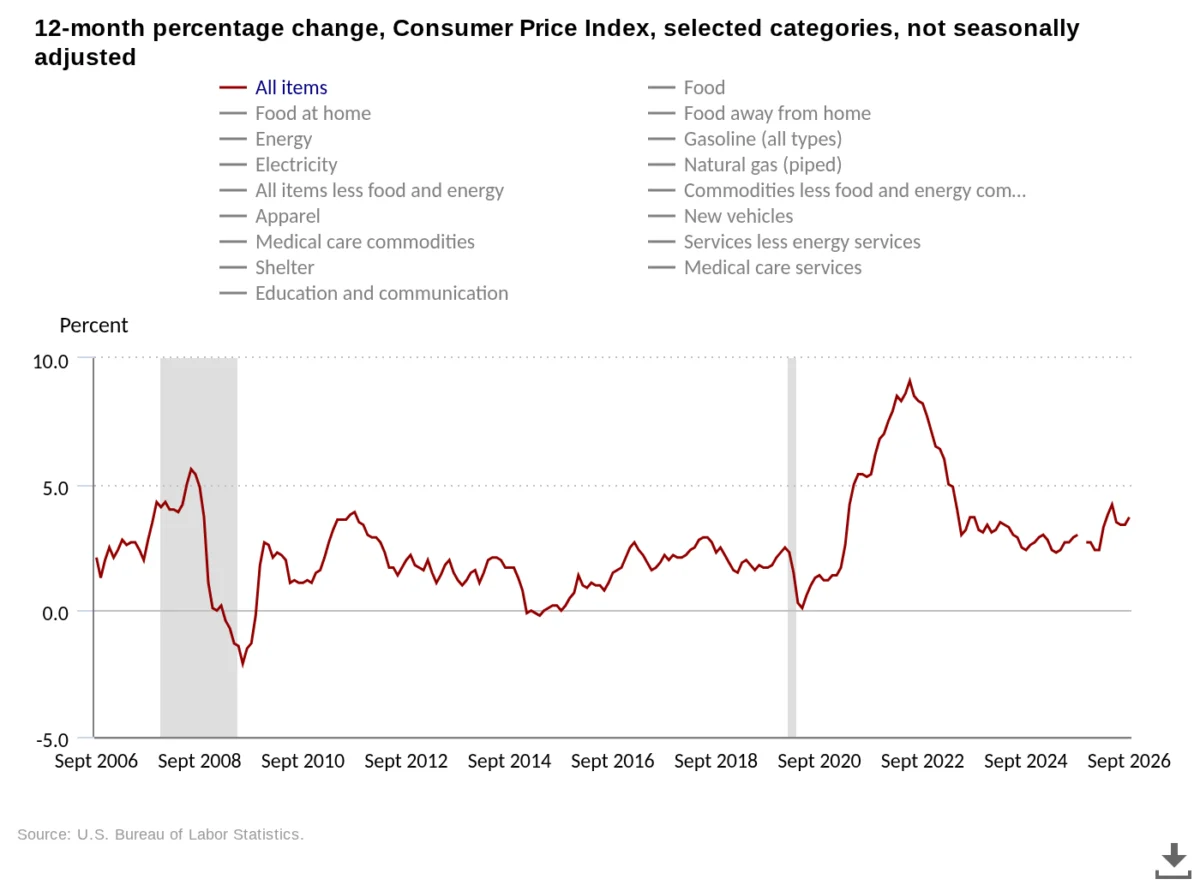
- Inflationary Pressures: Higher crude oil prices directly translate into increased costs for transportation, manufacturing, and energy production, feeding into broader inflationary pressures across economies. This exacerbates an already challenging global inflation environment, driven by supply chain bottlenecks, robust demand, and significant fiscal and monetary stimulus over the past two years.
- Monetary Policy Response: Central banks, including the US Federal Reserve and the European Central Bank, are already grappling with decisions on interest rate hikes and quantitative tightening to combat inflation. A sustained surge in oil prices complicates their task, potentially forcing them to adopt a more aggressive tightening stance, which could, in turn, slow economic growth.
- Consumer and Business Confidence: Elevated energy costs erode consumer purchasing power and increase operating expenses for businesses, potentially dampening overall economic confidence and investment.
- Geopolitical Instability: The continued stalemate between the US and Iran risks further regional destabilization in the Middle East, a critical global energy hub. Any escalation of tensions could lead to further disruptions in oil supply, driving prices even higher and introducing additional layers of uncertainty for global trade and investment.
- Impact on Emerging Markets: Energy-importing emerging markets are particularly vulnerable to sustained high oil prices, as they face increased import bills, higher domestic inflation, and potential currency depreciation, all of which can strain public finances and trigger social unrest.
Outlook and Concluding Thoughts
The immediate outlook for global financial markets is characterized by heightened volatility and a strong likelihood of continued downward pressure on equities, particularly in Europe as it catches up with negative global sentiment. The strengthening of the US Dollar reflects a typical safe-haven response. While risk appetite was clearly visible last week, the geopolitical shock from the failed US-Iran talks is expected to prompt a significant re-evaluation of risk, likely leading to a rotation towards defensive assets and a more cautious investment posture.
The resolution of the US-Iran nuclear issue remains a critical geopolitical and economic variable. Until a diplomatic breakthrough is achieved, or until global oil supply dynamics significantly shift, the risk premium embedded in crude oil prices is likely to persist, creating headwinds for global economic growth and complicating the inflation-fighting efforts of central banks worldwide. Market participants will be closely monitoring any further developments in the US-Iran relationship, as well as the reactions of major oil-producing nations and central banks, to navigate the evolving landscape. The current environment underscores the enduring power of geopolitical events to rapidly reshape economic forecasts and investment strategies.