Reynand Wu
The price of Gold (XAU/USD) exhibited limited movement during Monday’s Asian trading hours, hovering around $4,670 per troy ounce after an initial gap down. This muted reaction for the traditional safe-haven asset comes despite a significant escalation in geopolitical tensions and a fresh surge in energy prices, both factors typically supportive of gold. The non-yielding metal currently struggles against the backdrop of rising inflation risks, which are diminishing market expectations for imminent interest rate cuts by the US Federal Reserve (Fed) and other major global central banks. The complex interplay of these powerful forces is creating a challenging environment for gold, pushing it to reconcile its safe-haven appeal with the disincentive of a higher-for-longer interest rate regime.
Geopolitical Volatility Ignites Energy Markets: The Strait of Hormuz Crisis
The global energy market opened the week with a dramatic surge, primarily driven by the re-escalation of conflict between the United States and Iran. West Texas Intermediate (WTI) crude oil price witnessed a bullish gap, climbing approximately 8.5% to trade around $98.00 per barrel at the time of reporting. This sharp increase underscores the market’s sensitivity to geopolitical instability in the Middle East, a region critical for global oil supplies.
The immediate catalyst for this oil rally was the breakdown of US-Iran peace talks, reportedly held in Islamabad, aimed at de-escalating long-standing tensions. Following the announcement of their failure, US President Donald Trump issued a stern warning, stating that Washington would commence blockading all ships entering or leaving the Strait of Hormuz. This declaration was swiftly followed by an operational confirmation from the US Central Command (CENTCOM), which announced that US forces would begin blockading all maritime traffic entering and exiting Iranian ports starting at 10 AM ET (14:00 GMT) on Monday.
The Strait of Hormuz is one of the world’s most strategically vital choke points for oil transit. Situated between the Persian Gulf and the Gulf of Oman, it serves as the sole sea passage from the Persian Gulf to the open ocean. An estimated one-fifth of the world’s total oil consumption, and roughly one-third of all seaborne traded oil, passes through this narrow waterway daily. Any disruption to traffic through the Strait, whether perceived or actual, inevitably sends shockwaves through global energy markets, leading to sharp price increases and heightening concerns about supply security. Past instances of heightened tensions or direct threats to shipping in the Strait have historically led to significant spikes in crude oil prices, as traders price in the risk of supply disruptions.
The implications of such a blockade extend far beyond immediate oil prices. It threatens to disrupt global supply chains, increase transportation costs for all goods, and potentially trigger broader economic slowdowns as businesses and consumers face higher energy expenditures. Furthermore, it marks a significant escalation in the already fraught relationship between the US and Iran, raising fears of a wider regional conflict that could have profound geopolitical and economic consequences.
Inflationary Headwinds and the Federal Reserve’s Stance
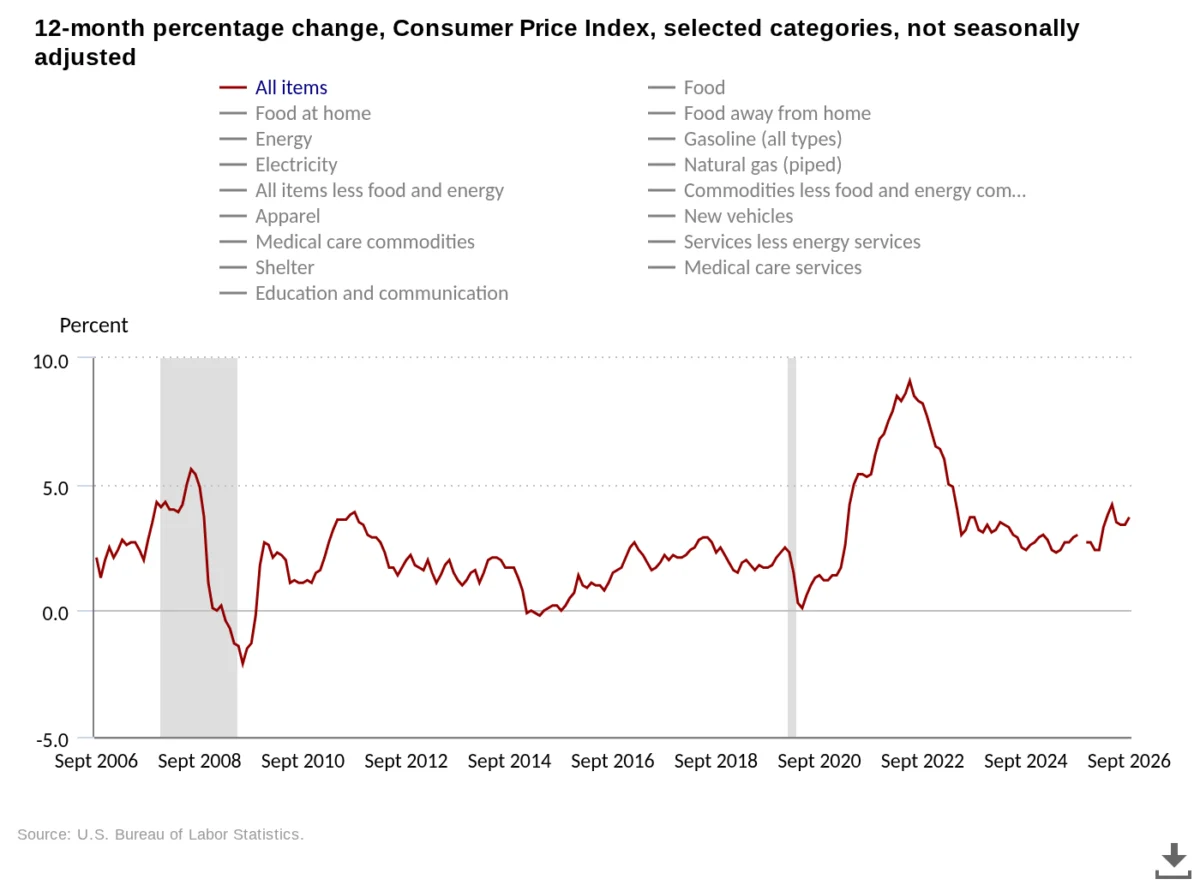
Adding to the market’s complexities, recent economic data from the United States has reinforced the Federal Reserve’s "higher-for-longer" interest rate stance, dampening expectations for near-term rate cuts. On Friday, the US Bureau of Labor Statistics (BLS) released the Consumer Price Index (CPI) data for March, which showed inflation accelerating more than anticipated.
The annual CPI rose to 3.3% in March, up from 2.4% in February, matching market expectations. More concerning was the monthly increase, with CPI rising by 0.9% in March after a more moderate 0.3% increase in February, signaling a renewed inflationary impulse. Core CPI, which excludes volatile food and energy prices, also showed upward pressure, increasing by 0.2% month-over-month and 2.6% year-over-year. While the year-over-year core CPI figure remained relatively stable, the monthly acceleration in both headline and core inflation indicates that price pressures are proving more persistent than policymakers and market participants had hoped.
This "hot" CPI data directly impacts the Federal Reserve’s monetary policy decisions. The Fed operates under a dual mandate: to achieve maximum employment and maintain price stability (typically targeting 2% inflation). Persistent inflation, especially when showing renewed momentum, makes it exceedingly difficult for the Fed to consider easing monetary policy through interest rate cuts. Higher energy prices, driven by the geopolitical events in the Middle East, are a significant contributor to this inflationary environment. Increased oil costs translate directly into higher fuel prices for transportation, higher manufacturing costs for businesses, and ultimately, higher prices for consumers across a wide range of goods and services.
Analysts now largely anticipate that the Fed will maintain its restrictive monetary policy for an extended period, possibly even considering further rate hikes if inflation continues its upward trajectory. This outlook reduces the appeal of non-yielding assets like gold, as higher interest rates increase the opportunity cost of holding gold compared to interest-bearing alternatives such as government bonds or savings accounts. The sentiment for reduced rate cuts by the Fed reverberates across other major central banks globally, many of whom closely watch the Fed’s actions and face similar inflationary pressures. Should the Fed signal a prolonged period of high rates, it would likely encourage other central banks to follow suit, further solidifying the global "higher-for-longer" paradigm.
Gold’s Enduring Role in a Volatile Landscape
Despite the immediate headwinds from rising interest rate expectations, gold’s intrinsic value and its historical role as a safe-haven asset remain paramount in times of escalating global instability. Gold has played a pivotal role throughout human history, widely recognized as a store of value and a medium of exchange long before modern fiat currencies. Its scarcity, durability, and lustrous appearance have endowed it with a unique status.
In contemporary financial markets, the precious metal is predominantly viewed as a safe-haven asset, meaning it tends to perform well during periods of economic uncertainty, geopolitical turmoil, or financial market stress. Investors flock to gold to preserve capital when other asset classes, such as equities or riskier bonds, face significant downturns. Moreover, gold is widely considered an effective hedge against inflation and depreciating currencies. Unlike fiat money, gold does not rely on the solvency or policies of any specific issuer or government, making it a universal anchor of value, particularly when confidence in traditional financial systems wavers.
A significant force in the gold market is the sustained purchasing activity by central banks. These institutions are, collectively, the largest holders of gold globally. Their motivations for accumulating gold are multi-faceted: to diversify their foreign exchange reserves away from dominant currencies like the US Dollar, to bolster the perceived strength and stability of their own national currencies, and to act as a hedge against global economic shocks. High gold reserves can instill greater trust in a country’s solvency and economic resilience, particularly in turbulent times. According to data from the World Gold Council, central banks added an astonishing 1,136 tonnes of gold, valued at approximately $70 billion, to their reserves in 2022. This figure represents the highest yearly purchase since records began, underscoring a strategic shift towards greater gold allocation. Emerging economies, notably China, India, and Turkey, have been at the forefront of this trend, rapidly increasing their gold holdings as part of broader efforts to reduce reliance on the US Dollar and enhance their financial autonomy.
The price of gold also exhibits an intricate dance with other major financial assets, particularly the US Dollar and US Treasuries. Gold generally maintains an inverse correlation with the US Dollar (XAU/USD). When the Dollar strengthens, gold typically depreciates, as it becomes more expensive for holders of other currencies. Conversely, a weakening Dollar tends to push gold prices higher, making it a more attractive investment. Similarly, as a non-yielding asset, gold competes with interest-bearing US Treasuries for investor capital. When Treasury yields rise, gold’s appeal diminishes, and vice versa. This inverse relationship is particularly pronounced during periods of rising interest rates, as the opportunity cost of holding gold increases. Furthermore, gold is often inversely correlated with risk assets like stocks. A robust rally in equity markets, signaling strong economic growth and investor confidence, often sees capital flow out of safe havens and into riskier investments, thereby weakening gold prices. Conversely, sell-offs in riskier markets due to economic downturns or geopolitical crises tend to favor the precious metal as investors seek refuge.
Market Outlook and Future Implications
The current market environment presents a complex challenge for gold. While the escalating geopolitical tensions in the Middle East and the potential for broader conflict typically bolster gold’s safe-haven appeal, the persistent inflationary pressures and the Federal Reserve’s reinforced "higher-for-longer" stance create a significant headwind. The immediate outlook suggests continued volatility, with gold prices likely to react sharply to further developments in the US-Iran standoff and incoming economic data, particularly inflation readings.
In the short term, any further escalation in the Strait of Hormuz crisis could provide a strong upward impetus for gold, as investors prioritize capital preservation amid heightened uncertainty. However, this potential upside could be capped by an even more aggressive tightening stance from central banks if energy-driven inflation proves more intractable. The delicate balance between these two powerful forces will dictate gold’s trajectory in the coming weeks and months.
Longer term, gold’s fundamental appeal as a hedge against systemic risk and inflation remains intact. Should the geopolitical landscape remain volatile, or if inflation proves difficult to tame even with higher rates, gold could regain significant momentum. The continued strategic accumulation of gold by central banks, especially those from emerging markets seeking to diversify and fortify their economies, provides a robust underlying demand floor for the metal.
The broader economic fallout from these developments cannot be understated. A prolonged disruption in the Strait of Hormuz would not only elevate global energy prices but could also severely impact global trade routes and supply chains, potentially triggering a wider economic slowdown. Such an environment, characterized by stagflationary fears (high inflation coupled with stagnant growth), would likely reinforce gold’s long-term value proposition. Diplomatic efforts to de-escalate tensions in the Middle East will be crucial, not only for regional stability but also for mitigating the economic risks currently rippling through global markets. The world watches closely as these interconnected events unfold, shaping the future of global finance and geopolitics.