Ena Muazin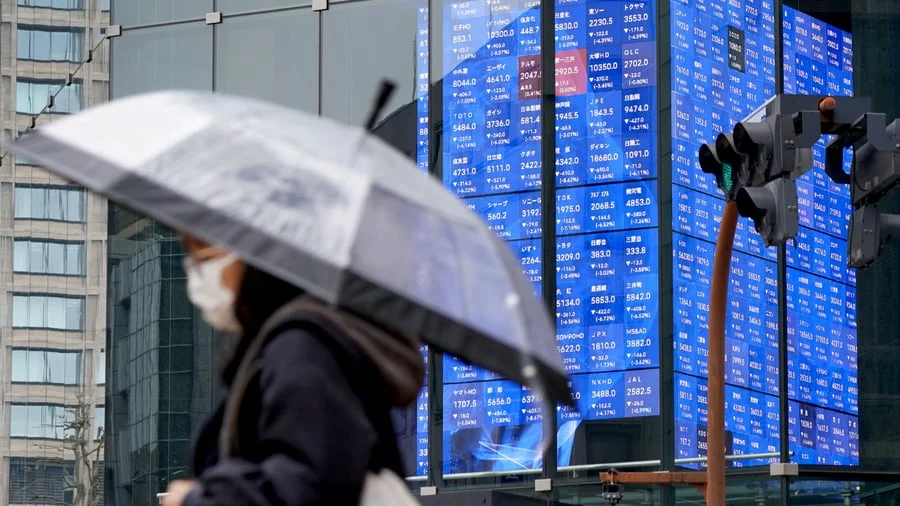
The escalating conflict in the Middle East cast a palpable pall over Asian stock markets on Friday, with investors grappling with heightened geopolitical tensions and their potential ramifications for global economic stability. While some indices showed resilience, the pervasive undercurrent of uncertainty contributed to a mixed performance across major trading hubs in Sydney, Tokyo, and Beijing.
In Tokyo, the benchmark Nikkei 225 index experienced a slight decline, shedding 0.3 percent to close at 53,446 points. This marginal retreat, while not precipitous, reflects a cautious sentiment among Japanese investors who are closely monitoring developments in the volatile Middle East region. The Nikkei, a closely watched barometer of Japanese corporate health, has been sensitive to global economic headwinds, and the current geopolitical climate adds another layer of complexity to its trajectory. Conversely, the broader Topix index, which encompasses a wider range of companies, demonstrated a degree of robustness, gaining 0.3 percent to settle at 3,653 points. This divergence suggests that while larger, export-oriented companies might be more susceptible to international shocks, a broader segment of the Japanese market is exhibiting more stability, perhaps benefiting from domestic economic factors or a perceived lower direct exposure to the immediate fallout of the Middle Eastern conflict.
The Chinese stock markets, meanwhile, displayed a more defiant posture, exhibiting greater resistance to the prevailing anxieties. The Shanghai Stock Exchange registered a gain of 0.3 percent, reaching 3,899 points. This upward movement indicates a degree of confidence in the Chinese economy or a perception that its domestic drivers are strong enough to withstand external pressures. The CSI 300 index, representing the largest companies listed in Shanghai and Shenzhen, mirrored this positive trend, climbing by 0.4 percent to conclude the trading day at 4,496 points. This resilience in China’s major indices could be attributed to several factors, including ongoing stimulus measures, a robust domestic demand, and a strategic decoupling from certain global supply chains, which may offer a degree of insulation from immediate geopolitical shocks.
Background and Chronology of Escalation
The current escalation in the Middle East, which has sent ripples through global financial markets, stems from a complex interplay of historical grievances, regional power dynamics, and a resurgence of extremist ideologies. While specific trigger events can vary, the underlying tensions have been simmering for decades, characterized by territorial disputes, proxy conflicts, and a persistent struggle for influence among regional actors.
Recent events have seen a significant intensification of hostilities, with reports of widespread violence, civilian casualties, and the disruption of critical infrastructure. This has led to a sharp increase in oil prices, a key commodity whose supply is intrinsically linked to the stability of the Middle East. The volatility in oil markets, in turn, directly impacts transportation costs, manufacturing expenses, and consumer spending across the globe, thus creating a ripple effect that touches virtually every sector of the economy.
The timeline of this particular surge in conflict, while intricate, can be broadly traced through a series of escalating incidents. These have included, but are not limited to, retaliatory strikes, increased military posturing by various factions, and diplomatic stalemates that have thwarted de-escalation efforts. Each new development has been closely scrutinized by international observers and financial analysts, who are tasked with assessing the potential economic fallout.
Supporting Data and Market Movements
The immediate impact on Asian markets on Friday was a testament to the interconnectedness of the global economy. The 0.3 percent dip in the Nikkei 225, while modest, represents a tangible financial loss for investors holding those specific equities. The broader Topix’s 0.3 percent gain, however, paints a more nuanced picture, suggesting that not all sectors are equally affected. For instance, sectors less reliant on international trade or those benefiting from domestic consumption might be less impacted or even see positive movement.
In China, the gains in Shanghai and Shenzhen, though seemingly small, are significant in the context of the current global economic climate. The Shanghai Composite Index’s performance, for example, is often influenced by domestic policy decisions and the performance of state-owned enterprises, which may provide a buffer against external shocks. The CSI 300’s rise indicates a broader market confidence, potentially driven by expectations of continued economic growth and government support.
Beyond these headline indices, specific sectors have experienced more pronounced movements. Defense stocks globally have seen an uptick as nations increase their security spending in response to heightened geopolitical risks. Conversely, companies with significant operations or supply chains in the affected regions, or those heavily reliant on energy imports, have likely faced downward pressure. While specific company-level data for Friday’s trading session in Asia is not provided in the initial report, general market trends suggest that energy companies, airlines, and logistics firms would be under particular scrutiny.
Official Responses and Diplomatic Efforts
The international community has responded to the escalating conflict with a mixture of concern and calls for de-escalation. Diplomatic channels are reportedly active, with various nations and international organizations attempting to mediate a peaceful resolution. However, the complex nature of the conflict, involving multiple state and non-state actors, presents significant challenges to these diplomatic endeavors.
The United Nations Security Council has convened several times to discuss the situation, issuing statements that condemn violence and urge restraint. However, the effectiveness of these pronouncements is often hampered by geopolitical divides and the divergent interests of member states.
Individual nations have also issued statements, with many expressing deep concern and urging all parties to exercise maximum restraint. Some countries, particularly those with strong economic ties to the Middle East or those that are major energy consumers, have also voiced concerns about the impact on global energy security and economic stability. The absence of a unified, decisive international response can, in itself, contribute to market uncertainty, as investors look for clear signals of de-escalation and stability.
Broader Impact and Implications for Asian Economies
The persistent shadow of the Middle East conflict has far-reaching implications for Asian economies, extending beyond immediate stock market fluctuations.
Energy Security: Many Asian nations are heavily reliant on energy imports, particularly oil and gas, from the Middle East. Any disruption to these supply lines, or significant price hikes, can lead to increased inflation, higher operating costs for businesses, and a reduction in disposable income for consumers. This can dampen economic growth and create inflationary pressures that central banks will need to address.
Supply Chain Disruptions: The Middle East is a crucial transit point for global trade. Increased geopolitical instability can lead to disruptions in shipping routes, increased insurance costs for cargo, and potential delays in the delivery of goods. For export-oriented economies in Asia, this can have a significant impact on their trade balances and economic output.
Investment Flows: Heightened geopolitical risk can deter foreign direct investment (FDI) and portfolio investment into regions perceived as unstable. Investors may choose to reallocate capital to perceived safe-haven assets or markets that are less exposed to geopolitical shocks. This could impact the availability of capital for infrastructure development and business expansion in Asia.
Inflationary Pressures: Rising energy prices, coupled with potential supply chain disruptions, can contribute to broader inflationary pressures across Asian economies. This can erode purchasing power, impact corporate profitability, and create challenges for monetary policy. Central banks will be under pressure to balance the need to control inflation with the imperative to support economic growth.
Regional Stability: The conflict in the Middle East can also have spillover effects on regional stability within Asia. Increased global tensions can exacerbate existing rivalries or create new flashpoints, further complicating the economic landscape.
The mixed performance of Asian markets on Friday underscores the complex and multifaceted nature of the current global economic environment. While some economies may possess inherent resilience, the pervasive uncertainty generated by geopolitical events like the Middle East conflict necessitates a cautious and adaptive approach from investors, policymakers, and businesses alike. The ability of Asian economies to navigate these turbulent waters will depend on their diversified economic bases, their strategic trade relationships, and their capacity to respond effectively to external shocks. The coming weeks and months will be critical in observing how these markets and economies adapt to the evolving geopolitical landscape.