Ena Muazin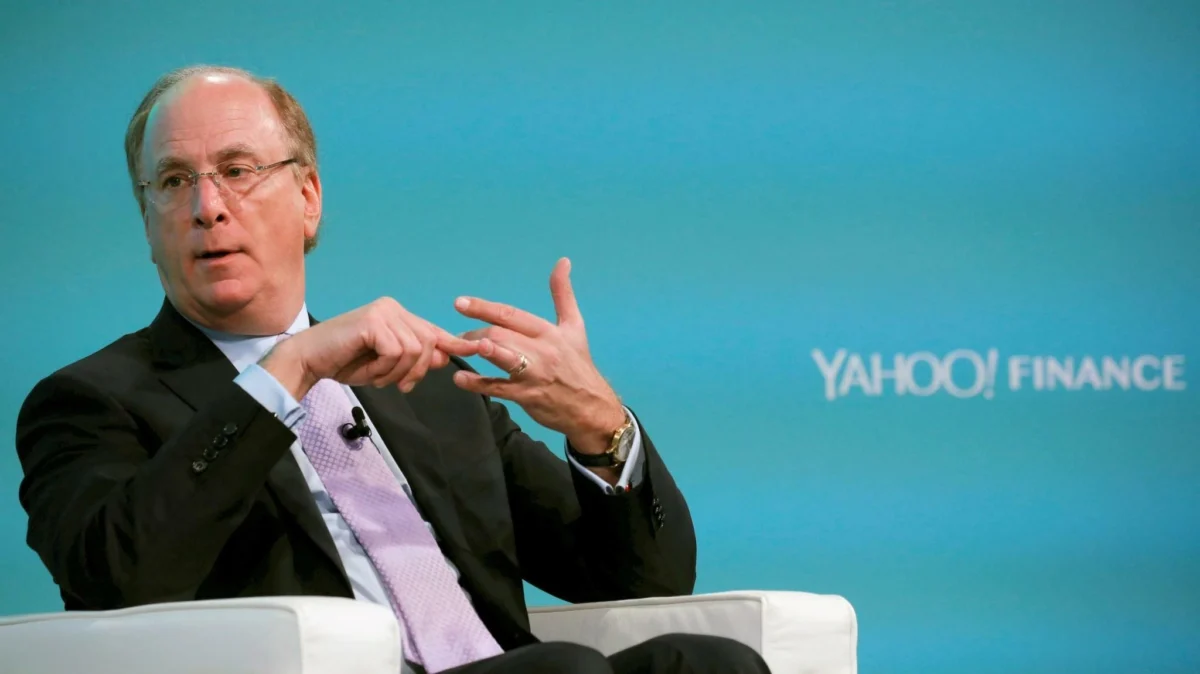
Larry Fink, the influential chairman and CEO of BlackRock, has issued a stark warning to investors, characterizing the current global landscape as a period where seismic shifts, once defining entire decades, are now unfolding with unprecedented rapidity. In his annual letter to BlackRock’s investors, Fink highlights a confluence of transformative events that are fundamentally reshaping economies, markets, and the very fabric of international relations. He observes a world grappling with prolonged conflicts that carry global ramifications, the meteoric rise of companies achieving trillion-dollar valuations, a profound reordering of international trade flows, and the emergence of a technology that rivals the significance of the computer in its potential to revolutionize society. Yet, Fink contends, these monumental developments are too frequently viewed through a narrow, short-term lens, hindering a comprehensive understanding of their long-term implications.
The Accelerating Pace of Global Transformation
Fink’s assessment underscores a fundamental shift in the nature of global change. Historically, major geopolitical conflicts, economic paradigms, and technological breakthroughs unfolded over extended periods, allowing societies and markets to adapt gradually. However, the current environment is characterized by a compressed timeline for these transformative forces. The ongoing conflicts, such as the war in Ukraine, have not been isolated regional disputes but have triggered cascading effects on global energy markets, food security, and supply chains. The sanctions imposed on Russia, the disruption of grain exports from a major breadbasket, and the redirection of energy flows have all contributed to inflationary pressures and economic instability worldwide.
Simultaneously, the business landscape has witnessed the rapid ascent of technology giants. Companies like Apple, Microsoft, Amazon, and Alphabet (Google) have not only achieved market capitalizations that dwarf those of many nations but have also become deeply integrated into the daily lives of billions. Their dominance is driven by innovation in areas such as artificial intelligence, cloud computing, and e-commerce, areas that are themselves experiencing exponential growth. This concentration of economic power and influence raises questions about market competition, regulatory oversight, and the distribution of wealth.
The global trade order, long established under post-World War II institutions, is also undergoing a significant recalibration. Geopolitical tensions, protectionist policies, and a growing emphasis on supply chain resilience are leading to a fragmentation of global markets. Companies are reassessing their manufacturing footprints, diversifying their sourcing, and, in some cases, reshoring production to reduce reliance on single points of failure. This trend, often termed "deglobalization" or "re-globalization," is reshaping trade routes, investment patterns, and the competitive dynamics between nations.
Perhaps the most profound shift, as identified by Fink, is the advent of a technology with the potential to rival the transformative impact of the computer. While he does not explicitly name a single technology, the context strongly suggests the ascendant field of Artificial Intelligence (AI). AI’s capabilities, from sophisticated data analysis and automation to generative content creation and predictive modeling, are rapidly evolving. The implications span every sector, promising to enhance productivity, revolutionize scientific discovery, and create new industries, while also posing challenges related to job displacement, ethical considerations, and the potential for misuse.
The Danger of the "Short-Term Lens"
Fink’s central critique revolves around the pervasive tendency to analyze these epochal shifts through a "short-term lens." This perspective, often driven by quarterly earnings reports, immediate market fluctuations, and the 24-hour news cycle, can lead to a misinterpretation of underlying trends and a failure to prepare for long-term consequences.
For instance, an investor fixated on short-term market volatility might overlook the strategic imperative for companies to diversify their supply chains in response to geopolitical risks. Similarly, a focus on immediate returns might obscure the long-term societal and economic benefits, as well as the potential risks, associated with rapid AI adoption. This short-sightedness can result in suboptimal investment decisions, inadequate policy responses, and a general lack of preparedness for the profound changes underway.
Background and Context: A World in Flux
The current era of accelerated transformation is not an overnight phenomenon but rather the culmination of several interconnected trends that have been building for years, if not decades.
- Geopolitical Realignment: The post-Cold War unipolar moment has given way to a multipolar world characterized by rising powers, assertive nationalism, and increased competition. The economic and political ascendance of China, coupled with a resurgent Russia, has challenged the established international order and led to increased friction with Western powers. This geopolitical chessboard plays out in various arenas, from trade disputes and cyber warfare to proxy conflicts and ideological competition.
- Technological Disruption: The digital revolution, initiated by the personal computer and the internet, has continued its relentless march. Mobile technology, big data, and cloud computing have laid the groundwork for the current wave of AI advancements. The pace of innovation is accelerating, with Moore’s Law, though debated, still reflecting a general trend of exponential improvement in computing power.
- Economic Globalization and its Discontents: While globalization has lifted millions out of poverty and fostered unprecedented economic growth, it has also contributed to rising inequality within many developed nations. Concerns about job losses due to outsourcing, wage stagnation, and the perceived erosion of national sovereignty have fueled populist movements and protectionist sentiments.
- Climate Change and Sustainability Imperatives: The growing awareness of climate change and its potential catastrophic impacts has become a significant driver of economic and policy change. The transition to a low-carbon economy, the development of renewable energy sources, and the increasing demand for sustainable practices are reshaping industries and investment priorities.
A Timeline of Accelerating Change (Illustrative)
While a precise timeline for the "new era" is subjective, certain key markers illustrate the accelerating pace of transformation:
- Late 2010s: Growing awareness of AI’s potential, initial significant investments in AI startups, and increasing geopolitical tensions.
- 2020: The COVID-19 pandemic acted as a massive accelerant for digital transformation, remote work, and highlighted the fragility of global supply chains.
- February 2022: The Russian invasion of Ukraine triggered a major geopolitical crisis with global economic repercussions, particularly on energy and food prices.
- 2022-Present: Rapid advancements and widespread adoption of generative AI tools (e.g., ChatGPT), sparking a new wave of investment and debate about AI’s future impact.
- Ongoing: Continued trade friction between major economic blocs, significant investments in renewable energy infrastructure, and ongoing efforts to reconfigure global supply chains.
Supporting Data and Market Indicators
The trends identified by Fink are reflected in various economic and market data points:
- Market Capitalization of Tech Giants: As of late 2023 and early 2024, the market capitalization of the top five to ten global companies, predominantly technology firms, has consistently surpassed several trillion dollars, demonstrating their immense economic influence. For instance, Apple and Microsoft have frequently traded places as the world’s most valuable companies, each reaching market caps well over $2 trillion.
- Global Conflict Expenditure: Military spending worldwide has seen a significant increase in recent years. According to the Stockholm International Peace Research Institute (SIPRI), global military expenditure reached an estimated $2.24 trillion in 2022, a 3.7% increase from 2021, marking the eighth consecutive year of growth. This reflects heightened geopolitical tensions and ongoing conflicts.
- Supply Chain Reconfiguration Costs: Studies from organizations like the World Economic Forum and various consulting firms indicate that companies are increasingly factoring in supply chain resilience and diversification into their strategic planning. This often involves higher costs for sourcing from multiple regions, nearshoring, and maintaining larger inventory buffers. Estimates suggest that these shifts could add significant percentages to the cost of goods.
- AI Investment Boom: Venture capital investment in AI technologies has surged. According to data from PitchBook and other market intelligence firms, AI startups have attracted tens of billions of dollars in funding annually in recent years, with significant spikes following breakthroughs in generative AI.
- Inflationary Pressures and Interest Rate Hikes: The global economy has experienced elevated inflation rates in the post-pandemic period, driven by supply chain disruptions, energy price shocks, and increased demand. Central banks globally responded with aggressive interest rate hikes, significantly impacting borrowing costs and economic growth forecasts.
Reactions and Analysis from Related Parties
While Fink’s letter is a personal reflection and a call to action for his investors, it resonates with broader discussions within the financial and geopolitical spheres.
- Economists: Many economists have echoed Fink’s concerns about the acceleration of change and the need for long-term strategic thinking. They often highlight the interconnectedness of geopolitical stability, technological advancement, and economic prosperity. The challenge, they note, lies in crafting policies that can foster innovation while mitigating risks and ensuring equitable distribution of benefits.
- Geopolitical Analysts: Experts in international relations point to the fundamental shifts in global power dynamics. They emphasize that the era of unchallenged American hegemony is over, and that a more complex and potentially volatile international system is emerging. The implications for global governance, security alliances, and economic cooperation are profound.
- Technology Leaders: While often optimistic about the transformative potential of new technologies like AI, many tech leaders also acknowledge the societal challenges they present. Discussions around ethical AI development, data privacy, and the future of work are commonplace within the industry. There is a growing recognition that responsible innovation requires proactive engagement with regulators and the public.
Broader Impact and Implications
Fink’s warning has significant implications for a wide range of stakeholders:
- Investors: Investors are tasked with navigating increased volatility and complexity. A long-term, diversified approach that considers geopolitical risks, technological disruption, and sustainability factors is becoming paramount. Understanding the fundamental drivers of value creation in this new environment is crucial.
- Corporations: Businesses must adapt their strategies to account for a more fragmented global trade landscape, heightened geopolitical risks, and the imperative to integrate rapidly evolving technologies. Supply chain resilience, digital transformation, and talent development in areas like AI are becoming critical competitive differentiators.
- Governments and Policymakers: Governments face the challenge of responding to a rapidly changing world. This includes managing geopolitical rivalries, fostering innovation while regulating emerging technologies, ensuring economic stability amidst inflationary pressures, and addressing the societal impacts of technological change and globalization. The need for agile and forward-thinking policy frameworks has never been greater.
- Society: The rapid pace of change presents both opportunities and challenges for individuals. New job roles will emerge, while others may become obsolete. Education and lifelong learning will be essential for individuals to adapt and thrive. Furthermore, societal discussions around the ethical implications of AI, the future of work, and the distribution of wealth will become increasingly important.
Larry Fink’s annual letter serves as a crucial reminder that the current global landscape is defined by an unprecedented acceleration of transformative forces. By urging a move beyond the "short-term lens," he challenges investors and stakeholders alike to embrace a more comprehensive, strategic, and long-term perspective. Failure to do so risks being caught unprepared by the profound and far-reaching consequences of these epochal shifts. The year ahead, and indeed the coming decade, will undoubtedly test the adaptability and foresight of individuals, corporations, and nations as they navigate this new, rapidly evolving reality.