Evan Lee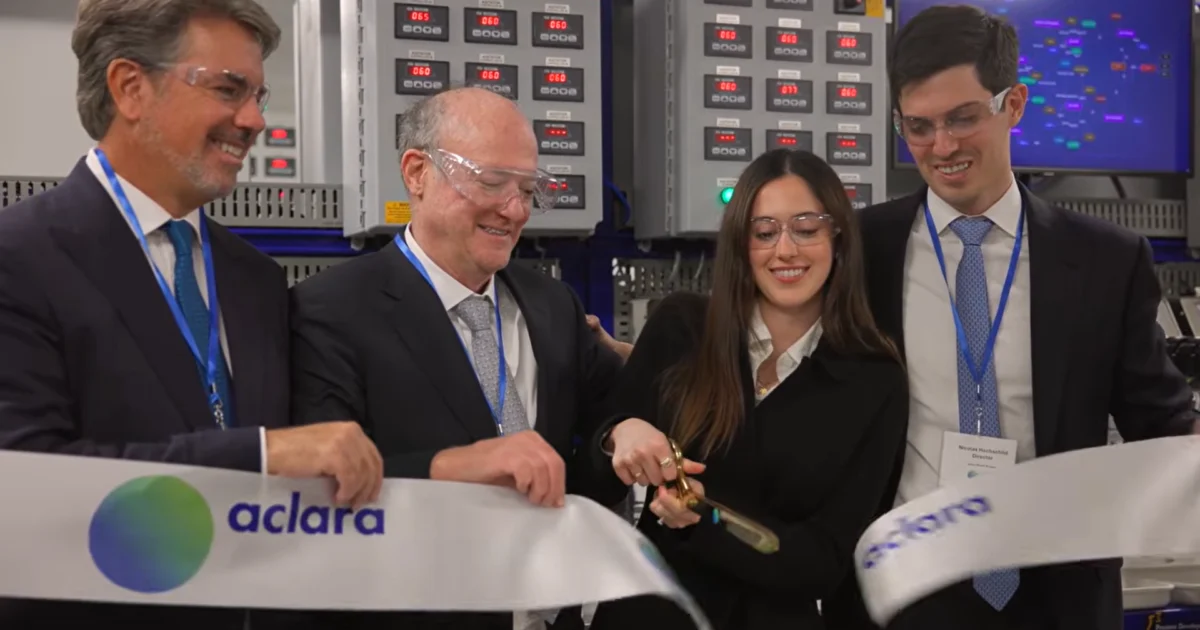
Aclara Resources (TSX: ARA) has officially inaugurated its rare earths separation pilot plant in Blacksburg, Virginia. This significant milestone marks the commencement of operations for what is poised to become one of the few integrated supply chains for these critical minerals within the United States. The establishment of this facility represents a pivotal step in addressing the nation’s growing reliance on foreign sources for rare earth elements, which are indispensable components in a vast array of modern technologies, from renewable energy systems and electric vehicles to defense applications and advanced electronics.
The Blacksburg pilot plant is designed to process rare earth mineral concentrate, employing Aclara’s proprietary separation technology. This technology aims to extract and refine individual rare earth oxides to high purity levels. The successful operation of this pilot facility is intended to validate Aclara’s scalable and environmentally conscious separation process, paving the way for potential commercial-scale production. The strategic location in Virginia is also noteworthy, placing it within a region with potential access to domestic mineral resources and a skilled workforce.
Background and Context: The Strategic Imperative of Rare Earths
Rare earth elements (REEs) are a group of 17 chemically similar metallic elements crucial for numerous high-tech applications. Despite their name, most rare earths are not particularly rare in the Earth’s crust. However, their economic extraction and separation are complex, costly, and often environmentally challenging processes. Historically, China has dominated the global supply of REEs, controlling a substantial portion of both mining and, critically, the downstream separation and processing capabilities. This concentration of supply has raised significant geopolitical and economic concerns for countries like the United States, which are heavily dependent on these imports for their industrial and national security needs.
The United States has recognized this vulnerability for years. In 2010, a report by the U.S. Geological Survey highlighted the nation’s significant dependence on foreign sources for critical minerals, including rare earths. Since then, various government initiatives and private sector investments have been aimed at reshoring or diversifying the REE supply chain. However, the complex and capital-intensive nature of rare earth separation has proven to be a significant hurdle, with few companies globally possessing the technology and expertise to perform this crucial step efficiently and sustainably.
Aclara’s venture into establishing a domestic pilot plant in Blacksburg is a direct response to this strategic imperative. By focusing on the separation phase, Aclara aims to fill a critical gap in the existing and developing North American rare earth ecosystem. The success of this pilot plant could unlock further investment and development across the entire value chain, from exploration and mining to final product manufacturing.
Chronology of Development and Inauguration
The journey to the inauguration of the Blacksburg pilot plant has been a multi-year endeavor. While specific dates for early-stage development are not publicly detailed in the initial announcement, the progression typically involves extensive research and development, laboratory-scale testing, securing financing, site selection, construction, and commissioning.
Aclara Resources, a company previously known for its work in other mining sectors, pivoted its strategic focus to rare earths. The decision to develop proprietary separation technology and establish a pilot plant in the U.S. likely involved substantial investment in intellectual property and infrastructure. The selection of Blacksburg, Virginia, as the site for this pilot plant suggests a careful consideration of factors such as proximity to potential feedstock, availability of specialized talent, and supportive regulatory environments.
The inauguration itself, a formal ceremony marking the commencement of operational testing, signifies the culmination of this development phase. This event is typically attended by company executives, investors, local and state government officials, and industry stakeholders, underscoring the project’s significance. The presence of these parties at the inauguration highlights the collaborative effort and broad support this initiative seeks to garner.

Supporting Data and Technological Innovation
While specific production volumes or purity levels achieved at the pilot plant are generally proprietary until commercial operations commence, the underlying technology is a key differentiator for Aclara. Rare earth separation typically involves complex chemical processes, such as solvent extraction, to isolate individual elements from a mixed rare earth concentrate. These processes require precise control of chemical reactions, efficient recycling of reagents, and robust environmental management systems to minimize waste and emissions.
Aclara has emphasized that its proprietary separation technology is designed to be more efficient and environmentally friendly than conventional methods. This could translate into lower operating costs, reduced environmental footprint, and higher purity products. The pilot plant’s primary objective is to prove the scalability of this technology and gather the data necessary for designing and constructing a full-scale commercial facility.
The rare earth market is segmented into light rare earth elements (LREEs) and heavy rare earth elements (HREEs). LREEs include elements like Neodymium (Nd) and Praseodymium (Pr), which are vital for permanent magnets used in electric vehicle motors and wind turbines. HREEs, such as Dysprosium (Dy) and Terbium (Tb), are essential for high-temperature applications and advanced electronics. The ability of Aclara’s technology to efficiently separate both LREEs and HREEs would significantly enhance its market potential.
Globally, the demand for REEs is projected to grow substantially in the coming decades. Projections from market research firms indicate that the global rare earth market could reach tens of billions of dollars annually by 2030, driven by the accelerating transition to clean energy and the proliferation of advanced technologies. For example, the demand for NdFeB magnets, a key application for Nd and Pr, is expected to more than double by 2030.
Official Responses and Stakeholder Reactions (Inferred)
While direct quotes from external parties are not available from the initial snippet, the inauguration of such a facility would typically elicit positive reactions from various stakeholders:
-
Government Officials (Federal and State): Officials from the U.S. Department of Energy, Department of the Interior, and Virginia state government would likely express support, viewing the project as a critical step towards enhancing national economic security and technological independence. They might highlight the job creation potential and the contribution to domestic manufacturing. Statements would likely emphasize the strategic importance of securing a reliable supply of critical minerals.
-
Industry Partners and Customers: Companies that rely on rare earth elements for their manufacturing processes – particularly in the automotive, aerospace, defense, and electronics sectors – would view Aclara’s pilot plant as a promising development. They might express interest in future offtake agreements and the potential for a more stable and domestically sourced supply chain, reducing their exposure to geopolitical risks and supply chain disruptions.
-
Environmental Advocacy Groups: The environmental aspect of rare earth processing is often a point of focus. Aclara’s claims of an environmentally conscious process would be scrutinized. Positive engagement from such groups would likely depend on the demonstrated effectiveness of their environmental mitigation strategies and transparent reporting on waste management and emissions.
-
Investment Community: Shareholders and potential investors would see the inauguration as a significant de-risking event for Aclara. It validates the company’s technological approach and its ability to execute on its strategic plan. Positive market reactions, such as stock price movements, could reflect this confidence.

Broader Impact and Implications
The inauguration of Aclara’s rare earths separation pilot plant in Blacksburg has several far-reaching implications for the United States and the global rare earth market:
-
Enhanced Domestic Supply Chain Security: This facility directly addresses the vulnerability of the U.S. to supply disruptions from dominant foreign producers. A functioning domestic separation capability is a prerequisite for a resilient rare earth supply chain.
-
Catalyst for Further Investment: The successful demonstration of Aclara’s technology at the pilot stage can unlock further investment in upstream mining projects within the U.S. and Canada, as well as in downstream processing and manufacturing. This can create a virtuous cycle of domestic rare earth industry development.
-
Technological Advancement and Innovation: Aclara’s proprietary separation process could set new benchmarks for efficiency and environmental performance in the rare earth industry. If successful, it could encourage other companies to adopt similar innovative approaches.
-
Economic Development: The establishment of the pilot plant and its potential expansion to commercial scale will create jobs in Blacksburg and the surrounding region, contributing to local and state economies. This includes skilled positions in engineering, chemistry, operations, and environmental management.
-
Geopolitical Realignment: A stronger domestic rare earth supply chain can reduce the geopolitical leverage of countries that currently dominate the market. This aligns with broader national security objectives of diversifying critical mineral sources and reducing reliance on potential adversaries.
-
Environmental Stewardship: The emphasis on an environmentally conscious process is crucial for public acceptance and long-term sustainability. If Aclara’s technology proves to be genuinely cleaner, it could influence the future direction of rare earth processing globally, pushing for more sustainable practices.
The path from a pilot plant to full commercial production is fraught with challenges, including securing significant capital, navigating regulatory approvals, and achieving consistent operational efficiency at scale. However, the inauguration of the Blacksburg facility represents a concrete and tangible step forward in the United States’ long-standing ambition to build a robust and secure rare earth supply chain. The success of Aclara Resources’ venture will be closely watched by industry, government, and international observers alike, as it holds the potential to reshape the global landscape of critical mineral supply.