Rifan Muazin
The Federal Reserve’s Federal Open Market Committee (FOMC) concluded its two-day policy meeting on March 18, 2026, opting to maintain the target range for the federal funds rate at 3-1/2 to 3-3/4 percent. This decision, announced at 2:00 p.m. EDT, signals the central bank’s continued vigilance against persistent inflation while navigating an economic landscape marked by both solid growth and geopolitical risks. The vote was 11-1, with one dissenting member advocating for an immediate rate cut, underscoring the nuanced challenges facing policymakers.
Key Takeaways from the FOMC Statement
The Committee’s statement painted a picture of an economy that continues to expand at a "solid pace," a testament to its underlying resilience despite tighter monetary conditions. However, the accompanying commentary highlighted several areas of concern that necessitated the decision to hold rates steady. Job gains were described as having "remained low," suggesting a deceleration in the pace of labor market expansion, though the unemployment rate has shown "little change in recent months." Critically, inflation "remains somewhat elevated," indicating it has yet to decisively trend back towards the Fed’s long-term 2 percent objective.
Geopolitical factors also weighed heavily on the Committee’s assessment. The statement explicitly noted that "uncertainty about the economic outlook remains elevated," with particular attention paid to "the implications of developments in the Middle East for the U.S. economy." This acknowledges the potential for global events to disrupt supply chains, energy markets, and overall economic stability, adding another layer of complexity to the Fed’s policy deliberations. The Committee reiterated its commitment to its dual mandate of achieving maximum employment and price stability, emphasizing its attentiveness "to the risks to both sides" of this mandate.
The Path to March 2026: A Chronology of Monetary Tightening and Holding
The decision to maintain the federal funds rate at 3.50%-3.75% in March 2026 follows a protracted period of aggressive monetary tightening initiated in early 2022. Facing multi-decade high inflation rates, the Federal Reserve embarked on a series of historic rate hikes, pushing the federal funds rate from near-zero levels to its current range. This tightening cycle, unprecedented in its speed and scale in recent memory, was designed to cool an overheating economy and bring inflation under control.
- Early 2022: The Fed begins its tightening cycle, initially with modest rate hikes, as inflation proves to be more persistent than initially anticipated.
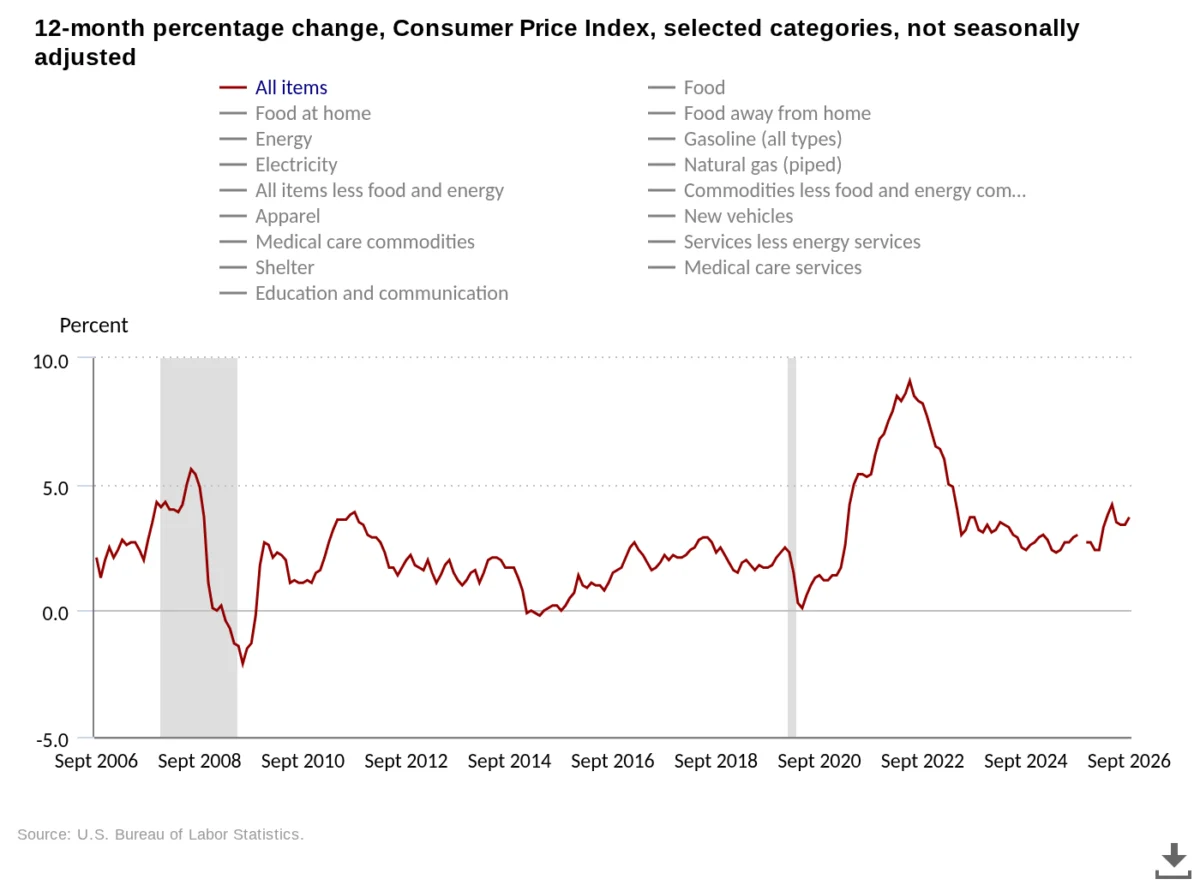
- Mid-2022 to Early 2023: A period of aggressive 75-basis-point hikes becomes common, as the Consumer Price Index (CPI) and Personal Consumption Expenditures (PCE) price index reach peaks well above 8% and 6% year-over-year, respectively. The labor market remains robust, providing cover for these significant increases.
- Mid-2023: The pace of hikes begins to moderate, typically to 25 or 50 basis points, as initial signs of disinflation emerge and the cumulative effect of previous hikes starts to ripple through the economy. Concerns about a potential recession intensify.
- Late 2023 to Early 2024: The FOMC shifts to a "hold" strategy, pausing rate hikes to assess the impact of past actions. During this period, inflation gradually declines, but often at a slower pace than desired, while the economy demonstrates surprising resilience. Debates within the Committee and among economists intensify regarding the timing of potential rate cuts.
- Mid-2024 to Early 2026: The Fed maintains a cautious stance, holding rates steady through multiple meetings. While inflation shows a downward trend, it frequently encounters "sticky" elements, particularly in the services sector. The labor market, while slowing, avoids a sharp contraction. Geopolitical tensions, particularly in the Middle East, begin to exert a more pronounced influence on the global economic outlook, adding uncertainty to commodity prices and trade flows. This prolonged holding pattern reflects the Fed’s commitment to ensuring inflation is sustainably brought back to its target before considering easing policy.
By March 2026, the federal funds rate had remained at its current level for several consecutive meetings, indicating the Fed’s belief that while progress had been made on inflation, the job was not yet done. This prolonged period of restrictive policy aims to embed disinflationary pressures more deeply into the economy, preventing a resurgence of price increases.
Underlying Economic Data and Indicators
The Committee’s assessment that economic activity has been "expanding at a solid pace" is likely supported by a range of data points. Gross Domestic Product (GDP) growth, while perhaps moderating from its post-pandemic peaks, would still indicate a healthy, albeit slower, rate of expansion, likely in the range of 1.5% to 2.5% annualized. Consumer spending, often a key driver of the U.S. economy, would also show sustained activity, albeit potentially shifting from goods to services. Business investment might also contribute to this "solid pace," reflecting ongoing confidence in future demand, albeit tempered by higher borrowing costs.
The observation that "job gains have remained low" is crucial. This does not necessarily imply job losses but rather a slower rate of job creation compared to the robust pace seen immediately after the pandemic or even pre-pandemic averages. For instance, monthly non-farm payroll additions might be consistently in the range of 50,000 to 100,000, which is below the approximately 200,000 jobs per month needed to keep pace with population growth and labor force expansion, but still positive. This slower pace of hiring could be a deliberate outcome of the Fed’s tightening, aimed at rebalancing the supply and demand for labor without triggering a significant spike in unemployment. The "little changed" unemployment rate, perhaps hovering between 3.8% and 4.2%, suggests that while job creation has slowed, widespread layoffs have been avoided, allowing for a relatively stable labor market. This delicate balance reflects the Fed’s efforts to achieve a "soft landing" – bringing inflation down without triggering a severe recession.
On the inflation front, "somewhat elevated" likely means that both the headline and core PCE price indexes are still above the 2 percent target, perhaps in the 2.5% to 3.0% range year-over-year. While a significant improvement from the peaks of 2022, this persistent deviation from target underscores the challenges of the "last mile" of disinflation. Contributing factors could include sticky services inflation, housing costs, and potential upward pressure from commodity prices influenced by global events. Wage growth, while potentially moderating, might still be running slightly ahead of levels consistent with 2% inflation, adding to the Fed’s caution. Inflation expectations, both short-term and long-term, as measured by surveys of consumers and businesses and market-based indicators, would be closely watched to ensure they remain anchored at the 2% target.
Official Responses and Dissenting Voices
The overwhelming majority vote of 11-1 in favor of maintaining the federal funds rate underscores a broad consensus within the Committee regarding the current stance of monetary policy. Chair Jerome H. Powell, Vice Chair John C. Williams, and other prominent members like Michael S. Barr, Lisa D. Cook, and Philip N. Jefferson, all voted for the hold. This united front suggests a shared belief that the economic conditions, particularly the elevated inflation and geopolitical uncertainties, warrant a continuation of the restrictive policy. The emphasis on "carefully assess incoming data, the evolving outlook, and the balance of risks" indicates a data-dependent approach, where future adjustments will be contingent on the sustained trajectory of economic indicators.
However, the lone dissenting vote by Stephen I. Miran, who preferred to lower the target range by 1/4 percentage point at this meeting, highlights the internal debate and differing perspectives within the FOMC. Miran’s dissent likely stems from a belief that the current restrictive policy might be overly aggressive or risks unduly slowing the economy and the labor market. He might be emphasizing the "low job gains" and the potential for the cumulative effects of past hikes to cause a more significant economic downturn than anticipated. His position could also reflect a concern that inflation is sufficiently on a downward path, or that the risks to employment now outweigh the risks of slightly elevated inflation, thus warranting a pre-emptive cut to support economic activity. Such dissents are not uncommon and provide valuable insight into the range of views and the robustness of the Committee’s deliberations.
Broader Impact and Implications
The Federal Reserve’s decision to maintain interest rates has several significant implications for various sectors of the U.S. economy and global financial markets.
For Consumers and Businesses:
- Borrowing Costs: Mortgage rates, auto loans, credit card interest rates, and business borrowing costs will remain elevated. This continued higher cost of capital can dampen demand for big-ticket items like homes and cars, and may deter businesses from undertaking significant expansion projects, potentially slowing overall economic growth.
- Savings: Savers will continue to benefit from relatively higher returns on savings accounts, money market funds, and Certificates of Deposit (CDs), providing a modest buffer against inflation.
- Housing Market: The housing market is likely to remain subdued, with high mortgage rates impacting affordability and sales volumes. While home prices might stabilize or even see slight declines in some areas, a significant rebound is unlikely until rates begin to fall.
- Corporate Earnings: Companies, particularly those with high debt levels or reliance on consumer discretionary spending, may face continued pressure on their earnings due to higher financing costs and potentially weaker demand.
For Financial Markets:
- Equity Markets: Stock markets might react with cautious optimism, as the decision removes immediate uncertainty about a rate hike. However, the prospect of prolonged higher rates could cap significant upside, particularly for growth stocks that are sensitive to future earnings valuations. Sectors like banking and financials might see continued benefits from higher net interest margins.
- Bond Markets: Treasury yields, particularly for shorter-duration bonds, are likely to remain firm, reflecting the Fed’s commitment to restrictive policy. The yield curve, which has been inverted for an extended period, might remain so, indicating market expectations of future economic slowdowns or eventual rate cuts.
- U.S. Dollar: A relatively higher interest rate environment in the U.S. compared to other major economies could continue to support the strength of the U.S. dollar, impacting global trade and the competitiveness of U.S. exports.
For the Economic Outlook:
- Inflation Trajectory: The Fed’s continued hawkish stance is designed to ensure that inflation trends definitively towards the 2% target. The prolonged period of restrictive policy aims to break inflation expectations and embed disinflationary pressures more deeply into the economy.
- Risk of Recession: While the Fed aims for a "soft landing," the risk of over-tightening and pushing the economy into a recession remains a significant concern for economists and market participants. The "low job gains" mentioned in the statement could be an early warning sign, though offset by the "solid pace" of overall activity.
- Geopolitical Sensitivity: The explicit mention of "developments in the Middle East" highlights the increasing sensitivity of the U.S. economy to global events. Any escalation could impact oil prices, supply chains, and investor confidence, potentially forcing the Fed to re-evaluate its stance.
- Future Policy Path: The Committee’s commitment to "carefully assess incoming data" and its preparedness to "adjust the stance of monetary policy as appropriate if risks emerge" indicates that future decisions are not predetermined. Labor market conditions, inflation pressures and expectations, and international developments will all be critical inputs for upcoming FOMC meetings. Market participants will be closely scrutinizing every piece of economic data and every statement from Fed officials for clues about the timing and magnitude of potential rate cuts later in 2026 or beyond.
In conclusion, the Federal Reserve’s decision to maintain the federal funds rate in March 2026 reflects a cautious but resolute approach to monetary policy. Balancing solid economic activity with persistently elevated inflation and rising geopolitical risks, the Committee remains committed to its dual mandate. The coming months will be crucial in determining whether the economy can navigate these complex headwinds towards a sustainable path of maximum employment and price stability.