Evan Lee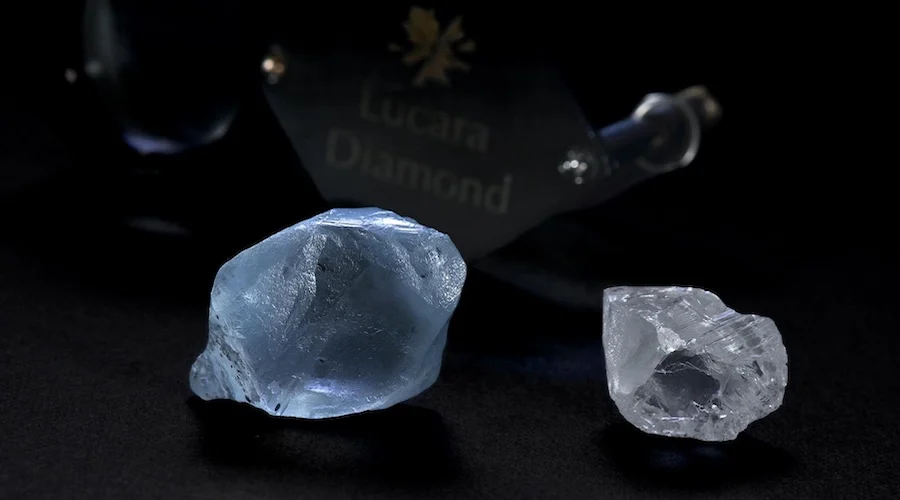
Canada’s Lucara Diamond, a prominent player in the global diamond mining sector, has announced the remarkable recovery of a high-quality, 36.92-carat blue diamond from stockpiled ore at its wholly-owned Karowe mine in Botswana. This significant find, a Type IIb stone, was identified and extracted utilizing advanced X-ray transmission (XRT) technology, a testament to the ongoing value and potential held within the mine’s surface stockpiles. The Karowe mine has a distinguished history of producing exceptional diamonds, and this latest discovery further underscores its status as a world-class asset.
The recovery of this extraordinary blue diamond arrives at a pivotal moment for Lucara Diamond. The company is actively pursuing ambitious plans to extend the operational life of the Karowe mine through a substantial underground expansion. A comprehensive feasibility study has projected the potential recovery of an additional 4.5 million carats over a projected 10-year mine life stemming from this underground development. This strategic initiative to deepen the mining operations highlights Lucara’s unwavering commitment to maximizing the value of its flagship asset, even as the global diamond market navigates a period of significant downturn. The industry is currently contending with challenges such as fluctuating revenues, temporary operational halts, and the escalating competition posed by an increasing supply of laboratory-grown diamonds.
William Lamb, President and CEO of Lucara Diamond, expressed his enthusiasm regarding the discovery, stating, “The recovery of this stunning blue, high-quality diamond from the Karowe mine again reinforces the special nature of this asset. Recoveries such as this demonstrate the value contained within the company’s surface stockpiles, which remain an important source of mill feed and a contributor to ongoing diamond recoveries.” His remarks emphasize not only the intrinsic value of the unearthed gem but also the strategic importance of the mine’s stockpiled resources, which continue to provide substantial output while the company transitions to its next phase of development.
The Karowe Mine: A Legacy of Exceptional Discoveries
The Karowe mine, situated in the Orapa diamond field of eastern Botswana, has established a formidable reputation for yielding some of the most significant and valuable diamonds ever discovered. The name "Karowe" itself translates to "precious stone" in the local Tswana language, a fitting description for the treasures it has consistently unearthed. Since commencing operations, the mine has been the source of several record-breaking gemstones, cementing its place in diamond mining history.
Among the most notable finds are:
- The Sewelô: Discovered in 2019, this exceptional diamond weighed a staggering 1,758 carats, making it the second-largest gem-quality diamond ever found. Its discovery generated immense global interest, with its eventual fate and transformation into jewelry by Louis Vuitton highlighting the commercial and artistic appeal of such unique stones.
- The Lesedi La Rona: Recovered in 2015, this magnificent diamond tipped the scales at 1,109 carats. Its sheer size and quality made it one of the most significant diamond discoveries in over a century, captivating the international gemological community.
- The Constellation: Also found in 2015, this 813-carat diamond was notable for its exceptional clarity and its unique structure. It went on to achieve a record-breaking sale price for a rough diamond at the time.
Beyond these colossal finds, Karowe has also been responsible for other remarkable discoveries, including Botswana’s largest fancy pink diamond, named Boitumelo. The mine consistently ranks among the world’s highest-margin diamond operations, producing approximately 300,000 carats of high-value diamonds annually. This consistent output of quality stones, coupled with its history of extraordinary discoveries, underscores the Karowe mine’s enduring significance in the global diamond supply chain.
Transitioning to Underground Operations: A Strategic Imperative
The current open-pit mining operations at Karowe are nearing their conclusion, with projections indicating they will cease before June of the current year. Following this transition, the mine will rely entirely on its substantial stockpiled material as mill feed. Simultaneously, Lucara Diamond is diligently working to ramp up underground production towards commercial levels. This strategic shift is crucial for ensuring the continued operation and profitability of the Karowe mine for years to come.
The underground expansion project represents a significant investment and a bold strategic decision by Lucara. It is designed to access deeper kimberlite deposits that are anticipated to contain a higher proportion of large, high-value diamonds. The feasibility study, which has been a cornerstone of this planning, has provided a detailed roadmap for this expansion, outlining not only the projected carat recovery but also the anticipated operational costs and timelines. The projected 4.5 million carats over a decade from the underground operations are expected to supplement and eventually surpass the production from the open pit.
Navigating a Challenging Market Landscape
Lucara Diamond’s decision to proceed with the ambitious underground expansion at Karowe is particularly noteworthy given the current state of the global diamond market. The industry has been experiencing a notable downturn, characterized by several factors:
- Weakened Revenues: Many diamond producers and retailers have reported reduced sales and profitability due to decreased consumer demand, particularly for larger and more expensive stones.
- Operational Adjustments: Several mining companies have had to adjust their production levels, with some temporarily halting operations or reducing output to align with market conditions.
- Competition from Lab-Grown Diamonds: The rapid advancement and increasing affordability of synthetic diamonds have presented a significant challenge to the natural diamond market. Lab-grown diamonds, often indistinguishable from their natural counterparts to the naked eye, are capturing a growing share of consumer interest, especially in the mid-range market.
- Geopolitical and Economic Uncertainties: Broader global economic slowdowns and geopolitical tensions have also contributed to a more cautious consumer spending environment, impacting discretionary purchases like luxury jewelry.
Despite these headwinds, Lucara’s commitment to Karowe reflects a deep-seated belief in the unique quality and long-term value of natural diamonds, particularly those originating from a mine with such a proven track record of exceptional discoveries. The company’s strategy appears to be focused on leveraging the inherent scarcity and desirability of large, high-quality natural diamonds, which are less susceptible to direct competition from synthetic alternatives. By focusing on these premium segments, Lucara aims to maintain its strong margins and market position.
The Significance of Type IIb Blue Diamonds
The 36.92-carat blue diamond is not just significant for its size but also for its classification as a Type IIb diamond. This category of diamonds is exceptionally rare, comprising less than 0.1% of all natural diamonds. Type IIb diamonds are distinguished by the presence of trace amounts of boron within their crystal lattice, which imparts their characteristic blue hue. This impurity also makes them semiconductors, a property that has historically been exploited in scientific and technological applications.
The rarity and the captivating color of blue diamonds make them among the most coveted and valuable gemstones in the world. Their value is further enhanced by their color intensity, clarity, and the size of the stone. A blue diamond of this size and quality, recovered from a mine with a reputation for producing significant stones, is expected to command a premium price in the market. The discovery reinforces the perception of Karowe as a source of exceptional and rare colored diamonds, adding another layer of prestige to its already impressive profile.
The Role of XRT Technology in Modern Diamond Recovery
The successful recovery of the 36.92-carat blue diamond using X-ray transmission (XRT) technology highlights the critical role of advanced processing techniques in modern diamond mining. XRT technology utilizes differences in the atomic density of materials to differentiate between diamonds and the surrounding ore. Diamonds, being denser than most other minerals found in kimberlite, absorb X-rays differently, allowing specialized sorting equipment to identify and separate them with high accuracy.
This technology is particularly valuable for recovering smaller diamonds and those that might otherwise be missed by traditional sorting methods. Furthermore, XRT’s precision helps to minimize diamond breakage during the recovery process, thereby preserving the value of the recovered stones. Lucara Diamond has been an early adopter and proponent of XRT technology at Karowe, and its continued success with this method underscores its effectiveness in maximizing diamond yield and value from the ore. The consistent application of this technology is directly contributing to the ongoing success of the Karowe mine, particularly in extracting value from its stockpiled resources.
Future Outlook and Market Implications
The continued success of Lucara Diamond in recovering high-quality diamonds from its Karowe mine, even amidst a challenging market, provides a degree of optimism for the company and the natural diamond sector. The strategic investment in underground expansion signals a long-term vision, anticipating a future where high-quality natural diamonds will retain their allure and value.
The recovery of a significant blue diamond, a gem type with exceptional market appeal, could also influence market sentiment. It serves as a tangible reminder of the unique treasures that natural diamond mining can yield, potentially bolstering demand for premium natural stones. As the industry grapples with the rise of lab-grown diamonds, discoveries like this reinforce the narrative of rarity, natural provenance, and the inherent value of earth-mined gems.
Lucara Diamond’s approach of doubling down on its flagship asset, Karowe, and investing in its future potential, is a calculated strategy. By focusing on the unique attributes of its ore body and leveraging advanced technology, the company is positioning itself to capitalize on the enduring demand for exceptional natural diamonds. The coming years will be crucial as the company navigates the transition to underground mining and continues to demonstrate the remarkable capabilities of the Karowe mine. The ongoing performance of its stockpiles and the successful development of its underground operations will be closely watched by investors and industry observers alike.