Evan Lee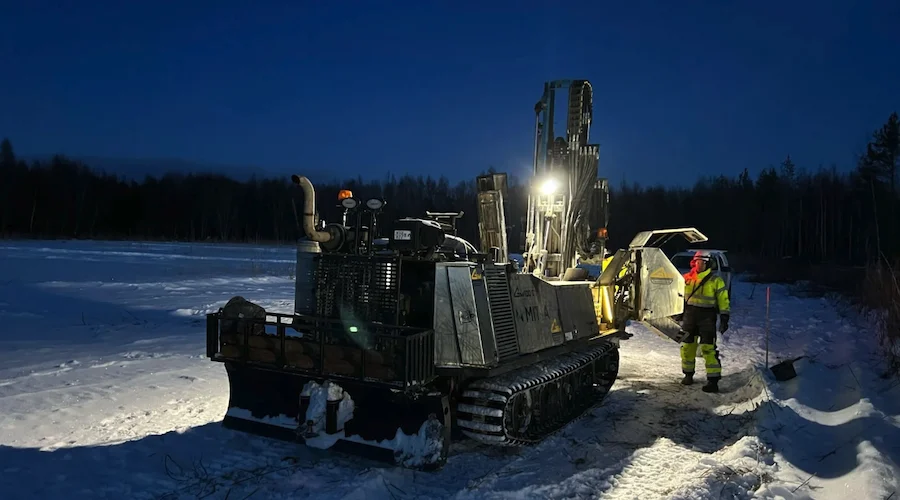
The recent announcement of significant rare earth intercepts at European Resources’ (ASX: ERE) Korsnäs project in Finland has once again ignited discussions about Europe’s capacity to secure its own supply of these critical minerals. While the promising drill results, including an exceptional interval of 31.5 meters grading 4,902 parts per million (ppm) Total Rare Earth Oxides (TREO) and a notable proportion of high-value neodymium and praseodymium (NdPr) at 28-30% of the rare earth mix, underscore the continent’s untapped geological potential, they simultaneously amplify a more profound strategic imperative: the urgent need to develop robust processing and refining capabilities. This development is not merely about finding deposits; it is about building the entire industrial value chain necessary to transform raw ore into the finished products essential for the green and digital transitions.
The Korsnäs project, located in a region with a well-established mining heritage, stable regulatory environment, and reliable infrastructure, presents an attractive proposition for resource development from a European policy perspective. The presence of monazite and apatite in the mineralization, as indicated by early assessments, suggests potential processing routes that could yield favorable recoveries. However, these same mineralogical characteristics can introduce complexities. Monazite deposits often contain trace amounts of naturally occurring radioactive materials (NORMs) such as thorium and uranium. While not inherently prohibitive, their presence necessitates stringent regulatory oversight concerning residue management and transport, particularly within Europe’s rigorous environmental frameworks. This aspect of project development, often overlooked in initial discovery headlines, can significantly influence timelines, costs, and public acceptance.
The significance of the NdPr component within the Korsnäs results cannot be overstated. Neodymium and praseodymium are the linchpins of high-strength permanent magnets, indispensable for the functioning of electric vehicles, wind turbines, and a wide array of advanced defense and technology systems. As Europe strives for "strategic autonomy" in critical raw materials, as articulated in initiatives like the EU Critical Raw Materials Act, securing a domestic supply of magnet rare earths ranks among the highest priorities. Yet, the journey from a promising drill core to a secure supply chain is fraught with challenges that extend far beyond the geological discovery phase.
The Processing Bottleneck: A Deeper Dive
The global rare earth sector has consistently demonstrated that the most significant performance gaps and economic hurdles are rarely encountered in the mining phase itself. Instead, the true complexities and substantial capital expenditures are typically concentrated in the downstream processing, particularly in the chemical separation of individual rare earth elements and the subsequent refining into marketable products. Internal analyses from industry experts, such as those at GEM Mining Consulting, indicate that processing plants often represent the majority of a rare earth project’s total capital cost, frequently dwarfing the investment required for mining infrastructure.
While high-grade ore is undoubtedly beneficial for project economics, the ultimate success and bankability of a rare earth project are frequently determined by the design, efficiency, and robustness of its processing flowsheet. Intricate and specialized processing circuits can lead to extended development timelines and escalated costs, especially in jurisdictions with demanding environmental permitting processes. European Resources appears to recognize this critical juncture, having already initiated metallurgical test work and downstream processing studies. Collaborations with entities like Australia’s ANSTO, focusing on pre-leach and acid bake test work, are crucial steps in informing strategic decisions regarding separation pathways and processing plant design. These technical studies, though less sensational than drill results, may ultimately prove more pivotal in the project’s long-term viability.
Furthermore, the composition of the rare earth mix is as vital as the overall grade. While TREO provides a general measure, it is the concentration of economically significant elements like NdPr that dictates a deposit’s strategic value. Many rare earth deposits are rich in elements like cerium and lanthanum, which have industrial applications but generally command lower market prices and face persistent oversupply. The majority of economic value in rare earth projects typically resides in NdPr, with dysprosium and terbium also playing crucial roles in high-temperature magnet applications. Consequently, a deposit with a moderate TREO grade but a strong NdPr share can be of greater strategic importance to magnet supply chains than a higher-grade deposit dominated by less valuable rare earths. The relatively high NdPr proportion at Korsnäs therefore significantly enhances its potential relevance to meeting Europe’s magnet production needs.
Europe’s Strategic Horizon: Meeting Ambitious Targets
The European Union’s strategic objectives for critical raw materials are ambitious and time-bound. The EU Critical Raw Materials Act, for instance, has set benchmarks for domestic capabilities across the entire value chain by 2030. These targets include extracting 10% of annual EU demand within the Union, processing 40% domestically, and sourcing 25% through recycling. These goals necessitate a paradigm shift in how new resource discoveries are evaluated, moving beyond mere extraction potential to encompass the entire industrial ecosystem.
While a mine in Finland, such as Korsnäs, could contribute to the extraction targets, Europe’s most significant strategic vulnerability lies in its limited processing and separation capacity. If rare earth ores mined within Europe are still exported for separation and refining, the continent remains susceptible to the very supply chain disruptions that have spurred its critical minerals strategy.
The geopolitical landscape further complicates this scenario. Global rare earth supply chains are profoundly influenced by export controls, industrial policies of dominant producers, and prevailing geopolitical tensions. China’s long-standing dominance in the rare earth sector is largely attributable to its extensive and integrated separation and refining infrastructure, rather than solely geological advantages. Consequently, any tightening of export conditions can rapidly impact manufacturers worldwide.
Policy Innovations and the Path Forward
Recent policy discussions in Western nations suggest a growing recognition of the downstream processing challenge. In the United States, for example, proposals have emerged for preferential trade zones for critical minerals, potentially incorporating enforceable price floors. These mechanisms aim to stabilize supply, mitigate price volatility, and foster investment in domestic processing capabilities by reducing the risk of price undercutting from established global suppliers. Analysts are observing that these ideas are being discussed in conjunction with coordinated trade rules and longer-term contracting models designed to enhance the financial viability of downstream processing projects.
For the rare earth sector, such innovative financial and trade mechanisms could prove decisive. The strategic significance of any new mine is intrinsically linked to its ability to feed competitive and secure separation and refining capacity. Without stable pricing structures or credible offtake agreements, attracting the substantial investment required for new processing plants outside of established hubs remains a formidable challenge.
Beyond Geological Discovery: Building Industrial Capacity
The story of the Korsnäs project, therefore, extends far beyond the borders of Finland and the implications of its geological findings. While it demonstrates that Europe possesses promising rare earth geology, including deposits with a strong potential for supplying magnet manufacturers, the continent’s long-term success in achieving critical mineral security will hinge less on what is unearthed and more on what is constructed above ground. This includes the development of state-of-the-art processing plants, advanced separation technologies, robust residue management systems, and the cultivation of enduring relationships with industrial buyers.
The Korsnäs project may indeed serve as an important geological signal, indicating the presence of valuable resources. However, its transformation into a strategically vital supply asset will ultimately depend on Europe’s collective ability to translate geological discovery into tangible industrial capability. This requires a concerted effort involving exploration companies, technology providers, governments, and financial institutions to build a comprehensive and resilient rare earth value chain. The timeline for achieving these ambitious goals is pressing, with the EU’s 2030 benchmarks serving as a critical impetus for action. The coming years will be decisive in determining whether Europe can successfully navigate the complex landscape of critical mineral supply and establish a truly secure and sustainable future.
Alina Karpunina is a project manager at GEM Mining Consulting, a Chile-based industrial engineering firm specializing in strategy, analytics, evaluation, and optimization services for the global mining industry.