Gilang Muhammad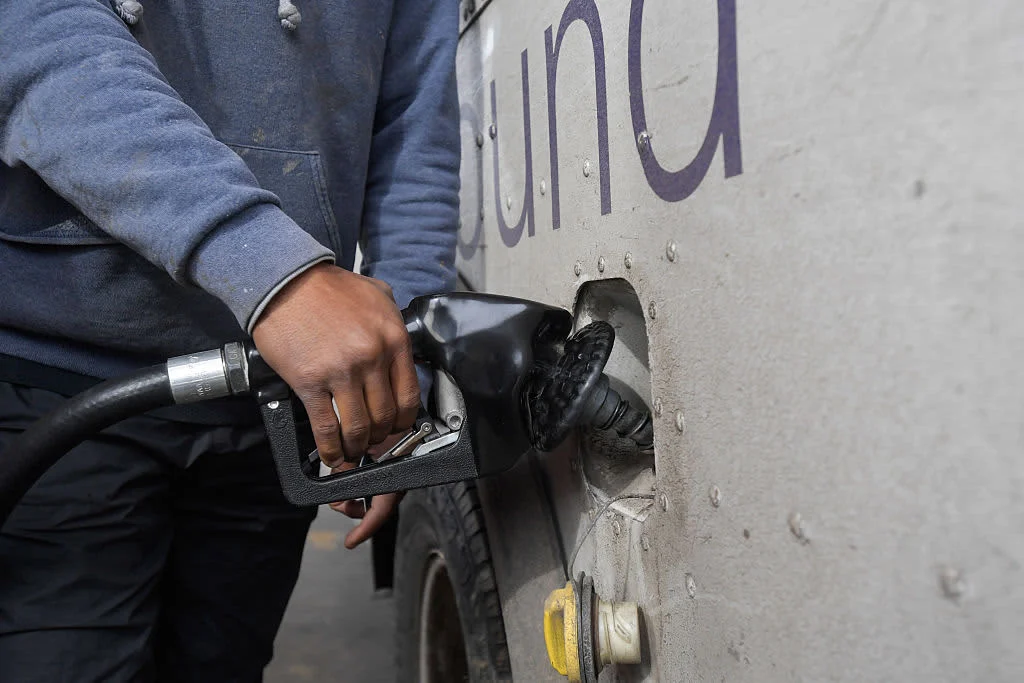
The U.S. economy and global financial markets are once again grappling with the formidable threat of stagflation, a perilous combination of high inflation and sluggish economic growth. This renewed apprehension has been triggered by a confluence of adverse factors: crude oil prices spiking to $100 a barrel, a discernible paralysis in the job market, and persistent inflationary pressures that continue to defy the Federal Reserve’s target. The situation presents a particularly challenging dilemma for policymakers, as traditional stimulative measures designed to boost growth, such as interest rate cuts or increased government spending, risk exacerbating the very inflation they seek to control.
A photograph taken on Monday, March 2, 2026, depicting a driver refueling a vehicle at a Wawa gas station in Media, Pennsylvania, starkly illustrates the immediate and tangible impact of rising energy costs on everyday Americans. This image, captured by Matthew Hatcher for Bloomberg via Getty Images, serves as a visual precursor to the broader economic anxieties now gripping the nation.
The Unfolding Energy Crisis and Geopolitical Instability
The latest surge in global energy prices stems directly from an escalation of geopolitical tensions in the Middle East. Markets were profoundly rattled on Thursday, March 11, 2026, by the prospect of prolonged fighting following a U.S.-Israeli attack on Iran, and the very real threat of a blockage of the Strait of Hormuz. This critical maritime chokepoint, through which a significant portion of the world’s oil supply passes, became a focal point of investor concern. The mere possibility of its closure sent shockwaves across commodity markets.
Brent crude, the international benchmark for oil, briefly touched the critical $100 per barrel mark, signaling a dramatic shift in market sentiment. Concurrently, U.S. crude oil prices saw an approximate 8.5% increase by 10 a.m. ET on the same day, underscoring the widespread impact of the regional instability. The immediate consequence of such rapid and substantial increases in energy costs is a direct rise in prices for consumers at the pump and for businesses across various sectors, creating a pervasive inflationary environment.
Erik Norland, chief economist at CME Group, articulated the multifaceted nature of the current inflationary landscape. "I have been concerned about the threat of stagflation for a long time, in part because there are so many different inflationary pressures on the economy," Norland stated. He pointed to "huge budget deficits, inflation above target, and central banks easing policy anyway," noting that the addition of "$100 per barrel oil" significantly amplifies these existing pressures.
A Stagnant Labor Market Adds to Economic Woes
Adding to the inflationary concerns is a disconcerting slowdown in the U.S. labor market. Just shy of a week before the oil price surge, the Bureau of Labor Statistics delivered a sobering report for February 2026: the economy lost 92,000 jobs, and the unemployment rate edged higher to 4.4%. This weak jobs report was not an isolated incident but rather a continuation of a pattern of stagnant job growth that had commenced in early 2025.
The overall job growth for the entirety of 2025 totaled a mere 116,000 positions, a figure that was 5,000 less than the monthly average recorded in the preceding year. This stark comparison raised fresh alarms that the robust growth spurt experienced through most of the previous year had dissipated, giving way to a period of economic deceleration. A persistently sluggish labor market has profound implications, potentially dampening consumer spending—which accounts for over two-thirds of the U.S. economic engine—and undermining overall economic confidence.
Persistent Inflationary Pressures Defy the Fed’s Target
Simultaneously, inflation metrics remain stubbornly elevated, well above the Federal Reserve’s mandated 2% target. Core inflation, as measured by the Personal Consumption Expenditures (PCE) price index—the Fed’s preferred gauge—stood at 3% in February 2026, a full percentage point above the central bank’s goal. While the Consumer Price Index (CPI), another key measure, indicated little change in inflation for February, it too remained above the Fed’s target, signaling that broad price pressures are far from subdued.
The combination of rising energy costs and existing inflationary trends paints a challenging picture. Ed Yardeni, founder of Yardeni Research, highlighted an often-overlooked consequence of rising oil prices: their potential to exacerbate food inflation. Oil is a crucial component in the production of fertilizers, and an increase in its cost directly translates to higher agricultural input costs, which are then passed on to consumers as more expensive food items. This creates a broader inflationary spiral that impacts household budgets on multiple fronts.
Stagflation Flashback: Echoes of Past Economic Crises
The specter of stagflation is not new to the U.S. economy, although its manifestations have varied in severity. The economy last experienced an oil-induced stagflationary jolt in 2022, following Russia’s invasion of Ukraine. While significant, that episode did not reach the severe, prolonged pattern witnessed in the 1970s, which was characterized by rampant inflation, high unemployment, and negligible growth. Similar fears also emerged more recently in April 2025, when the Trump administration implemented aggressive tariffs, leading to concerns about trade-induced price increases and slowing economic activity.
However, as many economists and Wall Street strategists observe, numerous stagflation threats have surfaced over the years, with most failing to fully materialize as the economy demonstrated resilience and stabilized. The critical factor in the current scenario, according to experts, is the duration of the Middle East crisis and the associated oil price elevation.
Jim Caron, chief investment officer of portfolio solutions at Morgan Stanley Investment Management, elaborated on this crucial distinction. "Higher oil prices, higher inflation, that leads to a shock," Caron explained. "But if oil prices stay up for long enough, then it becomes a growth scare, so then bond yields will start to come down. If bond yields are coming down because people are worried about growth, then you’re in the stagflation mode." This nuanced perspective underscores that a short-term price spike might be absorbed, but a sustained period of high energy costs risks fundamentally altering economic trajectories.
President Donald Trump’s promise of a swift resolution to the Iran situation, if realized within a few weeks, could mute any lasting stagflationary shock. However, while oil futures currently point to lower prices through the year, such forward-looking indicators can often prove unreliable in the face of rapidly evolving geopolitical events.
The Federal Reserve’s Unenviable Conundrum
The confluence of high inflation and a weakening labor market presents a profound challenge for the Federal Reserve, which operates under a dual mandate: to foster maximum employment and maintain stable prices (i.e., control inflation). In normal circumstances, these goals often align, but during periods of stagflation, they become acutely contradictory.
Prior to the U.S.-Israeli attack on Iran, futures traders had largely priced in a June 2026 rate cut from the Fed, with at least one more expected before the end of the year. The escalating crisis, however, has significantly altered these expectations. The first anticipated rate cut has now been pushed out to September 2026, with a second reduction not foreseen until late 2027. This recalibration reflects the market’s belief that the central bank will prioritize defending its 2% inflation goal over providing stimulus to a labor market showing signs of distress. The implied fed funds rate by the end of 2026 has accordingly shifted to 3.345% from its current 3.64%.
Bond yields have predominantly risen during the Iran crisis, a clear indication that investors are pricing in an inflation scare from the oil price surge. This upward movement in yields reflects a demand for higher compensation from lenders due to the increased risk of inflation eroding the value of future returns.
"This is probably the worst scenario for monetary policy, and we will probably hear the term stagflation repeated once again together with an ‘Iranian crisis,’" wrote Eugenio Aleman, chief economist at Raymond James. While acknowledging the severity of the situation, Aleman suggested that Fed officials might initially "wait to get more data on the risks for their dual mandate between inflation and employment" before making any drastic policy shifts. Historically, Fed officials have often attempted to "look through" temporary gyrations in energy prices when formulating long-term policy, but extended pressures inevitably influence their decisions.
Ed Yardeni, a veteran market observer, has taken a more cautious stance, raising his odds of a 1970s-style stagflation scenario to 35%. He views the ongoing Iran conflict as "the latest stress test of the U.S. economy’s resilience since the start of the decade," highlighting the fragility of the current economic environment.
Broader Economic Signals and Potential Resilience
Despite the significant headwinds, other economic indicators suggest that the U.S. economy may possess some underlying resilience. The Atlanta Fed, for instance, is tracking second-quarter GDP growth at 2.1%. While this represents a notable step down from the robust growth observed in the prior three quarters, it still signifies a relatively strong expansion rather than outright contraction.
Furthermore, reports released last week indicated that both the manufacturing and services sectors experienced expansion during February 2026. This broad-based growth in economic activity provides a counterpoint to the weak labor market figures, suggesting that some parts of the economy remain robust. However, not all indicators are positive, as January 2026 retail sales numbers showed a decline of 0.2%, pointing to some softening in consumer demand even before the latest energy shock.
Carol Schleif, chief market strategist at BMO Private Wealth, offered a perspective on the current situation compared to previous crises. "While $100 per barrel oil is unsettling for stocks, the inflation, stock market and earnings picture are each in a better position now than they were in March 2022, the last time that oil prices crossed $100 during the aftermath of Russia’s invasion of Ukraine," Schleif noted. She reiterated the critical importance of duration: "The key here is the duration of the elevation in prices and the conflict itself. The shorter the duration, the more likely the impact would be temporary and the economy resilient."
Ultimately, the U.S. economy finds itself at a critical juncture, navigating the treacherous waters between persistent inflation and slowing growth, exacerbated by an unpredictable geopolitical landscape. The Federal Reserve’s path forward is fraught with difficult choices, as it endeavors to balance its dual mandate in an environment where the threats of higher inflation and rising unemployment are converging. The duration and intensity of the Middle East conflict will undoubtedly be the primary determinants of whether the current economic anxieties evolve into a full-blown stagflationary crisis, or if the economy can once again demonstrate its resilience.