Clara Shinta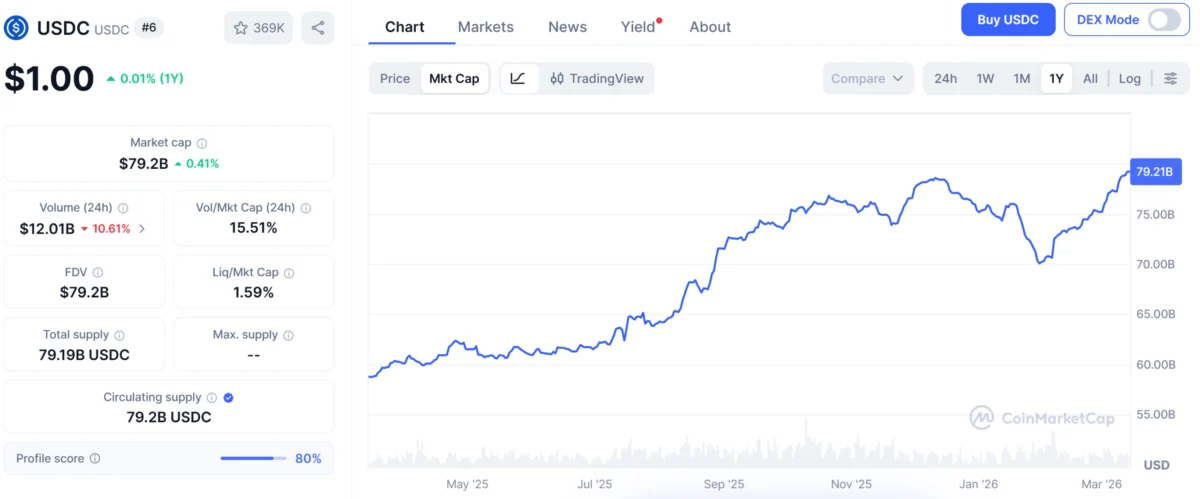
The dynamic world of cryptocurrency witnessed several pivotal developments recently, signalling shifting investor sentiment, enduring regulatory challenges, and the maturing self-governance of leading blockchain projects. USDC, a prominent dollar-pegged stablecoin, has seen its market capitalization surge to unprecedented levels, drawing attention to potential capital shifts from traditional markets, particularly in the United Arab Emirates. Simultaneously, a significant legal battle between a crypto-focused bank, Custodia, and the Federal Reserve reached a definitive conclusion, reinforcing the central bank’s discretionary powers over access to its critical payment infrastructure. Concurrently, the Ethereum Foundation, a key steward of the Ethereum blockchain, has articulated a revised mandate, emphasizing long-term decentralization and resilience over growth metrics, a move reflective of ongoing debates within the crypto community regarding the network’s future direction.
USDC’s Ascent and the Middle East’s Economic Currents
The market capitalization of USD Coin (USDC), the second-largest stablecoin by market cap, is currently nearing an all-time high of $80 billion. This remarkable surge is attributed by some analysts to heightened demand stemming from the Middle East, with specific links drawn to capital flight from the United Arab Emirates amidst perceived turbulence in Dubai’s real estate sector. According to data compiled from CoinMarketCap, USDC’s circulating supply has swelled to approximately $79.2 billion, eclipsing its previous peak of just under $79 billion recorded in December of the previous year. This expansion represents a rapid accumulation, with the stablecoin’s market cap having stood at just over $70 billion in early February and reaching $75 billion by the beginning of the current month.
Understanding USDC and its Role
USDC is a stablecoin pegged to the U.S. dollar on a 1:1 basis, meaning one USDC is intended to always be redeemable for one U.S. dollar. It is issued by Circle, a regulated financial technology company, and its reserves are typically held in highly liquid assets such as cash and short-term U.S. government treasuries. Stablecoins like USDC play a crucial role in the cryptocurrency ecosystem, acting as a bridge between volatile cryptocurrencies and traditional fiat currencies. They offer a stable store of value within the crypto market, facilitate quick and low-cost international remittances, and provide liquidity for trading pairs across various exchanges. In times of market uncertainty, stablecoins often serve as a safe haven for investors looking to de-risk from volatile assets without exiting the crypto ecosystem entirely.
The "Capital Flight" Narrative from the UAE
Rami Al-Hashimi, a self-proclaimed Dubai-based analyst, took to social media platform X (formerly Twitter) to claim that the surge in USDC demand reflects a growing desire among investors to move funds out of traditional markets. Specifically, Al-Hashimi highlighted that over-the-counter (OTC) desks in Dubai have reportedly struggled to keep up with the overwhelming demand for the stablecoin. OTC desks facilitate large-volume cryptocurrency trades directly between buyers and sellers, often preferred by institutional investors or high-net-worth individuals who wish to execute significant transactions without impacting public exchange order books.
The narrative of "capital flight" from the UAE, particularly linked to Dubai’s real estate market, suggests underlying concerns among some investors regarding regional economic stability, regulatory shifts, or perhaps geopolitical uncertainties. While Dubai has historically been a magnet for global investment and a hub for luxury real estate, any perception of instability or tightening capital controls could prompt investors to seek alternative, more liquid, or less regulated avenues for their wealth. Stablecoins, with their perceived stability and ease of cross-border transfer, present an attractive option in such scenarios, offering a digital alternative to traditional banking channels that might be subject to greater scrutiny or slower processing times.
Implications for Stablecoin Adoption and Global Capital Flows
The robust demand for USDC, particularly from a region known for its significant wealth and international capital flows, underscores the growing utility and acceptance of stablecoins as a tool for managing liquidity and wealth globally. If Al-Hashimi’s assessment accurately reflects a broader trend, it signals a significant validation of stablecoins’ role not just in crypto trading, but also as a mechanism for capital preservation and transfer in response to macroeconomic or regional specific concerns. This trend could further accelerate the integration of stablecoins into mainstream finance, pushing for clearer regulatory frameworks that acknowledge their dual function as both a digital asset and a quasi-fiat instrument. For the UAE, a sustained outflow of capital, whether through traditional or crypto channels, could prompt policymakers to re-evaluate economic strategies and regulatory environments to retain investor confidence.
Regulatory Hurdles: Custodia Bank’s Master Account Defeat
A protracted five-year legal struggle by Custodia Bank, a Wyoming-chartered special purpose depository institution (SPDI) focused on digital assets, to secure direct access to the Federal Reserve’s payment system has concluded with a definitive rejection by a U.S. federal appeals court. The U.S. Court of Appeals for the Tenth Circuit delivered a 7-3 vote, refusing to grant Custodia’s final request for an en banc rehearing, effectively upholding the Federal Reserve’s discretionary authority in granting "master accounts." This ruling marks the end of Custodia’s determined bid to bypass traditional intermediary banks and directly integrate with the central bank’s financial infrastructure.
The Significance of a Master Account

A master account, granted by a Federal Reserve Bank, allows financial institutions to hold reserves directly at the Federal Reserve and access its critical payment rails, such as Fedwire and FedACH. This direct access enables banks to settle transactions efficiently and securely without needing to rely on an intermediary bank. For a novel institution like Custodia, designed to bridge the gap between traditional finance and the emerging digital asset economy, a master account was seen as fundamental to its operational model. It would have allowed Custodia to offer more competitive and efficient services to its clients, including direct settlement of digital asset transactions, reducing costs and counterparty risks associated with relying on correspondent banks. The ability to directly access the Fed’s payment system is a hallmark of being a fully-fledged bank within the U.S. financial system.
A Chronology of Custodia’s Legal Battle
Custodia Bank, founded by Caitlin Long, initially applied for a master account with the Federal Reserve Bank of Kansas City in October 2020. This application was part of a broader strategy to create a compliant and regulated pathway for digital asset businesses to interact with the traditional banking system. However, the application faced significant delays and, ultimately, rejection by the Fed.
In June 2022, after more than 19 months without a decision, Custodia filed a lawsuit against the Federal Reserve and the Federal Reserve Bank of Kansas City, arguing that the Monetary Control Act of 1980 entitled state-chartered banks, including SPDIs like Custodia, to access Fed services and thus, a master account. Custodia contended that the Fed was intentionally delaying and ultimately denying its application, hindering its ability to operate effectively and fairly within the financial system.
Throughout 2023 and into 2024, the case progressed through the federal court system. Custodia faced setbacks in lower courts, which largely sided with the Federal Reserve, affirming its broad discretion in managing access to its payment systems. The core legal argument revolved around whether the Monetary Control Act created an absolute entitlement for all depository institutions to a master account or if the Fed retained the authority to deny applications based on various risk assessments and policy considerations. The courts consistently ruled that the Fed indeed maintains significant discretion, emphasizing its role in safeguarding the stability and integrity of the financial system. The recent decision by the Tenth Circuit to deny an en banc rehearing signifies a final judicial endorsement of the Fed’s position.
Contrasting Outcomes: Custodia vs. Kraken
The ruling against Custodia arrives shortly after Kraken, another prominent cryptocurrency platform, successfully received a master account from the Federal Reserve Bank of Kansas City on March 4. Kraken Financial, a Wyoming-chartered SPDI like Custodia, became the first crypto platform to achieve this milestone, highlighting a nuanced and perhaps inconsistent approach by the Federal Reserve to digital asset firms. While both entities operated under similar state-chartered frameworks in Wyoming, the differing outcomes suggest that the Fed’s evaluation process may involve a complex interplay of factors, including specific business models, risk management protocols, compliance histories, and potentially, the timing of their applications relative to evolving regulatory perspectives. The contrast underscores the ongoing challenges for crypto firms seeking to integrate into traditional finance, where regulatory clarity and consistent pathways remain elusive.
Implications for Crypto Integration and Regulatory Landscape
The Tenth Circuit’s decision solidifies the Federal Reserve’s gatekeeping role in the U.S. financial system, particularly concerning novel institutions like crypto banks. For Custodia, this ruling likely necessitates a re-evaluation of its operational strategy, potentially forcing it to continue relying on correspondent banking relationships rather than direct Fed access. More broadly, the outcome sets a significant precedent for other crypto-focused entities aspiring to obtain master accounts. It underscores that while state-level charters for crypto banks exist (like Wyoming’s SPDI framework), federal access to critical financial infrastructure is not guaranteed and remains subject to the Federal Reserve’s stringent oversight and discretionary powers. This legal clarity, albeit unfavorable to Custodia, may compel future applicants to demonstrate an even higher degree of regulatory compliance, risk mitigation, and alignment with central bank policy objectives to gain entry into the traditional financial system.
Ethereum’s Evolving Vision: A Mandate for Decentralization
The Ethereum Foundation, the non-profit organization supporting the development of the Ethereum blockchain, has published a comprehensive new document outlining its refined role and long-term priorities. This mandate emerges at a crucial juncture for the Ethereum network, which faces escalating discussions and questions surrounding its decentralization, scalability, and the influence of various ecosystem players, including Layer 2 (L2) networks. The core of the new directive emphasizes a commitment to safeguarding Ethereum’s foundational values rather than pursuing conventional growth or product-centric metrics, and notably introduces a "walkaway test" to guide its future actions.
The Foundation’s Evolving Role and Core Values
Since its inception, the Ethereum Foundation has played a pivotal role in funding research, coordinating development, and fostering the growth of the Ethereum ecosystem. However, as the network has matured and grown into a multi-billion-dollar global infrastructure, its centralized influence has come under increasing scrutiny. The new mandate seeks to redefine this role, positioning the Foundation less as a central developer and more as a steward dedicated to preserving Ethereum’s intrinsic properties.

The document explicitly states that the Foundation will prioritize protecting core values such as censorship resistance, privacy, and open-source development.
- Censorship resistance refers to the network’s ability to process transactions and uphold its state without interference from any single entity, government, or powerful group. This is fundamental to a truly decentralized and permissionless system.
- Privacy in this context relates to the ability for users to transact and interact on the network with an appropriate level of anonymity and control over their data, avoiding pervasive surveillance.
- Open-source development ensures that the underlying code of Ethereum remains publicly accessible, auditable, and modifiable by anyone, fostering transparency, security, and community-driven innovation.
By focusing on these principles, the Foundation aims to differentiate itself from traditional technology companies that typically chase market share, user growth, or specific product KPIs. Instead, its success will be measured by the network’s resilience, its ability to withstand external pressures, and its continued adherence to its original decentralized ethos.
The "Walkaway Test" and a Self-Sufficient Future
Perhaps the most salient feature of the new mandate is the introduction of a "walkaway test." This concept posits that the Ethereum network should eventually become robust and self-sufficient enough to operate effectively even if the Ethereum Foundation were to cease to exist or significantly reduce its involvement. This radical vision underscores a commitment to true decentralization, where the network’s ongoing development, maintenance, and governance are entirely distributed among its global community of developers, validators, and users, rather than being dependent on a single organizational entity.
Practically, achieving the "walkaway test" means the Foundation will focus on initiatives that empower the broader ecosystem to thrive independently. This includes:
- Funding public goods research: Investing in fundamental research that benefits the entire network, such as improvements to consensus mechanisms, cryptography, and scalability solutions, without dictating specific product roadmaps.
- Supporting diverse client implementations: Encouraging and funding multiple independent teams to develop and maintain Ethereum client software, reducing single points of failure.
- Fostering decentralized governance: Supporting mechanisms and tools that enable the community to collectively make decisions about the network’s future.
- Promoting education and documentation: Ensuring that knowledge about Ethereum is widely accessible, enabling new developers and users to contribute and participate.
By consciously working towards its own obsolescence as a central authority, the Ethereum Foundation aims to cement Ethereum’s status as a truly decentralized public utility, resilient to the influence of any single entity.
Contextualizing Vitalik Buterin’s Concerns
This strategic shift by the Ethereum Foundation aligns closely with recent public comments made by Ethereum co-founder Vitalik Buterin. Buterin has frequently voiced concerns regarding the network’s long-term direction, particularly in light of the rapid proliferation and increasing reliance on Layer 2 (L2) scaling solutions. While L2s like rollups are crucial for enhancing Ethereum’s transaction throughput and reducing costs, Buterin has cautioned against potential centralization risks if these L2s become too dominant or if their underlying infrastructure is not sufficiently decentralized. He has emphasized the imperative to preserve Ethereum’s core principles, such as censorship resistance and resilience, even as the network scales. The Foundation’s new mandate can be seen as a direct response to these concerns, providing a guiding framework to ensure that growth and scalability do not come at the expense of decentralization.
Implications for Ethereum’s Development and Governance
The Ethereum Foundation’s new mandate signals a maturing phase for the network, moving from a period of rapid foundational development to one of reinforcing its core principles and ensuring long-term sustainability. This strategic pivot could have profound implications for Ethereum’s future:
- Enhanced Decentralization: By consciously stepping back, the Foundation empowers the broader community to take greater ownership, potentially leading to a more diverse and resilient development landscape.
- Shift in Funding Priorities: Expect to see the Foundation’s grants and funding initiatives increasingly directed towards public goods, academic research, and infrastructure projects that foster decentralization and security, rather than commercial applications or specific L2 projects.
- Community Empowerment: The "walkaway test" implicitly challenges the community to rise to the occasion, fostering more robust governance discussions and independent development efforts.
- Reduced Single Point of Failure: A less central Foundation makes the network less vulnerable to pressure from external entities, whether regulatory or commercial, aligning with the blockchain’s original ethos of sovereign digital infrastructure.
In essence, the Ethereum Foundation is aiming to ensure that Ethereum lives up to its promise as a global, permissionless, and censorship-resistant platform, guided not by corporate ambition but by the collective will of its decentralized community. This move represents a significant internal reorientation that could shape the trajectory of one of the world’s most influential blockchain networks for decades to come.