Tari Putri Malika
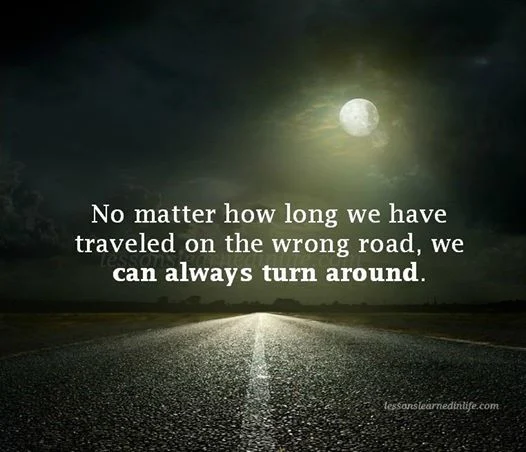
The field of psychological research has historically focused on incremental behavioral modifications—helping individuals stop smoking, improve sleep hygiene, or manage daily stress—yet a new paradigm emerging in late 2026 suggests a shift toward the more profound challenge of "changing life itself." As of November 29, 2026, clinicians and behavioral scientists are increasingly investigating the mechanisms required for a total redirection of one’s life path. When an individual realizes that their current trajectory—be it professional, relational, or existential—is fundamentally misaligned with their core values, the process of "turning around" requires more than mere willpower. It necessitates a strategic engagement with emotional discomfort and a structural reliance on communal support.
The Catalyst of Emotional Arousal in Behavioral Shifts
A cornerstone of contemporary psychological theory is the role of emotional arousal as a catalyst for change. While traditional self-help often emphasizes the avoidance of pain, clinical data suggests that fully experiencing the discomfort of being on the "wrong path" is the essential first step in the transformation process. Research indicates that individuals often engage in "avoidance behaviors"—such as substance abuse, excessive social media consumption, or compulsive "partying"—to dull the visceral pain of a misaligned life.
According to data released in early 2026 by the Global Behavioral Health Institute, approximately 64% of individuals reporting high levels of life dissatisfaction also reported using at least three distinct "numbing" mechanisms to avoid confronting their reality. However, the study also found that those who allowed themselves to reach a state of "acute emotional awareness" were 4.5 times more likely to successfully implement a long-term life pivot. This emotional arousal functions as a biological signal, disrupting the homeostasis of a stagnant life and providing the kinetic energy required for a total redirection.
A Chronology of the Transformation Process
The process of turning one’s life around is rarely a singular event; rather, it is a chronological sequence of psychological milestones. Based on longitudinal studies conducted between 2023 and 2026, researchers have identified a four-stage timeline for fundamental life redirection:
- The Recognition Phase (Months 1–3): This period is characterized by a growing sense of "existential friction." The individual begins to notice that their daily activities no longer provide fulfillment. This stage often involves a struggle between the desire to distract oneself and the emerging realization that change is non-negotiable.
- The Acute Discomfort Phase (Months 3–6): Here, the individual stops numbing the pain. By facing the disappointment and doubt of being on the wrong road, they experience a "catalytic crisis." This is the most volatile period, where the risk of retreating into old habits is highest, but the potential for a breakthrough is greatest.
- The Communal Integration Phase (Months 6–12): Recognizing that solitary change is rarely sustainable, the individual begins to share their mission with others. This involves moving from a "lonely activity" to a "shared mission," internalizing the support of a community or a therapeutic relationship.
- The Path Realignment (Year 1 and Beyond): The final stage involves the practical application of new directions. The "wrong road" is not forgotten but is reframed as a necessary precursor to the "right road."
The Efficacy of Shared Missions and Relational Support
One of the most significant findings in recent psychological literature is the transformative power of "shared missions." Borrowing from the success models of addiction recovery programs, such as Alcoholics Anonymous, the act of acknowledging a need for change within a community context is now seen as vital for general life transitions.
The psychological mechanism at work here is the "internalization of relationship experiences." When a person commits to changing their life in the presence of others, the process ceases to be an internal struggle of the ego and becomes a social obligation reinforced by empathy. Data from the 2025 Meta-Analysis of Therapeutic Outcomes suggests that "relational commitment"—the act of helping another person while they help you—increases the neuroplasticity associated with habit formation.
By taking on the burdens of someone else who is also seeking change, individuals report feeling "energized." This phenomenon, known as "altruistic redirection," suggests that the fastest way to heal one’s own disappointment is to become a meaningful part of someone else’s success. The transition from feeling like a "total failure" to a "valued partner" in a shared journey is often the tipping point that prevents a relapse into old life patterns.

Supporting Data: The Cost of the "Wrong Path"
The urgency of this psychological research is underscored by the economic and social costs of life misalignment. In a 2026 report by the International Labor Organization, it was estimated that "existential burnout"—distinct from standard occupational stress—costs the global economy $2.3 trillion annually in lost productivity and healthcare expenditures.
Furthermore, a survey of 10,000 adults conducted in mid-2026 revealed the following:
- 42% of respondents felt they were on a life path that did not reflect their true interests or talents.
- 78% of those who successfully changed their life direction cited "a specific community or mentor" as the primary reason for their success.
- only 12% of those who attempted a "solo" life pivot were able to maintain their new direction for more than eighteen months.
These statistics reinforce the premise that while the impetus for change must be internal, the architecture for change must be social.
Expert Perspectives on the "Turning Around" Methodology
Dr. Elena Vance, a lead researcher in Behavioral Transition at the University of Zurich, recently commented on the necessity of this shift in perspective. "We have spent decades telling people how to ‘fix’ their lives through optimization and efficiency," Vance stated in an October 2026 symposium. "What we are realizing now is that if the road itself is wrong, optimization only gets you to the wrong destination faster. We must give people permission to feel the pain of being lost, because that pain is the compass that points toward the turn-around."
Clinical psychologists have also noted that the "loneliness" of the wrong path is often more damaging than the "difficulty" of the change itself. By connecting with others who are also in the process of changing their paths, individuals find that their previous failures become "common ground" rather than "personal shame." This shift in perspective is critical for maintaining the long-term psychological resilience required for a total life overhaul.
Broader Implications for Mental Health and Society
The implications of these findings extend beyond individual therapy. As the workforce becomes more fluid and traditional life milestones (such as lifelong careers or early retirement) become less certain, the ability to "turn around" is becoming a core survival skill for the 21st century.
Educational institutions are beginning to integrate "Pivot Literacy" into their curricula, teaching students that life paths are not linear and that the "dead end" is a natural part of the human experience. Furthermore, corporate wellness programs are moving away from simple "stress management" toward "purpose alignment," acknowledging that an employee who feels they are on the wrong road will eventually become a liability, regardless of their skill level.
In conclusion, the research finalized in late 2026 suggests that changing one’s life is a sophisticated psychological operation that requires the embrace of emotional pain, the abandonment of numbing distractions, and the radical act of communal vulnerability. The "wrong road" does not have to lead to a dead end; instead, it can serve as the very foundation upon which a new, more authentic path is built. By transforming a solitary burden into a shared mission, the overwhelming prospect of changing "life itself" becomes a manageable, and even energizing, relationship experience. The first step is not finding the right road, but having the courage to stop and turn around.