Farhan Pambudi
The New York-based fintech firm, which enables users to convert qualitative market insights into quantitative investment portfolios via artificial intelligence, announced the closure of its $20 million seed round this week. The financing was led by the venture capital firm Adjacent, headed by Nico Wittenborn, with significant participation from prominent institutional investors including Coinbase Ventures and Union Square Ventures (USV). The round also attracted a diverse group of high-profile angel investors from the upper echelons of the technology and finance sectors, including Nat Friedman, the former CEO of GitHub and current head of product at Meta’s Superintelligence Labs; Guillermo Rauch, CEO of Vercel; Nikita Bier, the renowned social product strategist; Scott Belsky, Adobe executive and investor; and Nemil Dalal, a former Coinbase executive and current visiting partner at Y Combinator.
This latest capital infusion follows an initial $2 million pre-seed round, bringing the startup’s total funding to $22 million. The investment underscores a growing conviction among venture capitalists that "agentic finance"—a paradigm where AI agents autonomously execute complex financial strategies based on human intent—is the next frontier for retail and institutional wealth management.
The Genesis and Leadership of Supertake
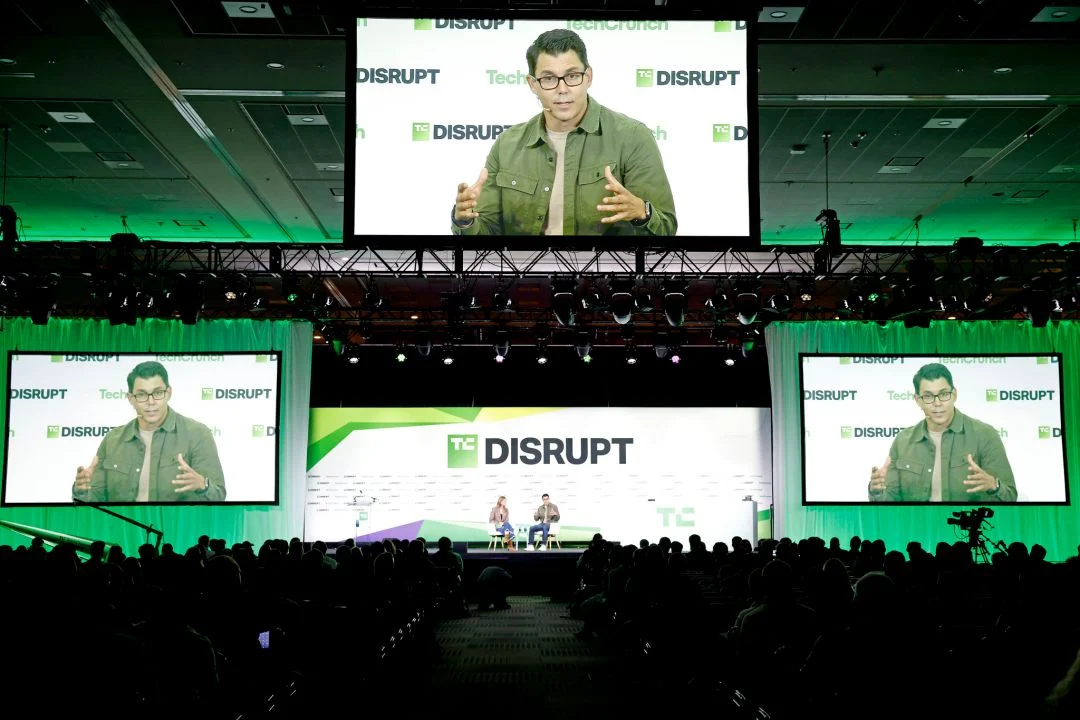
Supertake was born out of an incubation process at Union Square Ventures, spearheaded by Michael Mignano. Mignano is a veteran of the startup ecosystem, best known as the co-founder and former CEO of Anchor, the podcasting platform that was acquired by Spotify in 2019 for approximately $150 million. Following the acquisition, Mignano served as Spotify’s "Head of Talk," overseeing the platform’s massive expansion into the spoken-word medium. After a tenure as a venture partner at Lightspeed, where he identified early-stage opportunities in AI companies such as Suno and Granola, Mignano returned to USV as a general partner in early 2024.

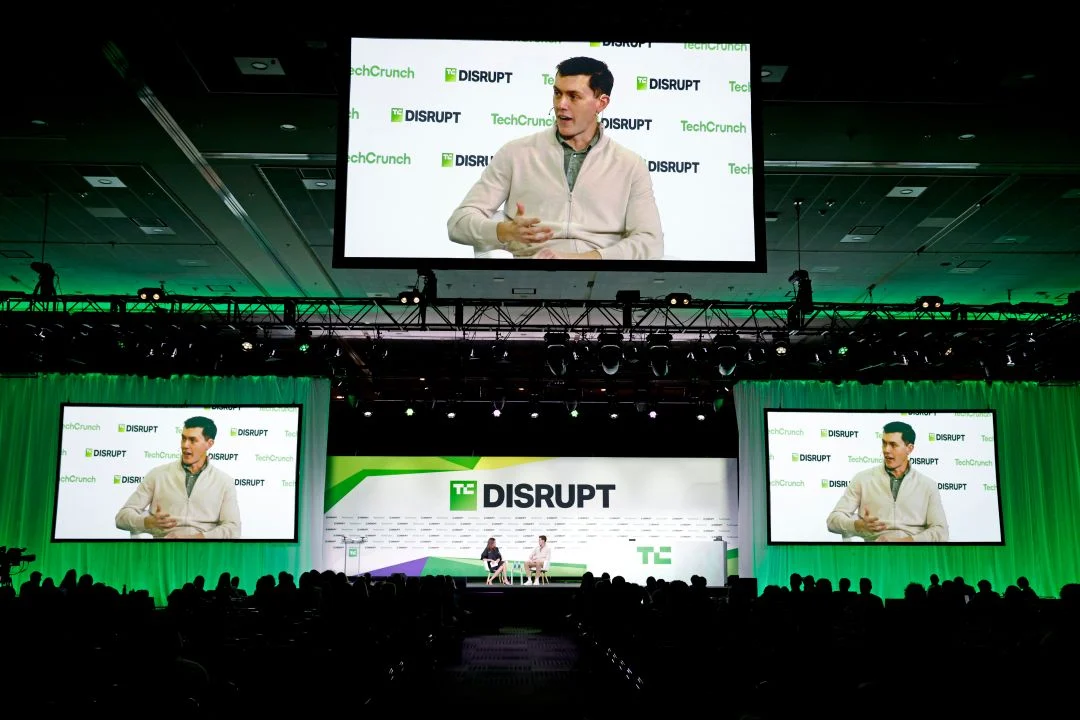
While Mignano remains the founder and executive chairman of Supertake, the day-to-day operations are led by a specialized team recruited from the forefront of the crypto and AI industries. CEO Lincoln Murr and CTO John Peterson both joined the company from Coinbase. During their tenure at the leading U.S. cryptocurrency exchange, Murr and Peterson served as heads of AI product and engineering, respectively. Their work at Coinbase was instrumental in launching pioneering initiatives such as the Coinbase AI advisor, agentic wallets, and "Coinbase for agents," providing them with the technical foundation necessary to build a secure, autonomous trading infrastructure.
Transforming Narrative Insights into Actionable Portfolios
The core value proposition of Supertake lies in its ability to bridge the gap between a user’s "takes"—subjective opinions or observations about global trends—and the technical execution of a diversified investment strategy. In the traditional retail investing model, an individual who believes a specific trend is emerging, such as the rise of longevity science or the decentralization of energy grids, must manually research relevant tickers, analyze balance sheets, and manage portfolio weighting.
Supertake simplifies this process through natural language processing (NLP) and frontier AI models. A user can describe their market thesis in plain English—for example, "I believe the trend toward ‘looksmaxxing’ and medical aesthetics will drive massive growth in pharmaceutical and cosmetic suppliers over the next five years." The Supertake AI then engages in an iterative dialogue with the user, refining the thesis and identifying a basket of assets that align with that specific outlook.
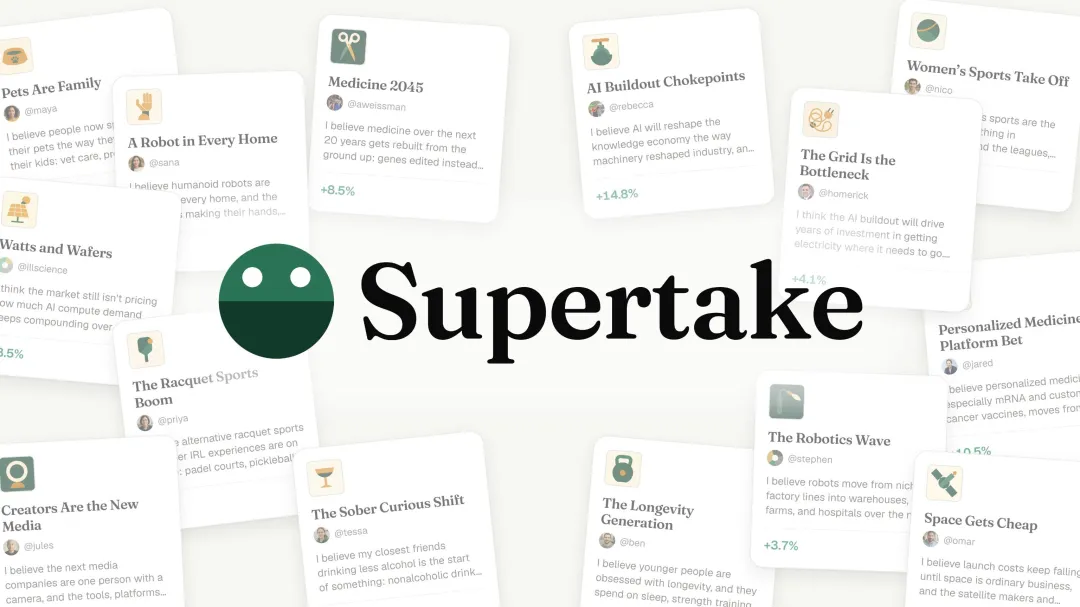
This process results in what the company calls a "take," which is essentially a bespoke, AI-managed portfolio. The platform currently integrates with major brokerages, including Robinhood and Coinbase, allowing users to deploy capital directly into these AI-generated strategies.

The Technological Architecture: Beyond Traditional Robo-Advising
Supertake’s leadership views the platform as a significant evolutionary step beyond the "robo-advisor" models popularized by firms like Betterment and Wealthfront in the 2010s. While traditional robo-advisors typically allocate funds into a limited set of low-cost ETFs based on a user’s risk tolerance, Supertake utilizes "agentic" workflows. This means the AI does not just set a static allocation; it actively monitors the market, iterates on the initial thesis, and can theoretically pivot as real-world conditions change.
Under the hood, the platform leverages large language models (LLMs) from leading providers like OpenAI and Anthropic, combined with proprietary software designed to constrain the AI’s actions. These "guardrails" are essential for maintaining user trust in a system that manages liquid assets. The company has implemented several layers of security and operational limits:
- Explicit Consent for Transfers: The AI agents have no authority to deposit or withdraw funds. All movements of capital into or out of the brokerage account require human authorization.
- Drift Limits: To ensure a portfolio does not deviate too far from the user’s original intent, the system enforces drift limits that trigger rebalancing or notifications if asset weights shift due to market volatility.
- Allow and Deny Lists: Users and the platform can restrict the AI from trading specific assets, ensuring compliance with personal ethics or regulatory requirements.
- Credential Isolation: The AI agents never have direct access to a user’s brokerage credentials, utilizing secure API integrations instead.
- Real-time Monitoring: The platform employs anomalous activity detection to flag any trade that falls outside of the expected parameters of the user’s "take."
Market Context: The Rise of Social and Agentic Trading
Supertake also incorporates a social layer, featuring a leaderboard where users can track the performance of various "takes." This allows other investors to browse high-performing or popular investment theses and "co-invest" alongside the originators. This social proof mechanism mirrors successful features found in platforms like eToro but replaces the manual copying of individual traders with the copying of AI-driven strategies.
The startup enters the market at a time when retail participation in the stock market remains at historic highs, yet many investors feel overwhelmed by the sheer volume of data and the speed of modern markets. According to recent market data, retail trading accounted for nearly 20% of total stock market volume in the United States over the last two years. However, the "retail alpha"—the ability for individual investors to outperform the market—remains elusive for those without institutional-grade tools. Supertake aims to close this gap by providing a "sophisticated analyst in your pocket."

Future Roadmap: Derivatives, Shorts, and Prediction Markets
While the platform currently focuses on long-equity and cryptocurrency portfolios, the roadmap for Supertake involves a significant expansion into more complex financial instruments. The founders have expressed intent to incorporate short selling, derivatives, perpetual contracts, and long-exposure strategies.
Furthermore, the company is eyeing the burgeoning prediction market space. Platforms like Polymarket have seen a surge in volume, particularly surrounding geopolitical events and elections. Supertake intends to partner with existing prediction market providers to allow users to turn short-term predictions into investable positions. While CEO Lincoln Murr clarifies that Supertake itself is not a prediction market, the ability to translate natural language predictions into a set of underlying assets provides a bridge between speculative forecasting and traditional asset management.
Analysis of Implications for the Financial Services Industry
The rise of Supertake and similar agentic finance startups poses a potential challenge to traditional wealth management firms. If AI can effectively manage a personalized portfolio based on a user’s unique worldviews at a fraction of the cost of a human advisor, the fee structures of legacy institutions may come under further pressure.
However, the "trust gap" remains the primary hurdle. As Murr noted, the transition to agentic finance is analogous to the adoption of self-driving cars. While consumers were initially hesitant to use basic cruise control, the proliferation of Level 2 and Level 3 autonomous systems—and the rise of robotaxi services like Waymo—has demonstrated that trust scales with proven safety and utility. Supertake’s founders are betting that as AI models become more "frontier" and reliable, the psychological barrier to letting an agent manage a brokerage account will vanish.

To demonstrate their confidence, the leadership team has committed significant personal capital to the platform. Murr and Peterson have allocated thousands of dollars to their own "takes," while Michael Mignano has reportedly placed hundreds of thousands of dollars under the management of the Supertake AI.
Strategic Growth and Employment
With the $20 million in new funding, Supertake plans to aggressively expand its headcount. The company is currently recruiting for roles in engineering, product design, and growth marketing. Although the core leadership is split between New York and Austin, the company is moving toward a hybrid work model to attract top-tier talent in the competitive AI and fintech sectors.
The successful funding of Supertake represents a pivotal moment in the intersection of generative AI and personal finance. By shifting the focus from "stock picking" to "insight picking," the startup is attempting to redefine what it means to be an investor in the 21st century. As the beta period continues and the waitlist opens to more users, the financial industry will be watching closely to see if "agentic finance" can deliver the democratization of wealth management it promises, or if the inherent volatility of AI-driven decisions presents new risks for the retail public.