Clara Shinta
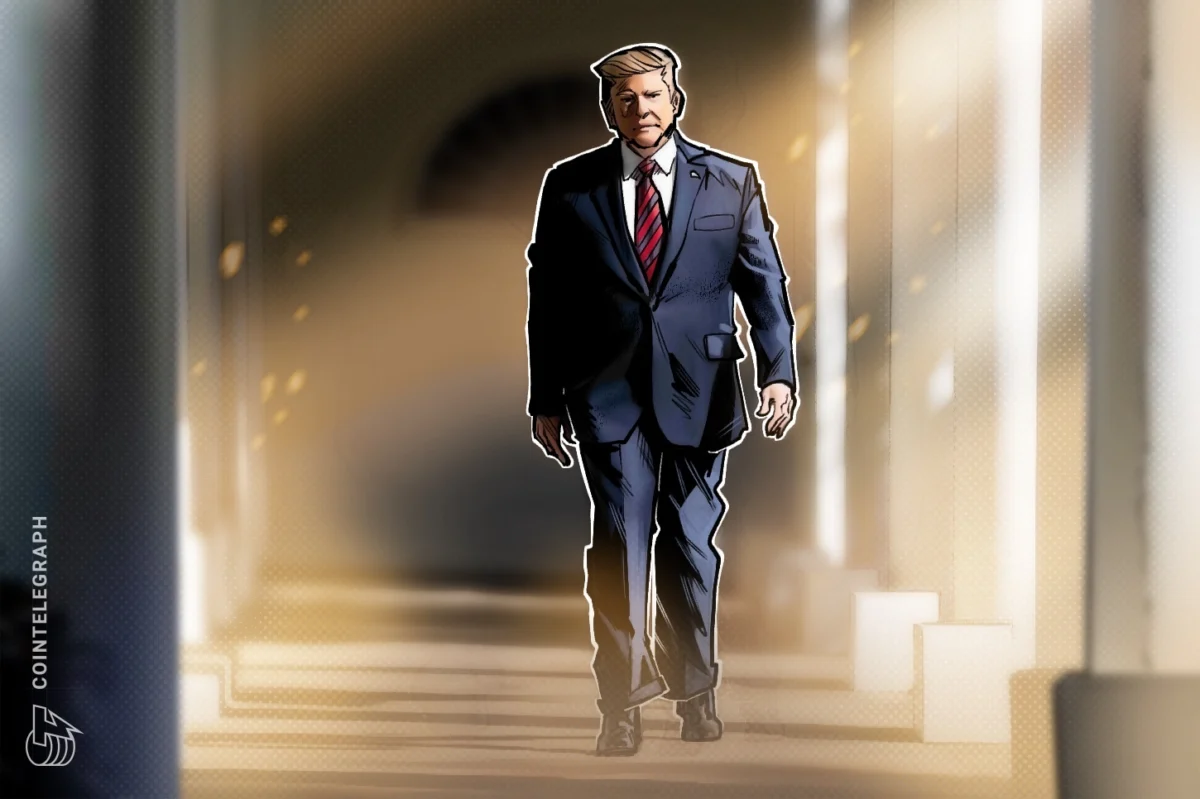
US President Donald Trump has once again publicly urged the board of Nvidia, the world’s leading artificial intelligence (AI) chipmaker, to reinstate its co-founder, Jensen Huang, days after the company indicated it had no plans for his return. The renewed call, delivered via a post on Truth Social on Monday, November 23, 2026, underscores a high-stakes confluence of corporate governance, national economic strategy, and the intensifying geopolitical competition over advanced technology. Trump stated, "I hope the Board of Nvidia rehires Jensen Huang. It would be the best thing for the Company, and also, for the U.S.A.," echoing sentiments he first expressed last Friday following a trip to Asia, where he reportedly suggested Huang should "make a big apology and go back." This presidential intervention comes amidst a complex backdrop involving alleged non-compliance with stringent US export controls, a fluctuating stance from Treasury Secretary Scott Bessent, and significant market speculation regarding Nvidia’s future leadership.
The Huang Conundrum: A Closer Look at Nvidia’s Leadership Vacuum
Jensen Huang is not merely a former executive; he is the visionary co-founder who built Nvidia into a technological titan. Under his decades-long leadership, Nvidia revolutionized graphics processing with its GPUs, expanding their application far beyond gaming into professional visualization, data centers, and, most critically, artificial intelligence. Nvidia’s CUDA platform and its ecosystem of developers have become the de facto standard for AI compute, granting the company a near-monopoly in certain critical segments of the AI hardware market. Its market capitalization soared, reflecting its pivotal role in the global tech landscape.
Huang’s departure from Nvidia, the precise circumstances of which remain subject to intense speculation and corporate discretion, reportedly occurred earlier this year. While no official statement from Nvidia or Huang directly confirmed a "firing," the language of "rehire" and "reinstate" used by Trump and other parties strongly suggests an involuntary separation or a significant disagreement that led to his exit. Industry insiders and government officials have largely linked his departure to heightened scrutiny over Nvidia’s compliance with increasingly stringent US export controls, particularly those aimed at restricting China’s access to advanced semiconductor technology. These controls, implemented and expanded by the US Commerce Department, aim to curb Beijing’s military and technological ambitions by denying it access to the most powerful AI chips and chipmaking equipment.
For a company like Nvidia, with significant global sales and a substantial presence in the Chinese market, navigating these regulations has been a formidable challenge. The development of "de-featured" or customized chips for the Chinese market, designed to fall below US export thresholds, has been one strategy, but even these efforts have faced evolving regulatory hurdles and intense political pressure. The alleged non-compliance that reportedly led to Huang’s removal would represent a significant breach of these critical national security directives, potentially exposing Nvidia to massive fines and further restrictions.
Treasury’s Shifting Sands: Secretary Bessent’s Evolving Position
Adding another layer of complexity to the narrative is the evolving public position of US Treasury Secretary Scott Bessent. Just weeks prior, Bessent had been a vocal proponent of a "dramatic shake-up" at Nvidia, advocating for the board to "look outside for new leadership" in light of the company’s compliance issues. His earlier statements indicated a strong desire for a clear break from past practices, suggesting that current leadership was deemed insufficient to navigate the intricate web of geopolitical tensions and regulatory demands.
However, in a Sunday appearance on "Face the Nation" with Margaret Brennan, Bessent’s tone notably softened when pressed on Trump’s recent support for Huang. Asked directly if Trump’s stance contradicted his earlier calls, Bessent declined to explicitly endorse or reject Huang’s return. Instead, he offered a more cautious, albeit pointed, remark: "I think we have to see where the buck stops," a clear allusion to the ultimate responsibility for any potential non-compliance with US export controls. This statement, while not directly naming Huang, implicitly places the onus of accountability squarely on the leadership responsible for corporate strategy and operational execution. Bessent’s apparent pivot could be interpreted in several ways: a strategic alignment with presidential directives, a recognition of the complexities involved in corporate leadership changes, or an internal re-evaluation of the most effective path forward for a strategically vital company like Nvidia. The Treasury Department, under Bessent’s leadership, plays a critical role in enforcing sanctions and financial regulations related to national security, making its stance on a company like Nvidia particularly influential.
The Export Control Nexus: Why Huang’s Departure Matters
The alleged reasons behind Jensen Huang’s departure are deeply intertwined with the broader geopolitical struggle between the United States and China for technological supremacy. Since 2022, the US government has implemented a series of sweeping export controls designed to prevent China from acquiring advanced semiconductors, chip manufacturing equipment, and AI software. These restrictions primarily target high-end GPUs essential for training large AI models and supercomputers, critical components for both commercial innovation and military applications.
Nvidia, as the dominant supplier of these high-performance GPUs, found itself at the epicenter of this technological decoupling. The company’s A100 and H100 chips, which are central to modern AI development, were specifically targeted by US regulations. In response, Nvidia developed modified versions, such as the A800 and H800, with reduced performance to comply with export thresholds for the Chinese market. However, even these adaptations faced ongoing scrutiny and evolving restrictions, highlighting the difficulty of balancing global business operations with national security imperatives.
The "non-compliance" Bessent alluded to could range from inadvertent breaches of complex regulations to more deliberate attempts to circumvent them, or simply a failure to adequately mitigate risks associated with operating in a highly restricted environment. Regardless of the precise nature, any significant compliance lapse by a company as strategically important as Nvidia would trigger intense scrutiny from Washington, potentially leading to severe penalties, reputational damage, and a loss of investor confidence. The government’s concern extends beyond direct sales, encompassing the potential for technology transfer, intellectual property theft, and the empowerment of rival nations through advanced computing capabilities.
Nvidia’s Dilemma: Corporate Governance vs. Political Pressure
Nvidia’s board of directors now faces an unenviable position, caught between a powerful presidential directive and its own corporate governance responsibilities. On one hand, a direct call from the President of the United States carries immense political weight and could influence regulatory oversight, government contracts, and the overall business environment for Nvidia. Disregarding such a public plea might be perceived as defiance, potentially inviting further scrutiny or even punitive actions.
On the other hand, the board’s primary fiduciary duty is to its shareholders and the long-term health of the company. Reinstating a leader who may have been removed due to compliance issues, especially those touching on national security, would raise serious questions about corporate integrity, risk management, and accountability. It could signal a disregard for internal investigations, undermine public trust, and potentially expose the company to renewed legal and regulatory challenges. Furthermore, if the board genuinely believes that Huang’s continued leadership would be detrimental given the current regulatory climate or that a new direction is required, then overriding that judgment under political pressure would set a troubling precedent for corporate independence.
The board’s reported decision to rule out Huang’s return, which led to a 4% dip in Nvidia shares upon the news, suggests a firm stance rooted in their assessment of the company’s best interests. This decision likely involved extensive internal reviews, legal counsel, and consideration of market reactions. Overturning such a decision would require a compelling justification that addresses the underlying reasons for Huang’s departure and convinces shareholders that the company’s future stability and compliance are not being jeopardized.
Market Reactions and Investor Sentiment
The ongoing saga surrounding Jensen Huang’s potential return has naturally captivated market watchers and investors. Nvidia shares, already sensitive to news regarding leadership changes and export control policies, experienced a notable dip when reports emerged that the board would not reinstate Huang. This initial reaction suggests that while Huang is revered for his past contributions, investors may prioritize corporate stability, strong governance, and adherence to regulatory frameworks, especially concerning national security.
The prediction market Polymarket, a platform where traders bet on the outcome of future events, currently shows a 37% chance that Huang will rejoin Nvidia by December 31, 2027. While not a definitive indicator, these odds reflect a significant, though minority, belief among speculative investors that a return remains possible, perhaps influenced by the sustained political pressure. The relatively low probability, however, also indicates that many traders perceive the obstacles to his return – including the board’s stated position and the underlying compliance issues – as substantial.
Analysts are closely watching how this unfolds. A prolonged period of uncertainty regarding leadership or compliance could introduce volatility into Nvidia’s stock. Conversely, a clear resolution, whether it involves a new, stable leadership team or an unexpected return of Huang under revised conditions, could provide clarity and potentially stabilize investor confidence. The broader implications for the semiconductor industry are also significant, as Nvidia’s performance and strategic direction often serve as a bellwether for the entire sector, particularly in the booming AI market.
Broader Implications for US Tech Policy and Geopolitics
President Trump’s direct intervention in Nvidia’s corporate leadership decisions raises profound questions about the future of US tech policy and the relationship between the government and private enterprise. Such a high-profile presidential plea could set a precedent for increased political influence over corporate governance in strategically vital industries. While past administrations have certainly engaged with tech companies on policy matters, a direct call for the reinstatement of a specific executive is unusual and signals a potentially more hands-on approach to managing key national assets.
This development also intensifies the spotlight on the ongoing US-China tech rivalry. The alleged reasons for Huang’s departure – issues related to export control compliance – are a direct consequence of this geopolitical tension. Trump’s call to rehire Huang, while seemingly aimed at benefiting "the U.S.A.," might also be interpreted through the lens of prioritizing the immediate economic strength and technological leadership of a key American company, even if it complicates the narrative around strict export control enforcement. It could signal a potential shift in emphasis from pure enforcement to a more nuanced approach that balances national security with the economic competitiveness of American firms.
The situation underscores the increasing difficulty for multinational tech companies to navigate a bifurcated global economy. Companies like Nvidia, which rely on global supply chains for manufacturing and global markets for sales, find themselves caught between competing demands from governments. The outcome of the Jensen Huang saga will not only determine Nvidia’s future leadership but could also offer crucial insights into the evolving dynamics of corporate independence, government intervention, and the enduring struggle for technological dominance in the 21st century. The world watches to see if the board of a leading American corporation will yield to presidential pressure or firmly uphold its perceived corporate autonomy in the face of national interest directives.