Lina Wu
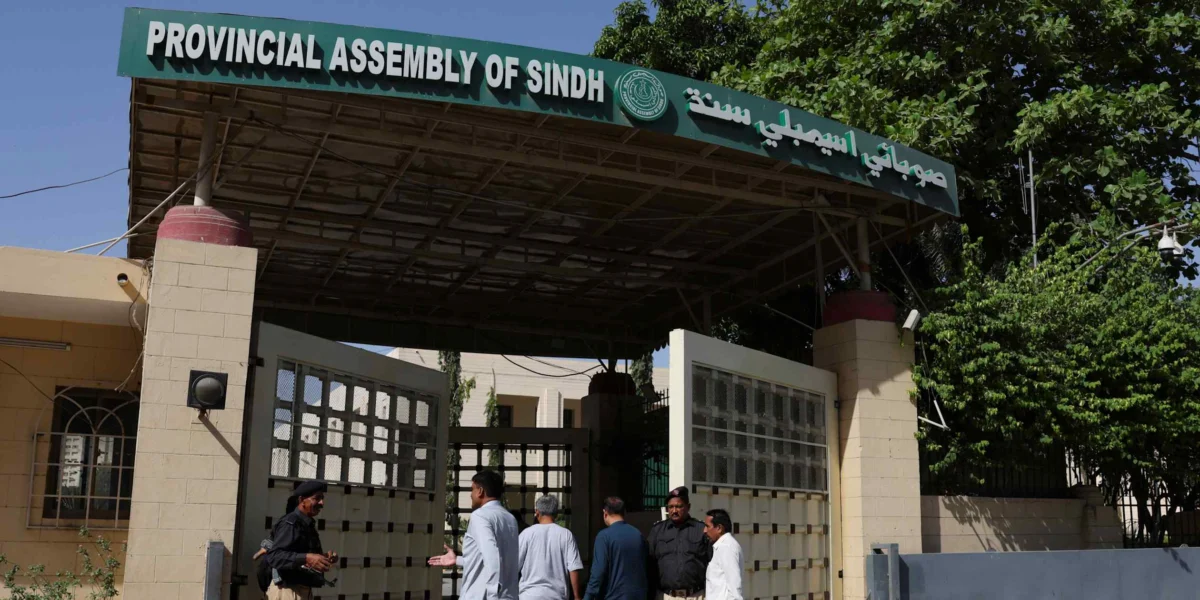
ISLAMABAD — Pakistan’s ambitious proposal to redraw its administrative map, potentially increasing the number of provinces from the current four to as many as twelve, is facing formidable political headwinds, primarily from a key ruling coalition partner. The Pakistan Peoples Party (PPP), led by Bilawal Bhutto Zardari, the son of the late former Prime Minister Benazir Bhutto, has signaled its opposition to a national non-binding referendum on the matter. The PPP currently governs Sindh, one of Pakistan’s four existing provinces, a stance that experts suggest significantly complicates the feasibility of such a sweeping constitutional and administrative overhaul.
The proposed restructuring, championed by elements within the ruling coalition, aims to address long-standing grievances related to provincial autonomy, resource distribution, and representation. Proponents argue that a more fragmented provincial structure could lead to better governance, more efficient service delivery, and a greater sense of inclusion for diverse ethnic and linguistic groups within Pakistan’s complex national fabric. However, the path to achieving such a transformation is fraught with political, legal, and logistical challenges, with the PPP’s opposition emerging as a particularly potent obstacle.
The Genesis of Provincial Reorganization in Pakistan
The idea of reorganizing Pakistan’s provinces is not new. Since its inception in 1947, the country has grappled with the question of how to best structure its administrative units to foster national unity while accommodating regional aspirations. Historically, the number and composition of provinces have been subject to significant changes.
Early Years and the One Unit Scheme: Following independence, Pakistan comprised two wings: West Pakistan and East Pakistan (which later became Bangladesh). West Pakistan itself was a collection of disparate provinces and princely states. In 1955, the controversial "One Unit" scheme was implemented, merging all provinces of West Pakistan into a single administrative entity. This move was intended to create a more cohesive political and administrative structure and strengthen the central government. However, it was deeply unpopular in many regions, particularly in the Punjab, which felt its dominance was being diluted.
The 1970s and the Restoration of Provinces: The One Unit scheme was ultimately dismantled in 1970, leading to the re-establishment of the provinces of Punjab, Sindh, Khyber Pakhtunkhwa (then North-West Frontier Province), and Balochistan. This period also saw the tragic secession of East Pakistan, highlighting the critical importance of addressing regional aspirations.
Subsequent Debates and Proposals: Over the decades, various governments and political factions have floated proposals for further provincial restructuring. These discussions have often been fueled by demands for greater autonomy from marginalized ethnic groups, concerns over equitable resource allocation, and a desire for more localized governance. The current proposal, however, appears to be driven by a more sweeping vision of administrative reform.
The Current Proposal and its Rationale
The contemporary push for increasing the number of provinces is reportedly rooted in several key considerations:
- Addressing Ethnic and Linguistic Diversity: Pakistan is home to a multitude of ethnic and linguistic groups. Some argue that the current provincial boundaries, largely drawn along linguistic lines in the 1970s, do not adequately represent the complex mosaic of its population. Creating smaller, more homogenous provinces could potentially enhance the political voice and cultural rights of specific communities.
- Improving Governance and Service Delivery: A common argument for administrative decentralization is that smaller units of government are often more responsive to the needs of their citizens. Proponents suggest that breaking down large provinces into smaller ones could lead to more efficient administration, better allocation of resources, and improved delivery of essential services such as education, healthcare, and infrastructure.
- Economic Development and Resource Management: Disputes over resource allocation, particularly concerning water and mineral wealth, have been a persistent source of inter-provincial tension. A restructured provincial map could potentially lead to a more equitable distribution of these resources or allow for more targeted development initiatives within smaller, more manageable administrative units.
- Political Representation: The current provincial structure, it is argued by some, can lead to the dominance of larger ethnic groups within their respective provinces, marginalizing smaller communities. A redivision could potentially create more proportionally representative provincial assemblies and governments.
The PPP’s Opposition: A Significant Hurdle
The Pakistan Peoples Party’s (PPP) opposition to a national referendum on provincial restructuring presents a substantial challenge to the government’s plans. The PPP is a major political force in Pakistan, with a strong base in Sindh and a significant presence in other provinces.
Historical Context of PPP’s Stance: The PPP, founded by Zulfiqar Ali Bhutto and led for many years by his daughter Benazir Bhutto, has historically championed provincial autonomy and the rights of smaller provinces. However, its current position on this specific proposal suggests a strategic calculation, possibly rooted in protecting its existing political power base and regional influence.
Concerns Over Sindh: The PPP’s control over Sindh province is a crucial factor. Any proposal that could dilute the power or alter the boundaries of Sindh would likely face fierce resistance from the party. It is plausible that the PPP fears that a referendum, even if non-binding, could be exploited to fragment Sindh or undermine its political standing within the province.
Potential Inferred Concerns of the PPP:
- Undermining Provincial Autonomy: The PPP might perceive the push for a referendum as an attempt by the federal government or other powerful elements to centralize power or to impose a restructuring that is not genuinely desired by the people of Sindh.
- Threat to Political Power: A redrawing of provincial boundaries could disrupt established political constituencies and alliances, potentially weakening the PPP’s electoral prospects.
- Concerns over Specific Restructuring Proposals: The PPP may not be opposed to the idea of restructuring in principle, but rather to the specific proposals that are being considered, which might not align with its vision for the future of provincial governance.
- Leveraging Political Capital: The PPP, as a key coalition partner, might be using its opposition to gain concessions on other policy matters or to assert its influence within the government.
Expert Analysis and Implications
Political analysts and constitutional experts have weighed in on the implications of the PPP’s opposition.
"The current four-province structure, established in 1970, has been the bedrock of Pakistan’s federal system for over five decades," noted Dr. Ayesha Siddiqa, a prominent political commentator. "Any significant change requires broad political consensus, and the opposition of a major coalition partner like the PPP makes the path forward exceedingly difficult, if not impossible, without substantial negotiation and compromise."
Constitutional Challenges: Pakistan’s constitution, particularly Article 239, outlines the procedure for constitutional amendments, which typically require a two-thirds majority in both houses of Parliament. While a non-binding referendum might not directly amend the constitution, the political will and parliamentary support generated by such a vote would be crucial for any subsequent legislative action. Without the backing of key parties like the PPP, achieving the necessary parliamentary supermajority would be a monumental task.
Logistical and Administrative Nightmares: The sheer scale of a potential redivision into 12 provinces would present unprecedented logistical and administrative challenges. This would involve not only redrawing boundaries but also creating new provincial secretariats, assemblies, judiciaries, and administrative cadres. The cost and time involved would be immense, requiring meticulous planning and extensive resources.
Potential for Further Fragmentation and Instability: While proponents argue for improved governance, critics warn of the potential for increased fragmentation and instability. A rush to create numerous small provinces without careful consideration of their economic viability, administrative capacity, and inter-provincial relations could lead to new conflicts and exacerbate existing ones.
Timeline of Developments (Hypothetical, based on typical news cycles):
- Early 2026: Initial discussions and internal consultations within the government and ruling coalition regarding provincial restructuring gain momentum. Reports emerge of a potential proposal for a significant increase in the number of provinces.
- Mid-2026: The government officially announces its intention to explore provincial reorganization, possibly mentioning the idea of a national referendum as a mechanism for gauging public opinion.
- Late 2026 (Current Reporting Period): The Pakistan Peoples Party (PPP) publicly expresses its reservations or outright opposition to the proposed referendum, citing concerns about its implications for provincial autonomy and the integrity of existing provinces, particularly Sindh. Opposition parties likely begin to voice their own concerns, demanding greater clarity and broader consultation.
- Early 2027: The government faces pressure to either abandon the referendum idea, modify its approach, or engage in intensive negotiations with the PPP and other stakeholders. Experts begin to analyze the political and constitutional ramifications of the impasse.
Broader Impact and Implications
The debate over provincial restructuring, and the current impasse, has significant implications for Pakistan’s political landscape and its future governance model.
- Federal-Provincial Relations: The disagreement highlights the ongoing tension between the federal government and the provinces, and among the provinces themselves, regarding power-sharing and resource distribution. The PPP’s stance underscores the need for consensus-building in a federal system.
- Political Stability: The success or failure of this reform initiative could impact the stability of the ruling coalition and the broader political environment. A protracted political battle over this issue could divert attention from pressing economic and social challenges.
- National Unity: The ultimate outcome of this debate will shape how Pakistan addresses its internal diversity and manages the aspirations of its various ethnic and regional groups. A well-managed reform could foster greater inclusion, while a poorly handled one could deepen divisions.
- Economic Development: The administrative and economic consequences of any proposed restructuring would be profound. Decisions about resource allocation, fiscal transfers, and development priorities would need to be re-evaluated, potentially impacting economic growth and equity across the country.
As Pakistan navigates this complex political terrain, the proposed expansion of its provincial framework remains a subject of intense scrutiny. The opposition from a key ruling party like the PPP has transformed what might have been a straightforward administrative reform into a significant political test, underscoring the intricate dynamics of power and consensus-building in the South Asian nation. The future of Pakistan’s provincial map, and indeed its governance structure, hinges on the ability of its political leaders to bridge divides and forge a path forward that commands broad-based support.