Farhan Pambudi
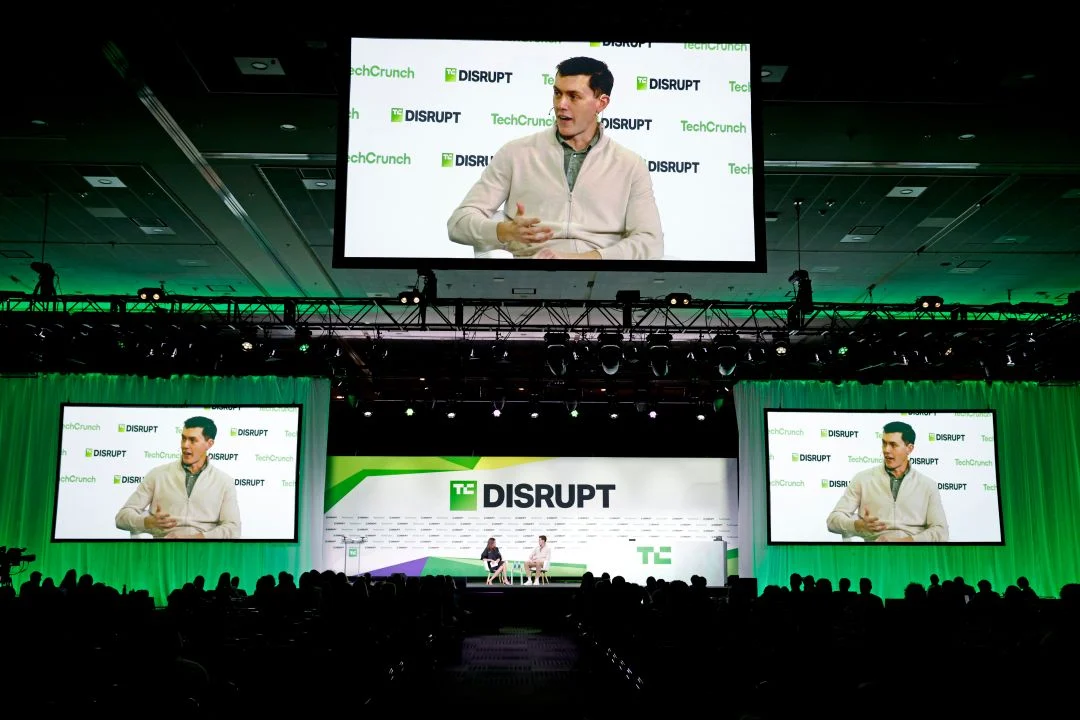
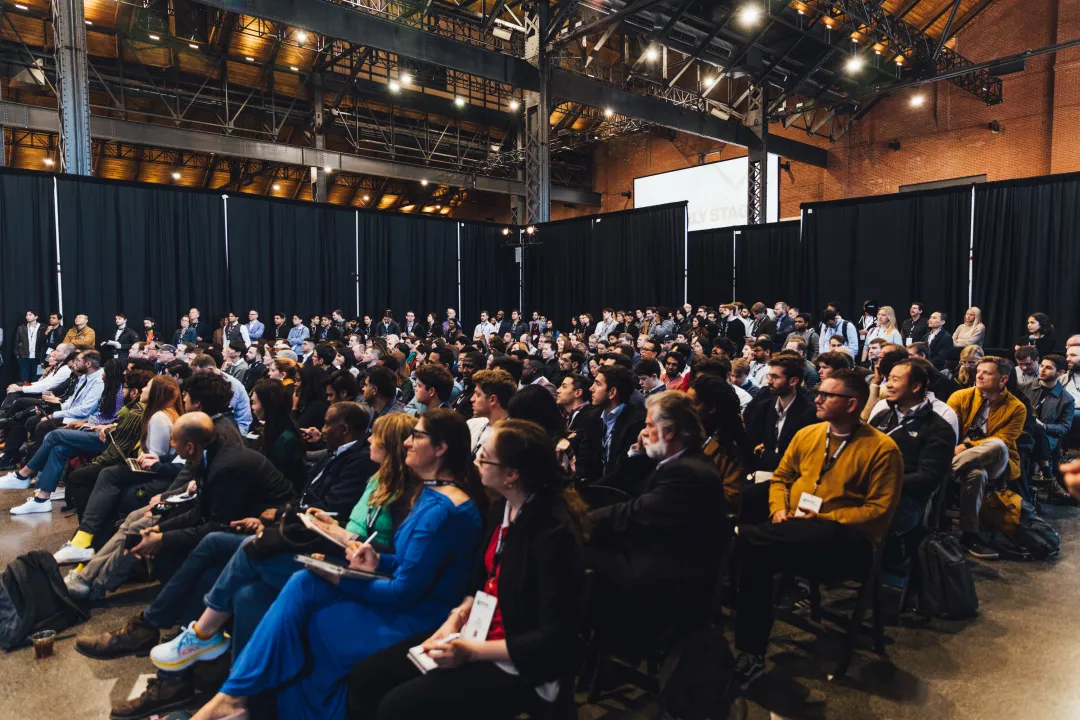
The final day of TechCrunch Disrupt 2026 has commenced at San Francisco’s Moscone West, marking the culmination of a week that has drawn more than 10,000 founders, venture capitalists, and technological visionaries to the heart of the global tech ecosystem. As the premier event for early-stage startups and disruptive innovation, the third day of the conference focuses on the practical implementation of artificial intelligence, the evolving landscape of venture capital, and the high-stakes conclusion of the Startup Battlefield competition. The atmosphere within the Moscone West complex reflects a shift from the speculative fervor of previous years toward a more disciplined, execution-oriented approach to building the next generation of decacorns.
The Evolution of a Tech Landmark
TechCrunch Disrupt has long served as the definitive proving ground for the technology industry. Since its inception, the conference has been the launching pad for companies that have redefined global commerce and communication, including Dropbox, Mint, and Uber. In 2026, the event finds itself at a critical juncture. The "AI hype cycle" that dominated 2024 and 2025 has matured into a period of rigorous implementation. This year’s attendance figures—exceeding 10,000 participants—underscore San Francisco’s resilient status as the epicenter of technological development, despite ongoing debates regarding the decentralization of tech hubs.
The 2026 iteration of the event features an expanded Expo Hall, housing over 320 exhibiting startups. These companies represent a diverse array of sectors, including HealthTech, FinTech, SaaS, and Hardware, though nearly every participant now incorporates some form of foundational or applied machine learning. The conference’s physical layout, spanning multiple levels of the Moscone West facility, facilitates a high-density networking environment supported by "Klik" badge technology, which allows for the instantaneous digital exchange of contact information through physical proximity.
The Startup Battlefield: A $100,000 Climax
The centerpiece of Day 3 is the Startup Battlefield 200 Final. Throughout the week, 200 hand-selected startups have been winnowed down through a series of rigorous pitch rounds. On this final day, the remaining finalists take the Disrupt Stage to present their business models to a panel of elite judges, including Karl Alomar of M13, Stacy Brown-Philpot of Cherryrock Capital, and Alexa von Tobel of Inspired Capital.

The stakes for the Battlefield are significant. Beyond the $100,000 equity-free grand prize, winners often see a massive influx of investor interest. Historical data suggests that Battlefield alumni have collectively raised more than $9 billion in funding and achieved over 120 exits. The 2026 finalists reflect a global trend toward "sovereign tech"—solutions that address national resilience, autonomous logistics, and decentralized infrastructure.
In addition to the main stage final, the Pitch Showcase Stage in the Expo Hall continues to host "Fast Pitches." These 60-second lightning rounds focus on specific sectors such as Consumer Tech and Healthcare, providing a platform for founders to demonstrate their value proposition under extreme time constraints.
Deep Dives into the AI Frontier
The "Industry Stage — AI" has remained the most consistently crowded venue throughout the conference. Day 3 sessions move beyond the capabilities of Large Language Models (LLMs) to address the systemic challenges of the "Agentic Era." A key discussion titled "What Comes After the Chatbot," led by Alexander Embiricos of OpenAI, explores the transition from conversational interfaces to autonomous agents capable of executing complex workflows without human intervention.
Security and data integrity remain paramount concerns for enterprise adoption. In the session "The Agent Security Problem Nobody Is Talking About," experts from NanoCo and Okta discussed the vulnerabilities inherent in delegating administrative privileges to AI agents. This technical discourse is balanced by business-centric panels such as "Rewriting SaaS," where representatives from Sapphire Ventures and NEA argued that the traditional per-seat licensing model is becoming obsolete in a world where AI can perform the work of multiple human operators.
Supporting data from recent venture reports indicates that while total VC deal volume has stabilized, the "AI infrastructure" category has seen a 40% year-over-year increase in capital allocation. This trend is reflected in the session "The $63 Billion Case for Storagemaxxing Your AI Stack," which analyzes the massive capital expenditure required to maintain the data centers and storage facilities necessary for modern generative models.

Operational Excellence on the Builders Stage
While the Disrupt Stage focuses on the "what" of the future, the Builders Stage addresses the "how." The final day’s programming features an uncommonly candid session titled "Yes, It’s Hard to Be a Founder: An Honest Conversation." Featuring Jack Withinshaw of Airspeeder and clinical perspectives from Harvard Medical School, the panel addresses the mental health crisis within the startup community—a topic that has gained significant traction as the "growth at all costs" mantra of the previous decade fades.
Other practical sessions focus on the financial realities of 2026. "M&A Is Now an Early-Stage Strategy" highlights a shift in the exit landscape, where startups are looking toward acquisitions earlier in their lifecycle rather than holding out for increasingly rare IPO windows. Furthermore, the session "The First 90 Days: How Startups Build Toward $10M ARR" provides a tactical roadmap for scaling revenue in a market that now demands profitability over mere user acquisition.
Hardware and Physical AI: The Next Horizon
A notable theme of the final day is the resurgence of hardware and "Physical AI." Panos Panay, formerly of Microsoft and now with Amazon, led a discussion on "What Comes After the Smartphone?" The conversation suggested a shift toward ambient computing and wearable devices that leverage AI to reduce screen time while increasing utility.
The "Breakout Stage" hosted a critical analysis titled "Physical AI Isn’t a Model Problem. It’s an Execution Problem." Panelists from Venrock and Archetype AI argued that while digital intelligence has scaled rapidly, the integration of that intelligence into robotics and physical infrastructure remains the primary bottleneck for the next industrial revolution. This is particularly relevant as logistics and supply chain startups seek to automate the "last mile" of delivery and manufacturing.
Networking and the San Francisco Tech Recovery
The logistics of TechCrunch Disrupt 2026 also tell a story of technological integration. The use of AI-powered matchmaking networking within the official event app has resulted in a recorded 30% increase in founder-investor meetings compared to the 2025 event. This data point is being cited by local economic development officials as evidence of San Francisco’s ongoing revitalization.

"The energy at Moscone West this week proves that the ‘doom loop’ narrative was premature," noted a representative from the San Francisco Chamber of Commerce during an informal press briefing. "The density of talent here is unmatched, and the fact that 10,000 people are here for the final day shows that the appetite for in-person collaboration is stronger than ever."
Broader Impact and Industry Implications
As TechCrunch Disrupt 2026 concludes, several key takeaways emerge for the broader industry. First, the barrier to entry for software development has collapsed. As Amjad Masad of Replit noted in his session "Everyone Can Build Software Now," the role of the traditional developer is evolving into that of a "GTM Engineer" or a systems architect who manages AI-generated codebases.
Second, the "power of access" remains the most valuable currency in Silicon Valley. This was exemplified in a high-profile appearance by Mark Wahlberg and Bruce Lee of Keebeck Wealth Management, who discussed how celebrity influence and traditional capital are merging to create new categories of consumer brands.
Finally, the 2026 conference has solidified the idea that AI is no longer a standalone sector but a fundamental layer of the global economy. Whether in the "Can You Bank Your Biology?" session regarding Cellino’s work in regenerative medicine or the "Logistics Stack" roundtable on national resilience, the message is clear: the disruptive potential of technology is now measured by its ability to solve tangible, physical-world problems.
The event will conclude this evening with the announcement of the Startup Battlefield 2026 winner, followed by a series of "Side Events" across the Bay Area. While the doors of Moscone West will close, the partnerships forged and the technologies unveiled this week are expected to dictate the trajectory of the tech industry well into 2027 and beyond. For those who missed the live sessions, the digital archive and the connections made via the Klik platform will serve as a continuous resource for the global founder community.