Gilang Muhammad
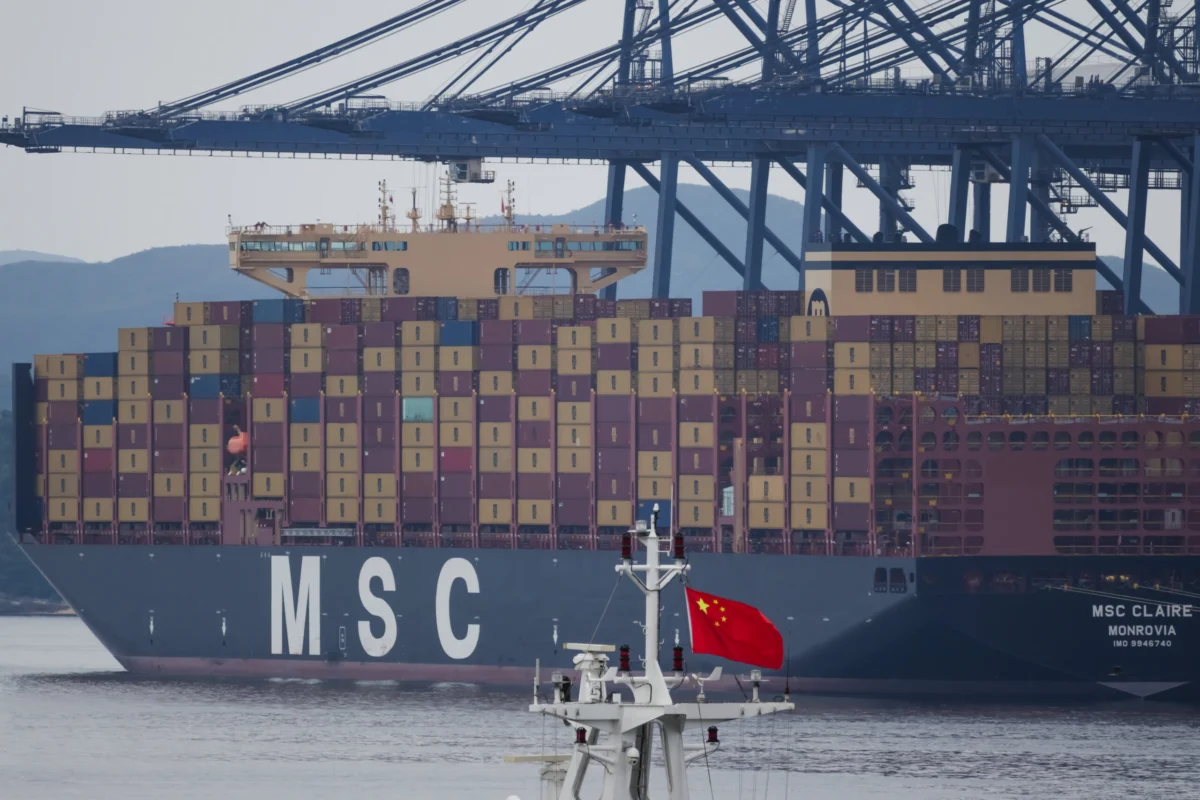
Shenzhen, China – November 12, 2026 – China’s formidable trade surplus has surged past the $1 trillion mark with two months still remaining in the year, customs data released on Tuesday confirmed. This significant economic milestone, achieved for the first time with such speed, underscores China’s enduring strength as a global manufacturing and export powerhouse, largely propelled by an insatiable worldwide demand for artificial intelligence (AI) related hardware. However, this export boom is simultaneously exacerbating concerns among international trading partners, who increasingly accuse Beijing of employing industrial policies that undercut local industries and create global overcapacity.
For the ten months ending October 2026, the cumulative trade surplus reached an impressive $1.04 trillion. This figure positions China on track to comfortably surpass its previous annual record of $1.2 trillion, which was set in the full year 2025 when the surplus first breached the trillion-dollar threshold. The sheer scale of this surplus, while a testament to China’s industrial prowess, comes at a critical juncture as Beijing faces mounting calls from key trading partners and international financial institutions to rebalance its economy away from an export-led model towards greater domestic consumption.
The October Surge: A Deep Dive into the Data
The latest monthly figures provide a granular view of the forces driving this unprecedented surplus. In October, China’s exports recorded a robust year-on-year jump of 35.2%, comfortably exceeding the 33.5% increase projected by economists polled by Reuters. This followed a 36.3% growth rate observed in September, signaling sustained momentum despite global economic headwinds. While the overall surplus growth in October did slow to a six-month low due to a significant surge in imports, undershooting some market estimates, the underlying strength in exports remained undeniable.
Simultaneously, imports also experienced a dramatic uptick, soaring by 41.6% last month. This marked the strongest import growth since May 2021 and sharply surpassed analysts’ Reuters-polled estimates of a 32% rise. This dual surge in both exports and imports highlights the complex dynamics of China’s trade relationships and its pivotal role in global supply chains.
The AI Revolution: Fueling China’s Export and Import Engines
At the heart of China’s current trade trajectory is the booming global demand for AI-related technologies. Lynn Song, Chief Economist for Greater China at ING Bank, noted, "China remains well on pace for a new record high for the trade surplus by year-end despite a miss in October," attributing much of this to the robust global appetite for Chinese-made AI hardware.
This AI-driven phenomenon is not limited to exports. The substantial increase in imports was predominantly fueled by demand for high-tech components, critical minerals essential for advanced manufacturing, and energy supplies crucial for powering China’s vast industrial base. Tianchen Xu, Senior Economist at Economist Intelligence Unit, observed, "Imports were still dominated by AI trade." Specifically, imports of high-tech products surged by an astonishing 72% in value terms in October compared to the previous year, according to CNBC’s analysis of official figures.
The insatiable demand for raw materials and energy to support this tech-driven growth was also evident. Imports of crude oil, liquefied natural gas (LNG), and coal grew approximately 41%, 50%, and 60% by value, respectively, in October. This illustrates China’s deep integration into global resource markets, not just as a consumer, but as a crucial link in the value chain for cutting-edge technologies. For instance, critical minerals like copper are indispensable for wiring the data centers and manufacturing the specialized chips that power AI applications globally. China’s sophisticated processing capabilities for these minerals further solidify its central role in this emerging technological landscape.
The Domestic Demand Conundrum and Policy Implications
Despite the booming export sector, China’s domestic economy continues to grapple with subdued consumer spending. Retail sales, a key indicator of household consumption, grew a modest 1.1% in September, underscoring a persistent imbalance within the world’s second-largest economy. This dichotomy between robust external demand and hesitant internal consumption presents a significant challenge for Beijing’s policymakers.
For years, the International Monetary Fund (IMF) and numerous trading partners have urged China to accelerate its pivot from an export and investment-heavy growth model towards one powered by domestic consumption. IMF Managing Director Kristalina Georgieva has repeatedly emphasized this need, advocating for reforms that would strengthen social safety nets, boost household incomes, and enhance consumer confidence.
Beijing itself has articulated a "dual circulation" strategy, aiming to foster greater reliance on domestic demand ("internal circulation") while remaining open to international trade and investment ("external circulation"). However, the latest trade figures suggest that the "external circulation," particularly through exports, remains a dominant engine of growth. The strength in exports has allowed policymakers to rely on moderate stimulus measures to achieve the country’s annual growth target, projected at 4.5%-5%, even as the fundamental rebalancing towards domestic consumption progresses slowly. This reliance on exports, while economically effective in the short term, exacerbates global trade imbalances and fuels international grievances regarding China’s industrial strategy.

Mounting International Pressure and Trade Friction
The burgeoning trade surplus and China’s export-driven growth model are increasingly becoming flashpoints in its relationships with major economies, particularly the United States and the European Union. Concerns over "overcapacity" in certain Chinese industries, perceived unfair subsidies, and limited market access for foreign firms are amplifying calls for retaliatory measures.
The U.S. and China: A Delicate Truce
Trade relations between Washington and Beijing remain complex and fraught with tension. In October, China’s exports to the U.S. soared by 32.9% in value terms from a year earlier, while imports from the U.S. grew by nearly 35%. This resulted in a bilateral surplus of $32.7 billion in China’s favor for the month. Year-to-date through October, U.S.-bound shipments from China have grown by 12.1%, partly benefiting from a low comparative base in the previous year when dramatic tariff hikes by the U.S. led to a 20% plunge in shipments.
In a move aimed at de-escalating immediate tensions, Washington and Beijing agreed in September to extend a broader trade truce by two months, pushing its expiry to January 2027. This extension encompassed a range of trade measures, including export-control waivers for certain critical minerals and special port fees for each other’s vessels. The upcoming APEC leaders’ summit in Shenzhen, China, next week is set to host a third meeting this year between Chinese President Xi Jinping and U.S. President Donald Trump, offering a crucial platform for dialogue on these sensitive trade issues. The outcome of these high-level discussions will be closely watched for any indications of future trade policy direction.
Europe’s Struggle with China’s Export Prowess
The European Union is also grappling with its own widening trade deficit with China. In October, China’s shipments to the EU bloc grew by 24.4%, while imports from the EU dropped by more than 4%, further widening the surplus to $33.4 billion. This imbalance has prompted the EU to take more assertive actions. Last month, the EU reached an agreement with Beijing to limit the imports of Chinese hybrid vehicles over the next few years, an effort to mitigate the impact of China’s rapidly expanding automotive sector on European manufacturers.
However, analysts remain skeptical about the effectiveness of these auto import curbs. Taking effect on December 1, the cap of 350,000 imported cars per year is actually above the 300,000 hybrids that China exported to Europe last year. Crucially, this cap is well below the annualized pace of 800,000 units observed over the last three months, suggesting it may do little to stem the tide of Chinese auto exports. Brad Setser, a senior fellow at the Council on Foreign Relations and a former U.S. Treasury official specializing in global trade, commented, "Europe still is a long way from a coherent trade and industrial policy with respect to autos, let alone a coherent economic policy towards overall trade with China." His remarks underscore the challenges faced by the EU in formulating a unified and effective response to China’s trade policies.
Headwinds and Future Outlook
While the current export boom, particularly in AI-related goods, provides a strong tailwind for the Chinese economy, several significant headwinds are on the horizon. Any slowdown in the global AI buildout could risk denting this momentum and squeezing Chinese exporters’ margins. Nguyen Hoang Nam, China economist at Capital Economics, noted, "Momentum looks to have slowed," estimating a seasonally adjusted 2% month-on-month fall in exports in October.
Looking ahead to 2027, Yuanliu Hu, an analyst at Citi Research, projects that export growth could decelerate to 8% as favorable base effects from 2026 fade and global AI investment moderates. The expiry of the U.S.-China trade truce in January and the increasing likelihood of additional EU trade measures targeting China further add to the uncertainty. Hu stated, "Additional EU trade measures targeting China look plausible to us," highlighting the potential for escalating trade friction.
Beyond the immediate trade figures, the broader implications for global economic stability are substantial. China’s continued reliance on exports, even with its stated aim of boosting domestic demand, could exacerbate global trade imbalances, potentially leading to increased protectionism and fragmentation of global supply chains. The sustainability of the AI-driven export model is also subject to technological shifts, geopolitical competition, and the evolving regulatory landscape surrounding advanced technologies.
The ongoing dialogue between China and its trading partners, particularly at high-level summits like APEC, will be critical in navigating these complex dynamics. The challenge for Beijing will be to manage its formidable export capacity in a way that supports its own economic growth without unduly destabilizing global markets or provoking further retaliatory measures from nations increasingly concerned about the competitive implications of China’s industrial ascent. As the world watches, China’s trade surplus, now well past the trillion-dollar mark, serves as a powerful barometer of these intricate global economic and geopolitical forces.