Lina Wu
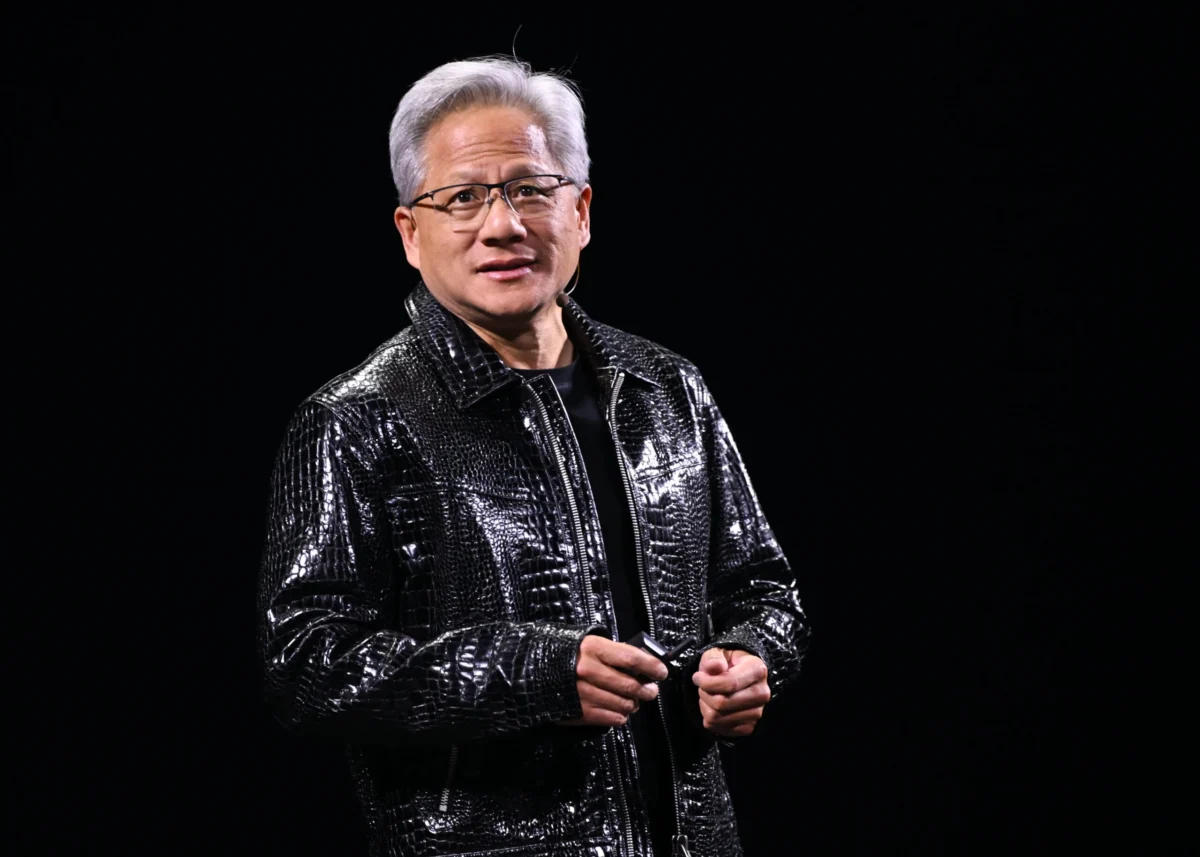
The recent turbulence surrounding Nvidia CEO Jensen Huang has sent ripples across the global technology landscape, but in Taiwan, the birthplace of the AI hardware revolution, the sentiment is overwhelmingly one of support and admiration for the industry titan. Despite the controversies, Huang’s impact on the Taiwanese economy and its tech sector remains deeply ingrained, fostering a sense of loyalty and a collective hope for his return. This sentiment was palpable in Taipei, where even casual conversations revealed a profound respect for Huang’s leadership and his pivotal role in shaping the global AI supply chain.
Huang’s personal connection to Taiwan, having been born and raised there until the age of five, further amplifies the local sentiment. He has consistently highlighted Taiwan’s indispensable position in the tech supply chain, famously referring to it as the origin point for AI hardware. This deep understanding of Taiwan’s capabilities and contributions has fostered a unique bond, transcending mere business transactions. The "Jensanity phenomenon," where his presence seemingly transforms locations into tourist hotspots and incubators for new businesses, is not just an anecdote but a testament to his influence on local economies. From bustling night markets to burgeoning restaurants and small businesses, the ripple effects of his ventures are widely acknowledged and appreciated by the Taiwanese populace.
The immediate aftermath of the news surrounding Huang’s leadership at Nvidia was met with a visible display of solidarity in Taipei. The iconic Taipei 101 skyscraper, a symbol of Taiwan’s technological prowess, illuminated its facade with supportive messages, including "Taiwan Loves Jensen" and "Family Loves Friendship," accompanied by the ubiquitous red heart emoticon, and "Thrive Together." These public expressions of support were orchestrated by key figures within Taiwan’s influential tech associations, including the Taipei Computer Association and the Monte Jade Science and Technology Association. An executive from a prominent Nvidia AI server supplier, who requested anonymity, articulated the sentiment, stating, "At times like this, the supply chain and Taiwan should offer timely support when it is most needed." This statement underscores the industry’s recognition of Huang’s instrumental role and its commitment to his legacy.
The speculation surrounding Huang’s potential return to lead Nvidia, however, faces a significant hurdle. The company’s board of directors has reportedly indicated that they do not intend to reinstate him as CEO, a decision that appears to have been communicated shortly after Huang signaled his interest in returning. This stance, if maintained, casts a shadow of uncertainty over the industry’s fervent hopes.
A Legacy of Innovation and Unwavering Standards
Jensen Huang’s tenure at Nvidia has been characterized by relentless innovation and an unyielding pursuit of excellence. Steve Lin, chairman of Auras Technology, a key Nvidia thermal solutions provider, offered a candid perspective on working with Huang. "It’s a crazy experience to work with Jensen," Lin stated. "His standard is so high, and he really pushes the supply chain to the extreme." This high-octane approach, while demanding, has consistently propelled the industry forward. Lin elaborated on how Huang revolutionized product development cycles, transforming the server industry from a biennial refresh rate to an annual release of new generations with significant specification upgrades. "He’s pushing the entire industry, marching forward at a fast pace… it’s really stressful and tiring, but God, it feels so good to work with him," Lin admitted. The chairman’s sentiment reflects a broader industry consensus: while Huang’s leadership was demanding, it was also inspiring and ultimately transformative. The question now is whether Nvidia can maintain this breakneck pace of innovation without his direct guidance.
The "Jensanity Phenomenon": An Economic Catalyst
The term "Jensanity phenomenon" has emerged to describe the remarkable effect Huang’s visits and Nvidia’s investments have had on local economies. While specific quantifiable data on the direct economic impact of this phenomenon is still emerging, anecdotal evidence from Taiwan paints a clear picture. Local businesses, from small restaurants to retail establishments, report increased foot traffic and revenue following high-profile visits or the establishment of Nvidia-related facilities. This surge in economic activity is attributed not only to direct investment but also to the increased tourism and interest generated by Huang’s persona and Nvidia’s global prominence. The hairdresser’s observation that Huang "helped lift the businesses in the night markets, restaurants, and many small businesses" is a recurring theme, highlighting a tangible benefit that extends beyond the tech sector. This localized economic uplift has fostered a deep sense of gratitude and a desire to see the source of this prosperity remain influential.
Broader Industry Impacts and Geopolitical Considerations
The developments surrounding Jensen Huang are occurring against a backdrop of significant global shifts in the technology sector. The anticipated initial public offering (IPO) of Anthropic, a leading AI frontier lab, is poised to invigorate the prospects of Asian AI startups. According to Nikkei Asia’s Yifan Yu and Cissy Zhou, Anthropic’s market debut could serve as a crucial benchmark for investors evaluating the revenue growth and compute costs of AI labs, potentially paving the way for listings by companies like China’s Moonshot AI and DeepSeek. Moonshot AI, developer of the Kimi chatbot, has reportedly been valued at around $50 billion, while DeepSeek is preparing for a Shanghai listing. Japan’s Sakana AI and South Korea’s Upstage AI are also reportedly gearing up for public offerings.
Meanwhile, the AI chip landscape is increasingly shaped by geopolitical considerations. The United States has implemented stricter measures to curb China’s access to advanced AI chips, particularly through overseas data centers. Cissy Zhou and Yifan Yu report that new export license requirements are being imposed on companies in countries like Singapore, Thailand, Malaysia, Indonesia, and Brazil, citing risks of diversion to China. This move directly impacts Southeast Asia, a region that has been experiencing a significant investment boom driven by the demand for AI infrastructure. Nikkei Asia’s Dylan Loh, Norman Goh, and Apornrath Phoonphongphiphat note that these regulations could significantly affect the region’s burgeoning AI ecosystem. In response, the AI chip and server supply chain, as reported by Yifan Yu and Lauly Li in Nikkei Asia, has already begun implementing tighter self-imposed inspections of clients and shipment destinations.
The implications of these U.S. export controls are far-reaching, potentially reshaping global supply chains and influencing the pace of AI development in various regions. While the stated aim is to prevent the proliferation of advanced AI technology to nations deemed adversaries, the economic consequences for countries that have become hubs for AI infrastructure development are significant. The industry is now tasked with navigating these complex geopolitical currents while continuing to innovate and meet the burgeoning demand for AI-powered solutions.
SoftBank’s Missed Opportunity and the AI Investment Race
The strategic decisions made by major technology investors are also under scrutiny. SoftBank founder Masayoshi Son recently expressed regret over not investing in Anthropic, having already committed substantial resources to its competitor, OpenAI. In a candid admission at a Nikkei event in Tokyo, Son stated, "We did have meetings [about investing in Anthropic]. But by that point, we had already decided to invest in OpenAI, and had already started doing so. So in that sense, there was a reluctance to pursue it further… This is an example of one of my mistakes." Son attributed this oversight to a reluctance to back "multiple horses" in the same race, a strategy that appears to have cost SoftBank a potentially lucrative opportunity.
This situation highlights the high-stakes nature of AI investment and the challenges of identifying and backing the next generation of AI leaders. Anthropic’s decision to pursue an IPO contrasts with OpenAI’s more cautious approach, with the latter delaying its own listing until at least next year due to concerns surrounding AI safety. OpenAI has reportedly revised its funding targets downwards, reflecting a more conservative valuation in the current market. The volatility in SoftBank’s stock, down significantly since June, underscores investor concerns about Son’s AI investment strategy and the broader market dynamics surrounding AI.
Cybersecurity Concerns Escalate: Japan’s Supercomputer Breach
The rapid advancement of AI and its underlying infrastructure is also accompanied by escalating cybersecurity threats. A recent security breach of Japan’s Fugaku supercomputer, one of the world’s most powerful, has exposed vulnerabilities in its protective measures, raising concerns about underfunding in security-related spending. The breach, which involved unauthorized access to the supercomputer’s operating system, potentially compromised the personal information of over 4,500 individuals, including research data and access keys. Riken, the research institute operating Fugaku, acknowledged that security spending was "small in comparison to utilities and other expenses," highlighting a potential disconnect between the immense computational power and the allocated security resources.
This incident underscores a broader global trend of increasing cyber threats. Leaders from ASEAN countries and their major partners, including China and India, have called for concerted efforts to counter cross-border cybercrime, as reported by Nikkei Asia’s Ramon Royandoyan and Kiran Sharma. The East Asia Summit in Manila addressed these rising challenges, with Philippine President Ferdinand Marcos Jr. emphasizing the escalating "transnational threats that are moving between the physical and digital realms." The interconnected nature of global technology infrastructure means that a vulnerability in one critical system can have far-reaching implications, necessitating a coordinated and robust global response to cybersecurity challenges.
Conclusion: A Resilient Industry Navigates Uncertainty
The events surrounding Jensen Huang’s leadership at Nvidia, coupled with the dynamic global AI landscape, present a complex web of challenges and opportunities. In Taiwan, the prevailing sentiment is one of unwavering support for Huang, a testament to his profound impact on the island’s economy and its pivotal role in the global AI supply chain. While the future of his leadership at Nvidia remains uncertain, the "Jensanity phenomenon" serves as a powerful reminder of his influence beyond the boardroom. As the industry grapples with geopolitical shifts, evolving investment strategies, and escalating cybersecurity threats, the resilience and adaptability of the tech sector will be paramount. The collective hope in Taiwan is that this period of turbulence will ultimately lead to an even stronger and more innovative future for AI, with Jensen Huang continuing to play a significant, albeit perhaps redefined, role.