Gilang Muhammad
New U.S. export regulations are poised to significantly impede the rapid expansion of Southeast Asia’s data center industry, particularly by restricting access to cutting-edge artificial intelligence (AI) chips and targeting the region’s burgeoning role as a computational nexus for Chinese technology firms. This development marks a critical juncture for an industry that has attracted billions in foreign investment and positioned the region as a vital player in the global AI landscape, now finding itself caught in the escalating technological rivalry between Washington and Beijing.
The New Regulatory Landscape: Tightening the AI Chip Noose
On Monday, the U.S. Commerce Department unveiled an interim rule that introduces stringent licensing requirements for data centers in key Southeast Asian nations, including Singapore, Malaysia, Thailand, and Indonesia, to acquire advanced AI chips from manufacturers like Nvidia. This directive directly extends existing U.S. restrictions on chip exports to China, effectively closing perceived loopholes that allowed Chinese entities to bypass these controls by renting computing capacity in overseas facilities. The rule stipulates that data centers currently servicing significant Chinese clientele will be granted a 90-day grace period to apply for the requisite U.S. government licenses, failing which they will face future export restrictions. This move underscores a broader U.S. strategy to curb China’s access to advanced semiconductor technology deemed crucial for AI development, which Washington views as a national security imperative.
Southeast Asia’s Ascent as an AI Computing Hub
The past few years have witnessed an unprecedented surge in data center construction across Southeast Asia. Driven by robust digital transformation agendas, burgeoning internet economies, and a strategic geographical location, the region became an increasingly attractive destination for hyperscale and colocation facilities. This boom was further amplified by the insatiable demand for computing power needed to train and deploy sophisticated AI models. As U.S. restrictions on direct sales of advanced chips to China intensified, Chinese technology giants, including Alibaba Group, ByteDance, and Tencent, began actively seeking alternative avenues to access high-performance AI compute. Southeast Asia, with its relatively lower operating costs, developing digital infrastructure, and proximity, emerged as a prime candidate. Estimates from the Washington-based Institute for Progress, published in October, projected that by the end of 2026, approximately 75% of China’s overseas AI compute capacity would be concentrated within Southeast Asian data centers. This made the region an unwitting, yet crucial, facilitator in the global AI race, a role now directly challenged by the new U.S. regulations.
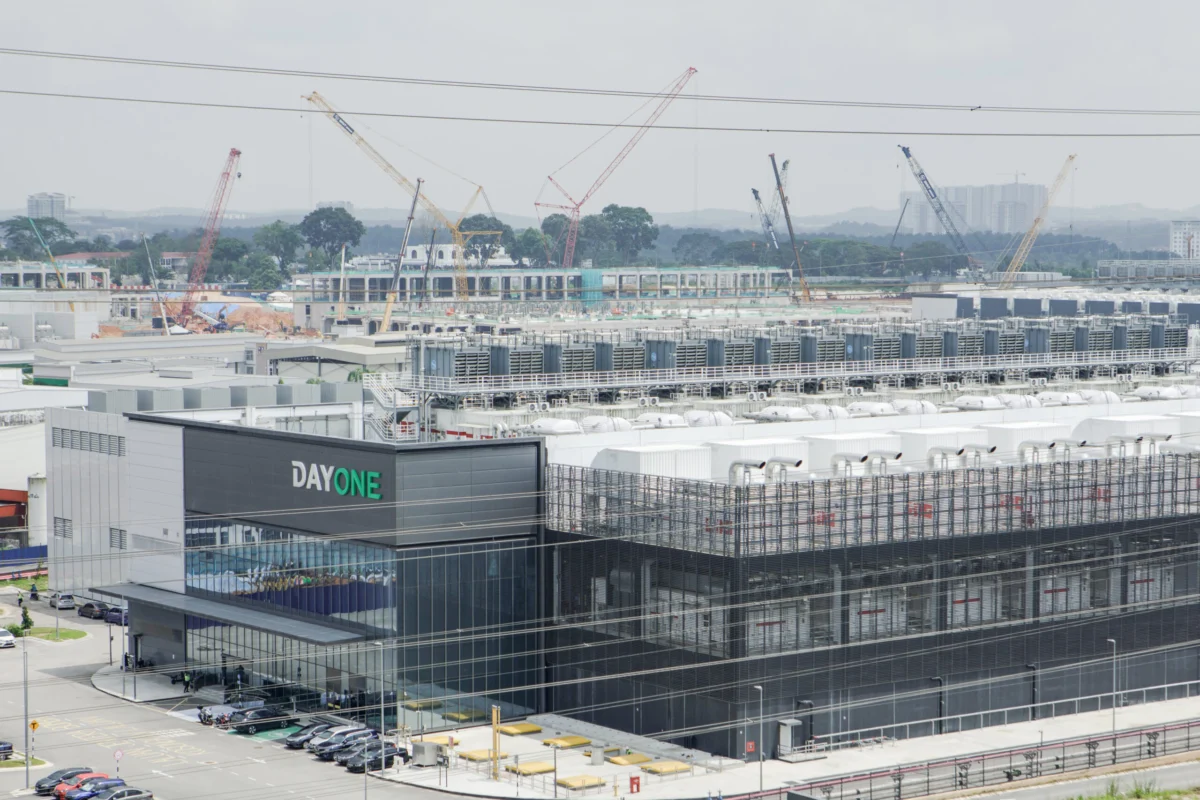
Companies like DayOne Data Centers Ltd., as observed at their Kempas Tech Park campus in Johor, Malaysia, on October 27, 2026, exemplify this trend. DayOne, along with many others, has actively pursued billions of dollars in private funding rounds to fuel its ambitious pipeline of data center projects, reflecting the enormous investor confidence in the region’s potential.
The Geopolitical Chessboard: U.S.-China Tech Rivalry Deepens
The interim rule is not an isolated measure but rather a significant escalation in the ongoing technological and economic confrontation between the United States and China. The Biden administration has consistently framed its export controls on advanced semiconductors and AI technology as essential for national security, aiming to prevent China from leveraging these technologies for military modernization or human rights abuses. Previous iterations of these rules, first introduced in 2022 and expanded in 2023, primarily focused on restricting the direct sale of advanced chips and chip-making equipment to China. However, the realization that Chinese firms were circumventing these controls by renting compute power from data centers in third countries, particularly in Southeast Asia, prompted this latest, more expansive regulation. This reflects a comprehensive effort by the U.S. to ensure its technological advantage and slow China’s progress in critical areas like AI.

Scrutiny Intensifies: The Nvidia Connection and Allegations
Adding another layer of complexity and urgency to the U.S. regulatory push is the intensified scrutiny surrounding Nvidia, the dominant producer of the advanced AI chips at the heart of this geopolitical contest. The buildout of AI infrastructure in Southeast Asia has come under greater examination following reports concerning Nvidia’s former CEO, Jensen Huang. Huang, a co-founder of Nvidia in 1993, reportedly left the company after allegations surfaced regarding several extramarital affairs. Crucially, one of these alleged affairs was with a suspected Chinese spy, who is believed to have played a role in facilitating billions of dollars worth of Nvidia chips into China, potentially circumventing earlier U.S. export controls. While the full extent and implications of these allegations are still under investigation, they have undoubtedly fueled Washington’s concerns about technology leakage and heightened the imperative to tighten control over the supply chain of advanced AI semiconductors, regardless of their final physical destination if used by Chinese entities.
Economic Fallout and Operational Hurdles for Regional Players
For data center operators in Southeast Asia, the new restrictions are expected to usher in a period of significant uncertainty and operational challenges. Jessica Brandt, a senior fellow for technology and national security at the Council on Foreign Relations, succinctly noted that these rules would likely make building and operating data centers "slower and costlier." The necessity of obtaining U.S. government licenses for advanced AI chips introduces a new layer of bureaucratic complexity, potential delays, and increased compliance costs.
Furthermore, the rules could fundamentally undercut the business model of "neoclouds" – newer cloud providers specifically designed around AI computing – that have emerged in the region. These providers often rely on flexible access to high-performance chips to offer competitive services, and the new licensing regime could severely hamper their agility and growth prospects. Reema Bhattacharya, head of Asia research at risk intelligence company Verisk Maplecroft, anticipates that operators will face more rigorous regulatory and national security requirements, demanding enhanced due diligence on their clientele and operational procedures. Beyond direct operational costs, the heightened scrutiny over investment into these projects could deter future capital inflows, negatively impacting Asian economies that have significantly benefited from the region’s data center build-out. The ripple effect could extend to associated industries, from construction to energy, which have seen a boom alongside the data center expansion.
National Exposure: Malaysia’s Vulnerability and Johor’s Role
Among the Southeast Asian nations, Malaysia is widely considered to be the most exposed to the fallout from these new restrictions. Analysts point to the immense scale of data center capacity currently under development, particularly in the state of Johor, and the sector’s substantial reliance on Chinese customers. Johor, strategically located near Singapore, has aggressively pursued data center investments, positioning itself as a regional hub.
Leah Fahy, a senior China economist at Capital Economics, highlighted that more than half of Malaysia’s existing data center capacity is within colocation facilities, with Chinese firms accounting for "a sizeable share of these workloads." The new rules directly threaten this symbiotic relationship. Restricting access to overseas cloud facilities for Chinese companies would weaken the commercial justification for further expansion in Malaysia, potentially leading to a slowdown in investment from both Chinese and U.S. companies. Fahy warned that any resulting deceleration in investment would exacerbate the drag from an anticipated cooling in the global AI export cycle, potentially shaving off 0.2 percentage points from Malaysia’s GDP growth forecasts through 2028. This represents a tangible economic impact, affecting job creation, technological advancement, and Malaysia’s broader economic diversification efforts.
Thailand and Other Regional Players Brace for Impact
Thailand, another significant player in the region’s data center landscape, is also preparing for increased scrutiny. With over 60 data centers already operational and approximately 30 more under construction, the country’s digital infrastructure ambitions are considerable. Kirida Bhaopichitr, Thailand’s vice minister for commerce, confirmed the country’s intent to scrutinize data centers importing high-end chips and vowed to "crack down" on any facilities found re-exporting them to third countries, signaling a commitment to compliance. Bhaopichitr also cautioned that new projects failing to secure U.S. approval for advanced chips might "not be able to complete construction," although existing facilities providing AI services could be less affected, provided they adhere to the new licensing requirements. This suggests a bifurcated impact, with new investments bearing the brunt of the regulatory shift.

Indonesia, with its vast market and growing digital economy, and Singapore, a mature hub seeking "trusted access" to advanced AI chips, also face adjustments. While Singapore’s proactive approach to negotiate directly with the U.S. for its companies might offer a degree of insulation, the overall regional environment will become significantly more complex and regulated.
Navigating Compliance and "Trusted Access"
Governments across the region have largely signaled their intent to comply with the new U.S. requirements, albeit with varying approaches. Malaysia’s Investment, Trade and Industry Minister, Johari Abdul Ghani, articulated a pragmatic stance on Tuesday, stating, "If you want to be in the game, you have to follow U.S. regulations." This acknowledgment underscores the reality of U.S. technological dominance in critical chip components and the limited leverage many nations have in bypassing these controls without incurring severe economic or diplomatic penalties. Singapore, known for its strategic foresight and robust regulatory framework, has indicated plans to negotiate "trusted access" to advanced AI chips for its companies. This approach aims to secure a preferential status, potentially through stringent oversight and guarantees of non-diversion, ensuring its domestic industry can continue to innovate while adhering to U.S. export controls. Such bilateral negotiations could become a template for other nations seeking to balance their economic aspirations with geopolitical realities.
The "Narrower Gate" and Global Repercussions
The interim rule, however, includes a significant exemption: U.S.-linked firms are not subject to the same licensing requirements. This creates a "narrower gate" through which Chinese companies might still indirectly access advanced computing power by renting from American cloud giants. Analysts like Chris McGuire, a senior fellow at the Council on Foreign Relations and former National Security Council official, have identified this as a potential loophole. McGuire explicitly urged Washington to close this loophole before it is exploited, warning of a "significant risk that Chinese companies will pivot from renting compute from data centers in Southeast Asia, to renting compute from data centers in Virginia." This scenario, if it materializes, could lead to a geographic shift in AI compute demand, benefiting U.S. data centers at the expense of their Southeast Asian counterparts.
Beyond this potential shift to the U.S., the new restrictions are prompting a global recalculation of data center strategies. Bhattacharya suggested that some high-end capacity could potentially shift to technologically advanced nations like Japan, South Korea, and Taiwan. However, she noted that constraints on power availability and suitable land may limit how much these markets can absorb. Chinese technology companies have already begun exploring alternative sources of computing power outside Southeast Asia. Earlier this month, CNBC reported that Chinese developer Moonshot AI attempted to access Nvidia chips through data centers located in Europe, indicating a wider search for compliant solutions. Furthermore, the U.S. administration’s vigilance extends beyond public regulations; in early November, Oracle reportedly canceled a multibillion-dollar chip-leasing agreement with Tencent that would have provided the Chinese company access to approximately 100,000 advanced AI chips. This cancellation, as reported by the Financial Times, came after concerns were raised by U.S. administration officials, illustrating the proactive and often behind-the-scenes efforts by Washington to enforce its tech containment strategy.
The Road Ahead: Uncertainty and Adaptation
The new U.S. export rules represent a fundamental reshaping of the global AI computing landscape. For Southeast Asia, what was once a clear path to becoming a dominant data center hub has now become fraught with regulatory hurdles and geopolitical complexities. While the immediate impact will be felt in slowed investment and increased operational costs, the long-term implications could include a re-evaluation of national digital strategies, a diversification of chip suppliers, and a renewed focus on domestic AI capabilities that are less reliant on foreign-controlled technology. The coming months will be critical as data center operators, national governments, and technology firms adapt to this new reality, striving to balance economic aspirations with the increasingly assertive demands of global technological competition. The era of unfettered global technology flows, particularly in advanced AI, appears to be decisively over.