Putri Inara
The strategic cultivation of anticipation serves as a cornerstone for sustainable growth in the digital publishing industry, particularly for content creators seeking to convert transient visitors into dedicated subscribers. At its core, the decision to subscribe to a digital publication is a forward-looking action; readers commit to a long-term relationship based on the calculated expectation that future content will continue to provide value, utility, or entertainment. Professional bloggers and digital strategists have long recognized that while a sense of anticipation can occur organically through high-quality output, the most successful platforms employ intentional methodologies to engineer this psychological state. By highlighting past excellence and curating historical data, creators can effectively demonstrate their authority, thereby convincing new audiences that future installments are worth the investment of their time and attention.
The Strategic Framework of Digital Anticipation
In the contemporary attention economy, the primary challenge for content creators is the "subscription hurdle"—the moment a reader decides to move from a single-interaction visit to a recurring engagement. Analysis of user behavior suggests that this transition is rarely the result of a single post, regardless of its quality. Instead, it is the result of a perceived pattern of reliability. The most effective advertisement for future content is a curated exhibition of past achievements. By placing high-quality archival material at the forefront of the user experience, a blogger creates a "proof of concept" for the reader.
This strategy operates on the principle of social and professional proof. When a visitor arrives on a site and is immediately directed toward the "Best of" content, the publisher is effectively setting a baseline of expectation. This curated visibility serves a dual purpose: it reduces the bounce rate by providing immediate value and establishes a narrative of expertise that the reader expects the publisher to maintain in subsequent updates.
Chronology of Content Curation and User Journey
The evolution of a blog from a chronological feed to a curated knowledge hub typically follows a specific strategic timeline. In the initial phase of a blog’s lifecycle, content is often organized linearly, with the most recent posts receiving the highest visibility. However, as an archive grows, this linear structure becomes a liability, burying high-value evergreen content beneath newer, potentially less foundational updates.
- Phase One: Content Accumulation. The creator focuses on establishing a "critical mass" of high-quality articles that address core niche topics.
- Phase Two: Performance Analysis. Using heatmaps and analytics tools, such as CrazyEgg or Google Analytics, the publisher identifies which legacy posts continue to resonate with audiences and drive engagement.
- Phase Three: Structural Redesign. The blog’s architecture is modified to include "Sneeze Pages," "Best of" sidebars, and intent-based landing pages.
- Phase Four: Conversion Optimization. Strategic subscription prompts are integrated into these high-traffic hubs, capitalizing on the heightened sense of anticipation and authority established by the curated content.
Methodologies for Highlighting Authority
To systematically build anticipation, industry experts recommend four primary technical implementations that transform a static archive into a dynamic marketing tool.
The Implementation of Sneeze Pages
The term "Sneeze Page" refers to a central hub or a thematic index designed to "spray" readers deep into the archives of a blog, much like a sneeze spreads particles. These pages are not merely lists of links; they are curated resources that categorize a blog’s most impactful work into logical sequences. For instance, a digital photography blog might feature a Sneeze Page titled "Basics of Exposure," which links to ten historical posts ranging from aperture settings to ISO management. By presenting this comprehensive body of work, the publisher demonstrates a depth of knowledge that suggests future posts will be equally substantive.
"Best of" Sections and Visual Heatmapping
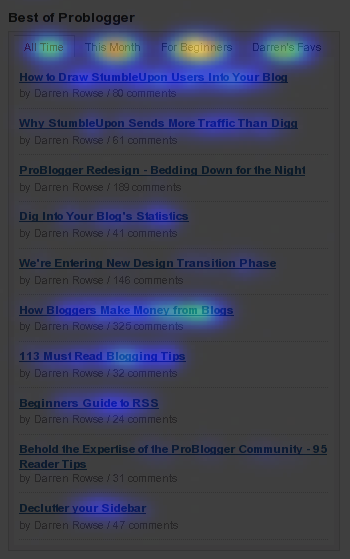
Data-driven design is essential for maximizing the impact of historical content. Utilizing tools like CrazyEgg allows publishers to generate heatmaps that visualize where users are clicking. Historical data from ProBlogger indicates that "Best of" sections—often located in the sidebar or a prominent front-page module—are among the most high-traffic areas of a website. These sections act as a "greatest hits" album, ensuring that even if a visitor arrives via a mediocre or highly specific post, they are immediately presented with the creator’s most polished and universally appealing work.
Intent-Based Landing Pages
Advanced digital strategy involves the use of landing site plugins and scripts that detect a visitor’s point of origin. If a reader arrives from a search engine query regarding "monetizing a blog," a sophisticated site architecture can automatically display a curated list of related high-quality articles. This immediate relevance increases the perception of the blog as a comprehensive resource. The psychological impact is significant: the reader perceives the site not as a collection of random thoughts, but as an authoritative library, thereby increasing the likelihood of a subscription to ensure they do not miss future insights.
Strategic Interlinking
Internal linking remains one of the most effective, albeit traditional, methods for building anticipation. By weaving links to past high-quality content into new articles, creators provide a path for "deep reading." Each subsequent high-quality post a reader encounters reinforces the "anticipation loop." The more value a reader extracts from the past, the more they anticipate value in the future.

Supporting Data and Market Analysis
Industry benchmarks in digital marketing support the efficacy of these curation strategies. According to data regarding user retention, a visitor who views more than three pages during their initial visit is 50% more likely to return to the site within a week compared to a visitor who views only one page. Furthermore, the "Rule of Seven" in marketing suggests that a prospect needs to encounter a brand’s message at least seven times before they commit to a purchase or subscription. By directing users to a curated selection of "Best of" content, bloggers can facilitate these multiple "touchpoints" within a single session.
Case studies of successful digital redesigns often highlight the shift from a chronological to a thematic layout. For example, when ProBlogger moved from a traditional blog roll to a themed section design, the site saw a measurable increase in session duration and a decrease in bounce rates. This structural change allowed for better "evergreen" content surfacing, which directly correlated to a rise in RSS and email subscription rates.
Industry Reactions and Expert Perspectives
Digital strategy consultants often emphasize that "anticipation is the antidote to the ephemeral nature of the internet." Analysts suggest that in an era of "disposable content" on social media platforms like X (formerly Twitter) or TikTok, long-form blogs that curate their excellence stand out as authoritative anchors.
"The goal of content curation on your own platform is to move the user from a state of curiosity to a state of reliance," notes one digital media analyst. "When you show a reader that you have solved their problems ten times in the past through your ‘Best of’ archives, you are making a silent promise that you will solve their problems again tomorrow. That promise is what drives the subscription."
Broader Impact and Implications for the Creator Economy
The shift toward intentional anticipation-building has broader implications for the creator economy. As the internet becomes increasingly saturated with AI-generated and low-effort content, the value of a curated, authoritative archive increases. Strategies like Sneeze Pages and intent-based landing sites are no longer just "growth hacks"; they are essential components of brand preservation.
For the individual creator, these techniques provide a way to monetize "latent value." A post written five years ago can still be the primary driver for a new subscription today if it is positioned correctly. This creates a compounding effect where the "work" of the blog is not just in the writing of new posts, but in the management and surfacing of the existing library.
Ultimately, creating a sense of anticipation is about managing the brand’s reputation over time. By treating past content as a portfolio of future potential, bloggers can build a loyal audience that views the "Subscribe" button not as a digital clutter-generator, but as an essential gateway to upcoming expertise. The psychological contract of the subscription is built on the foundation of proven quality, and the most successful digital publishers are those who never let their best work stay buried in the archives.