Gilang Muhammad
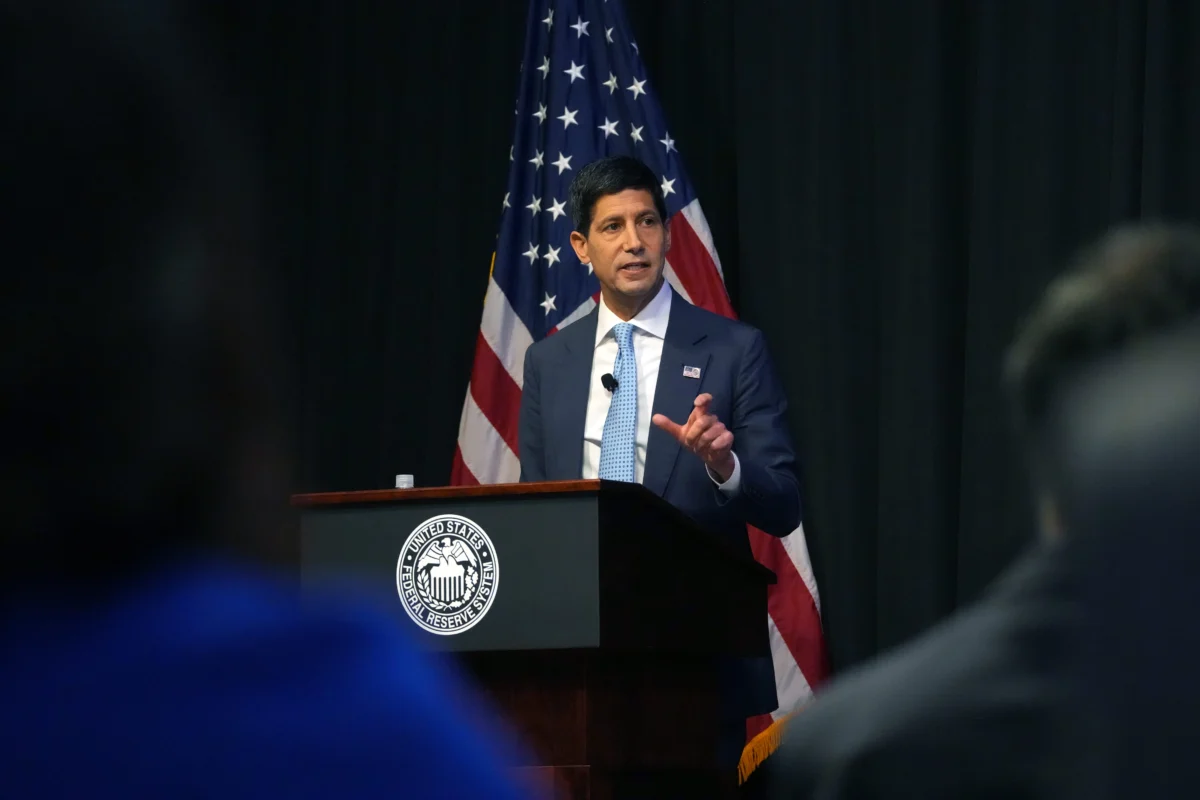
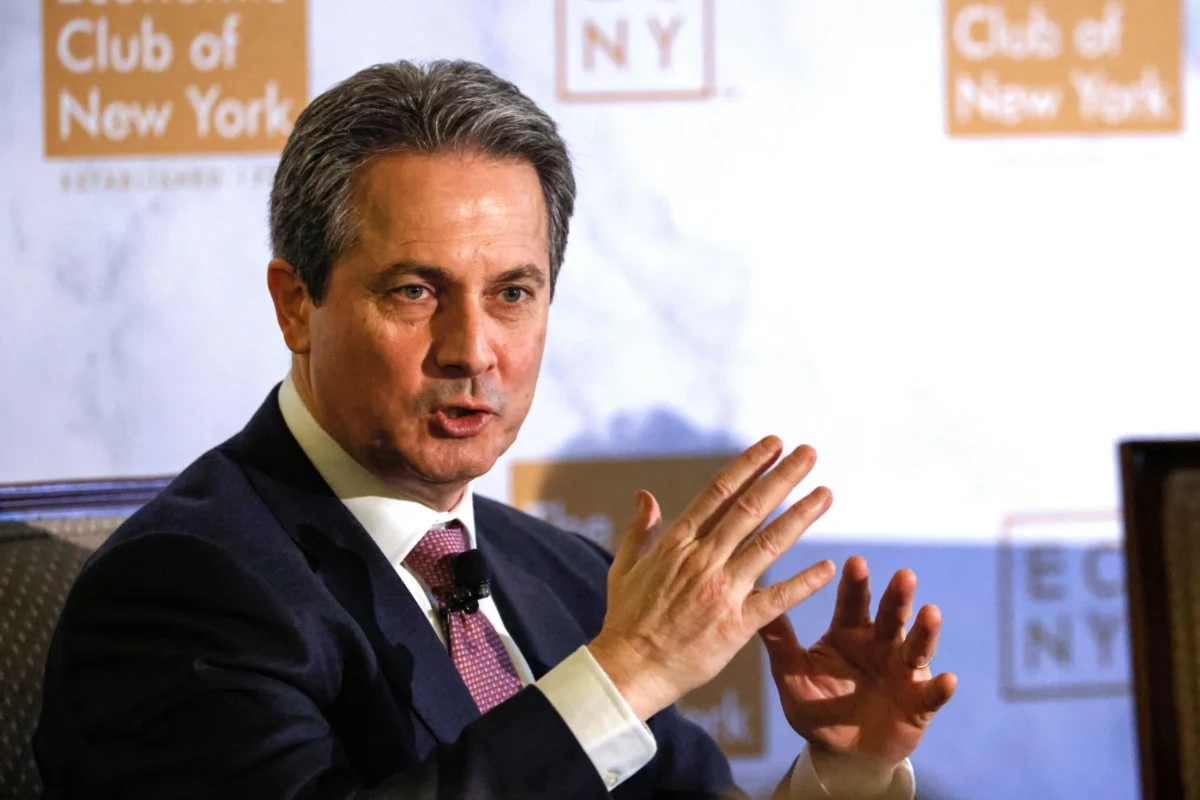
San Francisco, California – The United States economy stands at a pivotal juncture, grappling with the impending, transformative impact of artificial intelligence. On Monday, November 16, 2026, Federal Reserve Chairman Kevin Warsh convened a critical conference in San Francisco, bringing together an eclectic array of experts to dissect the profound implications of AI for productivity and jobs. Speaking at the Federal Reserve Bank of San Francisco, Warsh underscored the urgency, declaring, "We are at a hinge point in the U.S. economy," as the central bank braces to navigate a future shaped by rapidly advancing technology.
The conference, titled the Productivity and Jobs Task Force Conference, was a highly anticipated event, reflecting Chairman Warsh’s unconventional approach to monetary policy. Since assuming the helm of the Fed, Warsh has been a vocal critic of the institution’s perceived insularity, advocating for a broader inclusion of external expertise in its policymaking process. This gathering was a direct manifestation of that philosophy, assembling thinkers from technology, venture capital, and academia to advise the Fed on how to interpret and respond to the AI wave. The questions Warsh publicly posed—regarding the timing and nature of AI’s economic shift, and its subsequent effects on interest rates and inflation—are those that Americans will ultimately expect the Fed to answer with concrete policy.
The AI Tsunami: Economic Boom and Policy Challenges
The economic undercurrents of the AI revolution are already making waves, presenting the Federal Reserve with immediate and complex challenges. Just days after the conference, AI lab Anthropic is poised to price its initial public offering (IPO) shares on Wednesday, with projections indicating a potential raise of $64 billion at an astounding $1.4 trillion valuation. This colossal valuation and the immense capital influx it represents are indicative of the fervent investment sweeping through the technology sector. Such vast spending by AI firms, fueled by investor optimism and technological breakthroughs, is heating up the economy, creating inflationary pressures that the Fed cannot ignore. Indeed, there is growing contemplation within the Fed to potentially raise interest rates in December to temper this rapid pace of price increases, a move that would signal the central bank’s determination to maintain its dual mandate of maximum employment and price stability amidst unprecedented technological change.
The scale of investment in AI is staggering. Industry analysts report that global spending on AI systems is projected to reach hundreds of billions of dollars annually by the late 2020s, a dramatic increase from earlier forecasts. This capital is flowing into research and development, infrastructure (particularly data centers), and the acquisition of AI talent, creating a vibrant, yet potentially overheating, economic segment. The rapid commercialization of AI applications, from advanced analytics to autonomous systems, is driving demand across various industries, from healthcare to finance, manufacturing, and logistics. This demand, while promising for long-term productivity, creates short-term inflationary pressures on wages, raw materials, and energy, forcing the Fed to weigh the immediate risks against the long-term benefits.
Societal Backlash: The Data Center Dilemma
Amidst the economic exhilaration surrounding AI, a distinct undercurrent of public skepticism and concern is emerging, manifesting in concrete political action. The November 3 midterm elections saw voters across several states enact an array of state-level measures designed to slow down or even halt the construction of data centers—the foundational infrastructure essential for powering advanced AI systems. These ballot initiatives reflect growing public apprehension over issues such as massive energy consumption, environmental impact, water usage, and the localized strain on utility grids and community resources.
This public sentiment presents a unique dilemma for policymakers and technology advocates alike. Gina Raimondo, former Secretary of Commerce under President Joe Biden and former Governor of Rhode Island, offered a stark warning at the conference regarding these anti-data center trends. She characterized the passage of so many such measures in the midterms as "a very troubling sign," arguing emphatically that stopping AI development "would be very bad for America" and for the very people who voted for these restrictions. Raimondo’s perspective highlights the tension between technological progress and local community concerns, a divide that could significantly impede the pace of AI integration and its potential economic benefits. While Warsh did not publicly endorse Raimondo’s specific view, the implications for monetary policy are complex. A slowdown in AI infrastructure development could dampen the technology’s immediate economic impact, potentially altering the inflationary outlook and the Fed’s interest rate trajectory. Conversely, unbridled expansion without addressing public concerns could lead to broader societal friction, impacting economic stability.
A New Paradigm at the Fed: External Expertise and Task Forces
Chairman Warsh’s decision to convene an AI task force, alongside four other specialized task forces addressing various facets of Fed policymaking, represents a significant departure from the central bank’s traditional operational model. For decades, the Federal Reserve has relied heavily on its internal cadre of Ph.D. economists, a "small army" capable of rapidly analyzing and responding to economic shifts. However, Warsh’s longstanding critiques of the Fed as an "insular and outdated" institution have paved the way for a more open, multidisciplinary approach. He believes that to effectively navigate the unprecedented challenges posed by AI, the Fed must draw upon expertise from outside its institutional walls.
The Productivity and Jobs Task Force is composed of three official members, two of whom were slated to speak at Monday’s event. Venture capitalist Marc Andreessen, a prominent figure in the tech world and a long-time friend of Warsh (they share a Stanford connection through Andreessen’s wife), was present and vocal. His insights, drawn from decades of investing in and observing technological disruption, were central to the discussions. The second member, Stanford economist Chad Jones, a renowned expert in economic growth and innovation, was unfortunately on leave and working at Anthropic, precluding his participation during the company’s IPO blackout period. The third member, Xbox CEO Asha Sharma, a leader in consumer technology and digital platforms, did not attend the event. This diverse composition underscores Warsh’s intent to gather perspectives from the cutting edge of technology, economic theory, and business application, rather than relying solely on traditional macroeconomic models.
The "China Shock" Analogy: Disinflation in Services and Job Displacement
A recurring theme in Warsh’s moderation of the conference, particularly during three of the four sessions he led, was a scenario drawing parallels to past economic upheavals. He repeatedly evoked the "China shock," a phenomenon that unfolded after China’s accession to the World Trade Organization in 2001. The influx of low-cost Chinese manufacturing into global markets led to a dramatic drop in prices for goods like clothing and furniture in the U.S., significantly benefiting consumers. However, this came at a severe cost: widely cited estimates suggest the U.S. lost approximately one million manufacturing jobs and 2.4 million jobs overall in the years that followed, profoundly impacting American industrial communities.
Warsh carefully suggested to panelists that the widespread adoption of AI might produce its own version of this shock, but this time concentrated on the service sector. "I don’t want to hold this too tightly," Warsh cautioned, "But if in some ways over the last generation or generation and a half, the China shock, for lack of a better word, lowered prices of goods in the United States, the way that I heard you talking about the philosophy of this new technology is it might do something for services." He posited that AI could perform complex service tasks, such as legal research, administrative functions, customer support, or even certain aspects of healthcare diagnostics, more cheaply and efficiently than humans. This efficiency gain could lead to a significant reduction in the cost of services, translating into overall disinflation. However, the corollary, as Warsh implicitly highlighted, would be substantial job displacement in these white-collar and service-oriented professions.
Marc Andreessen, one of the few task force members present, shared a nuanced perspective on this potential displacement. While inherently optimistic about AI’s technological promise, Andreessen expressed skepticism that the U.S. economy, as currently structured, would allow Americans to experience AI’s full disruptive effects. He argued that heavy regulation in sectors like healthcare and education effectively creates barriers to technology replacing human jobs. "To the extent our economy is a free-market economy, then maybe you could see the, let’s say, extremely rapid displacement scenarios people are talking about," Andreessen stated. "But we’ve mostly outlawed the kind of job transition that… both the utopians the doomers talk about." His point suggests that regulatory frameworks, intended to protect jobs or ensure quality, might inadvertently slow down the disinflationary and disruptive potential of AI in certain highly regulated service sectors.
Monetary Policy Crossroads: Navigating Disinflationary Headwinds
The central question Warsh posed to the panelists was direct and fundamental to monetary policy: "Should we expect disinflation over the medium term, from what AI could do to services?" The experts largely concurred that such a scenario was plausible. If AI significantly lowers the cost of services, leading to broad disinflation, the implications for the Federal Reserve’s interest rate policy would be profound. In a sustained disinflationary environment, the Fed might eventually find itself in a position to lower interest rates over the long term, moving away from the potential December hike currently being contemplated due to short-term inflationary pressures from AI investment.
This creates a complex challenge for the Federal Open Market Committee (FOMC), the Fed’s primary monetary policymaking body. They must distinguish between the short-term inflationary impacts of AI investment (demand-side pressures from tech spending) and the potential long-term disinflationary effects of AI deployment (supply-side efficiencies reducing costs). Balancing these forces requires a sophisticated understanding of AI’s economic mechanics, a task for which the Fed is actively seeking external counsel. The risk of misjudging this balance could lead to either an unnecessarily tight monetary policy stifling innovation or an overly loose policy allowing inflation to run unchecked.
The Road Ahead: Task Force Recommendations and Policy Evolution
The conference served as an initial, critical dialogue, but it is merely the first step in a longer process toward integrating AI considerations into Fed policy. The three members of the Productivity and Jobs Task Force are now tasked with synthesizing their diverse perspectives and findings into a comprehensive report for Chairman Warsh, expected within the next few months. This report will be crucial in informing the Chairman’s own evolving views and preparing the broader institution for the inevitable policy debates.
Following the submission of the report, the Federal Reserve itself will engage in rigorous internal discussions. Its Ph.D. economists will analyze the findings, stress-test the assumptions, and model potential scenarios for how AI will impact productivity, employment, and inflation. Only then will the Fed debate whether and how to integrate these insights into its monetary policy framework, potentially leading to adjustments in its forward guidance, interest rate decisions, or even its analytical tools.
However, the rapid pace of AI development and its escalating economic footprint mean that the luxury of extended deliberation may be limited. With AI growing "bigger every day," as the article notes, the Fed may need to accelerate its decision-making timeline. The urgency is amplified by the sheer scale of the potential economic shifts—from job retraining programs to new social safety nets, from infrastructure investment to regulatory reforms—that may be required to smoothly transition the U.S. economy into the AI era. While the Fed’s primary tools are monetary, its understanding and communication of these broader implications will be vital for guiding national policy. The choices Warsh and his fellow Fed members make in the coming months and years will not only shape interest rates but also the very structure of the American workforce and its economic future.