Lina Wu
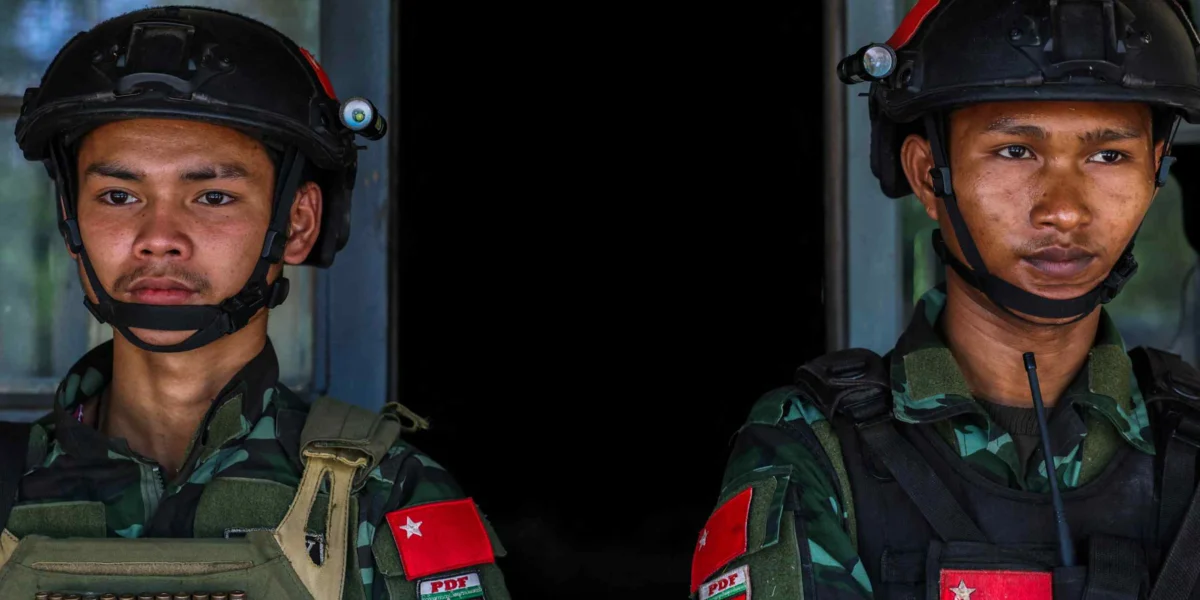
The images emerging from the Myanmar-Thailand border, particularly near the strategic town of Myawaddy, paint a stark picture of a nation embroiled in intensifying conflict. On April 15, 2024, fighters from the People’s Defense Force (PDF), an umbrella group representing various anti-junta resistance movements, were seen standing guard at an army base recently captured from the ruling military regime. This capture, a significant tactical victory for the resistance, is not merely a territorial gain; it is a potent symbol of the shifting power dynamics within Myanmar and a critical juncture in understanding the complex interplay between war and resource control, specifically the nation’s gold supply chain.
This report delves into the multifaceted implications of such battlefield successes, examining how ongoing conflict directly influences the extraction, processing, and movement of Myanmar’s valuable mineral resources, with a particular focus on gold. The capture of strategic locations like Myawaddy, a vital trade hub, has far-reaching consequences that extend beyond military objectives, impacting regional economies, international trade routes, and the very sustainability of the conflict itself.
The Strategic Significance of Myawaddy and Border Regions
Myawaddy, situated in Kayin State, has long been a crucial transit point for goods and illicit trade between Myanmar and Thailand. Its strategic location on the Moei River, which forms part of the border, makes it a gateway for cross-border commerce. For decades, this region has been a nexus for smuggling and informal trade, a reality exacerbated by the ongoing civil war that has fragmented the country and weakened central government control.
The capture of a military base near Myawaddy by the PDF signifies a considerable erosion of the Myanmar military junta’s authority in this key border area. This success is part of a broader offensive by ethnic armed organizations (EAOs) and PDF groups across the country, collectively known as the Three Brotherhood Alliance, which has gained significant ground in the north and along the eastern borders. The fall of junta strongholds in these regions not only disrupts military supply lines but also opens new avenues for the control and exploitation of natural resources.
A Timeline of Escalating Conflict and Resource Control
The current phase of intensified conflict in Myanmar can be traced back to the February 1, 2021, military coup, which overthrew the democratically elected government of Aung San Suu Kyi. This event triggered widespread protests and a brutal crackdown by the military, leading to the formation of the National Unity Government (NUG) and the widespread proliferation of PDF groups.
Post-Coup Period (Early 2021 – Mid-2022): Following the coup, initial resistance was largely characterized by civil disobedience and localized armed uprisings. The military regime faced growing international condemnation and sanctions, but maintained control over major urban centers and key resource extraction sites, often through direct military presence.
Rise of the Three Brotherhood Alliance (Mid-2022 – Present): In late 2022 and early 2023, several powerful EAOs, including the Myanmar National Democratic Alliance Army (MNDAA), the Ta’ang National Liberation Army (TNLA), and the Arakan Army (AA), formed the Three Brotherhood Alliance. This alliance launched coordinated offensives against the junta, achieving significant successes, particularly in northern Shan State. These victories opened up new territories and, crucially, disrupted established supply chains controlled by the junta and its associated cronies.
Operation 1027 and Beyond (Late 2023 – Early 2024): Operation 1027, launched by the Three Brotherhood Alliance in late October 2023, was a watershed moment. It led to the capture of numerous towns and military outposts, severely weakening the junta’s grip on northern Myanmar. The success of Operation 1027 emboldened other resistance groups, including the PDF, to launch similar offensives in their respective regions, leading to the recent gains near Myawaddy.
The capture of areas like Myawaddy is a direct consequence of this sustained military pressure. As the junta’s military presence diminishes in certain regions, resistance forces gain de facto control. This control often translates into the ability to influence or directly manage the flow of natural resources.
Gold as a Spoils of War: Data and Evidence
Myanmar is rich in natural resources, including gold, jade, and precious metals. Historically, the extraction and trade of these resources have been closely intertwined with political power and conflict. The current civil war has only amplified this dynamic, turning resource wealth into a critical factor in sustaining the conflict.
Gold Extraction and Trade: While precise, up-to-date data on Myanmar’s gold production is difficult to ascertain due to the informal nature of much of the industry and the ongoing conflict, historical trends and reports from conflict zones offer insights. Prior to the coup, Myanmar was a significant producer of gold, with artisanal and small-scale mining (ASM) playing a substantial role. The military regime and associated business conglomerates have historically controlled many of the larger, more formalized mining operations.
However, with the loss of territory, the junta’s access to revenue streams from these operations is diminishing. Conversely, resistance groups are increasingly finding ways to profit from resource extraction in areas they control.
- Informal Mining Operations: In regions where central authority has collapsed, informal gold mining camps have proliferated. These are often situated in remote, conflict-affected areas, making them difficult to monitor and regulate. The People’s Defense Force and other resistance groups can exert influence over these operations, levying taxes or directly participating in the extraction and trade.
- Cross-Border Smuggling: The porous borders with neighboring countries, particularly Thailand and China, are crucial for the illicit trade of gold. Myawaddy, as a major border town, is a key transit point. When resistance forces capture areas around such towns, they can intercept or control the flow of gold. Reports suggest that gold, often mined in conflict zones, is smuggled across these borders and then processed or sold in international markets.
- Funding the Conflict: The revenue generated from gold extraction and trade, even if informal, provides a vital source of funding for both the junta and the resistance movements. For the PDF and EAOs, these funds are essential for purchasing weapons, ammunition, and other supplies needed to sustain their fight. This creates a dangerous feedback loop where conflict fuels resource exploitation, and resource exploitation, in turn, fuels further conflict.
A report by the International Institute for Strategic Studies, "Spoil of War: How Conflict Shapes Myanmar’s Gold Supply Chain," published in October, highlights the direct link between conflict zones and the gold trade. It details how armed groups can exert control over mining sites, extract resources, and then facilitate their movement through illicit networks. The capture of areas like Myawaddy directly impacts these networks, potentially redirecting revenue streams.
Official Responses and International Implications
The Myanmar military junta has consistently denied allegations of human rights abuses and has sought to portray the resistance as foreign-backed terrorists. Their official response to territorial losses is often to downplay their significance or claim that reinforcements are en route. However, the consistent gains made by resistance forces, particularly in strategic border regions, indicate a significant erosion of the junta’s military and administrative capacity.
International reactions to the escalating conflict and its impact on resource control are varied.
- Sanctions: Many Western countries have imposed sanctions on the junta and its associated businesses, aiming to cut off their financial resources. However, the effectiveness of these sanctions is limited when alternative revenue streams, such as those derived from illicit resource trade, remain accessible.
- Humanitarian Concerns: The ongoing conflict has led to a severe humanitarian crisis, with millions displaced internally and externally. The control of resources by armed groups can exacerbate these issues, as access to essential services and aid can be compromised.
- Regional Stability: The instability in Myanmar has broader regional implications. The porous borders and the flow of illicit goods, including weapons and narcotics, pose challenges for neighboring countries. The increased control of border areas by various armed groups, including those with unclear political objectives, raises concerns about regional security.
Broader Impact and Analysis
The capture of key border towns like Myawaddy by the PDF and its allies has profound implications beyond the immediate military gains.
- Decentralization of Power: The ongoing conflict is leading to a significant decentralization of power. As the central government’s authority wanes, local armed groups are increasingly taking on administrative and economic control in the territories they occupy. This includes the management of natural resources.
- Shift in Trade Routes: The control of border crossings like Myawaddy can alter established trade routes. This can lead to new economic opportunities for the groups in control, but also disrupt legitimate cross-border commerce and potentially increase smuggling activities.
- Sustainability of Resistance: The ability of resistance groups to generate revenue from natural resources is crucial for their long-term sustainability. Gold, being a high-value commodity, is a particularly attractive target. This creates a dynamic where the conflict itself becomes a driver for resource exploitation.
- Challenges for Reconstruction: Should a future democratic government emerge, the fragmented control of resources and the established illicit trade networks will pose significant challenges for national reconstruction and the establishment of transparent and accountable resource governance.
The visual of PDF fighters standing guard over captured territory near Myawaddy is a powerful emblem of this new reality. It signifies not just a military victory but a shift in the control of strategic assets and economic lifelines. As the conflict in Myanmar continues, understanding the intricate links between warfare, resource extraction, and supply chains will be paramount to comprehending the trajectory of the nation and its impact on regional and global stability. The "spoil of war" in Myanmar is increasingly being measured not just in territorial gains, but in the control of its rich mineral wealth, a reality that fuels the ongoing struggle and complicates any prospects for lasting peace. The international community faces a growing challenge in addressing both the humanitarian crisis and the illicit flow of resources that sustain the conflict, requiring a nuanced approach that goes beyond traditional diplomatic or military interventions. The future of Myanmar’s gold supply chain, and indeed its future as a nation, is inextricably linked to the outcome of its protracted civil war.