Gilang Muhammad
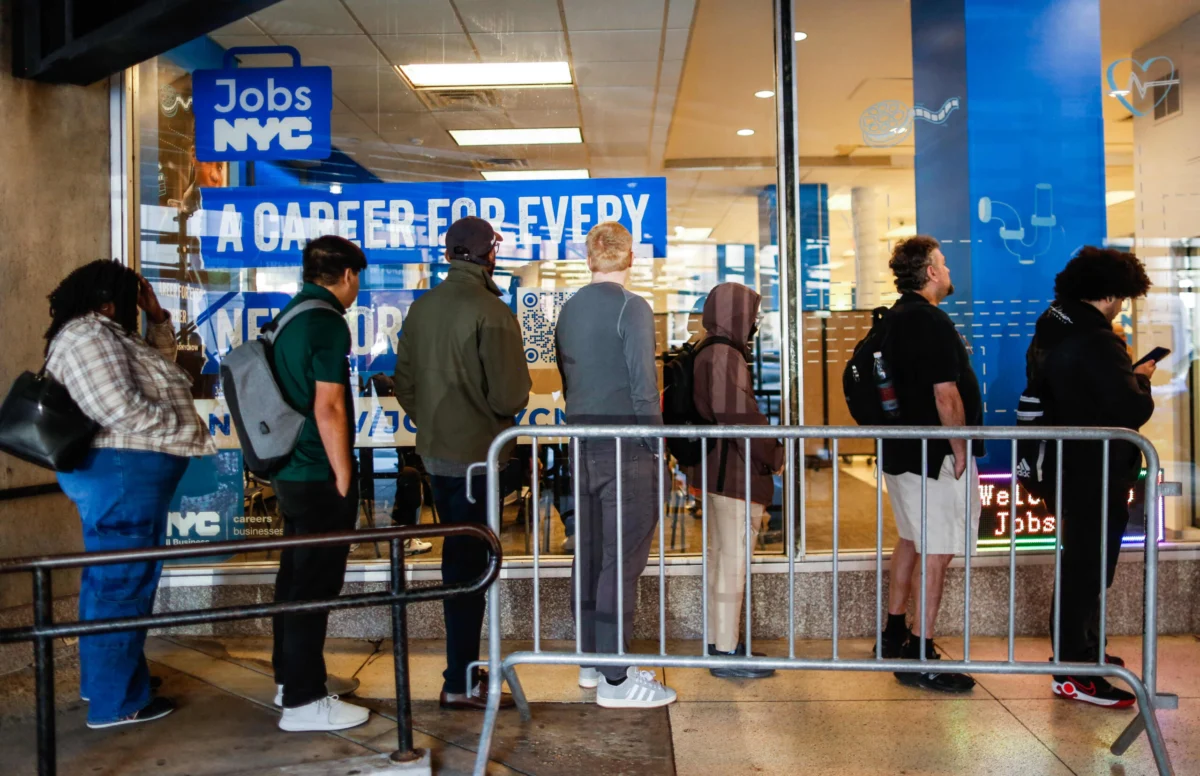
Americans experiencing job loss today face a stark reality: securing new employment quickly is becoming increasingly difficult, a trend that stands in sharp contrast to several seemingly robust labor market indicators. The average duration of unemployment for jobless workers surpassed 27 weeks in October on a seasonally adjusted basis, according to the latest jobs report from the Bureau of Labor Statistics (BLS). This period, equivalent to nearly seven months, represents the longest stretch outside of the unique circumstances of the pandemic era since 2016, a time when the U.S. labor market was still painstakingly recovering from the profound disruptions of the 2008 financial crisis.
The Growing Ranks of the Long-Term Unemployed
The BLS data reveals a concerning rise in the number of individuals trapped in prolonged job searches. Approximately 2 million Americans have now been without work for at least 27 weeks. This cohort, officially designated as the "long-term unemployed," constituted 27.6% of all jobless workers in October. This share marks the highest proportion observed since late 2021, underscoring a growing structural issue within the labor market. While monthly figures for this series can exhibit some volatility, senior economist Cory Stahle at Indeed, a prominent hiring platform, noted, "If you look over a longer time horizon, there is no mistake in the trend." His observation highlights that this is not a transient fluctuation but a persistent and worsening phenomenon.
This lengthening duration of joblessness is a troubling signal, particularly within what otherwise appears to be a stable and even strong labor market. Experts describe the current environment as a "low-hire, low-fire" market. Companies, while hesitant to initiate widespread layoffs due to lingering memories of pandemic-era labor shortages and the costs associated with rehiring, are simultaneously exercising extreme caution in expanding their workforces. This creates a bottleneck for job seekers, as fewer opportunities become available even as the pool of unemployed individuals grows.
The Economic and Human Toll of Extended Joblessness
The implications of long-term unemployment extend far beyond mere statistics, exacting a heavy toll on individuals and potentially hindering broader economic recovery. Research consistently demonstrates that Americans who endure extended periods without work face a cascade of negative consequences. These include significant depletion of personal savings, a diminished earnings potential over their remaining careers, and a marked decline in mental health. The psychological burden of prolonged joblessness—stress, anxiety, and a loss of self-worth—can be as debilitating as the financial strain.
Furthermore, workers caught in extended unemployment risk falling into a self-perpetuating cycle, a phenomenon extensively documented by researchers. As analysts at the Federal Reserve Bank of Richmond warned earlier this year, "Time spent unemployed may itself reduce the probability of finding a job, perhaps because skills depreciate, networks thin or employers interpret long unemployment durations as a negative signal." This "scarring effect" means that the longer someone is unemployed, the harder it becomes to re-enter the workforce, even if their skills are still relevant. Employers may view long gaps in employment with suspicion, assuming a decline in competence or motivation, even if unwarranted.
A critical aspect of this challenge is the duration of unemployment benefits. In most U.S. states, government unemployment benefits typically cease after 26 weeks within a year. Given that the average unemployment duration now exceeds this threshold, a rising share of long-term unemployed individuals helps explain why initial and continuing jobless claims have paradoxically remained low. Many individuals who have exhausted their benefits are no longer counted in the continuing claims data, effectively masking the true scale of persistent joblessness. Stahle underscored this crucial point: "Now, the average unemployed person takes longer to find a job than their benefits would last. That is a really key point of this." This means a growing number of Americans are navigating their job search without any financial safety net, amplifying their economic vulnerability.
A ‘Jarring’ Narrative: The Paradox of a Bifurcated Labor Market
The rise in long-term unemployment presents a "jarring" narrative when juxtaposed against several other positive indicators within the broader labor market, creating a complex and somewhat contradictory picture. The October jobs report, for instance, revealed that nonfarm payrolls surged by 165,000 jobs, significantly surpassing economists’ forecasts. The national unemployment rate also saw a slight tick down to 4.1%, a figure marginally lower than predictions. These headline numbers typically signal a robust and expanding economy.
Further reinforcing the perception of a strong labor market, a separate BLS report released earlier in the month showed that job openings came in much higher than economists expected in September. This metric, often derived from the Job Openings and Labor Turnover Survey (JOLTS), indicates that demand for labor remains elevated in many sectors. Additionally, the number of workers voluntarily quitting their jobs—a widely accepted barometer of worker confidence in their ability to secure new and often better employment—spiked to levels not seen since March 2025. This suggests that a significant portion of the workforce feels secure enough to leave their current positions, anticipating greener pastures.
The BLS also reported a decrease in layoffs and discharges, reaching their lowest volume in over a year. This data point directly supports the "low-fire" aspect of the current market dynamic, indicating that employers are indeed retaining their existing staff. However, this seemingly positive trend is somewhat complicated by a recent string of high-profile workforce reductions at major corporations, which could temper public perception and worker confidence about the overall health of the job market.
For example, reports circulated this week that media giant Disney is planning to eliminate thousands of jobs, marking the latest in a series of cost-cutting measures and strategic reorientations for the company this year. Similarly, American Express announced last month its intention to slash its headcount by 5% as it reorients its business strategy, particularly in response to the growing influence of artificial intelligence across various industries. These large-scale corporate layoffs, even if fewer in number overall, tend to capture significant media attention and can create a sense of unease among workers.
"It’s difficult to separate what’s happening to you or the people around you from the big picture," observed Elizabeth Renter, lead economist at Life360. She noted that "When your LinkedIn is filled with layoffs and your social circle features a few folks who have been job seeking for several months, positive narratives about the labor market can seem jarring." This sentiment encapsulates the current dichotomy: while aggregate data suggests strength, individual experiences of job loss and prolonged unemployment paint a much bleaker picture.
Historical Context and the Road to the "Low-Hire, Low-Fire" Market
To fully understand the current predicament, it’s essential to consider the economic journey that led here. The U.S. labor market experienced an unprecedented shock during the initial phase of the COVID-19 pandemic in 2020, with millions of jobs lost in a matter of weeks. This was followed by a robust, albeit uneven, recovery, characterized by rapid hiring, wage growth, and the phenomenon dubbed the "Great Resignation," where workers voluntarily left jobs at record rates, often seeking better pay, conditions, or work-life balance.
However, this rapid recovery also contributed to surging inflation, prompting the Federal Reserve to embark on an aggressive campaign of interest rate hikes beginning in early 2022. These rate increases, designed to cool the economy and bring inflation under control, have had a discernible impact on business investment and hiring decisions. Companies, facing higher borrowing costs and uncertain economic prospects, became more cautious. While the Fed’s actions have largely succeeded in moderating inflation without triggering a full-blown recession—a so-called "soft landing"—they have also contributed to a deceleration in hiring activity.
This confluence of factors has created the "low-hire, low-fire" environment. Businesses are wary of making new hiring commitments that might become liabilities if the economy truly falters. At the same time, having navigated severe labor shortages during the pandemic, they are reluctant to let go of existing talent, fearing the difficulty and cost of rehiring once conditions improve. This dynamic effectively traps those already outside the workforce, making it harder for them to re-enter.
Broader Economic and Social Implications
The persistence of long-term unemployment carries significant broader implications for the U.S. economy and society. Economically, a large pool of unemployed workers represents underutilized human capital, dampening overall productivity and potential economic growth. Reduced consumer spending from millions of jobless households can further slow economic activity. It also places a strain on public resources, even if many of the long-term unemployed have exhausted benefits, as they may turn to other social assistance programs.
Socially, sustained long-term unemployment can exacerbate income inequality and create deeper divides within communities. It can lead to a loss of essential skills, making it harder for the workforce to adapt to future economic shifts. For individuals, the loss of income, professional networks, and self-esteem can have lasting effects, impacting families, educational opportunities for children, and overall community well-being. The erosion of skills and professional networks can also create a "lost generation" of workers whose career trajectories are permanently altered.
Policy Considerations and the Path Forward
Addressing the rise in long-term unemployment requires a nuanced approach, acknowledging the complex interplay of factors at play. Potential policy responses could include:
- Extended Unemployment Benefits: In past economic downturns, Congress has often approved extensions of unemployment benefits beyond the standard 26 weeks. While the current aggregate unemployment rate is low, the concentration of long-term joblessness suggests that targeted extensions might be warranted for specific groups or regions.
- Workforce Development and Retraining Programs: Investing in robust federal and state-level programs that offer skills training, reskilling for in-demand industries (like those driven by AI and technology), and job placement assistance could help bridge the gap between the skills of the unemployed and the needs of employers.
- Targeted Employment Initiatives: Government-backed initiatives aimed at creating temporary public works programs or incentivizing private companies to hire long-term unemployed individuals could provide immediate relief and pathways back into the workforce.
- Addressing Employer Biases: Efforts to educate employers on the "scarring effect" and encourage a more open-minded approach to hiring individuals with employment gaps could also be beneficial.
- Monitoring and Research: Continued rigorous data collection and research by agencies like the BLS and the Federal Reserve are crucial to understand the evolving dynamics of long-term unemployment, including demographic breakdowns and industry-specific challenges.
The Federal Reserve, with its dual mandate of maximizing employment and maintaining price stability, faces a delicate balancing act. While its aggressive rate hikes have helped cool inflation, the growing duration of unemployment suggests that the "soft landing" might still entail significant hardship for a segment of the population.
The current labor market narrative is undoubtedly complex. While headline figures of job creation and a low unemployment rate offer a comforting picture of overall economic health, the steadily rising duration of unemployment and the growing ranks of the long-term jobless paint a more challenging and concerning reality. This bifurcation underscores the need for policymakers, businesses, and individuals to look beyond aggregate statistics and address the specific, often hidden, struggles within the workforce, ensuring that the benefits of economic recovery are broadly shared and that no segment of the population is left behind in a protracted search for opportunity.