Gilang Muhammad
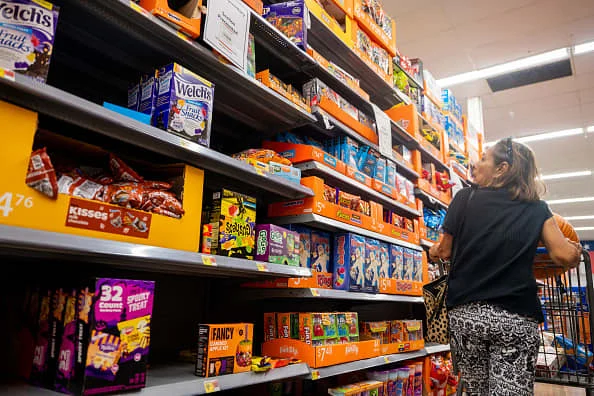
American consumers demonstrated increasing caution in October, leading to the slowest retail sales growth in nearly a year as persistent high prices began to significantly impact household budgets. According to the latest CNBC/NRF Retail Monitor, total retail spending on a seasonally adjusted basis reached $561.7 billion, marking a modest 0.2% increase from September. This figure, while 3.6% above spending levels recorded a year prior, underscores a palpable shift in consumer behavior, driven by a prolonged period of elevated inflation and rising borrowing costs. Core retail spending, which excludes the volatile restaurant sector, also registered a tempered rise of 0.3% month-over-month, reaching $454.2 billion, and stood 3.4% higher than October of the previous year. The National Retail Federation (NRF) highlighted that this monthly growth rate was the weakest since November of the prior year (2023), signaling that shoppers are becoming more discerning and strategic with their purchases as their disposable income is stretched thin. While a robust Halloween season and the early initiation of holiday promotional campaigns prevented an even more substantial slowdown, the data presents a clear picture of a consumer base navigating a challenging economic landscape.
Decoding the Consumer Climate: Inflation’s Grip and Spending Shifts
The deceleration in retail sales is a critical barometer of the current economic environment, providing tangible evidence of how higher-than-usual inflation is directly affecting the purchasing power and spending habits of U.S. households. For months, consumers have contended with rising costs across a spectrum of goods and services, from everyday groceries to energy and housing. The cumulative effect of these price hikes appears to be culminating in a more restrained approach to discretionary spending. This trend aligns with broader economic indicators that suggest a cooling in consumer demand, a necessary component in the Federal Reserve’s ongoing battle against inflation.
Matthew Shay, CEO of the National Retail Federation, encapsulated this sentiment, stating, "Households are managing budgets carefully, timing purchases around special offers and sales events in order to stretch their dollars. Retailers continue to offer promotions and value pricing to keep everyday items and holiday gifts affordable." This statement not only acknowledges the financial pressures faced by consumers but also highlights the proactive strategies retailers are employing to maintain sales velocity in a competitive and cost-sensitive market. These strategies include early Black Friday deals, expanded loyalty programs, and targeted discounts designed to capture cautious spending.
The CNBC/NRF Retail Monitor, a collaboration that has recently expanded its scope to include approximately 120 million debt and credit cards through data from Affinity Solutions, offers one of the most comprehensive insights into U.S. consumer spending. Its granular data allows for a detailed analysis of spending patterns across various sectors, providing a crucial understanding of where consumers are choosing to spend—and where they are pulling back.
Sectoral Performance: Winners and Losers in a Tight Market
A deeper dive into the October data reveals a mixed bag across retail sectors, reflecting a nuanced adjustment in consumer priorities. While overall spending growth was sluggish, nine out of 11 sectors recorded year-over-year increases, indicating that demand remains resilient in certain areas, even as consumers tighten their belts elsewhere.
Electronics and Appliances Lead the Charge: The electronics and appliances category emerged as a surprising frontrunner, posting a robust 9.3% increase over the 12-month period. This growth, often dubbed "funflation" by analysts, is partly attributable to the ongoing demand for personal technology and home entertainment upgrades. Moreover, technology companies have been raising prices on popular products, from Apple’s MacBooks to Microsoft’s Xbox consoles, driven by surging memory chip costs. This increase in component prices is largely a ripple effect of the burgeoning artificial intelligence (AI) boom, which has dramatically escalated demand for high-performance semiconductors. Despite overall economic pressures, consumers appear willing to invest in technology that enhances productivity, connectivity, or leisure, possibly viewing these as essential modern amenities rather than pure luxuries. This sector’s resilience suggests a bifurcation in discretionary spending, where consumers prioritize certain high-value, long-lasting tech items over other forms of entertainment or home improvements.
Housing Market Freeze Chills Furniture and Home Furnishings: In stark contrast, the furniture and home furnishings sector experienced a significant contraction. Sales in this category dropped by 0.2% month-over-month in October and registered a 2.6% decline over the past 12 months. This downturn is directly linked to the "deep freeze" in the U.S. housing market. Escalating mortgage rates, which climbed steadily throughout the year, have severely dampened both new home sales and existing home transactions. With fewer homes changing hands and homeowners facing higher financing costs for renovations, demand for big-ticket items like sofas, dining sets, and other home décor has plummeted. The average 30-year fixed mortgage rate, which had hovered around 3% just a few years prior, had surged past 7.5% by October 2024, pricing many potential buyers out of the market and making home improvement loans less attractive. This trend underscores the strong interrelationship between the housing market’s health and consumer spending on home-related goods, demonstrating how macroeconomic factors can have direct and measurable impacts on specific retail segments.
Leisure Items See Pullback: Spending on a basket of leisure items, including sporting goods, music, and bookstores, also reflected consumer cautiousness. While this category saw a slight tick upward from September to October, it recorded an overall pullback of 0.4% on a year-over-year basis. This indicates that while consumers may still be engaging in some leisure activities, they are likely moderating their spending on related goods. This could be due to a reallocation of funds towards necessities, or a shift towards more affordable forms of entertainment and recreation that do not require significant upfront purchases. The subtle month-over-month increase could be attributed to early holiday gift purchases in these categories or specific promotional events, but the annual decline suggests a broader trend of consumers curtailing non-essential discretionary spending.
Broader Economic Context: Inflationary Headwinds Persist
The October retail sales data arrives amidst a flurry of economic reports that paint a picture of an economy grappling with persistent inflationary pressures. On the day preceding the retail sales announcement, the Bureau of Labor Statistics reported that its closely watched Consumer Price Index (CPI) increased by 0.4% in October, a rate slightly higher than economists had forecasted. This continued upward creep in the CPI indicates that while the pace of inflation has moderated from its peak, it remains stubbornly above the Federal Reserve’s target of 2%. Core CPI, which excludes volatile food and energy prices, also showed sustained upward pressure, suggesting that price increases are broad-based across the economy.
Further compounding concerns, a National Federation of Independent Business (NFIB) survey released on Tuesday revealed that a net 37% of small businesses planned to hike prices in the next three months. This figure is the highest since July 2022, a period when the U.S. economy was reeling from severe energy price shocks exacerbated by the Russian invasion of Ukraine. Small businesses, often operating on thinner margins, are typically quicker to pass on rising input costs—such as wages, rent, and materials—to consumers. This willingness to raise prices indicates that inflationary pressures are not just a matter of strong consumer demand but also stem from elevated operating costs faced by businesses themselves. The NFIB data suggests that the battle against inflation is far from over and that consumers should brace for further price adjustments in the near future.
Political Reverberations: Inflation at the Ballot Box
The economic anxieties stemming from inflation and the rising cost of living were not confined to financial reports; they resonated deeply in the political arena. Inflation and the cost of living emerged as central issues for voters in the preceding week’s midterm elections. These concerns contributed significantly to one of the largest shifts of U.S. political power in recent history. Voters, feeling the pinch of higher prices in their daily lives, expressed their discontent at the ballot box, leading to a challenging environment for incumbent parties. This political outcome underscores the profound societal impact of economic conditions and places immense pressure on policymakers to address inflation effectively. The election results serve as a stark reminder that economic stability and affordability are paramount concerns for the electorate, influencing everything from consumer confidence to national governance.
Monetary Policy and the Road Ahead
The Federal Reserve has been aggressively raising interest rates since early 2022 in an effort to cool the economy and bring inflation under control. While these measures have begun to slow certain sectors, such as housing, the persistence of inflation and the mixed signals from retail sales data present a complex challenge for monetary policymakers. The slower retail sales growth in October could be interpreted as a sign that the Fed’s tightening policies are indeed having their intended effect, gradually dampening demand. However, the continued rise in CPI and the intentions of small businesses to hike prices suggest that inflationary pressures are still deeply embedded.
Economists are now closely watching how the Fed will interpret these latest figures. Some analysts suggest that the cooling retail sales might give the Fed more flexibility to pause or slow the pace of future rate hikes, hoping to achieve a "soft landing" rather than triggering a recession. Others argue that the core inflation readings and business pricing plans indicate that more restrictive measures might still be necessary to fully subdue price pressures. The balancing act for the Fed involves taming inflation without unduly stifling economic growth, a task made more difficult by the divergent trends seen in different economic indicators. The implications of the Fed’s decisions will ripple through borrowing costs for consumers and businesses, influencing everything from credit card interest rates to business investment.
Outlook for the Holiday Season and Beyond
The October retail sales report sets a cautious tone for the crucial holiday shopping season, which traditionally accounts for a significant portion of annual retail revenue. Retailers, already anticipating a more frugal consumer, have front-loaded promotions and emphasized value propositions. The NRF predicts a more modest holiday sales increase compared to previous years, reflecting the prevailing economic headwinds. Consumers are expected to be highly strategic, leveraging sales events like Black Friday and Cyber Monday, and carefully comparing prices across retailers.
Looking further ahead into 2025, the trajectory of retail sales will largely depend on the evolution of inflation, the labor market’s resilience, and the Federal Reserve’s monetary policy decisions. If inflation continues to moderate and wage growth sustains, consumer confidence could rebound, potentially loosening the grip on spending. However, if inflation remains stubbornly high or if a significant economic slowdown materializes, retailers and consumers alike may face an even more challenging environment. The current data strongly suggests that the era of robust, unbridled consumer spending may be temporarily on hold, replaced by a more considered and value-driven approach as households adapt to a new economic reality. The ability of retailers to innovate and adapt to these changing consumer preferences will be paramount in navigating the uncertain economic waters ahead.