Putri Inara
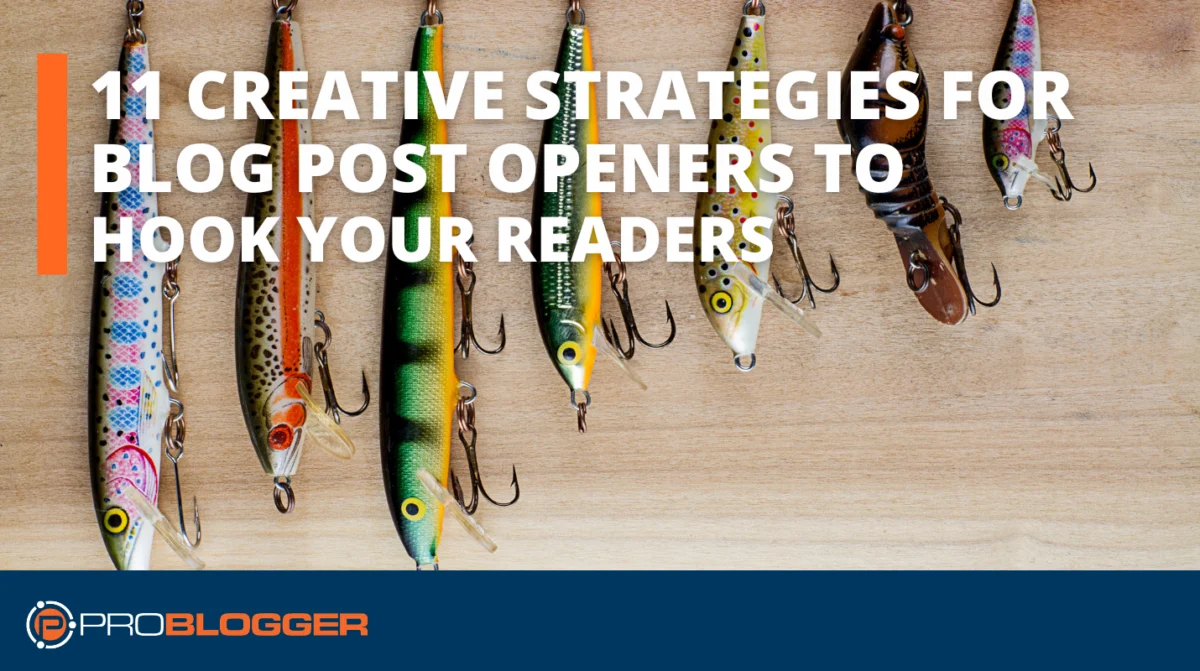
The digital publishing industry has reached a critical inflection point where the sheer volume of content necessitates more sophisticated methods for capturing and retaining audience attention. In the contemporary landscape of digital media, the opening line of a blog post or article has transitioned from a mere introductory sentence into a high-stakes psychological tool. Following the headline, which serves as the primary gateway for traffic, the lead sentence functions as the secondary filter, determining whether a user will commit to a full reading or exit the page within seconds. Industry data suggests that the average user spends fewer than 15 seconds on a webpage before deciding to stay or leave, placing an immense burden of performance on the initial 20 to 50 words of any published piece.
As part of a comprehensive framework for digital content creation, professional writers are increasingly adopting structured strategies to mitigate "bounce rates"—the metric representing visitors who leave a site after viewing only one page. The methodology behind these strategies relies on a blend of cognitive psychology, traditional journalism, and data-driven marketing. By analyzing the mechanics of reader engagement, experts have identified eleven distinct strategies that serve to bridge the gap between a curious click and sustained reading.
The Evolution of the Digital Lead: A Chronology of Engagement
The history of the "lead" or "lede" finds its roots in 19th-century telegraphy, where the "inverted pyramid" style of journalism was developed. Reporters would transmit the most crucial facts first in case the telegraph line was cut. As media transitioned into the 20th-century magazine era, the lead became more descriptive and narrative, designed to build atmosphere.
With the advent of the World Wide Web in the 1990s and the blogging boom of the early 2000s, the chronology of the opening line shifted again. Early digital content relied heavily on search engine optimization (SEO) keyword stuffing, often sacrificing readability for discoverability. However, as search algorithms evolved to prioritize user experience (UX) and "dwell time," the focus returned to high-quality, engaging prose. Between 2010 and 2024, the rise of mobile browsing and social media "scroll culture" further compressed the window for engagement. Today, the opening line must compete not only with other articles but with instant notifications and the infinite scroll of social platforms.
Strategic Frameworks for Reader Retention
The application of specific opening strategies is no longer a matter of creative whim but a tactical necessity. Each of the following eleven methods targets a specific psychological trigger intended to bypass the reader’s natural inclination toward distraction.
1. Identifying and Addressing Immediate Needs
The most direct approach involves the immediate identification of a reader’s pain point. By articulating a problem the reader is currently facing, the writer establishes immediate relevance. This strategy operates on the principle of utility; if a reader perceives that the text contains a solution to a personal or professional hurdle, the motivation to continue reading increases exponentially.
2. The Psychology of the "One-Answer" Question
Utilizing questions that elicit a reflexive "yes" response is a technique borrowed from high-conversion copywriting. This method creates a "consistency loop" in the reader’s mind. When a reader internally agrees with an opening premise—such as "Do you want to improve your writing efficiency?"—they are psychologically predisposed to follow the subsequent advice to maintain internal consistency.
3. Creating Curiosity Gaps through Intrigue
The "curiosity gap" is a theory developed by George Loewenstein in the early 1990s, suggesting that when there is a gap between what we know and what we want to know, we feel a sense of deprivation. Opening with an intriguing question that promises a future revelation compels the reader to finish the article to close that cognitive gap.
4. The Pattern Interruption: Surprise and Anecdote
In a sea of standardized content, the "pattern interrupt" is a powerful tool. This involves starting with a personal anecdote or a surprising fact that seems unrelated to the headline. This disorientation forces the brain to pay closer attention to reconcile the unexpected information with the expected topic. For instance, beginning a technical guide with a humorous personal mistake can humanize the author and build immediate rapport.
5. Narrative Transportation through Storytelling and Analogy
Narrative transportation refers to the phenomenon where a reader becomes so immersed in a story that they lose track of their physical surroundings. Using a brief story or a vivid analogy to open a post can transform an abstract or dry topic into a relatable human experience. This method is particularly effective for complex technical subjects, where an analogy can serve as a cognitive bridge.
6. Bold Assertions and Authoritative Claims
A strong, authoritative claim sets a high expectation for the content. This approach establishes the writer as an expert and promises a high-value takeaway. However, data indicates that this strategy carries a higher risk; if the subsequent content fails to support the bold opening claim, reader trust is permanently damaged.
7. Strategic Use of Controversy
Controversy remains one of the most effective ways to stop a reader’s scroll. By challenging a commonly held belief or taking a firm stance on a polarizing industry topic, a writer invites the reader to either validate their own opinion or prepare a counter-argument. In both scenarios, the reader must engage with the text to understand the author’s rationale.
8. Sensory Engagement and Vivid Imagery
Painting a "word picture" engages the sensory cortex of the brain. When a writer describes a scenario using sensory details—sight, sound, or feeling—the reader’s brain processes that information more deeply than abstract facts. This visualization creates an emotional anchor that tethers the reader to the narrative.
9. Data-Driven Leads and Startling Statistics
In an era of misinformation, hard data provides a sense of security and authority. Starting with a startling statistic—such as "only one out of every 100 readers will comment on a blog post"—immediately quantifies a problem and provides a factual foundation for the discussion that follows.
10. The Authority of the Quote
Leading with a quote from a recognized figure leverages "borrowed authority." A well-chosen quote can encapsulate the theme of the article more succinctly than original prose and provides a familiar touchstone for the audience.
11. Visual-First Integration
In visual-centric digital environments, the "opening line" may actually be an image. Data from eye-tracking studies shows that users almost always look at images before text. A striking, relevant image paired with a strong first sentence can increase engagement rates by over 40% compared to text-only leads.
Supporting Data and Industry Analysis
The efficacy of these strategies is supported by various metrics within the digital marketing sector. According to a study by the Nielsen Norman Group, users follow an "F-shaped" pattern when reading web content: they read the first few lines across the top, then move down the page and read a shorter horizontal line, and finally scan the left side of the content. This confirms that the highest density of attention is concentrated in the opening paragraph.
Furthermore, statistics from the Content Marketing Institute indicate that articles with "hook-driven" leads see a 25% higher average time-on-page than those that use generic introductions. In the context of SEO, this "dwell time" is a significant ranking factor for search engines like Google. If a user clicks a link and immediately returns to the search results (a "pogo-sticking" effect), the search engine interprets the content as irrelevant or low-quality, leading to a decrease in search rankings.
Professional Reactions and Best Practices
Digital editors and content strategists emphasize that while these eleven techniques are effective, they must be used with discretion. "The goal is engagement, not deception," states a consensus of industry experts. The use of "clickbait" openings—those that promise information they do not deliver—has led to a more skeptical audience.
Professional best practices now dictate a "Value-First" approach. This means that regardless of the creative strategy used (whether it be a story, a statistic, or a question), the opening must be intrinsically linked to the core value proposition of the article. Writers are encouraged to rotate these strategies to avoid becoming predictable, as loyal audiences can become desensitized to a single repeated technique.
Broader Impact and Implications
The mastery of opening lines has implications beyond individual blog success. For businesses, it translates directly into lead generation and brand authority. In a competitive market, the ability to hold a potential customer’s attention for the duration of a 1,500-word article is a significant competitive advantage.
On a broader scale, the shift toward more engaging opening strategies reflects a larger trend in human communication. As information becomes more fragmented, the ability to synthesize complex ideas into compelling, immediate narratives is becoming a primary skill in the digital economy. The opening line is no longer just the start of a story; it is a critical interface between an author’s expertise and a distracted world’s need for clarity and value. As algorithms continue to prioritize human-centric engagement metrics, the art of the "hook" will remain a cornerstone of successful digital communication for the foreseeable future.