Ena Muazin
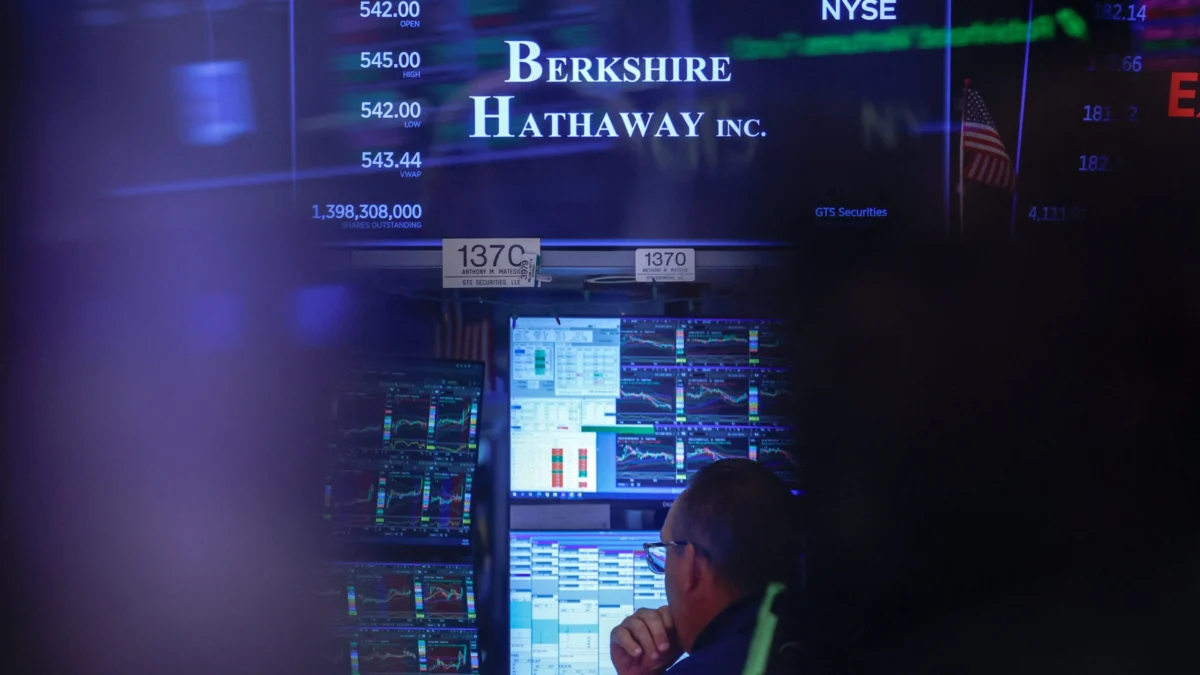
Frankfurt – Berkshire Hathaway, the colossal American conglomerate led by CEO Greg Abel, has significantly ramped up its share buyback program in the third quarter, repurchasing stock worth a staggering $9.6 billion. This aggressive move marks the highest quarterly buyback volume this year and signals a notable shift in capital allocation strategy under Abel, who assumed the CEO role from legendary investor Warren Buffett in January. The decision to deploy substantial capital towards repurchasing its own shares underscores Abel’s readiness to utilize the company’s vast cash reserves, a departure from the more conservative approach often associated with his predecessor and mentor, Warren Buffett, who guided Berkshire for six decades.
Strategic Shift in Capital Deployment
The substantial increase in share repurchases during the third quarter is a key indicator of Berkshire Hathaway’s evolving financial strategy under Greg Abel. While Buffett, now 96, was known for his prudent and often patient approach to capital deployment, Abel appears to be more inclined to actively manage the company’s immense liquidity. The $9.6 billion spent on buybacks in the latest quarter significantly outpaced previous periods, suggesting a deliberate effort to return value to shareholders by reducing the number of outstanding shares, thereby potentially increasing earnings per share and signaling confidence in the company’s intrinsic value.
This acceleration in buybacks comes at a time when Berkshire Hathaway continues to amass significant cash. Despite the aggressive share repurchases, the company’s cash reserves actually grew from the previous quarter to $377.4 billion. This substantial war chest reflects the ongoing strength of Berkshire’s diverse operating businesses and its continued success in generating free cash flow. The sheer size of this liquidity pool positions Berkshire Hathaway as a financial powerhouse with immense capacity for future investments, acquisitions, or further shareholder returns.
Berkshire Hathaway: A Diversified American Behemoth
Berkshire Hathaway is not merely an investment firm; it is a sprawling conglomerate with a presence in numerous sectors of the U.S. economy. Its vast portfolio includes major holdings in insurance, energy, and industry, alongside a significant number of smaller and medium-sized businesses. The company’s insurance operations, a cornerstone of its success, generate substantial premiums that can be reinvested. Its energy division provides essential services across various regions, and its industrial segment encompasses a wide array of manufacturing and service companies. This diversification acts as a buffer against economic downturns in specific sectors and provides a consistent stream of earnings.
The value of Berkshire Hathaway’s equity investments alone is estimated to be around $336 billion, highlighting the immense scale and success of its long-term investment strategy. Warren Buffett’s legacy as one of history’s most successful investors is deeply intertwined with Berkshire’s growth. His investment philosophy, emphasizing value investing and a long-term perspective, has been meticulously followed and will likely continue to influence the company’s direction, even as leadership transitions. The portfolio movements of Berkshire Hathaway are closely scrutinized by investors worldwide, as they are often seen as a bellwether for market sentiment and strategic investment trends.
Operational Performance Amidst Buyback Surge
While the buyback activity paints a picture of aggressive capital deployment, the operational performance of Berkshire Hathaway in the third quarter presented a more mixed scenario. The company reported a 5.8% decrease in operating earnings, which fell to $12.7 billion. This decline was primarily attributed to a significant drop in profits within the crucial insurance segment.
Key Factors Affecting Insurance Segment Performance:
- Increased Claims Activity: The insurance sector is inherently susceptible to the frequency and severity of insured events. Unforeseen increases in claims, potentially related to natural disasters or other widespread incidents, can directly impact profitability. While specific details of these events were not immediately provided in the initial reports, such occurrences are a known risk factor for insurers.
- Underwriting Losses: Profitability in insurance is determined by the balance between premiums collected and claims paid out, along with operating expenses. A rise in claims or an increase in operational costs without a corresponding increase in premium income can lead to underwriting losses.
- Investment Income Volatility: While Berkshire’s insurance operations generate underwriting profits, they also benefit from investment income earned on the substantial "float" (premiums collected but not yet paid out in claims). Fluctuations in investment markets can affect this income stream.
This dip in operational earnings, particularly from the insurance division, highlights the inherent cyclicality and risks associated with certain business segments, even within a diversified conglomerate like Berkshire Hathaway. It underscores that while capital allocation strategies like share buybacks can enhance shareholder value, they operate alongside the fundamental performance of the underlying businesses.
Timeline of Leadership Transition and Capital Allocation
The recent surge in share buybacks is best understood within the context of the leadership transition at Berkshire Hathaway.
- November 2021: Berkshire Hathaway announces that Greg Abel, then vice chairman of non-insurance operations, has been selected as the successor to Warren Buffett as CEO. This announcement provided clarity and a sense of continuity for investors.
- January 2022: Greg Abel officially assumes the role of CEO of Berkshire Hathaway. This marks the beginning of his direct influence on the company’s strategic decisions, including capital allocation.
- Q1-Q3 2022: Throughout the first three quarters of 2022, Berkshire Hathaway has been actively repurchasing its shares, with the third quarter witnessing a pronounced acceleration of this activity. This period reflects Abel’s early tenure and his approach to managing the company’s substantial financial resources.
The contrast in buyback activity between the periods before and after Abel’s CEO appointment is significant. While Buffett also oversaw share repurchases, the scale and pace initiated under Abel suggest a more proactive and perhaps aggressive stance on returning capital to shareholders. This shift is a critical point of observation for investors analyzing Berkshire’s future trajectory.
Broader Market Implications and Investor Sentiment
The substantial share buyback program by Berkshire Hathaway carries several implications for the broader financial market and investor sentiment:
- Indicator of Confidence: Large-scale buybacks are often interpreted as a strong signal of management’s confidence in the company’s future prospects and its belief that its stock is undervalued. This can boost investor confidence in Berkshire Hathaway itself and potentially in the broader market if seen as a trendsetter.
- Support for Stock Price: By reducing the supply of shares in the open market, buybacks can provide support for the company’s stock price, especially during periods of market volatility.
- Impact on Earnings Per Share (EPS): Fewer outstanding shares directly translate to a higher earnings per share figure, assuming net earnings remain constant or increase. This can make the company’s financial metrics appear more attractive.
- Competition for Capital: With $377.4 billion in cash, Berkshire Hathaway has immense financial firepower. Its decisions on how to deploy this capital – whether through buybacks, acquisitions, or investments in its own businesses – have a ripple effect. A strong commitment to buybacks may suggest a more cautious approach to large-scale acquisitions in the current market environment, or it could indicate that management sees limited compelling acquisition targets at present.
Analysis of Abel’s Strategy
Greg Abel’s approach to capital allocation at Berkshire Hathaway appears to be characterized by a willingness to actively deploy the company’s vast cash reserves. This contrasts with the more patient, value-oriented approach that Warren Buffett famously employed for decades. While Buffett was certainly not averse to share buybacks, Abel seems to have made them a more central and aggressive component of Berkshire’s capital return strategy.
Potential Motivations for Accelerated Buybacks:
- Lack of Compelling Acquisition Targets: In an environment where many assets may be perceived as overvalued, management might find repurchasing their own shares to be the most accretive use of capital.
- Maximizing Shareholder Value: By reducing the number of shares outstanding, Abel could be aiming to enhance shareholder returns through increased EPS and a potential boost to the stock price.
- Signaling Financial Strength: The ability to execute such large buybacks, even amidst operational headwinds in certain segments, demonstrates the underlying financial robustness of Berkshire Hathaway.
- Long-Term Investment Philosophy Adaptation: While Buffett’s philosophy was deeply ingrained, Abel may be adapting it to current market conditions, where immediate shareholder returns through buybacks can be as valuable as long-term value creation through acquisitions.
The long-term implications of this strategy will be closely watched. A sustained period of aggressive buybacks could reshape Berkshire’s financial structure and its valuation multiples. Investors will be keen to see if this approach leads to sustained outperformance and whether it aligns with the core principles of value creation that have defined Berkshire Hathaway under Buffett’s stewardship. The ongoing performance of its diverse operating businesses, particularly the insurance segment, will remain a critical factor in evaluating the overall success of Abel’s leadership. The balance between returning capital to shareholders and investing in the long-term growth and resilience of its businesses will be the key determinant of Berkshire’s future success.