Clara Shinta
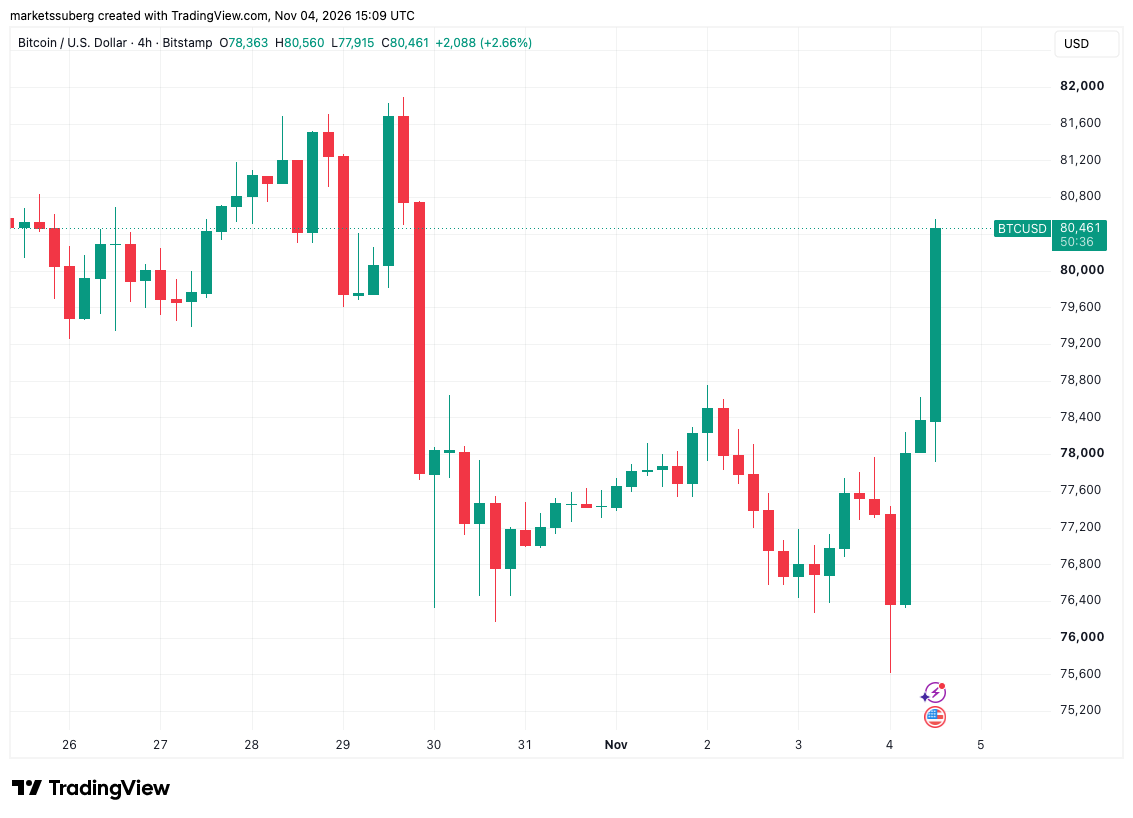
Wednesday’s trading session saw a significant uplift across financial markets, with Bitcoin (BTC) reclaiming the $80,000 mark at the Wall Street open, propelled by a broad surge in US stocks. This robust market performance followed a pivotal Democratic sweep in the recent midterm elections, a development that initially caused a brief dip but ultimately ignited a powerful "relief rally" as political uncertainty dissipated and geopolitical tensions appeared to ease.
A Sweeping Victory and Market Rebound
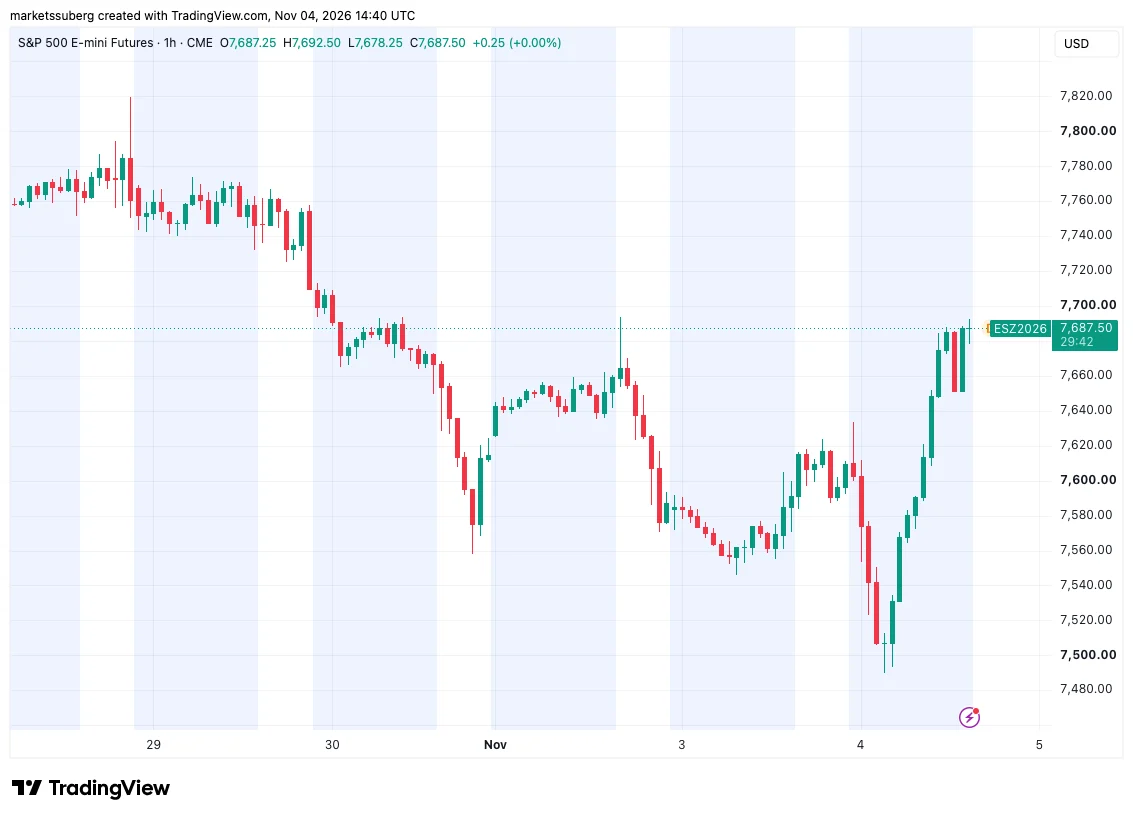
The outcome of the midterm elections, which saw Democrats secure significant gains in both the Senate and the House of Representatives, marked a notable shift in the American political landscape. This change, described by trading resource The Kobeissi Letter as "one of the largest shifts in US political power in nearly two decades," had an immediate, albeit complex, impact on investor sentiment. Initial overnight reactions in US stock futures indicated a cautious dip, with S&P 500 futures falling to 7,490 points, their lowest since July 31. However, this weakness proved to be fleeting, quickly reversing into a strong rebound that saw futures ascend to 7,690 points, nearing new month-to-date highs. The Kobeissi Letter characterized this initial market hesitation as a "textbook bear trap," where early pessimism was swiftly overcome by a broader sense of clarity and perhaps, optimism regarding future policy stability.
Bitcoin, often mirroring the broader sentiment of risk assets, responded emphatically to this market shift. Data from TradingView showed BTC/USD climbing by over 4%, a decisive rebound from its lowest levels in seven weeks. This move underscored the cryptocurrency’s increasing correlation with traditional equities and its sensitivity to macroeconomic and political narratives. The return above $80,000 was not merely a psychological milestone but a clear indicator of renewed investor confidence.
Analyst Perspectives: Beyond the Ballot Box

While the election results served as a catalyst, market analysts emphasized that the rally was underpinned by a confluence of factors extending beyond mere political outcomes. James Butterfill, head of research at crypto asset manager CoinShares, articulated this nuanced view in comments to Cointelegraph. He noted the potential for a wider Bitcoin "relief rally" as the uncertainty surrounding the elections faded, but stressed that "real yields, dollar liquidity and ETP flows still carry more weight than the elections" for Bitcoin. This perspective highlights the fundamental economic drivers that continue to influence cryptocurrency valuations, such as the actual return on investment after accounting for inflation (real yields), the availability of USD in the global financial system, and the capital flows into Bitcoin exchange-traded products (ETPs).
Butterfill also pointed to another crucial development: a significant plummet in oil prices. This drop, he explained, was "relieving some inflationary pressure and consequent rate hike expectations could moderate." This connection between energy markets, inflation, and monetary policy is critical. Lower oil prices translate to reduced input costs for businesses and lower fuel costs for consumers, potentially easing the upward pressure on the general price level. In turn, this could allow central banks, particularly the U.S. Federal Reserve, to adopt a less aggressive stance on interest rate hikes, a scenario generally favorable for risk assets like Bitcoin and stocks.
The Geopolitical Undercurrent: Iran and Oil Markets
A significant driver of the decline in oil prices was a notable shift in geopolitical rhetoric following the Democratic gains. Iran’s reaction to the election results played a crucial role in pushing US WTI crude oil prices to their lowest levels since mid-October. Mohammad Bagher Ghalibaf, Iran’s speaker of parliament, conveyed a message of de-escalation, stating in an X post that voters had "said NO TO WAR, and we endorse this message." This sentiment suggested a potential softening of international tensions, particularly concerning the Middle East, which is a critical region for global oil supply.
The market responded swiftly to this perceived reduction in geopolitical risk. WTI crude dipped below $93 per barrel, registering a substantial weekly decline of as much as 11.9%. Concurrently, Brent crude, the international benchmark, approached sub-$100 levels for the first time since October 7. These price movements were a direct reflection of diminished fears about supply disruptions from the region.
Former US President Donald Trump, in a statement reported by the Wall Street Journal, conceded that the ongoing conflict with Iran was partly responsible for the Republican Party’s losses in the elections. This acknowledgement further underscored the political and economic ramifications of the conflict. Economist Robin Brooks further elaborated on this, suggesting that oil markets had priced in a risk premium that was "too high" before the midterms. Brooks questioned, "The key question now is whether this causes the President to dial back on war with Iran or whether he escalates," indicating the ongoing sensitivity of oil prices to political decisions and geopolitical stability.
The interplay between political outcomes, geopolitical stability, and commodity prices forms a complex web. A perceived reduction in the likelihood of a wider conflict in a major oil-producing region naturally leads to an expectation of stable or increased supply, thereby lowering prices. This effect cascades through the global economy, influencing inflation expectations and, consequently, monetary policy.
Chronology of Events: A Rapid Turnaround
The sequence of events unfolded rapidly:
- Pre-Election Uncertainty: Leading up to the midterms, markets exhibited cautious sentiment, characterized by a degree of uncertainty regarding the potential shifts in political power and their implications for economic policy. This contributed to Bitcoin trading at its lowest levels in seven weeks.
- Election Night (Overnight): As early results indicated significant Democratic gains, US stock futures initially dipped. This reaction likely stemmed from investor apprehension about potential policy changes, such as increased regulation or shifts in fiscal policy, traditionally associated with a strengthened Democratic mandate. S&P 500 futures touched a low of 7,490 points.
- Wednesday Wall Street Open: A dramatic reversal occurred. As the full scope of the "Democratic sweep" became clear and initial anxieties subsided, market participants began to price in the implications of greater political clarity. This sparked a strong rebound in US equities, pushing S&P 500 futures back up to 7,690 points.
- Bitcoin’s Resurgence: Mirroring the broader market sentiment, Bitcoin (BTC) surged by over 4%, reclaiming the $80,000 threshold, signaling renewed investor confidence in risk assets.
- Geopolitical De-escalation: Simultaneously, statements from Iranian officials, particularly Mohammad Bagher Ghalibaf’s "NO TO WAR" message, were interpreted by markets as a sign of reduced geopolitical tension.
- Oil Price Plunge: This optimism directly translated into a sharp decline in crude oil prices, with WTI crude dropping below $93 per barrel and Brent crude approaching sub-$100, driven by the perceived reduction in supply risk premium.
- Analyst Confirmation: Experts like James Butterfill and The Kobeissi Letter provided analysis, confirming the "relief rally" dynamic in equities and the broader economic factors influencing Bitcoin, while Robin Brooks highlighted the pre-midterm "too high" risk premium in oil.
Broader Impact and Implications for the Economy
The market’s reaction to the midterm elections and the subsequent developments in oil markets carry significant implications for the broader economy and investment landscape. The initial market dip followed by a swift rally underscores the market’s inherent desire for clarity and stability. Regardless of the political party in power, a decisive outcome that reduces policy uncertainty often acts as a catalyst for renewed investment.
A strengthened Democratic position in Congress could signal a greater likelihood of specific policy initiatives, potentially including further infrastructure spending, social programs, or shifts in regulatory frameworks. While the exact details remain to be seen, the market often prefers a clear direction over prolonged political gridlock.
Crucially, the plunge in oil prices due to de-escalating geopolitical tensions provides a tangible benefit to the global economy. Lower energy costs can significantly alleviate inflationary pressures, which have been a primary concern for central banks worldwide. If inflation moderates, the need for aggressive interest rate hikes diminishes, potentially fostering a more accommodative monetary policy environment. Such an environment is typically supportive of economic growth and conducive to higher valuations for risk assets, including technology stocks and cryptocurrencies like Bitcoin.
Furthermore, the interconnectedness of global markets was starkly illustrated. A domestic political event in the U.S. had immediate ramifications for global commodity prices and, consequently, for international monetary policy expectations and asset valuations across diverse categories. This highlights how investors continuously monitor a broad spectrum of indicators – from election results to geopolitical statements – to gauge the future economic landscape.
Conclusion: A Multi-faceted Recovery
The resurgence of Bitcoin past $80,000, hand-in-hand with a rallying Wall Street, represents a multi-faceted recovery driven by a complex interplay of political, economic, and geopolitical factors. The Democratic sweep in the midterm elections brought about a crucial dose of political clarity, which, after an initial "bear trap," unleashed a powerful "relief rally" in equity markets. This domestic political shift, coupled with an optimistic outlook for de-escalation in the Middle East, particularly regarding Iran, led to a significant drop in oil prices.
These developments collectively contributed to a more favorable macroeconomic environment: reduced geopolitical risk, easing inflationary pressures, and the potential for moderated interest rate hikes. While fundamental factors like real yields, dollar liquidity, and ETP flows remain paramount for Bitcoin’s long-term trajectory, the recent events have undoubtedly provided a strong impetus for its short-to-medium term performance. As markets continue to digest these shifts, the focus will remain on how these new political and geopolitical realities translate into concrete economic policies and sustained stability, ultimately shaping the path forward for both traditional and digital assets.