Gilang Muhammad
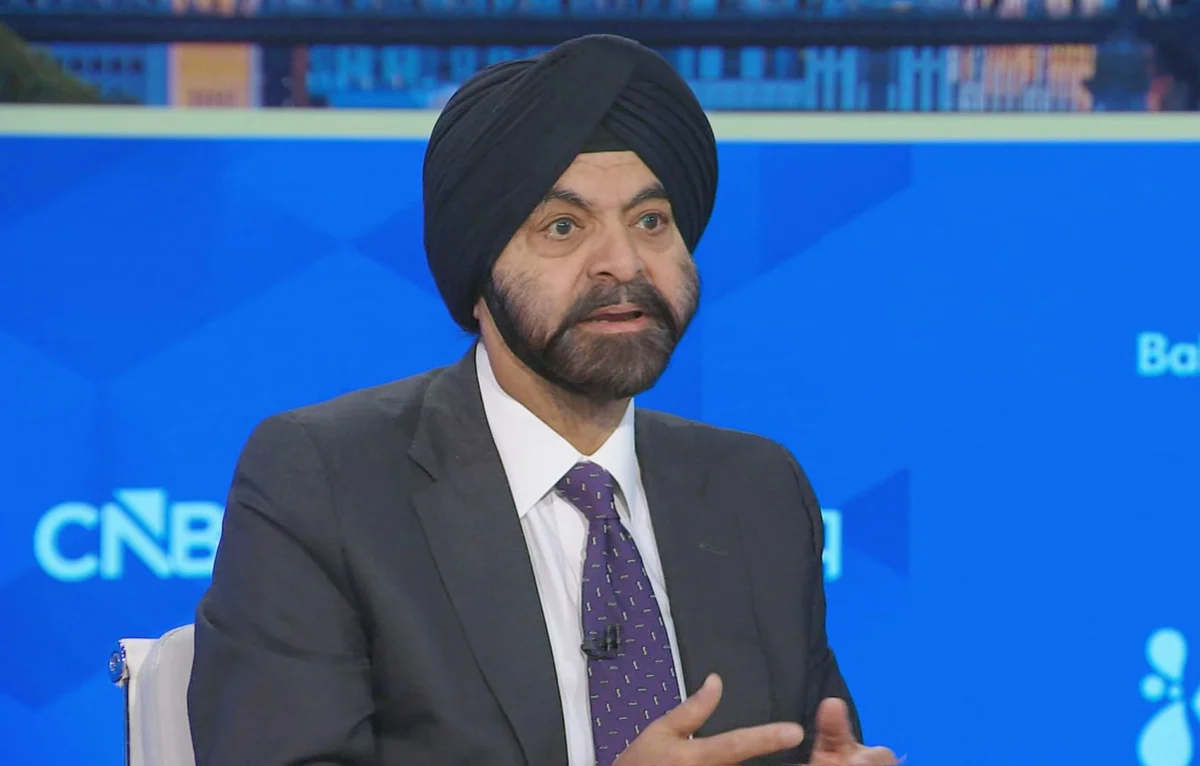
World Bank President Ajay Banga on Tuesday asserted that global capital markets remain robust and accessible, directly addressing prevailing anxieties that the burgeoning artificial intelligence sector could exert upward pressure on interest rates. Speaking on CNBC’s "Squawk Box," Banga dismissed these concerns, stating definitively, "It’s not really an issue," signaling a more optimistic outlook on the financial liquidity available for global development and technological advancement. His comments arrive at a critical juncture, preceding a series of anticipated interest rate decisions from major central banks worldwide, all while economists and policymakers grapple with the profound and multifaceted economic implications of AI’s rapid and widespread adoption.
The Economic Conundrum of AI and Capital Demand
The rapid ascent of artificial intelligence, particularly generative AI, has ignited a global debate about its potential economic ripple effects. One significant area of concern for investors and policymakers alike is the immense capital expenditure required to build and sustain the AI infrastructure. This includes investments in advanced semiconductor manufacturing, vast data centers, specialized energy grids, and the highly skilled human capital necessary for research, development, and deployment. The fear is that this colossal demand for capital could strain existing financial markets, leading to increased borrowing costs—manifesting as higher interest rates—for governments, businesses, and consumers across the board. This scenario could exacerbate inflationary pressures, complicate monetary policy, and potentially stifle investment in other crucial sectors.
Analysts have pointed to the significant investments being poured into AI. For instance, major tech companies have announced multi-billion-dollar commitments to AI development, data center expansion, and chip manufacturing. Estimates suggest that global AI market revenue could reach hundreds of billions of dollars within the next few years, requiring trillions in cumulative investment. This scale of capital redeployment has naturally raised questions about financial equilibrium. However, Banga’s perspective offers a counter-narrative, suggesting that the sheer volume of global savings and institutional investment capital is sufficient to absorb this demand without undue systemic strain. He implicitly argues that the market’s capacity for capital allocation is more flexible and expansive than some doomsayers predict.
World Bank’s Mobilization Prowess and Strategic Shifts
Banga underscored the World Bank’s substantial capacity for capital mobilization as evidence of sustained market liquidity. He highlighted that the institution successfully mobilized an impressive $112 billion last year alone. This figure represents a nearly threefold increase compared to the amount recorded just three years prior, a testament to the World Bank’s enhanced ability to attract and deploy funds for development. This surge in mobilization reflects a concerted effort under Banga’s leadership to scale up financing for critical global challenges, including climate change, poverty reduction, and digital transformation, particularly in emerging economies.
The World Bank Group, founded in 1944, comprises five institutions: the International Bank for Reconstruction and Development (IBRD), the International Development Association (IDA), the International Finance Corporation (IFC), the Multilateral Investment Guarantee Agency (MIGA), and the International Centre for Settlement of Investment Disputes (ICSID). Its overarching mission is to end extreme poverty and promote shared prosperity by providing financing, policy advice, and technical assistance to developing countries. The reported $112 billion includes direct lending from IBRD and IDA, private sector financing and advisory services from IFC, and investment guarantees from MIGA, alongside significant co-financing leveraged from other development partners and private investors. This multi-pronged approach allows the World Bank to address a diverse range of development needs, from large-scale infrastructure projects to small and medium-sized enterprise support, while also acting as a crucial de-risking agent for private capital in challenging markets.
The tripling of capital mobilization within a few years also points to a strategic reorientation within the World Bank. Under Banga, who assumed the presidency in June 2023, there has been a renewed emphasis on leveraging private sector capital and fostering innovative financing mechanisms. His background as the former CEO of Mastercard and Vice Chair at General Atlantic has endowed him with a deep understanding of private capital markets and technological innovation, which he is now applying to the World Bank’s operational strategies. This includes focusing on blended finance solutions, where public and philanthropic funds are used to mitigate risks and attract private investment into projects that might otherwise be deemed too risky or not sufficiently profitable. This approach is particularly vital in addressing the Sustainable Development Goals (SDGs), which require trillions in annual investment, far exceeding what public funds alone can provide.
Divergent Investment Appetites: Developed vs. Emerging Markets
A key nuance in Banga’s argument lies in the differing investment landscapes for AI between developed and emerging markets. He noted that investors in developed economies might harbor concerns about "circular financing" and the inherent business models tied to large-scale AI investments. This often refers to the phenomenon where massive capital is poured into AI companies, sometimes with speculative valuations, without clear, immediate, and widespread revenue generation or tangible returns on investment. The cycle of venture capital funding, rapid growth, and eventual IPOs, while driving innovation, can also create periods of market exuberance and potential asset bubbles, leading to investor caution about sustainability and profitability. The high-stakes, high-risk nature of cutting-edge AI research and deployment in advanced economies, particularly in areas like foundational models and autonomous systems, presents a distinct set of challenges for traditional investors seeking predictable returns.
Conversely, Banga highlighted that emerging markets are not encountering the same hesitancy. This is primarily because investments in these regions tend to concentrate on more tangible, foundational infrastructure, such as bridges, roads, digital connectivity networks, and energy grids. These projects offer more predictable returns, address critical development gaps, and often have clearer economic and social impact metrics. Moreover, emerging markets are largely focused on smaller-scale, applied uses of AI, which contrasts sharply with the "exact opposite" need for funding large-scale, often speculative, AI use cases observed in developed counterparts.

Examples of smaller-scale AI applications in emerging markets include using AI for precision agriculture to optimize crop yields and water usage, leveraging machine learning for improved healthcare diagnostics in remote areas, deploying AI-powered educational tools to bridge learning gaps, or utilizing predictive analytics for smart city planning and disaster preparedness. These applications are typically less capital-intensive at the outset, deliver immediate and measurable benefits, and are often integrated into existing infrastructure or services, thus presenting a lower risk profile to investors. The focus here is on using AI as a tool for efficiency, access, and improved public services, rather than speculative, groundbreaking research. This practical, problem-solving approach resonates more strongly with development finance and impact investors who prioritize measurable social and economic returns alongside financial viability.
Shielding Against Debt Crises: The World Bank’s Unique Model
One of Banga’s most significant points concerned the World Bank’s operational model, which he stated strategically mitigates risks associated with sovereign debt crises and rising bond yields. He emphasized that the private capital overseen and deployed by the World Bank does not directly flow to governments. Instead, it is channeled through various mechanisms, including direct lending to private sector entities (via IFC), guarantees for private investments (via MIGA), or project-specific financing that often involves public-private partnerships where the World Bank acts as an intermediary or guarantor.
This indirect approach is crucial in an era marked by increasing global debt vulnerabilities. Many countries, both developed and developing, have accumulated substantial public debt, particularly following the economic shocks of the COVID-19 pandemic and subsequent inflationary pressures. Rising interest rates from central banks, intended to curb inflation, translate into higher borrowing costs for governments, making it more expensive to service existing debt and finance new expenditures. This can quickly spiral into a debt crisis, as seen in recent years with countries like Sri Lanka, Zambia, and Ghana, which have faced severe fiscal distress. Even economically robust nations, such as France, have recently seen their debt-to-GDP ratios and bond yields come under scrutiny, highlighting the broad nature of these fiscal challenges.
By ensuring that the private capital it mobilizes is directed away from sovereign balance sheets, the World Bank effectively insulates its projects and partner countries from the direct impact of government fiscal instability. This model offers a safer avenue for private investors seeking to participate in development finance without being exposed to the default risks associated with government debt. It also aligns with the World Bank’s broader strategy of fostering private sector-led growth, recognizing that sustainable development requires more than just public investment. This distinction is vital for maintaining investor confidence and ensuring a steady flow of capital into crucial development projects, even amidst a volatile global economic landscape.
AI’s Transformative Path: Bumps and Opportunities
Despite the perceived "bumps in the road," Banga remains fundamentally optimistic about AI’s long-term potential. "In general, I still believe that AI is going to be transformative and profitable," he affirmed. This view aligns with many technologists and economists who foresee AI as a general-purpose technology capable of revolutionizing industries, boosting productivity, creating new jobs, and solving some of humanity’s most pressing challenges. From accelerating drug discovery and climate modeling to optimizing supply chains and personalizing education, the potential applications of AI are vast and profoundly impactful.
However, Banga’s caveat that "everybody sees bumps in the road from here to there, and no one knows when the next bump will come" is a sober acknowledgment of the complexities and uncertainties inherent in such a paradigm shift. These "bumps" could manifest as various challenges:
- Job Displacement: Concerns about AI automating tasks and displacing human workers, leading to social unrest and calls for reskilling initiatives.
- Ethical Dilemmas: Issues surrounding algorithmic bias, privacy violations, and the misuse of AI for surveillance or misinformation.
- Regulatory Hurdles: The struggle of governments worldwide to develop appropriate regulatory frameworks that foster innovation while mitigating risks.
- Energy Consumption: The massive energy footprint of training large AI models and operating data centers, posing challenges for sustainability and grid stability.
- Geopolitical Competition: The intense global race for AI supremacy, potentially leading to technological nationalism and exacerbating international tensions.
- Economic Shocks: Unforeseen market disruptions, investment bubbles, or failures of AI systems that could trigger economic instability.
Central banks globally are particularly focused on how AI will influence labor markets and inflation. If AI significantly boosts productivity, it could exert downward pressure on prices, but if it creates bottlenecks in skilled labor or demands massive energy resources, it could be inflationary. The Federal Reserve, European Central Bank (ECB), and Bank of Japan (BOJ), among others, are meticulously studying these dynamics as they calibrate their monetary policy decisions. The timing and magnitude of AI’s impact remain highly unpredictable, adding another layer of complexity to an already intricate global economic outlook.
A Vision for Global Prosperity
Ajay Banga’s leadership at the World Bank is marked by a clear commitment to leveraging his extensive private sector experience to address global development challenges. His tenure at Mastercard, where he championed financial inclusion and digital payment systems, provided him with invaluable insights into the power of technology to empower individuals and economies. His current role sees him advocating for a pragmatic approach to technological adoption, particularly AI, ensuring that its benefits are broadly shared and its risks carefully managed, especially in the context of emerging markets.
The World Bank’s ongoing efforts under Banga’s guidance are crucial for steering global capital towards productive and sustainable ends. By clarifying the availability of capital and differentiating investment opportunities across various economic landscapes, Banga seeks to instill confidence and encourage continued investment in development. His nuanced perspective on AI – acknowledging its transformative power while remaining realistic about its inherent challenges – provides a critical framework for policymakers, investors, and development practitioners alike. As the world navigates the complexities of an AI-driven future, the World Bank’s role in fostering inclusive growth and mitigating economic instability becomes ever more paramount, ensuring that the promise of AI translates into tangible prosperity for all, not just a select few.