Gilang Muhammad
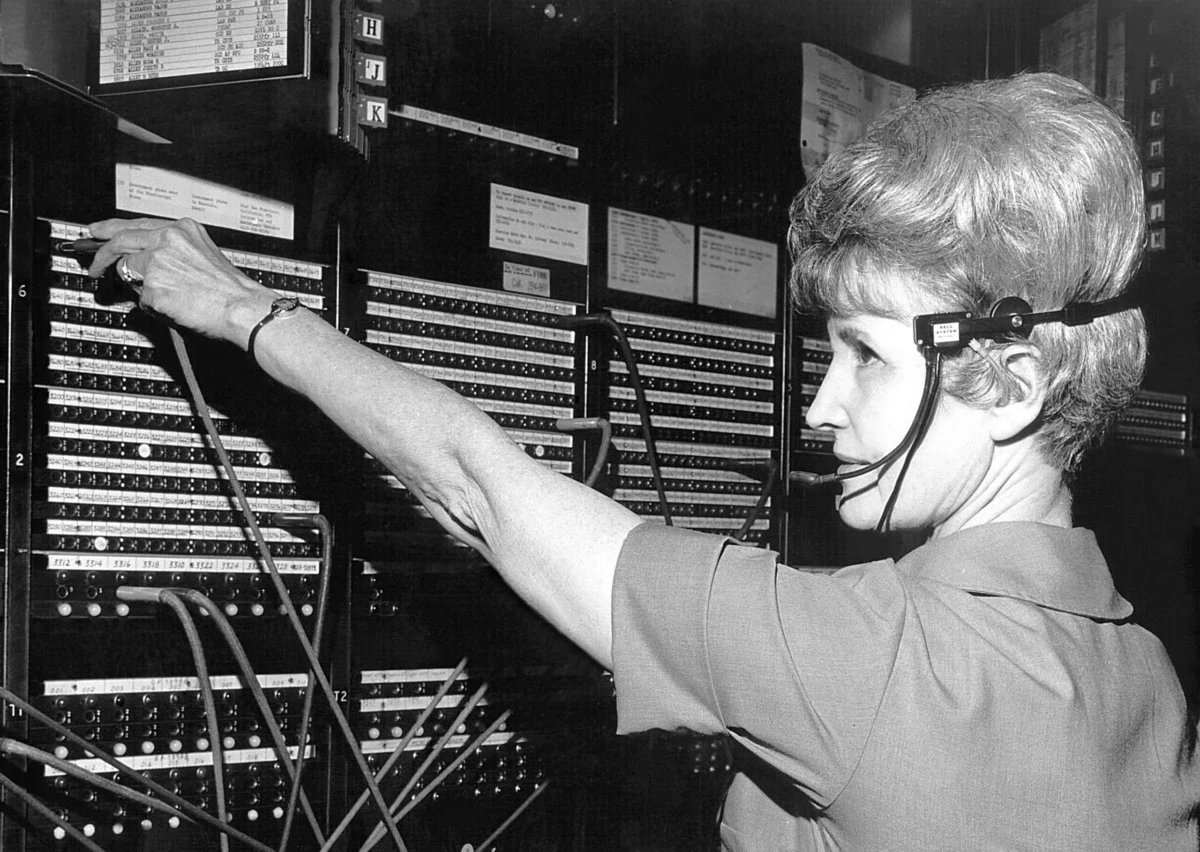
Decades before the ubiquitous presence of virtual assistants like Siri or Alexa, or the groundbreaking generative capabilities of ChatGPT, the heart of the information world beat through a very real human connection. This crucial role was almost invariably filled by a woman, whose presence was so indispensable that much of long-distance communication simply could not occur without her. She was the telephone switch operator, a profession that, at its zenith, constituted the single largest occupation for white, U.S.-born women under the age of 20. Today, that once-vital job has been entirely rendered obsolete, a stark reminder of technology’s transformative power.
The global community is currently grappling with the profound implications of artificial intelligence’s ascent, pondering its ramifications for society, culture, and the economy. For many ordinary Americans, the more immediate and pressing question revolves around the future of their own livelihoods. Historical precedents of technological progress – ranging from the automation of telephone switches to the widespread adoption of domestic appliances like washing machines and the introduction of the personal computer – offer valuable insights. These historical shifts suggest a recurring pattern: women are often disproportionately affected by such technological disruptions, a trend that appears poised to continue with the advent of AI.
"AI is fundamentally designed to excel at routine tasks, data analysis, and pattern recognition. These capabilities align directly with the clerical and administrative jobs that a significant proportion of women currently hold," explains Ariane Hegewisch, a senior research fellow at the Institute for Women’s Policy Research. She further emphasizes the demographic reality: "It’s still 90% of secretaries and clerical workers who are women." This observation is corroborated by recent comprehensive research. The International Labour Organization (ILO), in a March report, concluded that nearly one in ten women in high-income countries are employed in occupations identified as being at the highest risk of displacement or significant alteration by AI technologies.
The Golden Age of Operators and Its Abrupt End
The mid-20th century marked a peak for telephone operators. By the 1940s, an astonishing nearly 95% of America’s telephone operators were female. This wasn’t merely a high-volume job; it was a complex and demanding profession requiring considerable skill and dexterity. Operators were the human interface of a burgeoning communications network, manually connecting calls by plugging and unplugging cords on intricate switchboards. The role was considered relatively well-paying for women at the time, often offering better wages and working conditions than other available female-dominated professions. New recruits underwent months of rigorous training to achieve the necessary speed and precision, learning to manage several hundred calls per hour during peak periods while maintaining an unwavering standard of politeness and efficiency under pressure. Their ability to quickly route calls, recall frequently requested numbers, and even troubleshoot minor connection issues made them the indispensable backbone of national communication.
This era, however, was destined for a monumental disruption. The American Telephone and Telegraph Company (AT&T) spearheaded one of the largest automation investments in history with the introduction of the automated telephone switch. This technological leap, a close historical parallel to the massive capital influx currently driving AI development, unleashed one of the most significant technological shocks the nation had ever witnessed. Instead of human operators manually connecting calls, these electromechanical switches could process calls automatically, based on dialed numbers. The transition was gradual but relentless, beginning with local calls and eventually extending to long-distance connections.
In the decades following the popularization of the automated switch, an estimated 75,000 operator jobs vanished across the United States. This staggering figure represents a massive workforce displacement, primarily impacting women who had built careers in the sector. Economists James Feigenbaum of Boston University and Daniel P. Gross of Duke University’s Fuqua School of Business meticulously studied census and paycheck data from this period, tracing local employment trends along AT&T’s phased investment in automated switches nationwide. Their 2020 research highlighted the profound human cost: "The effect of this shock on incumbent operators was to dispossess many of their jobs and careers." They found that a significant number of these displaced switchboard operators were forced into lower-paying jobs, often with reduced benefits and stability, or, in many cases, exited the formal workforce entirely.
Economist David Autor offers a broader perspective on this phenomenon, noting that for many workers, their current occupation represents their highest and best-paying role. When such a job disappears due to automation, the subsequent career step is frequently a downward one. "Most people are not changing careers very often. They make their career decisions early, and they stick with those careers," Autor observes. "If those careers, if the value of that work… suddenly goes out of fashion, becomes technologically obsolete, they’re going to, in general, do something not as good." This sentiment underscores the profound personal and economic dislocation experienced by those whose skills are suddenly devalued by new technology.
However, Feigenbaum and Gross’s study also revealed a more optimistic trend for subsequent generations. They found that "future workers found work in other fields, often taking up similar-quality jobs," suggesting that younger individuals were "more adaptive to an evolving labor market." This implies that while existing workers faced hardship, the labor market, over time, generated new opportunities that absorbed new entrants. "Anxiety over the opportunities available to future generations proved to be somewhat misplaced," they concluded. In essence, while one category of jobs disappeared, new avenues of employment emerged that, for the next generation, offered comparable quality and compensation. This crucial distinction between the impact on incumbent workers and future entrants is a vital lesson for the AI era.
"Engines of Liberation": The Appliance Revolution
By the 1950s, another wave of technological innovation began to profoundly reshape the lives and economic roles of women: the widespread adoption of household appliances. While less dramatic in terms of direct job displacement, these technologies had a monumental indirect impact on women’s labor force participation. Washing machines, along with refrigerators, vacuum cleaners, and dishwashers, were dubbed "engines of liberation" in a seminal paper by University of Pennsylvania economist Jeremy Greenwood and his colleagues. These machines dramatically reduced the sheer volume and physical burden of unpaid housework, tasks traditionally assigned almost exclusively to women.
Before these appliances became common, household chores consumed an enormous amount of time and physical effort. Laundry, for instance, involved hours of manual washing, scrubbing, rinsing, wringing, and drying, often stretching over multiple days. The introduction of the automatic washing machine alone could save several hours of labor per week. This reduction in the time commitment to domestic duties had a transformative effect: it freed up women’s time, enabling a significant reallocation of their labor towards paid employment outside the home, even as societal expectations often still placed the primary responsibility for household management on them.
The period from 1950 to 1980 witnessed a remarkable shift in the American workforce, driven in part by these technological advancements and evolving gender norms. The number of employed women in the U.S. soared by more than 25 million, and their labor force participation rate – the share of the female population actively engaged in or seeking work – jumped from 34% to 52%. While 16 million more men also found work during this period, the male participation rate saw a modest decline of 5 percentage points, highlighting the distinct impact on women’s economic integration.
The relevant question for today’s AI boom echoes this historical precedent: If AI creates a vast new pool of available workers by automating existing tasks, can the economy generate sufficient new jobs to absorb them? The post-appliance era offers a multi-faceted answer. Firstly, the very entry of women into the paid workforce stimulated demand for services that had previously been performed within the home, such as commercial childcare, prepared foods, and cleaning services. Secondly, as the nation grew wealthier, the expanding service economy generated numerous new employment opportunities for women in sectors like retail, restaurants, leisure and hospitality, and increasingly, professional services. Thirdly, the expansion of American businesses across various sectors necessitated more administrative and clerical support – handling payroll, customer accounts, inventory management, and general office organization.
While the entry of women into the workforce undoubtedly influenced these economic shifts, it was also partly fortuitous that the U.S. economy was experiencing robust growth and undergoing structural changes that created a high demand for office workers. "Between 1940 and 1980, there was a ton of new work created in the U.S. economy, and it was in office and clerical work that was accessible to people with a high school education," Autor notes, underscoring a period of economic expansion uniquely suited to absorb a growing female workforce.
The Personal Computer Revolution: Shifting Roles, New Skills
The next major technological revolution to significantly affect women in the workplace arrived with the personal computer. Prior to the advent of the PC, women formed the indispensable backbone of office infrastructure. The 1980 U.S. census vividly illustrates this: nearly 4.7 million Americans were employed as secretaries, stenographers, and typists, and over 98% of them were women. These roles were critical for documentation, communication, and administrative support, relying heavily on typewriters, dictaphones, and intricate filing systems.

When IBM introduced its personal computer in 1981, followed just two years later by the release of Microsoft Word, the landscape of office work began to transform dramatically. These technologies, along with spreadsheet programs like Lotus 1-2-3, started to eliminate many of the "middlemen" – or, more accurately, "middlewomen" – in office processes. Tasks such as writing, filing, and editing were not eliminated entirely, but a significant portion of them shifted away from dedicated clerical workers. Executives and managers, previously reliant on secretaries for typing reports or booking travel, could now perform these tasks themselves directly on a computer. This led to a gradual reduction in the demand for purely clerical roles focused on transcription and manual document creation.
However, the PC revolution was not solely a story of job displacement for women. Studies from the early PC era indicate that women were already more likely than men to be using computers at work, perhaps due to their concentration in administrative roles where early computing applications found immediate utility. The personal computer placed powerful new tools directly at their fingertips: spreadsheets for complex calculations, databases for managing information, and general computing power that could streamline countless tasks. While some traditional roles were indeed reduced, many women adapted by acquiring new digital literacy skills. They learned to operate word processors, master spreadsheet software, and manage digital files, making themselves indispensable in new ways to their employers and evolving their roles beyond purely secretarial functions.
This adaptive capacity offers a crucial parallel and a potential outcome for the current AI wave. In numerous instances, AI is expected to eliminate specific tasks within a job rather than entire job roles. By automating repetitive or data-intensive components of a job, AI could enhance a worker’s capacity, freeing up time and cognitive resources for more complex, creative, and value-added responsibilities that still require uniquely human judgment, emotional intelligence, and interpersonal skills. This "augmentation" rather than "automation" of jobs is a key consideration.
A 2022 paper by Marcus Dillender and Eliza Forsythe examined the impact of companies adopting software for office and administrative work. They found that while it led to a 1% decline in employment within the sector, it also resulted in a 3% increase in wages for college graduates. This suggests a shift towards roles requiring higher education and more sophisticated analytical skills, illustrating how technology can polarize the labor market.
Critically, today’s female workforce is far more educated than in previous technological shifts. Many more women have earned college and advanced degrees and hold managerial positions, offering a potential buffer against the immediate impacts of automation. Their higher educational attainment and presence in diverse professional fields could provide some protection from AI’s initial wave of disruption, particularly as AI is currently focused on automating routine clerical and administrative functions. However, this protection may not be long-lasting. One of the central promises, or threats, of advanced AI is its capacity to move further up the value chain, encroaching on tasks that traditionally required higher levels of cognitive ability and professional expertise. As Ariane Hegewisch ominously states, "AI can learn," implying an evolving threat landscape that will necessitate continuous adaptation and skill development across all sectors.
The Current AI Landscape and Future Implications
The parallels between past technological revolutions and the current surge in artificial intelligence are striking, particularly concerning their potential impact on women’s employment. The core principle remains consistent: technologies designed to automate routine, pattern-based, and data-intensive tasks tend to displace jobs concentrated in sectors where those tasks are prevalent. Historically, and currently, these sectors often have a high proportion of female workers.
Today, AI’s capabilities extend beyond simple automation. Generative AI, exemplified by large language models, can draft reports, generate marketing copy, synthesize information, and even create code. Machine learning algorithms can analyze vast datasets to identify trends, automate customer service responses, and streamline administrative processes. Robotic Process Automation (RPA) can mimic human interactions with digital systems to automate repetitive computer-based tasks. These advancements directly target the "clerical, administrative jobs" that remain predominantly female.
The ILO’s recent findings are a stark warning. While a general estimate suggests around 10% of global employment could be significantly impacted by AI, the gendered aspect is crucial. Women, particularly in high-income countries, are overrepresented in at-risk occupations such as administrative support, customer service, and data entry. For example, a significant portion of jobs in finance (back-office operations), legal support (paralegal tasks), and even healthcare administration could see substantial changes. This raises concerns about potential setbacks in gender equality in the workplace, particularly if job displacement is not met with effective reskilling and new job creation strategies.
However, just as past technologies created new opportunities, AI is also poised to generate new categories of employment. The burgeoning field of AI development itself, data science, ethical AI oversight, "prompt engineering" (crafting effective instructions for generative AI), and roles focused on human-AI collaboration are emerging. The critical challenge lies in ensuring that women have equitable access to training and opportunities in these new, often high-paying, fields. Currently, women are underrepresented in STEM fields and in AI research and development roles, which could exacerbate existing inequalities if proactive measures are not taken.
Navigating the AI Future: Policy, Education, and Adaptation
The historical record offers both caution and optimism. While technological shifts can be profoundly disruptive for incumbent workers, particularly those in roles ripe for automation, they also spur economic growth and create new opportunities over time. The key differentiator for the AI era will be how societies and governments respond to these changes.
Policy Responses: Governments and international bodies must consider robust policy frameworks. These could include:
- Investment in Reskilling and Upskilling Programs: Targeted training initiatives to equip workers, especially those in vulnerable sectors, with the digital literacy, AI proficiency, and human-centric skills (e.g., critical thinking, creativity, emotional intelligence, complex problem-solving) that AI cannot replicate.
- Strengthening Social Safety Nets: Expanding unemployment benefits, exploring universal basic income models, or offering transitional support for workers displaced by automation.
- Promoting STEM and AI Education for Girls and Women: Early intervention and ongoing support to encourage female participation in technical fields, ensuring they are not left behind in the creation and management of AI.
- Incentivizing Ethical AI Development: Policies that encourage the development of AI tools that augment human capabilities rather than simply replacing them, and that are free from inherent biases that could further disadvantage certain demographic groups.
Educational Reform: Educational systems must evolve to prepare future generations for an AI-integrated workforce. This means a greater emphasis on adaptability, lifelong learning, and skills that complement AI rather than compete with it. Curriculum development should prioritize critical thinking, creativity, communication, and digital fluency from an early age.
Corporate Responsibility: Businesses adopting AI have a role to play in managing the transition ethically. This includes investing in their existing workforce through internal training, exploring redeployment opportunities, and fostering a culture of continuous learning.
Individual Adaptation: For individuals, the lesson from history is clear: adaptability is paramount. Proactively acquiring new skills, embracing continuous learning, and understanding how AI can enhance one’s work rather than eliminate it will be crucial. The ability to pivot careers, combine existing expertise with new technological proficiencies, and identify emerging human-centric roles will define success in the AI economy.
The trajectory of technological progress, from the telephone switch to the personal computer, undeniably shows a pattern of job transformation and creation, often with a disproportionate impact on women’s employment. The current wave of artificial intelligence presents a similar, if not more accelerated, challenge. While the potential for disruption is significant, the opportunity to shape a future where AI serves as a powerful tool for economic growth and human flourishing, particularly for women, remains within reach. Realizing this potential will require concerted efforts from policymakers, educators, businesses, and individuals to ensure that the "AI economy" truly works for everyone.