Ena Muazin
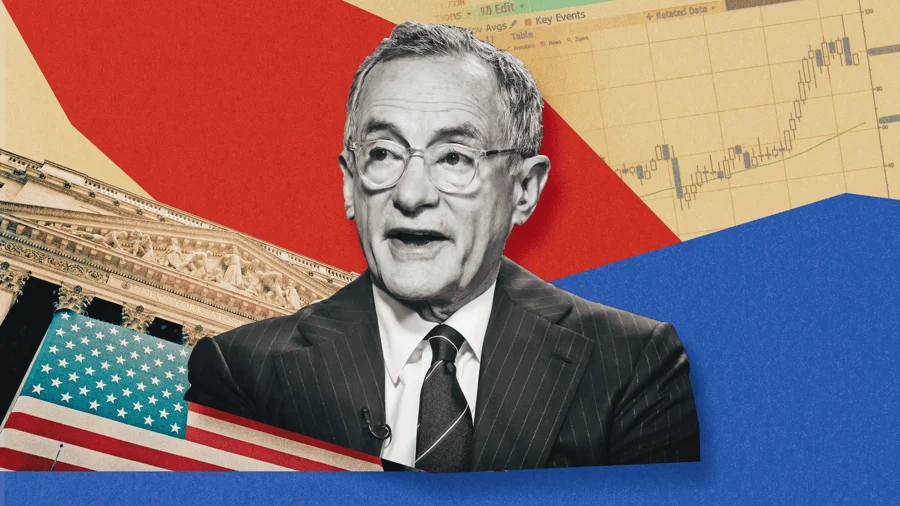
Howard Marks, the esteemed co-founder of Oaktree Capital Management and a celebrated figure on Wall Street, has voiced his conviction that current interest rates are entering a new, more "sensible" era, expecting a sustained period of higher capital costs. With decades of experience navigating the intricacies of distressed debt and high-yield bonds, Marks, whose insights are closely followed by luminaries like Warren Buffett, is strategically positioning himself and his firm for an anticipated surge in deal-making opportunities.
A Shift in the Economic Landscape: The "Sensible" Interest Rate Era

Marks’s assertion that today’s interest rates are "sensible" signifies a departure from the prolonged period of ultra-low rates that characterized the post-financial crisis era. For over a decade, a confluence of factors, including quantitative easing programs, low inflation, and a general global economic slowdown, kept borrowing costs at historic lows. This environment fostered a "search for yield" among investors, pushing capital into riskier assets and inflating asset prices.
However, the economic landscape has undergone a significant transformation in recent years. Rising inflation, driven by supply chain disruptions, geopolitical events, and robust consumer demand, prompted central banks globally, including the U.S. Federal Reserve and the European Central Bank, to embark on aggressive monetary tightening cycles. This has led to a substantial increase in benchmark interest rates, fundamentally altering the cost of capital across all sectors of the economy.
Marks’s perspective suggests that these higher rates are not a temporary aberration but rather a recalibration to a more sustainable economic equilibrium. This implies a future where businesses will need to factor in higher borrowing costs for investments, expansions, and even day-to-day operations. For investors, this shift has profound implications, creating both challenges and significant opportunities.
Oaktree Capital’s Strategic Positioning for a High-Interest Environment
Oaktree Capital Management, a firm renowned for its expertise in distressed debt and alternative credit strategies, is inherently positioned to capitalize on an environment of higher interest rates. The firm’s investment philosophy has always centered on identifying undervalued assets and complex situations, often arising during periods of economic stress or transition.
In a high-interest-rate environment, several factors contribute to an increase in opportunities for distressed debt investors:

- Increased Corporate Defaults: As borrowing costs rise, companies with weaker balance sheets and less resilient business models face a greater risk of defaulting on their debt obligations. This creates opportunities for investors like Oaktree to acquire debt at a discount or to participate in restructuring processes.
- Reduced Availability of Cheap Capital: The era of readily available, cheap debt financing is receding. This means that companies struggling to refinance their existing debt or fund new projects will have fewer options, potentially leading to more distressed situations.
- Valuation Adjustments: Higher discount rates applied to future cash flows can lead to a repricing of assets across various markets. This can create opportunities for value investors to acquire assets at more attractive valuations.
- Shift in Investor Sentiment: As risk-free rates rise, investors may become more discerning about risk, leading to a potential reallocation of capital away from speculative ventures towards more tangible, value-driven opportunities.
Marks’s statement indicates that Oaktree is not only prepared for this shift but actively anticipating a significant increase in the volume of deals. This suggests a proactive strategy of identifying potential distressed assets, engaging with borrowers facing financial challenges, and preparing the necessary capital to deploy into these opportunities.
The Oaktree Approach: A Deeper Dive into Distressed Debt Investing
Oaktree’s success in the distressed debt market is built on a deep understanding of financial engineering, legal frameworks, and market dynamics. Their approach typically involves:
- Thorough Due Diligence: Before any investment, Oaktree conducts exhaustive due diligence on the target company, its assets, management, and the broader economic and industry landscape. This includes analyzing financial statements, legal documents, and competitive positioning.
- Active Engagement: Unlike passive investors, Oaktree often takes an active role in the companies it invests in. This can involve appointing board members, restructuring management teams, or directly influencing operational and strategic decisions to enhance value.
- Long-Term Perspective: Distressed investing is not a short-term game. Oaktree typically adopts a long-term horizon, allowing ample time for restructuring, operational improvements, and eventual value realization.
- Diversification: The firm manages a diverse range of credit strategies, including distressed debt, senior loans, high-yield bonds, and real estate debt, providing a broad spectrum of opportunities to exploit market inefficiencies.
The current economic climate, with its higher interest rates, is seen as a fertile ground for Oaktree’s specialized expertise. Marks’s anticipation of "more bankruptcies and restructurings" is a direct signal that the firm is gearing up to deploy significant capital into these situations.
Broader Economic Implications and Expert Analysis
Howard Marks’s pronouncements carry considerable weight in financial circles. His reputation as a "voice of reason" stems from his consistent ability to dissect complex market trends and offer sober, well-reasoned perspectives. His current outlook suggests a fundamental shift in the global economic paradigm, moving away from an era of cheap money towards one where the cost of capital is more reflective of underlying economic realities.

This shift has several broad implications:
- Impact on Corporate Investment: Higher borrowing costs may temper corporate investment in speculative or long-term projects with uncertain returns. Companies will likely prioritize investments with clearer and more immediate payback periods.
- Bond Market Dynamics: The bond market, particularly the high-yield sector, will likely see increased volatility and a greater dispersion of returns. Investors will need to be more selective and conduct rigorous credit analysis.
- Real Estate Sector: The real estate market, often highly sensitive to interest rate changes, may experience a cooling period. Higher mortgage rates can reduce affordability and dampen demand.
- Innovation and Entrepreneurship: While higher capital costs can pose challenges for startups, it can also foster more disciplined and sustainable business models. Entrepreneurs will need to demonstrate stronger unit economics and clear paths to profitability.
Economists and market strategists have echoed Marks’s sentiment regarding a potential normalization of interest rates. Data from various financial institutions and economic research firms consistently point to a sustained higher interest rate environment compared to the previous decade. For instance, projections from institutions like the International Monetary Fund (IMF) and the World Bank have indicated a recalibration of global growth expectations in line with a less accommodative monetary policy.
The Role of "Sensible" Rates in Market Health

Marks’s use of the term "sensible" suggests that the current interest rate levels are, in his view, more aligned with the underlying fundamentals of the economy. The prolonged period of near-zero interest rates, while seemingly beneficial in the short term, could distort market signals, encourage excessive risk-taking, and lead to malinvestment.
A "sensible" interest rate environment, according to economic theory, allows for more accurate pricing of risk and a more efficient allocation of capital. It encourages businesses to invest prudently and rewards savers for their patience. While the transition to higher rates can be challenging, it can ultimately lead to a more robust and sustainable economic system.
Marks’s experience as an investor in distressed debt has undoubtedly shaped his perspective. He has witnessed firsthand the consequences of excessive leverage and the unsustainable nature of artificially low borrowing costs. His current stance reflects a belief that the current interest rate regime, while potentially uncomfortable for some, is a necessary step towards a healthier economic future.

Looking Ahead: Opportunities in a Changing Market
Howard Marks’s anticipation of increased deal flow signals a strategic outlook that embraces the challenges and opportunities of the current economic climate. For investors, particularly those with expertise in credit and alternative investments, this period presents a unique window to deploy capital effectively.
Oaktree Capital, under Marks’s guidance, appears poised to leverage its proven strategies to navigate this evolving landscape. Their focus on distressed debt and complex credit situations positions them to benefit from increased corporate defaults and restructurings. As the global economy adjusts to a new era of higher interest rates, the insights and actions of seasoned investors like Howard Marks will be closely watched for clues about the direction of financial markets and the opportunities that lie ahead. The transition may be marked by increased volatility, but for those prepared, it also heralds a period of potentially significant returns.