Gilang Muhammad
The United States is currently experiencing what many economists and policymakers describe as a preview of a potential debt crisis, marked by long-term bond yields persistently above 5% and a federal deficit approaching $2 trillion. While a full-blown emergency remains a future threat, the current economic climate offers a sobering glimpse into the profound challenges that would accompany such an event. With the upcoming November 3, 2026, midterm elections poised to solidify a period of divided government, the path forward to address the nation’s worrying fiscal trajectory appears increasingly obscure.
The Alarming Fiscal Picture: A Nation’s Balance Sheet Under Strain
The nation’s fiscal health has been a growing concern, now exacerbated by a confluence of geopolitical events and domestic spending patterns. The 10-year Treasury yield, a critical benchmark for borrowing costs across the economy, has surged dramatically, climbing 114 basis points since the end of February to trade at 5.1% by midday Friday. This upward movement in yields reflects not only market apprehension but also the sheer volume of federal debt being issued, which is starting to exact a toll on various sectors of the economy and threatens to deepen the government’s existing debt problem.
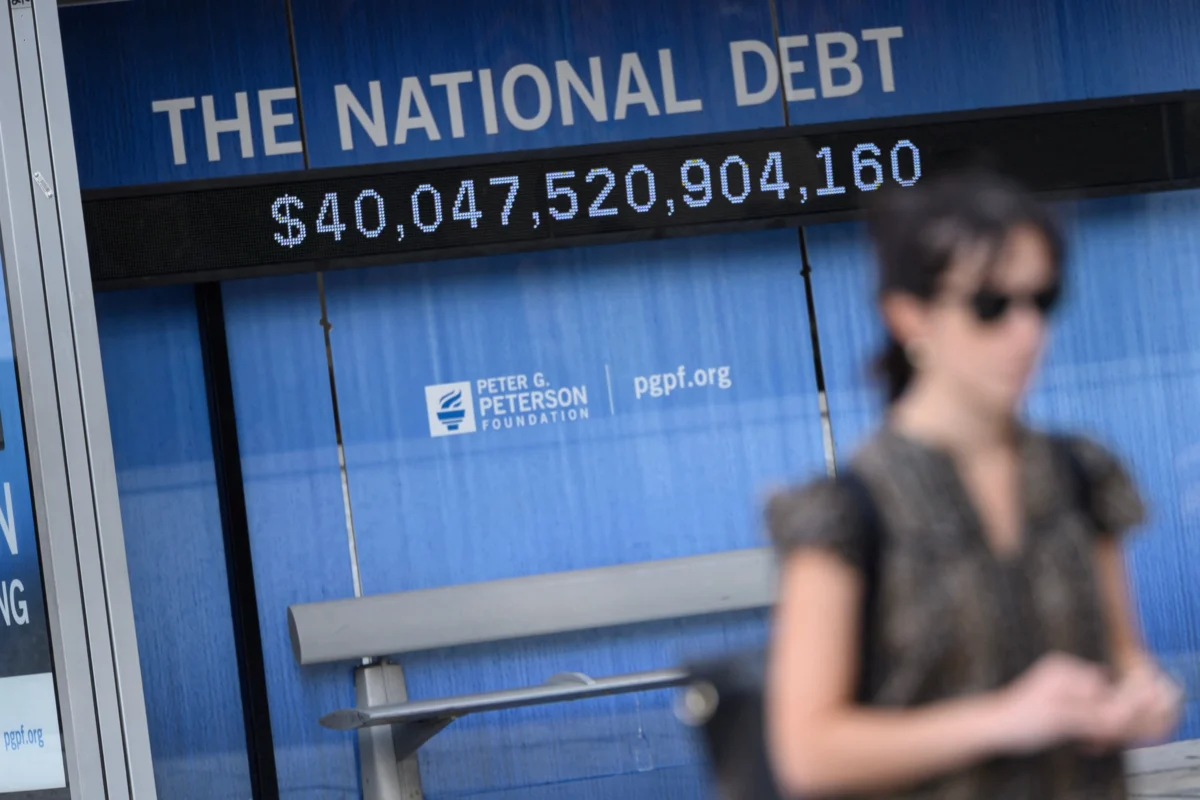
The latest figures underscore the magnitude of the challenge. The U.S. Treasury reported a deficit of $1.992 trillion for the 2026 fiscal year, marking a significant 12% increase from the previous year. This deficit translates to approximately 6.2% of the nation’s gross domestic product (GDP), based on an estimate of third-quarter GDP. For context, many economists consider a deficit-to-GDP ratio above 4% to be a cause for concern, indicating that the government is spending significantly more than it collects in revenue. The overall U.S. national debt has now surpassed the unprecedented $40 trillion mark, raising fundamental questions about its long-term sustainability.
Economic Repercussions: The Housing Market Takes a Hit
One of the most immediate and tangible impacts of these elevated interest rates is being felt in the housing market. The average 30-year fixed-rate mortgage, a crucial indicator for homebuyers, has hovered stubbornly around 7.5%. This significant increase in borrowing costs has rapidly eroded affordability, particularly for first-time buyers and those with tighter budgets.
The effect is clearly visible in market activity. Pending home sales, a forward-looking indicator based on signed contracts, plummeted by 4% in September, according to data released by Redfin on Monday. This represents the steepest monthly decline in three years, signaling a significant slowdown in demand. The combination of high home prices, which have largely remained elevated despite cooling demand in some areas, and prohibitive mortgage rates has created a formidable barrier for prospective purchasers. For existing homeowners, the prospect of refinancing at lower rates has vanished, trapping many in their current loans and further dampening market liquidity. Builders, too, are facing headwinds, with higher construction loan rates and uncertain buyer demand leading to potential project delays or cancellations, which could eventually impact job growth in the construction sector.
Chronology and Catalysts for Rising Yields
The dramatic ascent in long-term bond yields is not attributable to a single factor but rather a complex interplay of geopolitical events, fiscal policy, and market dynamics.
-
The War with Iran (February 28, 2026): A pivotal event was the outbreak of conflict with Iran on February 28, 2026. This geopolitical instability immediately sent shockwaves through global energy markets, leading to sharp increases in oil and diesel prices. The direct economic consequences included elevated inflationary pressures and increased defense spending, which contributed to an expanded federal budget. Bond traders, anticipating continued inflation and potential central bank responses, began demanding higher yields to compensate for the perceived increased risk and erosion of purchasing power. The conflict also introduced broader geopolitical uncertainty, often prompting investors to seek greater returns for holding government debt during times of heightened global risk.
-
Persistent Federal Debt Issuance: A fundamental driver of higher yields is the continuous "flood" of federal debt into the market. To finance its expenditures and cover the ongoing deficit, the U.S. government regularly issues new Treasury bonds. When the supply of these bonds increases significantly, and demand does not keep pace, their prices tend to fall, which in turn causes their yields (the return an investor receives) to rise. This constant need for borrowing, especially at current deficit levels, means the Treasury must offer increasingly attractive rates to entice investors.
-
Global Competition for Capital: The market for U.S. government debt is no longer without robust alternatives. The global financial landscape has seen a surge in demand for capital from other sectors, particularly for the burgeoning artificial intelligence (AI) industry. Companies are issuing hundreds of billions in new corporate debt to fund the massive infrastructure required for AI development and deployment. This fierce competition for capital means that global investors, who seek low-risk, long-term debt, now have more attractive options than they once did. To compete effectively, the U.S. Treasury must offer higher yields to draw in investors who might otherwise allocate their funds to these high-growth corporate ventures or even alternative sovereign debt markets.
-
Expectations of Central Bank Action: Underlying these factors are market expectations regarding the Federal Reserve’s monetary policy. While not directly tied to immediate rate hikes, persistent inflation stemming from energy prices and strong government spending leads bond traders to anticipate that central banks may need to maintain higher interest rates for longer, or even implement further hikes, to bring inflation under control. This expectation of tighter monetary policy in the future is priced into long-term bond yields today, pushing them higher.
Official Perspectives and Proposed Solutions
The gravity of the situation has prompted various responses and analyses from government officials and independent bodies, though a consensus on a solution remains elusive.
-
Treasury Secretary Scott Bessent’s View: Treasury Secretary Scott Bessent has been vocal about the need to address the deficit. He has articulated a target for the U.S. deficit to fall below 4% of its gross domestic product by the end of President Donald Trump’s term. Bessent argues that achieving credible commitment to deficit reduction would likely ease long-term bond yields, creating a "virtuous cycle" of lower borrowing costs and further fiscal improvement. However, he acknowledges the difficulty, stating in Dallas last month, "My view is that we’ve got this mountain of debt, and we have to grow our way out of it." He and other administration officials have pointed to artificial intelligence as a crucial source of future economic growth that could help generate the revenue needed to tackle the debt.
-
CBO Warnings on Interest Rate Sensitivity: The Congressional Budget Office (CBO), the non-partisan agency providing budget and economic information to Congress, has issued stark warnings about the sensitivity of the deficit to interest rate fluctuations. The CBO estimates that if interest rates remain just half a percentage point above its current expectations, the cumulative deficit over the next 10 years would increase by an additional $1.9 trillion. In a more alarming scenario, if rates overshoot by 1.5 percentage points, an astounding $6 trillion could be added to the nation’s deficits over the same period. The CBO currently projects the 10-year Treasury to average 4.3% over that decade, a figure significantly below the current 5.1%. These projections highlight how higher borrowing costs exponentially compound the debt problem, making fiscal consolidation more challenging with each passing year.
-
Independent Analysis: The Limits of Growth: While Secretary Bessent emphasizes growth, independent research groups temper expectations. The Committee for a Responsible Federal Budget (CRFB), a non-partisan organization advocating for balanced budgets, has analyzed the feasibility of growing out of the debt. Their research suggests that it would require an astonishing decade of 7.2% annual GDP growth just to balance the budget through growth alone. This figure stands in stark contrast to recent economic performance; GDP growth was recently revised upwards for the second quarter from 1.5% to 2.2% at an annualized rate. Achieving a sustained 7.2% growth rate would imply an almost unimaginable transformation of the economy, underscoring the inadequacy of growth as the sole solution without accompanying fiscal discipline.
The Political Quagmire: Divided Government and Divergent Paths
The path to fiscal stability is further complicated by the entrenched political divisions in Washington, particularly as the nation heads into the crucial November 3 midterms. With President Trump entering the final two years of his presidency, a period often marked by legacy-defining projects, there are few signs that deficit reduction will be a central focus. Indeed, President Trump has pledged substantial new spending, including promises of $5,000 checks to every adult American citizen if Republicans achieve a sweeping electoral victory.
However, current forecasts widely predict that Republicans are likely to lose at least the House of Representatives, and possibly also the Senate. This outcome would usher in a period of divided government, a scenario that historically has sometimes led to surprising bipartisan compromises, but often results in legislative gridlock. The starting points for fiscal solutions between the two major parties are currently far apart. For instance, Representative Hakeem Jeffries, widely expected to become the next House Speaker for the Democrats, has expressed intentions to reverse the $1 trillion in healthcare cuts enacted last year as part of President Trump’s signature legislative package. This desire to undo previous fiscal measures, coupled with other spending priorities, suggests that finding common ground on deficit reduction will be an arduous task. The deep animosity and partisan polarization further diminish the likelihood of the kind of bipartisan cooperation necessary to tackle a problem of this magnitude.
Broader Implications and The Specter of a Full-Blown Crisis
The current economic environment, while challenging, is not yet a full-blown debt crisis. The U.S. government still commands significant global investor confidence, and for now, higher yields are also attracting some investors to U.S. government bonds, a reminder that expensive borrowing is not synonymous with an immediate collapse of confidence.
However, the continued trajectory of rising debt and interest rates carries profound broader implications. A true emergency, often referred to as a "debt crisis," would feel like the current conditions "on steroids." In such a scenario, bond yields would spike uncontrollably, global investors would rapidly sell off dollar-denominated assets, and the U.S. Treasury and the Federal Reserve would have severely limited tools to stem the tide. The consequences would include a sharply depreciating dollar, runaway inflation, and potentially a severe recession, with global ripple effects. Such an event would threaten the U.S.’s economic sovereignty, its role as the world’s reserve currency, and the financial stability of the entire international system.
Ultimately, the nation is at a critical juncture. The economics of the situation clearly demonstrate that the current path is unsustainable. But as the political landscape stands, the solutions are not purely economic; they demand difficult political choices and bipartisan cooperation that currently appear out of reach. If Americans genuinely wish to forestall a full-on debt crisis and secure the nation’s long-term prosperity, they must find a way to bridge the political divides and address the fiscal challenges with urgency and resolve. The alternative is a future defined by escalating borrowing costs, constrained public services, and diminished economic opportunity.