Gilang Muhammad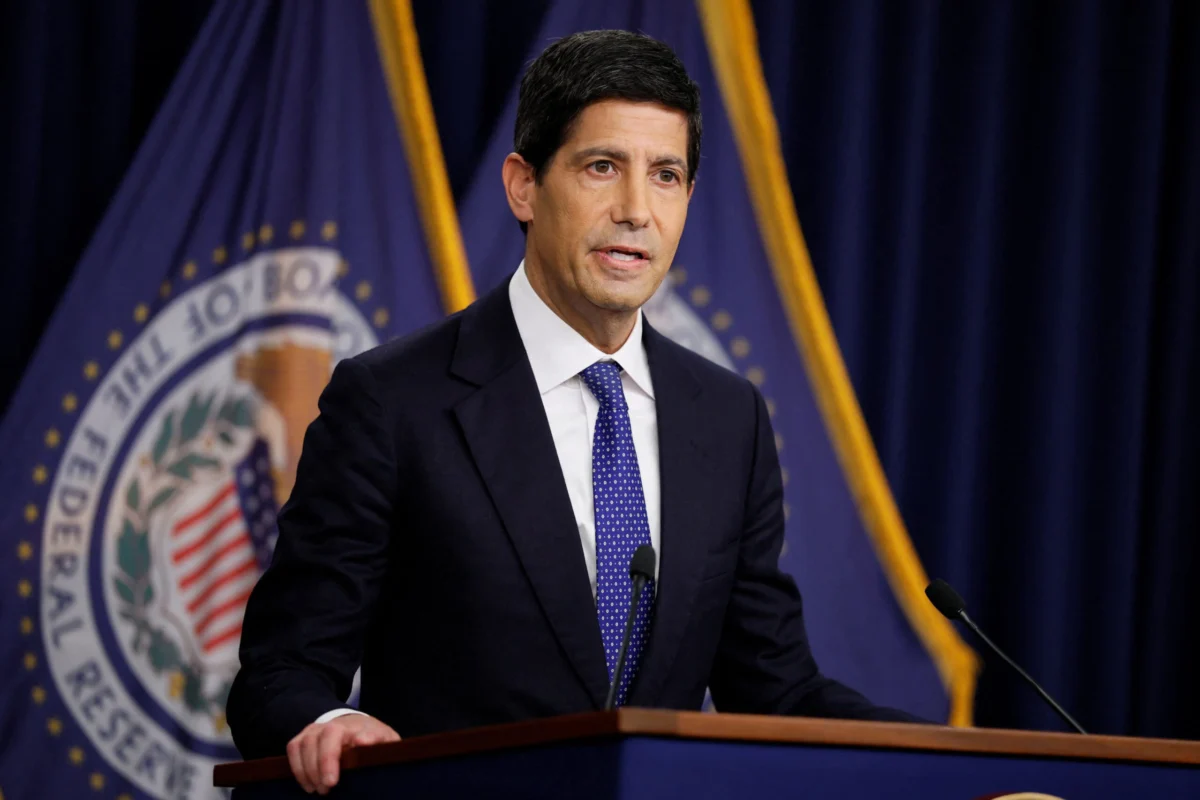
Traders are currently demonstrating overwhelming confidence that the Federal Reserve will maintain a steady course and refrain from raising interest rates during its eagerly anticipated policy meeting later this month. However, this widely held market conviction appears to be predicated on a set of assumptions regarding the central bank’s communication strategy that may no longer hold true under the nascent leadership of Chairman Kevin Warsh. The relatively new chairman has, through a series of calculated and often unconventional public statements, deliberately cultivated a significant degree of policy flexibility, leaving ample room to pursue an interest rate increase should he deem it necessary. This creates a palpable tension between entrenched market expectations and the potential for a surprising policy pivot.
Market Complacency Amidst Traditional Fed Signals
The prevailing sentiment in financial markets, reflected most prominently in the derivatives arena, suggests a strong leaning towards a pause in the Fed’s tightening cycle. As of Friday morning, the futures market, a key barometer of investor expectations, assigned a mere 15% probability to an October rate hike, indicating a near-certainty of no change. This conviction has been reinforced by recent pronouncements from other influential Federal Reserve officials, including the chairman’s traditional top lieutenants, who have largely signaled comfort with a temporary cessation of rate increases. For instance, in recent weeks, both Fed Vice Chairman Philip Jefferson and New York Fed President John Williams have delivered remarks that conveyed a distinct lack of urgency concerning further interest rate adjustments. These statements were swiftly interpreted by market participants as a collective inclination towards a hold, leading to an immediate repricing of expectations in favor of a pause.
Historically, the public utterances of these senior officials, particularly the Vice Chairman and the President of the Federal Reserve Bank of New York, have been closely scrutinized as proxies for the chairman’s own thinking or, at the very least, as reflections of a broadly coordinated committee consensus. Under previous Fed chairs, a clear divergence in public messaging between the chairman and his key deputies was rare, fostering an environment where market participants could often anticipate policy shifts based on these signals. The current market complacency largely stems from this ingrained historical experience, leading investors to believe that the seemingly dovish leanings of Jefferson and Williams effectively speak for the broader committee, and perhaps even for Chairman Warsh himself.
Chairman Warsh’s Departure from Conventional Communication
However, Chairman Warsh has repeatedly demonstrated a conscious effort to break from the established conventions of Federal Reserve communication, particularly the practice of telegraphing policy decisions well in advance of Federal Open Market Committee (FOMC) meetings. Speaking at an International Monetary Fund (IMF) event in Bangkok on Friday morning, Warsh explicitly stated that he was "not signaling a decision one way or the other," regarding the upcoming policy meeting. While seemingly neutral, this statement itself served to underscore his commitment to an less transparent, more independent approach to communication. This deliberate ambiguity stands in stark contrast to the communication strategies employed by his predecessors, who often utilized public appearances and speeches to carefully manage market expectations and provide forward guidance.
Warsh’s skepticism towards pre-meeting signaling was also evident during the press conference following the September 16, 2026, FOMC meeting. When pressed on the committee’s Summary of Economic Projections (SEP), which indicated a median expectation of one more rate hike in 2026, Warsh notably distanced himself, stating pointedly, "Those aren’t my forecasts." This disavowal of a document widely considered a key communication tool for the committee further highlighted his individualized approach to policy communication and his reluctance to be bound by collective forecasts that may not align with his personal economic outlook.
This departure from established norms raises the critical possibility that investors are operating under a dangerous degree of complacency regarding the probability of an October rate hike. If Warsh does not feel beholden to the traditional signals from his lieutenants or to the consensus projections of the SEP, then the conventional wisdom derived from these sources may prove to be a misleading guide to the actual policy outcome.
The "Troika" and the Challenge of Coordinated Messaging
The informal decision-making triumvirate at the helm of the Federal Reserve, often referred to as the "troika," comprises Chairman Warsh, Vice Chairman Philip Jefferson, and New York Fed President John Williams. In previous administrations, the public statements of these three individuals were often perceived as highly coordinated, providing a cohesive message to markets. The recent remarks by Jefferson and Williams, indicating little urgency for further rate hikes, have been interpreted by many as a continuation of this coordinated approach.
However, the question looms whether these traditional conventions surrounding public statements have truly survived the leadership transition to Chairman Warsh. While Warsh could, theoretically, coordinate with the troika even if he personally eschews pre-meeting signaling, outsiders lack certainty about the degree of such coordination. The possibility exists that the Vice Chairman and the New York Fed President, while influential, may not be speaking directly for Warsh’s personal views or, more importantly, may not be fully aware of his ultimate policy intentions, given his stated preference for maintaining flexibility. This creates a significant communication gap and introduces an element of unpredictability that was less common under previous chairmen.
The Inflationary Case: A Catalyst for a Hawkish Pivot

Despite the market’s current dovish bias, there exists a compelling case, rooted in recent inflation data, that Chairman Warsh could invoke to advocate for an interest rate increase at the October 28 meeting. The Federal Reserve operates under a dual mandate from Congress: to foster maximum employment and maintain price stability, with the latter often codified as a 2% annual inflation target for the Personal Consumption Expenditures (PCE) price index.
Recent economic indicators have presented a challenging picture on the inflation front. The Consumer Price Index (CPI) for the year through September rose by a robust 3.7%, significantly exceeding the Fed’s target. This figure, released on October 14, 2026, indicated persistent inflationary pressures across various sectors of the economy, particularly in housing and services. The following day, October 15, 2026, brought further concerns with the release of the Producer Price Index (PPI), which surged by an even more substantial 6.3% year-over-year. The PPI, which measures average changes in selling prices received by domestic producers for their output, often serves as a leading indicator for consumer inflation, suggesting that pipeline pressures could continue to feed into the CPI and PCE in the coming months.
Crucially, these new data points imply that the next reading of the Fed’s preferred inflation gauge, the core Personal Consumption Expenditures (PCE) price index (which excludes volatile food and energy components), is projected to come in at approximately 3.1% year-over-year. The headline PCE, which includes energy prices and has been affected by recent commodity market volatility, would likely register even higher.
Warsh has been unequivocally clear about his stance on inflation exceeding the 2% target. During his closely watched speech at Jackson Hole, Wyoming, at the end of August 2026, he forcefully addressed economists’ questions about his potential tolerance for inflation above 2%. "There should be no misunderstanding," Warsh declared, "The Fed’s 2% PCE goal is a firm, fixed target." This statement served as a strong signal of his hawkish conviction and his commitment to bringing inflation back down to target, even if it requires more aggressive policy action. Given this explicit commitment, the recent inflation readings, particularly the implied 3.1% core PCE, provide Warsh with a powerful argument to push for an October rate hike, aligning policy with his stated objective.
Warsh’s Jackson Hole Blueprint and Financial Conditions
Chairman Warsh’s August speech at Jackson Hole provided a detailed exposition of his "idiosyncratic reading of the economy," which has since served as a blueprint for his hawkish stance. In this address, he characterized the economy as exhibiting strong growth, with inflation posing a significantly greater concern than the state of the labor market. His strongly hawkish views articulated at Jackson Hole were instrumental in setting the stage for the FOMC’s unanimous decision to raise interest rates in September. A cornerstone of Warsh’s hawkish position has been his persistent concern regarding what he perceives as "loose credit conditions" in the financial system, arguing that easy money could further fuel inflationary pressures.
To assess financial conditions, the Chicago Fed’s National Financial Conditions Index (NFCI) is a key metric. This index provides a comprehensive measure of financial stress, with negative values indicating looser-than-average financial conditions. Since Warsh’s Jackson Hole speech, the NFCI has risen by approximately 0.05 points. While this indicates a modest tightening of financial conditions, the index nonetheless remains negative, suggesting that overall financial conditions continue to be relatively loose compared to historical averages. This persistent looseness in financial conditions, from Warsh’s perspective, could justify further monetary tightening to "remove a dose of accommodation," as he articulated on Thursday. The question for the October meeting, therefore, is whether Warsh believes the market’s recent movements have adequately done his work for him, or if direct policy intervention remains necessary.
The Chairman’s Learning Curve and the Path Ahead
It is plausible that Chairman Warsh is still in a period of "learning on the job," adapting to the unique demands and intricate dynamics of leading the world’s most influential central bank. The role of Fed chairman is one that requires not only keen economic insight but also a nuanced understanding of institutional politics, committee consensus-building, and effective market communication. Warsh may be coming to understand the imperative of relying on the expertise of the Federal Reserve staff and the collective wisdom of the broader FOMC to effectively execute his responsibilities. Similarly, he might discover that financial markets, despite their sophistication, do not always issue clear, unambiguous signals independently of the Fed’s explicit guidance. The intricate feedback loop between central bank communication and market behavior is a complex one, and Warsh’s unconventional approach is actively testing its boundaries.
However, the ultimate truth of these matters is not yet assured. Warsh’s tenure thus far has been marked by a willingness to challenge established norms and assert his own economic philosophy. He could very well enter the October meeting prepared to leverage the booming demand for Artificial Intelligence (AI) spending, which contributes to robust economic growth, alongside the persistently warm inflation readings, to "muscle up" wavering committee members towards a rate hike. The strong economic momentum, coupled with elevated inflation, provides a potent combination for a chairman determined to adhere strictly to the 2% inflation target.
Alternatively, Warsh might opt for a more conciliatory approach, choosing to "sit back and tack toward the middle of the committee" after thoroughly assessing their diverse views. This would entail prioritizing consensus-building and perhaps accepting a temporary pause in rate hikes if a significant portion of the committee believes it is warranted. This scenario would align more closely with traditional Fed leadership, where the chairman often acts as a facilitator of committee consensus rather than an unyielding proponent of a specific policy outcome.
The confluence of Warsh’s unconventional communication style, persistent inflationary pressures, and a relatively loose financial environment creates a high degree of uncertainty surrounding the upcoming FOMC meeting. The market’s current confidence in a pause, rooted in traditional interpretations of Fed signals, risks underestimating Chairman Warsh’s capacity for surprise. His willingness to diverge from established norms means that the October decision remains genuinely open-ended, with significant implications for both domestic and global financial markets, making it a critical juncture in his nascent chairmanship.