Clara Shinta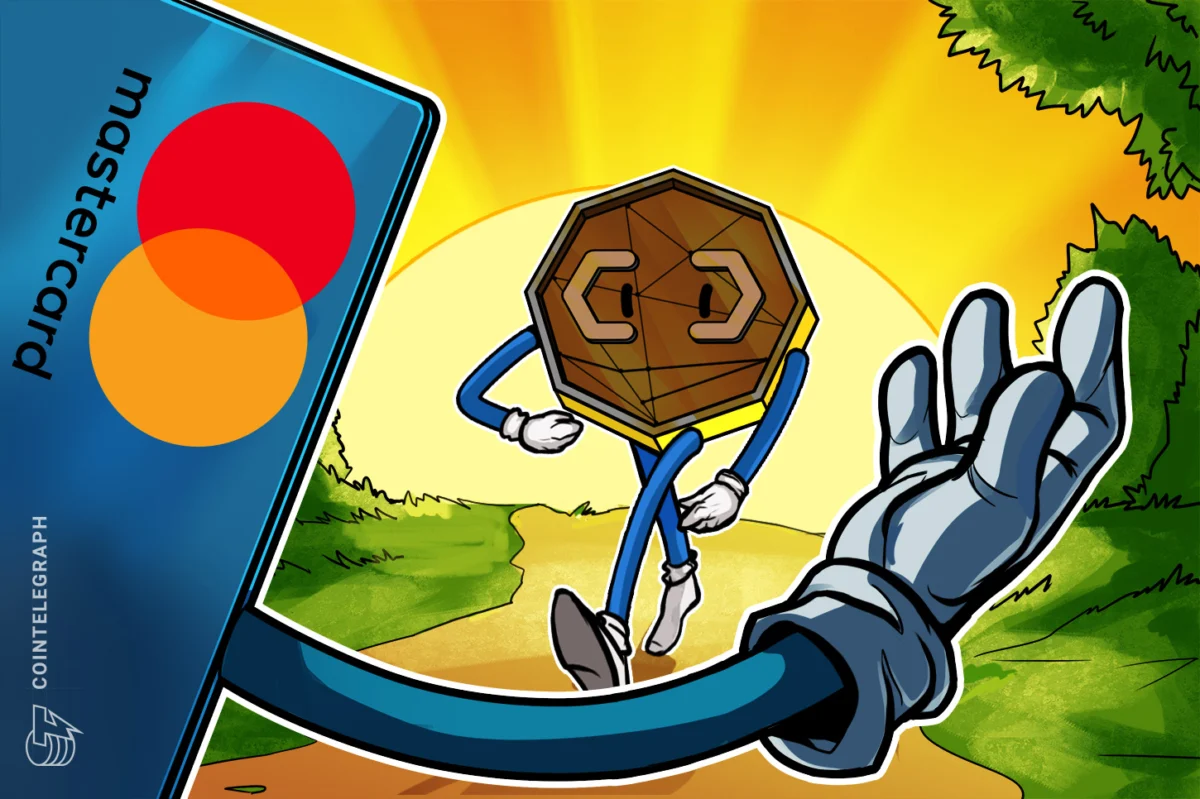
Mastercard is significantly expanding its footprint in the burgeoning stablecoin ecosystem with the introduction of its new Global Money Platform (GMP), a sophisticated service designed to allow businesses to seamlessly integrate digital currencies into their existing traditional banking and card services. This strategic initiative, formally announced on Thursday, October 2026, represents a pivotal moment in the convergence of conventional finance and the rapidly evolving digital asset landscape, promising to simplify the adoption of stablecoin payments for enterprises by alleviating the need to develop their own complex infrastructure.
The Global Money Platform marks Mastercard’s first major integration following its strategic acquisition of stablecoin infrastructure company BVNK in August of the preceding year. This acquisition underscored Mastercard’s commitment to building robust capabilities in the digital asset space, leveraging BVNK’s specialized expertise to underpin its new offerings. The platform is engineered to empower businesses with a comprehensive suite of functionalities, including the ability to hold and convert both fiat currencies and stablecoins, issue stablecoin-linked payment cards, and execute direct payments from stablecoin balances into recipients’ local bank accounts globally.
The Strategic Imperative: Bridging Traditional Finance and Digital Assets
The launch of the Global Money Platform is not an isolated event but rather the culmination of Mastercard’s evolving strategy to embrace and integrate digital assets into its core business model. For years, major payment networks have closely monitored the disruptive potential of blockchain technology and cryptocurrencies. While initial engagements were often cautious, the maturation of stablecoins—digital currencies pegged to stable assets like fiat currencies—has presented a compelling use case for enhancing payment efficiency, particularly in cross-border transactions.
Stablecoins offer several distinct advantages for businesses. Their inherent stability, unlike volatile cryptocurrencies such as Bitcoin or Ethereum, makes them suitable for day-to-day transactions, treasury management, and payroll. They also promise faster settlement times, lower transaction fees, and 24/7 accessibility compared to traditional banking rails, which can be slow, costly, and subject to banking hours. For international businesses, these attributes translate into tangible benefits, including improved liquidity management, reduced foreign exchange risks, and enhanced operational efficiency.
Mastercard’s recognition of these benefits has driven a deliberate shift in its approach. From early exploratory ventures into blockchain patents and partnerships, the company has progressed to actively developing infrastructure that supports digital currency transactions. The acquisition of BVNK was a critical step in this journey, providing Mastercard with the foundational technology and expertise to move beyond merely processing crypto-linked payments to actually enabling the underlying stablecoin infrastructure for businesses. BVNK’s specialization in stablecoin solutions offered the plug-and-play capabilities necessary for Mastercard to rapidly develop and deploy a platform like GMP.
Deconstructing the Global Money Platform’s Core Offerings
The Global Money Platform is designed as a versatile, end-to-end solution for businesses looking to navigate the stablecoin economy. Its core functionalities address key pain points in both traditional and digital payment ecosystems:
-
Unified Fiat and Stablecoin Management: Businesses can hold and convert between various fiat currencies and major stablecoins within a single platform. This simplifies treasury operations, enabling companies to manage their digital and traditional asset liquidity from a centralized hub. For global enterprises dealing with multiple currencies and seeking to leverage stablecoins for efficient transfers, this feature significantly streamlines financial operations.
-
Stablecoin-Linked Payment Cards: A groundbreaking feature, this allows businesses to issue payment cards directly linked to their stablecoin balances. This capability effectively bridges the gap between the digital asset world and mainstream consumer spending. Cardholders can spend their stablecoins at any merchant within Mastercard’s vast global acceptance network, converting them to local fiat currency at the point of sale. This significantly enhances the utility of stablecoins beyond mere transfers, making them viable for everyday purchases and corporate expenses.
-
Direct Payments to Local Bank Accounts: Leveraging Mastercard’s extensive global money transfer network, Mastercard Move, the GMP enables businesses to initiate payments from their stablecoin balances directly into recipients’ local bank accounts. Mastercard Move boasts a reach of over 17 billion destinations, encompassing bank accounts, cards, and mobile wallets across more than 100 markets. This integration is particularly impactful for cross-border remittances, B2B payments, and gig economy payouts, where speed, transparency, and cost-effectiveness are paramount. Businesses can send stablecoins, and the recipient receives their local currency directly, minimizing intermediaries and potential delays.
The platform’s connectivity extends not only to Mastercard Move but also to Mastercard’s extensive merchant network, further embedding stablecoins into the global commerce infrastructure. This dual integration ensures that stablecoins managed through GMP can be used for both outgoing payments to traditional bank accounts and for purchases at millions of physical and online merchant locations worldwide.
Early Adopters and Ecosystem Expansion
To facilitate broad adoption and integrate seamlessly into existing business workflows, Mastercard has enlisted several prominent fintech companies as initial integration partners. Nuvei, a global payment technology provider, and Marqeta, a leading modern card issuing platform, are among the first to collaborate. These partnerships are crucial for scaling the Global Money Platform’s reach and utility. Nuvei can integrate GMP into its comprehensive payment solutions, offering its merchant clients expanded stablecoin payment and payout options. Marqeta, with its flexible card issuing capabilities, can leverage GMP to enable businesses to create and manage stablecoin-linked card programs tailored to their specific needs. The involvement of such key players signifies a broader industry validation of stablecoin utility and Mastercard’s strategic vision.
A Timeline of Mastercard’s Digital Asset Journey and the Competitive Landscape
Mastercard’s journey into the digital asset space has been a carefully orchestrated evolution, reflecting a broader industry trend among financial incumbents.
- Pre-2020: Exploratory Phase. Mastercard began filing patents related to blockchain and digital currency technologies, indicating early research and development efforts. However, public statements often emphasized caution regarding the volatile nature of cryptocurrencies.
- 2020-2021: Increased Engagement. The company signaled a more open stance towards digital assets, recognizing their potential. It announced partnerships with crypto card issuers, allowing users to spend their cryptocurrencies (converted to fiat) at Mastercard-accepting merchants. This period also saw Mastercard actively participating in central bank digital currency (CBDC) research and pilot programs.
- 2022-2023: Strategic Focus on Stablecoins and Infrastructure. Mastercard intensified its focus on stablecoins, viewing them as a more viable and less volatile medium for payments. The acquisition of BVNK in August of the preceding year (implied 2025 given the announcement date of Oct 2026) was a definitive move to build in-house stablecoin infrastructure capabilities, rather than solely relying on third-party integrations. This acquisition was key to enabling the development of platforms like GMP.
- July 2026: Visa’s Stablecoin Platform Launch. Mastercard’s competitor, Visa, launched its own stablecoin platform, allowing financial institutions to hold, mint, and transfer stablecoins. This move underscored the growing recognition of stablecoins by major payment networks and signaled an intensifying "stablecoin race" between the two industry giants.
- October 2026: Mastercard Launches Global Money Platform. The official unveiling of GMP, directly competing with and building upon the capabilities seen in Visa’s earlier offering, further solidifies the role of stablecoins in mainstream finance.
This chronology highlights a clear pattern: a gradual but accelerating embrace of digital assets, with stablecoins emerging as a primary focus for payment innovation. The competitive dynamic with Visa is particularly noteworthy, as both companies are vying to become the dominant infrastructure providers for institutional stablecoin adoption. While Visa’s platform focused on the holding, minting, and transferring aspects for financial institutions, Mastercard’s GMP appears to offer a more comprehensive, end-to-end solution that integrates directly into card services and local bank payouts, potentially offering a broader suite of services to businesses.
Supporting Data and Market Trends Fueling Adoption
The timing of Mastercard’s Global Money Platform launch aligns with significant market trends and research indicating a robust future for stablecoins. Recent research from Standard Chartered, for instance, points to a substantial increase in stablecoin transaction activity, even as the circulating supplies of major tokens like USDt and USDC have remained relatively flat over the past year. This indicates a higher velocity of stablecoin usage, meaning these digital assets are being utilized more actively for payments and transfers rather than simply being held as investments. This increased utility is a strong indicator of growing business and consumer adoption.
The broader digital payments landscape also provides a fertile ground for GMP. The global cross-border payments market is projected to reach trillions of dollars annually, with businesses constantly seeking more efficient, transparent, and cost-effective methods. Stablecoins, through platforms like GMP, offer a compelling alternative to traditional SWIFT-based transfers, which can be slow, opaque, and expensive.
Furthermore, the regulatory environment is slowly but surely catching up with the innovation. The Financial Accounting Standards Board (FASB) in the United States, for example, has introduced new accounting rules for digital assets, which, as suggested by industry analysts, could make stablecoins more attractive to corporations. Clearer accounting standards reduce uncertainty and compliance burdens, encouraging more businesses to hold and transact with stablecoins. Similarly, regulatory frameworks like MiCA (Markets in Crypto-Assets) in the European Union are working to provide legal clarity and consumer protection for stablecoins, paving the way for wider institutional adoption. Mastercard’s move, therefore, is not just about technological innovation but also about positioning itself strategically within an evolving regulatory paradigm.
Inferred Official Responses and Industry Reactions
While specific live quotes are not available for this future-dated article, we can logically infer the likely statements and reactions from key stakeholders.
From Mastercard’s Leadership: Executives would likely emphasize the platform’s role in democratizing access to digital currencies for businesses, fulfilling a growing market demand for seamless and secure stablecoin integration. A spokesperson might state, "The Global Money Platform represents our commitment to innovation and to building the future of payments. By integrating stablecoins into our existing trusted network, we are providing businesses with unprecedented efficiency, speed, and flexibility in managing their finances and facilitating global commerce. This is about meeting businesses where they are, and where they need to be, in an increasingly digital world." They would likely highlight the platform’s ability to address critical pain points in traditional finance, such as high cross-border transaction costs and slow settlement times.
From BVNK: Representatives from BVNK would likely express enthusiasm for the successful integration of their technology, affirming the strategic value of the acquisition. They might comment on how their expertise in stablecoin infrastructure has been instrumental in bringing such a comprehensive platform to market, enabling businesses to unlock the full potential of digital currencies with enterprise-grade reliability and security.
From Integration Partners (e.g., Nuvei, Marqeta): Partners would likely laud the opportunity to expand their service offerings and provide their clients with cutting-edge payment solutions. Nuvei might state, "Partnering with Mastercard on the Global Money Platform allows us to offer our global merchant base an even broader array of payment and payout options, meeting the evolving demands of modern commerce. This integration enhances our ability to provide innovative, scalable solutions that drive growth for our clients." Marqeta might similarly highlight the enhanced capabilities for card program management, stating, "The GMP opens new avenues for businesses to create flexible, stablecoin-backed card programs, empowering them to cater to a new generation of digital-first customers and employees."
From Industry Analysts: Financial industry analysts would likely view this as a significant competitive move that further validates the utility of stablecoins and accelerates their mainstream adoption. One analyst might comment, "Mastercard’s Global Money Platform is a powerful statement of intent. It positions them firmly at the forefront of the stablecoin revolution, offering a compelling alternative to traditional banking rails for businesses. This will undoubtedly intensify the competition with Visa and push other financial institutions to accelerate their digital asset strategies." Another might add, "The platform’s comprehensive features, from card linking to direct bank payouts, demonstrate a deep understanding of business needs and will likely serve as a blueprint for future digital payment innovations."
Broader Impact and Implications for the Future of Payments
The launch of Mastercard’s Global Money Platform carries profound implications for the future of global payments and the broader financial ecosystem.
-
Accelerated Convergence: The platform will significantly accelerate the convergence of traditional finance and the digital asset economy. By embedding stablecoins within familiar banking and card services, Mastercard is making digital currencies accessible and usable for a much wider audience, blurring the lines between "crypto" and "fiat."
-
Disruption in Cross-Border Payments: The most immediate and tangible impact is likely to be felt in cross-border transactions. GMP’s ability to facilitate near-instant, cost-effective payments from stablecoin balances to local bank accounts has the potential to disrupt traditional correspondent banking networks and remittance services, offering businesses and individuals faster, cheaper, and more transparent international transfers.
-
Enhanced Financial Inclusion: By reducing the cost and complexity of international payments, stablecoin platforms like GMP could contribute to greater financial inclusion, particularly for populations reliant on remittances or operating in regions with underdeveloped banking infrastructure.
-
Intensified Competition: The "stablecoin race" between Mastercard and Visa will only intensify, pushing both giants to innovate further and expand their digital asset offerings. This competition will likely benefit businesses by driving down costs and improving service quality. It also sets a precedent for other financial institutions and fintechs to enter this space, fostering a vibrant ecosystem of digital payment solutions.
-
Regulatory Scrutiny and Standard Setting: As major players like Mastercard delve deeper into stablecoins, regulatory bodies globally will likely increase their scrutiny. Mastercard, with its long history of navigating complex financial regulations, will play a crucial role in helping to shape standards and best practices for responsible stablecoin integration, potentially influencing future policy decisions.
-
Risk Mitigation and Trust: While stablecoins aim for stability, the broader digital asset space still carries perceived risks. Mastercard’s involvement, with its established brand, security protocols, and regulatory compliance expertise, lends significant credibility and trust to the stablecoin ecosystem. The platform is designed to manage these risks by providing a secure, compliant, and enterprise-grade environment for stablecoin transactions.
In conclusion, Mastercard’s Global Money Platform represents a bold and strategic move that positions the company as a pivotal enabler in the mainstream adoption of stablecoins. By providing a comprehensive, integrated solution for businesses, Mastercard is not just adapting to the future of payments but actively shaping it, paving the way for a more efficient, inclusive, and interconnected global financial system where digital currencies play an increasingly central role. The long-term success of GMP will serve as a bellwether for how rapidly and effectively the traditional financial world can fully embrace the transformative power of blockchain and digital assets.