Tari Putri Malika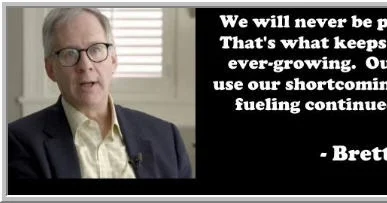
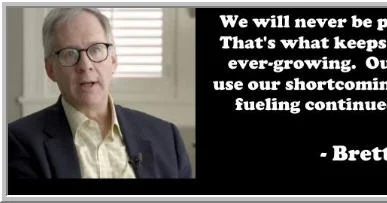
The financial services industry is witnessing a significant shift in how individual and institutional traders approach performance, moving away from purely technical analysis toward a sophisticated integration of evidence-based psychology and self-coaching methodologies. Dr. Brett Steenbarger, a clinical associate professor of psychiatry and behavioral sciences and a prominent figure in the field of trading psychology, has recently emphasized the necessity for market participants to adopt "solution-focused" approaches to their professional development. This methodology, which prioritizes the identification and amplification of personal strengths over the traditional focus on correcting flaws, represents a departure from earlier models of behavioral finance and signals a new era in the pursuit of sustainable market success.
The Shift Toward Evidence-Based Trading Psychology
The discipline of trading psychology has evolved from anecdotal observations of market "intuition" to a rigorous field grounded in clinical research. Central to this evolution is the application of evidence-based psychological techniques, such as Cognitive Behavioral Therapy (CBT) and Solution-Focused Brief Therapy (SFBT), to the high-stakes environment of global markets. Unlike traditional psychotherapy, which often delves into historical trauma or personality deficits, these modern approaches are designed to improve productivity, quality of life, and creativity in real-time.
Dr. Steenbarger’s work highlights that the most effective growth occurs when traders focus on what they do well. By leveraging cognitive, interpersonal, and personality strengths, individuals can create a resilient framework for decision-making. This "strengths-based" paradigm is supported by a growing body of literature suggesting that positive reinforcement and the replication of successful behavioral patterns lead to more consistent results than the constant scrutiny of failures. In the context of professional trading, where the emotional toll of financial loss can be debilitating, this proactive psychological stance serves as a critical buffer against burnout and cognitive fatigue.
Historical Context and the Chronology of Performance Coaching
The history of performance coaching in the financial sector can be traced back to the late 20th century, coinciding with the rise of electronic trading and the democratization of market access.
- The Early 1990s: The Emotional Management Era. Early pioneers in the field focused primarily on "managing emotions" such as fear and greed. The prevailing theory was that successful trading required the suppression of human emotion to achieve a robotic state of execution.
- The Early 2000s: The Cognitive Revolution. Researchers began applying findings from behavioral economics—most notably the work of Daniel Kahneman and Amos Tversky—to trading. This period introduced the concept of cognitive biases, such as loss aversion and the disposition effect, helping traders understand why they made irrational choices.
- 2010–2020: Integration of Clinical Science. Figures like Dr. Steenbarger bridged the gap between clinical psychiatry and the trading floor. This era saw the introduction of "Deliberate Practice" (a concept popularized by Anders Ericsson) and the use of biofeedback to monitor physiological responses to market volatility.
- 2020 to Present: The Self-Coaching and Wellness Movement. Current trends emphasize the "trader as an athlete" model. This involves a holistic focus on work-life balance, mental health, and the democratization of coaching resources through digital platforms and evidence-based literature.
This timeline reflects a broader transition from external mentorship to internal mastery. As resources become more accessible, the onus has shifted to the individual trader to act as their own coach, utilizing structured journals, performance metrics, and psychological frameworks to navigate the complexities of the modern market.
Supporting Data: The Quantitative Impact of Psychological Resilience
The necessity for robust psychological training is underscored by the high failure rates traditionally associated with active trading. Industry data often suggests that upwards of 80% to 90% of retail traders fail within their first two years. Research into the causes of these failures frequently points not to a lack of technical knowledge, but to "behavioral alpha"—the ability to maintain disciplined execution under stress.
A study on the performance of professional hedge fund managers indicated that those who utilized performance coaches or structured psychological reviews showed a higher Sharpe ratio (a measure of risk-adjusted return) compared to those who did not. Furthermore, data from proprietary trading firms suggests that traders who engage in "solution-focused" reviews—analyzing their best trades to identify repeatable patterns—recover from "drawdowns" (periods of loss) 25% faster than those who focus exclusively on analyzing their mistakes.
The role of "cognitive load" is also a critical factor. High-stress environments trigger the release of cortisol, which can impair the prefrontal cortex—the area of the brain responsible for executive function and complex decision-making. Evidence-based techniques, such as mindfulness and structured breathing, have been shown to lower heart rate variability (HRV) and maintain cognitive clarity, providing a measurable edge in fast-moving markets.

Institutional Responses and the Rise of Professional Standards
Major financial institutions and proprietary trading groups have increasingly recognized the value of embedded performance psychology. Firms such as Point72, SMB Capital, and various London-based hedge funds have integrated full-time psychologists into their operations. These professionals do not function as traditional therapists but as performance consultants who assist in hiring best practices, teamwork, leadership development, and idea generation.
Industry leaders suggest that the "soft skills" of trading—self-awareness, resilience, and adaptability—are now viewed as "hard skills" essential for institutional-grade performance. The integration of these practices has led to a more formalized approach to trader development, where psychological metrics are tracked alongside financial ones. For instance, some firms now monitor "tilt" (a state of emotional frustration leading to poor decisions) through trading software that alerts managers when a trader’s behavior deviates from their historical norm.
Broader Impact and Implications for the Trading Community
The movement toward self-coaching and evidence-based psychology has profound implications for the broader trading community. By moving away from the "get rich quick" narratives often found in retail trading circles, the focus on psychological development promotes a more sustainable and professionalized approach to the markets.
1. Democratization of Institutional Knowledge
Previously, access to world-class performance psychologists was reserved for the elite traders of top-tier hedge funds. The proliferation of resources, books, and blogs from experts like Dr. Steenbarger has democratized this knowledge, allowing individual retail traders to implement the same rigorous standards used by professional desks.
2. Emphasis on Work-Life Balance
One of the most significant shifts in the modern era is the recognition that trading performance is inextricably linked to quality of life. The "hustle culture" of the past is being replaced by a focus on sleep hygiene, physical fitness, and interpersonal relationships. Data suggests that traders with a stable personal life and a healthy work-life balance are less likely to engage in impulsive "revenge trading" after a loss.
3. The "Solution-Focused" Future
As artificial intelligence and algorithmic trading continue to dominate the execution landscape, the human element in trading is shifting toward high-level strategy and psychological management. The ability to remain creative and adaptable—traits emphasized in Dr. Steenbarger’s solution-focused approach—will become the primary differentiator for human traders in an increasingly automated environment.
Analysis of Implications
The transition to a strengths-based, evidence-based coaching model suggests that the future of trading will be defined by "psychological capital." Traders who can effectively "become their own coaches" will be better equipped to handle the volatility and uncertainty inherent in global finance. This evolution also highlights a growing intersection between the fields of clinical psychology and financial technology.
For the individual trader, the path forward involves a commitment to continuous "personal evolution." As Dr. Steenbarger notes, the journey of becoming a successful trader is often identical to the journey of becoming one’s best self. By identifying what works, doing more of it, and maintaining a disciplined focus on cognitive strengths, market participants can transform the often-volatile experience of trading into a structured path of professional and personal growth.
In conclusion, the integration of psychological science into the trading process is no longer an optional "extra" but a core requirement for success. As the industry moves forward, the focus will likely remain on the refinement of these techniques, the use of data to track behavioral patterns, and the ongoing pursuit of a balanced, high-performance lifestyle. The ultimate goal is the alignment of personality with strategy, ensuring that when a trader is at their best, they are also at their most profitable.