Lina Wu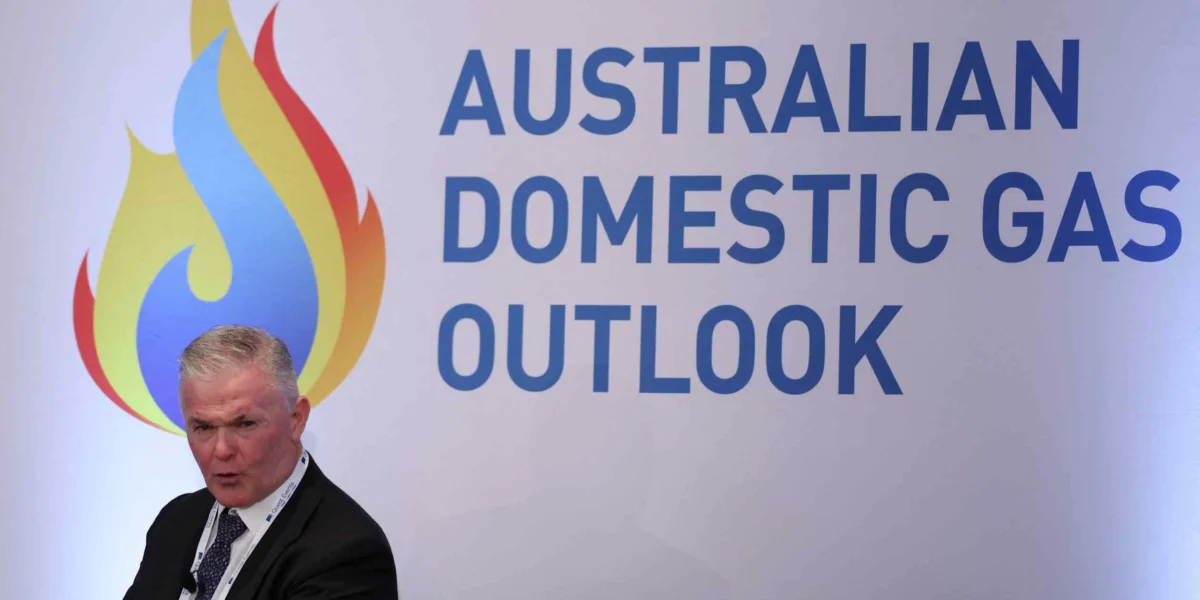
The Australian government is currently engaged in a critical negotiation with the nation’s powerful natural gas producers over a proposed mandate to reserve a portion of their output for the domestic market. Despite recent concessions from the government, the industry is intensifying its push for further modifications, arguing that the current framework poses a significant threat to future investment in production and jeopardizes Australia’s standing as a reliable global energy supplier. The core of the dispute lies in the government’s intention to ensure a stable and affordable gas supply for Australian households and industries, a goal that has been complicated by the dual pressures of a tightening domestic market and the lucrative opportunities presented by international export markets, particularly in Asia.

The Genesis of the Domestic Gas Reservation Policy
The push for a domestic gas reservation policy is not a sudden development. It stems from years of escalating domestic gas prices and concerns about supply security, particularly in the eastern Australian states. For much of the 2010s, Australia experienced a boom in liquefied natural gas (LNG) exports, with major projects coming online and significantly increasing the nation’s capacity to sell gas to overseas markets. While this brought substantial economic benefits, including significant export revenue and job creation, it also led to a disconnect between the supply and demand dynamics within Australia. Domestic users, especially manufacturers, found themselves facing rapidly increasing prices and, at times, uncertainty about future supply.
This situation reached a tipping point in the late 2010s, prompting government intervention. Initial efforts involved voluntary agreements with producers, but these proved insufficient to address the structural issues. The government then began exploring more robust policy levers, culminating in the current proposal for a mandatory domestic reservation. The underlying objective is to create a buffer, ensuring that a certain percentage of gas produced within Australia is first offered to domestic consumers at prices that reflect the cost of production and a reasonable return, rather than being solely dictated by global market fluctuations.

Industry’s Counterarguments: The Peril of Reduced Export Revenue
The natural gas industry, represented by major players like Santos, Woodside, and Origin Energy, has voiced strong opposition to the proposed mandate, even in its softened form. Their primary argument centers on the economic consequences of diverting gas from high-value export markets. Australia is a leading global exporter of LNG, with its export revenue forming a significant component of the national economy. Companies argue that any policy that restricts their ability to sell gas on the international market directly erodes this revenue stream.
This reduction in export revenue, they contend, has a cascading effect on investment decisions. The profitability of large-scale gas exploration and production projects is intrinsically linked to the ability to secure long-term export contracts at competitive prices. If a significant portion of this potential revenue is siphoned off for domestic use, the economic case for investing in new supply infrastructure, such as offshore platforms, pipelines, and liquefaction facilities, becomes weaker.

Kevin Gallagher, CEO of Santos, a prominent Australian gas producer, has been a vocal critic of the policy. At a March conference in Sydney, Gallagher emphasized that the profitability of the Australian gas sector is crucial for attracting the substantial capital required for new developments. He has repeatedly stated that without the certainty of export market access and pricing, companies will be hesitant to commit billions of dollars to projects that are essential for meeting future domestic and international demand. The argument is that a perceived or actual reduction in the potential return on investment will inevitably lead to a slowdown in the pace of new supply coming online, potentially exacerbating the very supply issues the government is trying to address in the long run.
Government’s Concessions and the Ongoing Standoff
The Australian government, under Prime Minister Anthony Albanese, has acknowledged the concerns raised by the industry and has made some adjustments to its initial proposal. Initially, the government had indicated a more stringent approach, but subsequent consultations led to a revised framework. The exact details of the revised policy remain a point of contention, but it is understood to involve a more flexible mechanism for determining the volume of gas to be reserved and potentially a more market-based pricing approach for domestic sales.

However, these concessions have not fully appeased the industry. Producers are still pressing for greater certainty and flexibility, seeking assurances that the policy will not become an unpredictable burden on their operations. They are advocating for a system that is closely tied to actual domestic demand and supply deficits, rather than a fixed percentage that could lead to surplus gas being allocated domestically at uneconomic prices.
Supporting Data: The Price Discrepancy and Export Volumes
To understand the gravity of the situation, one must consider the stark contrast between domestic and international gas prices. In recent years, Australian domestic gas prices, particularly in the eastern states, have frequently been significantly higher than the equivalent prices in major Asian export markets. This discrepancy is a direct consequence of the supply and demand imbalance exacerbated by the export boom. While the government aims to bring domestic prices down to more affordable levels, the industry argues that forcing them to sell at a loss or reduced profit margin in the domestic market, while international prices remain high, is unsustainable and distorts market signals.

Australia’s LNG export volumes have been substantial. In the fiscal year 2022-23, Australia’s LNG exports were valued at approximately A$70 billion, making it one of the country’s largest commodity export earners. Any policy that significantly curtails these volumes would have a tangible impact on the national trade balance and government revenues. Furthermore, Australia is a crucial supplier of LNG to countries like Japan, South Korea, and China, playing a vital role in their energy security. The industry warns that a perception of unreliability in Australian supply could lead these nations to seek alternative, potentially less stable, sources of energy.
Timeline of Developments
- Early to Mid-2010s: Rapid expansion of Australia’s LNG export capacity with the development of major projects.
- Late 2010s: Rising domestic gas prices and growing concerns about supply security in eastern Australia.
- 2017-2019: Initial government attempts at voluntary agreements with gas producers to address domestic supply.
- 2020-2022: Continued pressure on domestic prices and supply, leading to exploration of more stringent policy options.
- 2023: The Australian government formally announces its intention to introduce a mandatory domestic gas reservation policy.
- Early 2024: Industry consultations begin, with producers voicing strong concerns about the potential impact on investment.
- March 2024: Kevin Gallagher of Santos speaks at a Sydney conference, highlighting investment risks.
- Mid-2024: The government signals potential concessions and a revised approach to the policy.
- October 2026: Ongoing negotiations and sparring between the government and gas producers over the final details of the policy.
Broader Impact and Implications
The standoff between the Australian government and its gas producers carries significant implications beyond the immediate economic sphere.

Energy Security: While the government’s intention is to bolster domestic energy security, the industry’s argument suggests that a poorly designed policy could, in the long run, undermine it by discouraging investment in new supply. If future production is curtailed due to reduced profitability, Australia could face even tighter supply conditions down the line.
Economic Competitiveness: Australia’s manufacturing sector has been struggling with high energy costs. A successful domestic reservation policy could provide much-needed relief, making Australian businesses more competitive. However, the risk remains that the broader economic impact of reduced export revenue and investment could outweigh these benefits.

International Relations: As a major global energy exporter, Australia’s energy policies are closely watched by its trading partners. A perception of protectionism or unreliability in its energy supply could strain diplomatic and economic relationships with key Asian allies.
Investment Climate: The outcome of this dispute will send a strong signal to domestic and international investors about the regulatory environment for the energy sector in Australia. A clear, predictable, and market-aligned policy is crucial for attracting the substantial capital required for the transition to a lower-emission energy future, which still relies heavily on natural gas as a transition fuel.

The ongoing dialogue highlights the complex balancing act the Australian government faces: ensuring affordable energy for its citizens and industries while maintaining the economic benefits of its significant natural gas export sector and navigating the global energy transition. The final shape of the domestic gas reservation policy will be a critical determinant of Australia’s future energy landscape and its role in the global energy market.