Clara Shinta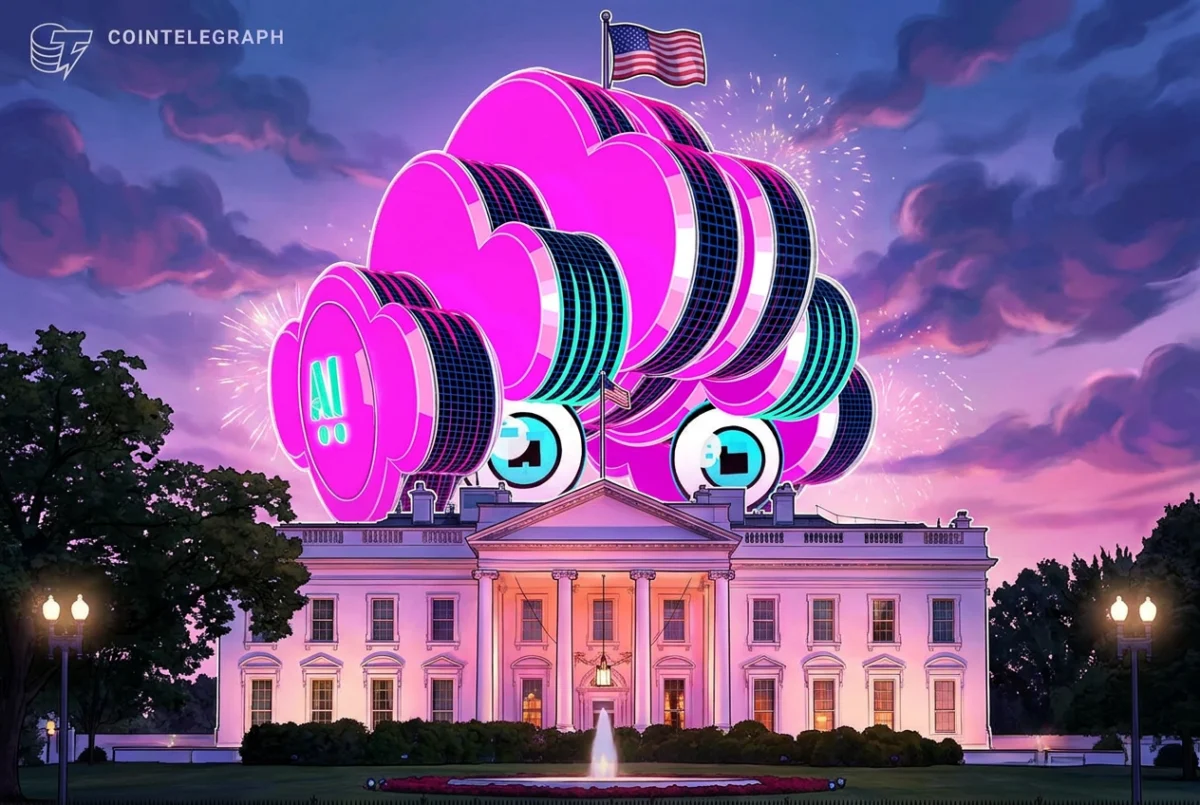
President Donald Trump is reportedly set to name Jay Clayton, currently the US Director of National Intelligence (DNI) and former head of the Securities and Exchange Commission (SEC), as the nation’s inaugural Artificial Intelligence (AI) czar. The appointment, widely reported by CNN and other major media outlets on Friday, citing anonymous sources familiar with the discussions, signals a significant escalation in the federal government’s engagement with the rapidly advancing field of AI. This move comes as the former president has repeatedly emphasized the need for a dedicated federal strategy to manage the burgeoning AI sector, aiming to foster innovation while addressing inherent risks, without imposing stifling regulations that could impede progress.
The anticipated selection of Clayton underscores a strategic alignment with Trump’s stated objective to establish an "AI Force," conceptually modeled after the Space Force, a vision he first articulated on Truth Social. This initiative, according to Trump, seeks to provide a structured federal framework for overseeing AI development, ensuring American leadership in the technology, and navigating its complex ethical and societal implications. While official confirmation from the White House is pending, with one official telling CBS News that any announcement would come directly from the president, dismissing early reports as speculation, the widespread nature of the reports indicates advanced stages of the selection process.
Jay Clayton: A Profile in Regulatory and Intelligence Leadership
Jay Clayton’s potential appointment brings a wealth of experience from both regulatory and intelligence sectors, making him a unique candidate for the multifaceted role of AI czar. His tenure as Chairman of the Securities and Exchange Commission (SEC) from 2017 to 2020, during Trump’s first administration, was marked by efforts to modernize regulations and address emerging financial technologies. At the SEC, Clayton navigated the complexities of initial coin offerings (ICOs) and the nascent cryptocurrency market, often emphasizing investor protection and the application of existing securities laws to new digital assets. This background in overseeing disruptive technologies within a regulatory framework could prove invaluable in the AI domain, where innovation often outpaces traditional governance models. His approach at the SEC was generally seen as cautious but open to technological advancement, a balance that will be critical in the AI landscape.
Following his leadership at the SEC, Clayton was confirmed by the Senate in July to lead the intelligence community as the Director of National Intelligence (DNI). In this critical role, he oversees the vast network of U.S. intelligence agencies, providing the President with the daily intelligence briefing and coordinating intelligence efforts across the government. His experience at the helm of the DNI provides him with a unique vantage point on the national security implications of AI, ranging from its use in surveillance and cyber warfare to its potential to enhance intelligence analysis and decision-making capabilities. During his confirmation hearing, Clayton publicly acknowledged AI as a "game changer," stating it represents "not only an opportunity but a threat." This nuanced perspective suggests an understanding of the dual-use nature of AI technologies and the imperative to balance their transformative potential with rigorous risk management. His previous experience as an interim U.S. Attorney for the Southern District of New York further burnishes his credentials in legal and enforcement matters, skills that could be crucial in defining the boundaries and responsibilities within the rapidly evolving AI sector. The breadth of his experience across finance, law, and national security positions him to address the diverse challenges and opportunities presented by AI.
Defining the Role of an AI Czar and the "AI Force"
The establishment of an "AI czar" signifies a dedicated, high-level federal position aimed at streamlining policy, coordinating efforts across various government agencies, and serving as the principal advisor to the President on artificial intelligence. Historically, "czars" have been appointed in the U.S. government to address specific, urgent national priorities, such as the "drug czar," "energy czar," or "climate czar." These roles typically involve considerable influence and direct access to the President, enabling them to cut through bureaucratic red tape and drive policy initiatives across departmental lines. An AI czar would likely be tasked with developing a cohesive national AI strategy, fostering public-private partnerships, guiding federal investment in AI research and development, and potentially representing the U.S. in international discussions on AI governance. This role demands not only a deep understanding of the technology but also significant diplomatic and political acumen.
The "AI Force" concept, as envisioned by President Trump, further illustrates the ambition behind this initiative. Drawing parallels with the Space Force, established in 2019 as the sixth branch of the U.S. Armed Forces, the "AI Force" suggests a strategic, perhaps even militarized, approach to AI development and deployment. While the specifics remain undefined, it could imply a new federal agency, a coordinated inter-agency effort, or a significant expansion of existing defense and intelligence AI capabilities. The objective would likely be focused on securing U.S. dominance in AI, protecting national interests from adversarial AI threats, and potentially developing AI capabilities for defense and intelligence purposes. Such an entity, guided by an AI czar, would play a pivotal role in allocating resources, setting research priorities, and potentially influencing the ethical guidelines for AI development within government operations, particularly concerning national security applications. The very naming "AI Force" implies a strong, assertive posture towards AI, recognizing it as a domain of strategic competition akin to space or cyber warfare.
Trump’s AI Policy Framework: Innovation and Self-Regulation
President Trump’s approach to AI policy has consistently emphasized the dual goals of accelerating innovation and ensuring American leadership, while explicitly cautioning against excessive regulation that could stifle progress. His public statements, including those on Truth Social, have underscored a philosophy that prioritizes market-driven solutions and industry self-governance over heavy-handed government oversight. This stance aligns with a broader conservative viewpoint that innovation thrives best in an environment with minimal regulatory burdens, allowing technological advancements to flourish organically. This perspective often suggests that the private sector is more agile and capable of adapting to rapid technological change than government bureaucracy.
A tangible manifestation of this philosophy occurred recently when Trump gathered leading figures from the AI and technology sectors at the White House. At this meeting, these industry titans reportedly signed a commitment to "self-police" their companies’ AI models and development. While the full details of this accord have not been publicly disclosed, it signals an intent to leverage the industry’s expertise and commitment to responsible development, rather than imposing external mandates. Proponents of self-regulation argue that the rapidly evolving nature of AI makes it difficult for traditional legislative processes to keep pace, and that industry insiders are best equipped to understand and address the technical nuances and potential risks. They often point to the risk of "regulatory capture" or unintended consequences from ill-informed legislation. Critics, however, often voice concerns about the inherent limitations of self-policing, arguing that without robust external oversight, companies may prioritize profit and speed over safety and ethical considerations, potentially leading to unchecked development and unforeseen societal consequences. This tension between innovation and regulation forms a central challenge for any incoming AI czar, who will need to navigate these often-conflicting pressures to forge a path forward that balances technological advancement with public trust and safety.
The Intensifying Global Debate on AI Safety and Governance
The discussions surrounding the appointment of an AI czar and the formulation of a national AI strategy are unfolding against a backdrop of intensifying global debate over AI’s potential dangers and the urgent need for effective governance. Warnings from prominent figures in the AI community have amplified concerns, highlighting scenarios ranging from the erosion of democratic processes through sophisticated disinformation and deepfakes to the existential risks posed by superintelligent AI systems that could "outrun our ability to understand and control." These warnings are not mere speculative fiction but come from the very engineers and researchers at the forefront of AI development.
One of the most vocal proponents for a more measured approach to AI development is Dario Amodei, CEO of Anthropic, a leading AI safety research company. In a widely discussed three-step proposal, Amodei advocated for pacing the speed of AI development to a "safer pace," emphasizing that if left unchecked, advanced AI systems might exceed humanity’s capacity for comprehension and control. His proposal included concrete steps such as robust external evaluations of advanced AI models, the establishment of industry-wide safety standards, and potentially a global pause or slowdown in the development of frontier models until adequate safeguards are in place. Following this, Anthropic partnered with Accenture, embedding the consulting giant as an evaluator to help moderate the pace of AI development, an initial step aligned with Amodei’s vision for responsible scaling.
Amodei’s call for caution resonated with other influential figures. Sam Altman, CEO of OpenAI, the creator of ChatGPT, has repeatedly emphasized the need for international governance bodies for AI, acknowledging the technology’s immense power and potential for societal transformation, both positive and negative. Altman has testified before Congress, advocating for a new agency to license powerful AI models and ensure their safety. Similarly, Elon Musk, CEO of SpaceX and xAI, a new AI venture focused on understanding the universe, has long been a vocal critic of unchecked AI development, frequently warning about its existential risks and advocating for proactive regulatory measures. His concerns about AI’s potential for harm predate the recent generative AI boom. Their support underscores a growing consensus among some leading developers that AI’s trajectory requires careful steering and international coordination.
However, this sentiment is not universally shared within the tech industry. Jensen Huang, CEO of Nvidia, a semiconductor giant crucial to AI’s infrastructure, has expressed skepticism about the necessity of immediate, heavy-handed regulation. Huang argues that the market itself, through competitive pressures and the pursuit of beneficial applications, will naturally guide AI development in a responsible direction, and that premature regulation could stifle the innovation necessary to address global challenges and maintain technological competitiveness. He often points to the rapid pace of technological change making prescriptive regulation quickly obsolete. This divergence of opinion highlights the complex challenge facing policymakers: how to balance the imperative for rapid technological advancement with the critical need for safety and ethical guardrails. The AI czar will be at the forefront of navigating these often-conflicting perspectives, attempting to forge a path that satisfies both innovation advocates and safety proponents.
Historical Precedent: David Sacks and the Temporary "Crypto and AI Czar" Role
The notion of an "AI czar" is not entirely unprecedented within the Trump administration, albeit in a more temporary and informal capacity. Last year, venture capitalist David Sacks served a 130-day tenure as a special White House official, informally dubbed the "crypto and AI czar." This role, constrained by specific U.S. government rules limiting special government employees to 130 days of work within a 12-month period, aimed to provide expert advice on emerging technologies, particularly blockchain and artificial intelligence. Sacks, a prominent figure in Silicon Valley and a co-founder of PayPal, brought an entrepreneurial perspective to the White House’s engagement with these sectors, focusing on how these technologies could be leveraged for economic growth and national security.
During his brief but impactful tenure, Sacks reportedly focused on understanding the implications of these technologies for national security, economic competitiveness, and regulatory frameworks. He engaged with various stakeholders, including industry leaders, academics, and policymakers, to inform potential government strategies. His work provided a glimpse into the administration’s early efforts to integrate technological expertise into federal policy-making. Upon the conclusion of his 130 days, Sacks stated in March that he would continue to contribute to policy recommendations across a broad range of tech industries as co-chair of the President’s Council of Advisors on Science and Technology (PCAST). While Sacks’ role was temporary and advisory, it laid some groundwork for the administration’s thinking on how to integrate technological expertise into federal policy-making, demonstrating a recognition of the need for specialized guidance in these complex areas.
Jay Clayton’s potential appointment as a more permanent and formally empowered AI czar would represent a significant evolution from Sacks’ temporary role. It suggests a move from an ad-hoc advisory function to a more institutionalized position with potentially broader authority and a longer-term mandate. This shift reflects a recognition that AI’s impact demands sustained, high-level attention that transcends temporary advisory roles and requires a more integrated approach across government.
The Global AI Governance Landscape and U.S. Positioning
The United States’ efforts to establish a coherent national AI strategy, spearheaded by an AI czar, unfold within an increasingly competitive and complex global landscape of AI governance. Nations worldwide are grappling with the same opportunities and challenges presented by artificial intelligence, leading to a patchwork of regulatory approaches and strategic investments. The global AI market, projected to reach trillions of dollars within the next decade, underscores the immense economic and geopolitical stakes involved.
The European Union, for instance, has taken a proactive and comprehensive regulatory stance with its proposed AI Act. This landmark legislation, currently moving through the EU’s legislative process, aims to create the world’s first comprehensive legal framework for AI, categorizing systems by risk level and imposing strict requirements on high-risk applications, such as those used in critical infrastructure, law enforcement, and employment.