Lina Wu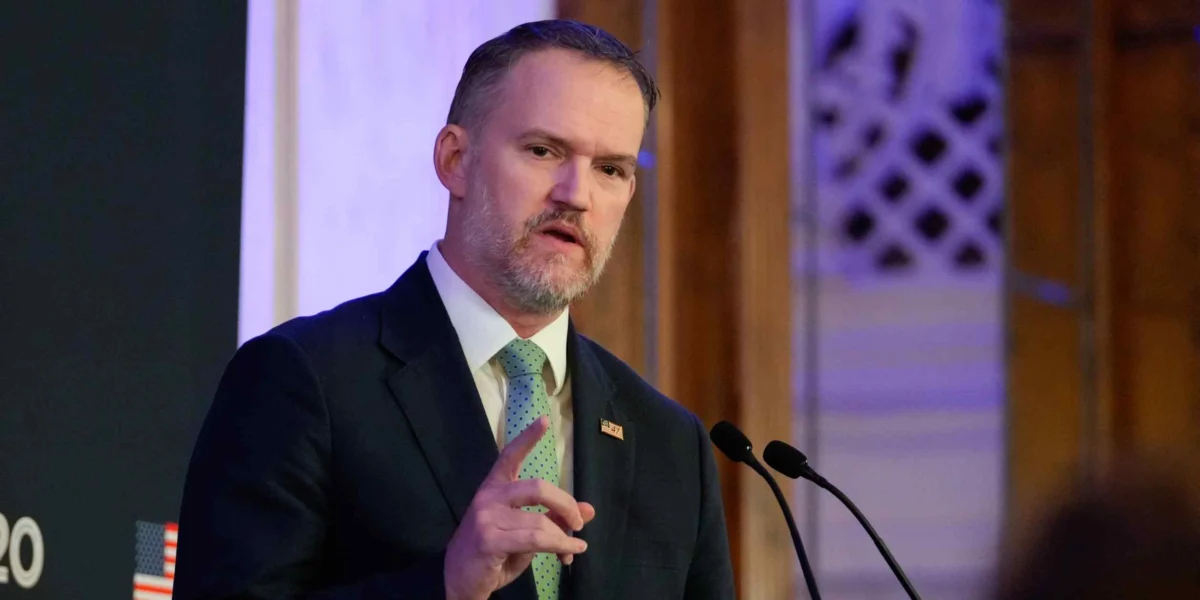
MILWAUKEE, Wisconsin – United States Trade Representative Jamieson Greer declared on Thursday that Washington is poised to unveil a suite of countermeasures against what it perceives as problematic overproduction emanating from China and other nations within a matter of "weeks." Speaking at the G20 Trade Ministerial held in Milwaukee, Wisconsin, Greer articulated a firm stance, stating that the U.S. "is not going to sit there and take" the influx of excess goods that could disrupt domestic industries and global markets. This announcement signals a significant escalation in the ongoing trade tensions, particularly with Beijing, and suggests a proactive approach by the Biden administration to address what it views as unfair competitive practices.
A G20 Forum for Friction and Future Policy
The G20 Trade Ministerial, a gathering of trade ministers from the world’s largest economies, typically serves as a platform for dialogue on global trade issues, fostering cooperation and seeking solutions to shared challenges. However, in recent years, the forum has increasingly become a stage for expressing divergent national interests and, at times, highlighting trade disputes. The backdrop to Greer’s statement is a global economic landscape marked by persistent supply chain vulnerabilities, the lingering effects of the COVID-19 pandemic, and geopolitical shifts that have amplified concerns about economic security and industrial policy.
The U.S. has long voiced grievances regarding China’s state-led economic model, arguing that it fosters overcapacity in key sectors, leading to artificially low prices that undermine fair competition for American businesses. This overproduction, the U.S. contends, is often supported by substantial government subsidies, preferential financing, and other forms of state intervention that distort global markets. While China maintains that its industrial policies are aimed at fostering domestic growth and innovation, trading partners, including the U.S., the European Union, and Japan, have expressed growing alarm over the implications for their own economies.
The Genesis of U.S. Concerns: A Growing Tide of Excess Capacity
The specific sectors targeted by the U.S. for potential countermeasures have not been explicitly detailed by Greer. However, recent U.S. trade actions and pronouncements have often focused on industries where China has significantly expanded its manufacturing capabilities and export volumes. These include, but are not limited to, renewable energy technologies like solar panels and electric vehicles, steel, aluminum, semiconductors, and certain consumer goods.
Data from various international bodies and industry analyses have highlighted the scale of China’s industrial expansion. For instance, reports from the International Energy Agency (IEA) have pointed to substantial increases in Chinese production capacity for solar PV modules, electric vehicle batteries, and wind turbines, far exceeding current global demand. Similarly, the World Steel Association has documented significant overcapacity in the global steel market, with China being the largest producer and exporter. This surplus production, if not absorbed by domestic demand, often finds its way to international markets, putting downward pressure on prices and challenging the competitiveness of producers in other countries.
The U.S. administration’s concerns are not entirely new. The Trump administration initiated a series of tariffs on Chinese goods, citing unfair trade practices and intellectual property theft. While the Biden administration has maintained some of these tariffs, it has also sought to recalibrate its trade policy, emphasizing a focus on strengthening domestic supply chains, investing in strategic industries, and working with allies to address shared challenges. Greer’s statement suggests a shift towards more targeted and proactive measures beyond broad-based tariffs.
A Timeline of Escalating Trade Tensions and U.S. Actions
The U.S. approach to trade with China has evolved over several administrations, but the underlying concerns about industrial overcapacity have remained a constant.
- Early 2010s: Concerns about China’s growing industrial capacity and state subsidies begin to gain traction among trading partners.
- Mid-2010s: The U.S. initiates targeted trade investigations and disputes at the World Trade Organization (WTO) related to specific Chinese industrial policies.
- 2018-2019: The Trump administration imposes significant tariffs on a wide range of Chinese goods, triggering retaliatory measures from China. Trade talks lead to a "Phase One" trade deal, but many core issues remain unresolved.
- 2021: The Biden administration reviews U.S. trade policy towards China, maintaining some tariffs while signaling a desire for a more coordinated approach with allies. Discussions around supply chain resilience and strategic competition intensify.
- 2022-2023: U.S. officials, including U.S. Trade Representative Katherine Tai, repeatedly highlight the issue of China’s overproduction as a destabilizing factor in global markets. The U.S. engages in discussions with allies, including the EU and Japan, on coordinated responses.
- 2024 (leading up to October 2026): U.S. government agencies conduct in-depth analyses of global overcapacity in critical sectors. Reports from think tanks and industry groups further underscore the scale of the issue.
- October 2026: U.S. Trade Representative Jamieson Greer announces imminent countermeasures at the G20 Trade Ministerial in Milwaukee.
Potential Countermeasures: A Multifaceted Approach
While the precise nature of the countermeasures remains undisclosed, U.S. trade policy has a range of tools it can employ. These could include:
- Targeted Tariffs: Similar to previous actions, the U.S. could impose tariffs on specific Chinese goods or categories of goods that are deemed to be benefiting from unfair subsidies and are contributing to oversupply. However, this approach can be contentious and may invite further retaliatory measures.
- Section 301 Investigations: The U.S. could initiate new investigations under Section 301 of the Trade Act of 1974, which allows the President to take action against countries that engage in unfair trade practices. This could lead to broader tariffs or other trade restrictions.
- Trade Remedies: This includes anti-dumping and countervailing duty investigations, which are formal processes to address unfairly priced imports and subsidized goods. If these investigations find evidence of harm to U.S. industries, duties can be imposed.
- Export Controls and Investment Screening: The U.S. may consider stricter controls on the export of certain technologies to China or enhanced screening of Chinese investments in critical U.S. industries, aiming to limit China’s ability to leverage its industrial capacity.
- International Cooperation and Coordinated Actions: A key element of the Biden administration’s strategy has been to work with allies. Greer’s statement could be a prelude to coordinated actions with countries like Japan, the European Union, and others who share similar concerns about China’s overproduction. This could involve joint trade investigations, coordinated tariff measures, or unified approaches in international forums like the WTO.
- Domestic Industrial Policy Support: While not a direct countermeasure against other countries, the U.S. is also investing heavily in its own domestic industries through legislation like the CHIPS and Science Act and the Inflation Reduction Act. These initiatives aim to bolster U.S. manufacturing capabilities, reduce reliance on foreign supply chains, and make American industries more competitive.
Reactions and Inferences: A Global Expectation of Action
While no immediate official statements from China or other targeted nations were available at the time of reporting, Greer’s remarks are likely to generate significant attention and anticipation.
- China: Beijing is expected to strongly refute any accusations of unfair trade practices and may warn of retaliatory measures if the U.S. imposes new trade restrictions. Chinese state media and official spokespersons often emphasize the country’s role in global supply chains and its contributions to economic growth. They might also point to subsidies and industrial policies in other developed nations as a form of protectionism.
- Japan: As a key trading partner and ally of the U.S., Japan has also expressed concerns about China’s overproduction, particularly in sectors like steel and chemicals. Tokyo is likely to be closely watching the U.S. actions and may seek to align its own trade strategies to some extent, while also prioritizing its own economic interests. Japan’s own industrial policy aims to bolster its high-tech sectors and maintain competitiveness.
- European Union: The EU has similarly voiced concerns about China’s industrial overcapacity and its impact on European industries, especially in green technologies. Brussels has its own set of trade defense instruments and has been actively discussing coordinated responses with the U.S. and other partners. The EU’s own Green Deal Industrial Plan aims to boost European manufacturing in key climate technologies, mirroring some of the U.S. objectives.
- Industry Groups: American industry associations, particularly those representing sectors facing intense import competition from China, are likely to welcome the U.S. government’s proactive stance. However, depending on the specific countermeasures, some industries that rely on Chinese inputs or have significant export markets in China might express concerns about potential disruptions or retaliatory tariffs.
Broader Implications: Reshaping Global Trade Dynamics
The U.S. move to unveil countermeasures against overproduction has far-reaching implications for the global trading system. It signals a potential intensification of trade friction between major economic powers, moving beyond disputes over tariffs to address more systemic issues of industrial policy and market distortion.
- Supply Chain Restructuring: This could accelerate efforts by companies worldwide to diversify their supply chains away from China, leading to shifts in manufacturing locations and increased investment in countries like Vietnam, India, Mexico, and within the U.S. and Europe.
- Geopolitical Alignment: The U.S. push for coordinated action with allies could strengthen economic blocs and influence geopolitical alignments, as countries are compelled to choose sides or navigate complex trade relationships.
- WTO’s Role: The effectiveness and relevance of the World Trade Organization (WTO) in resolving such disputes will be further tested. If countries increasingly resort to unilateral actions or bilateral agreements, it could weaken the multilateral trading system.
- Inflationary Pressures: While intended to protect domestic industries, the imposition of tariffs or other trade barriers can, in the short to medium term, lead to higher prices for consumers and businesses due to increased import costs.
- Innovation and Competition: The long-term impact on global innovation and competition remains to be seen. A more fragmented global market could lead to less efficient resource allocation but might also spur domestic innovation and competition in the absence of subsidized foreign competitors.
As the U.S. prepares to roll out its new measures, the international business community and governments worldwide will be scrutinizing every detail, anticipating a new phase in the ongoing recalibration of global trade relationships. The U.S. Trade Representative’s firm declaration suggests that the era of simply observing and reacting to overproduction may be coming to an end, replaced by a more assertive and strategic approach to safeguarding American economic interests.