Putri Inara
The Evolution of the Professional Blogging Industry
The professionalization of blogging began in earnest in the early 2000s. Darren Rowse, the founder of ProBlogger, established his first digital presence in 2002, a period when the infrastructure for monetization—such as Google AdSense and sophisticated affiliate networks—was still in its infancy. Since that era, the industry has transitioned through several phases: the "gold rush" of search engine optimization (SEO) in the late 2000s, the rise of social media integration in the 2010s, and the current era of diversified "creator businesses."
Today, the industry is no longer limited to the "Make Money Online" (MMO) niche. Success stories now span diverse sectors, including health and wellness, home improvement, photography, and hyper-local travel. The transition from a hobbyist activity to a legitimate business model requires a shift in perspective, moving away from chronological "journaling" toward the creation of high-value, evergreen content that solves specific reader problems.
The Statistical Reality of Blogging Income
Quantitative data regarding blogger earnings reveals a significant disparity between top earners and the general population of creators. In a comprehensive survey conducted by ProBlogger involving 1,500 respondents, the findings highlighted a "long tail" economic distribution. The data indicated that while the barrier to entry is low, the barrier to a livable wage remains high.
According to the survey results:
- Zero Earnings: 10% of bloggers attempting to monetize their platforms report making no income at all.
- Low-Level Earnings: Approximately 28% earn less than 30 cents per day, while 63% of the total surveyed population earns less than $3.50 per day.
- Part-Time Income: 9% of respondents earn over $1,000 per month, which serves as a supplemental or part-time income in many economies.
- High-Level Success: A small elite of 4% (65 individuals out of 1,508) reported earnings exceeding $10,000 per month, placing them in a six-figure annual income bracket.
This data underscores that while the "millionaire blogger" narrative exists, it represents a statistical outlier. The majority of creators operate in a space of supplemental income, particularly during the first 24 months of operation.
Strategic Diversification of Revenue Models
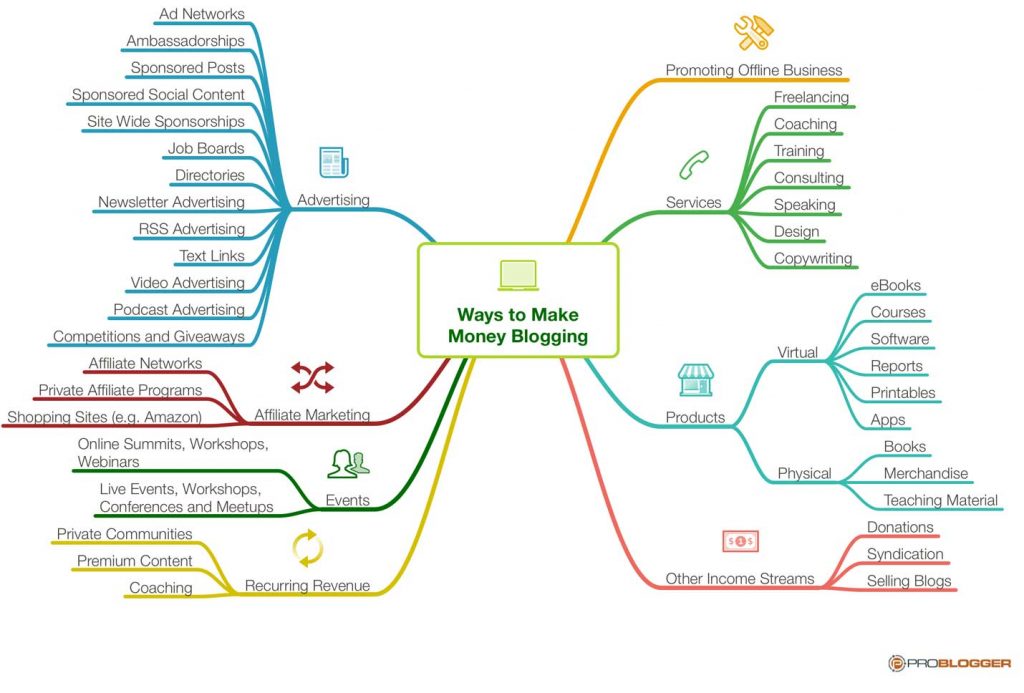
One of the most critical findings in the study of successful digital publishers is the rejection of a single-stream income model. The "Money Map" of modern blogging includes a complex matrix of revenue sources that mitigate the risk of platform changes or market shifts.

The primary monetization methods utilized by full-time bloggers include:
- Advertising: Utilizing display networks like Mediavine, Raptive, or Google AdSense.
- Affiliate Marketing: Earning commissions by recommending third-party products through platforms like Amazon Associates or specialized niche networks.
- Digital Products: Creating and selling ebooks, online courses, and downloadable templates.
- Membership Areas: Offering premium, gated content or community access for a recurring monthly fee.
- Service-Based Income: Leveraging the blog as a portfolio to secure speaking engagements, consulting contracts, or freelance writing assignments.
- Physical Goods: Expanding a digital brand into tangible products, such as cookbooks or specialized tools.
Case studies from the Australian blogging community—such as Sarah Wilson of I Quit Sugar, Ana White of her eponymous woodworking site, and Tsh Oxenreider of Simple Living—demonstrate that these models are successful across vastly different topics. These creators do not sell the "dream" of blogging; rather, they provide utility in their respective niches and monetize that attention through diverse channels.
The Longevity Factor and Time-to-Profitability
A recurring theme among high-earning bloggers is the correlation between longevity and income. The survey data revealed that 85% of bloggers in the top income bracket (earning over $10,000 per month) had been active for at least four years. Almost all respondents in this category had a minimum of three years of consistent publishing history.
This timeline is necessary for several structural reasons:
- SEO Authority: Search engines generally require time to establish the "Expertise, Authoritativeness, and Trustworthiness" (E-E-A-T) of a domain.
- Audience Trust: Building a loyal readership that is willing to purchase products or follow recommendations is a cumulative process.
- Content Library: A significant volume of evergreen content is required to generate the traffic levels necessary for high-volume ad revenue or affiliate sales.
The industry consensus suggests that blogging is a "get-rich-slow" scheme. The first year is often characterized by high labor and negligible returns, with the "compounding effect" of content and SEO only becoming visible in years three and four.
Labor Intensity and the Myth of Passive Income
The concept of "passive income" is a frequent marketing trope within the blogging world, yet professional creators describe the work as highly active and demanding. Maintaining a profitable blog requires a multi-disciplinary skill set that extends far beyond writing.
Full-time digital publishing involves four core pillars of labor:
- Content Creation: Developing original, high-quality, and research-backed articles on a consistent schedule.
- Reader Acquisition: Mastering SEO, email marketing, and social media distribution to bring new eyes to the platform.
- Community Engagement: Managing comments, email newsletters, and social interactions to convert casual visitors into loyal fans.
- Business Operations: Analyzing metrics, managing technical site health, negotiating sponsorships, and developing new products.
Analysis suggests that the "passive" element only applies to the timing of the income (money can be earned while the creator is not at their desk), but the generation of that income requires continuous maintenance and strategic updates to existing content.
Niche Viability Beyond the Meta-Blogging Sector
A common criticism of the industry is the "pyramid" theory: the idea that the only people making money are those teaching others how to make money. However, a broader analysis of the market disproves this. In fact, many creators find that "normal" niches are significantly more profitable due to lower competition and higher consumer demand.
For example, Darren Rowse notes that his photography-focused site, Digital Photography School, is ten times more profitable than his site about blogging (ProBlogger). This is attributed to the massive global market for photography gear, software, and education compared to the relatively smaller niche of aspiring professional bloggers. The same principle applies to home renovation, parenting, and personal finance, where the potential for affiliate commissions and high-value sponsorships is substantial.
Broader Implications for the Media Landscape
The rise of the professional blogger represents a democratization of media. As traditional newsrooms and magazines have faced declining revenues, independent creators have filled the void, providing specialized, "boots-on-the-ground" expertise that resonates with modern consumers. This shift has forced brands to reallocate their marketing budgets from traditional TV and print ads toward "influencer" and "creator" partnerships.
However, the future of the industry faces new challenges. The integration of Artificial Intelligence (AI) in search engines (Search Generative Experience) and the saturation of content platforms mean that bloggers must focus more on "human-centric" value, unique personal experience, and community building to remain competitive.
Conclusion
The evidence confirms that it is entirely possible to earn a full-time living from blogging, but the path is rigorous and statistically uncertain. Success in the field is not the result of a secret formula or a specific product, but rather a combination of niche selection, diversified monetization, and—most importantly—extreme persistence. For those willing to view blogging as a long-term business venture rather than a quick financial fix, the digital landscape remains a viable frontier for entrepreneurship. The minority who reach the top tiers of income are characterized not by luck, but by a minimum of four years of active, strategic labor and a commitment to providing genuine value to a specific audience.