Gilang Muhammad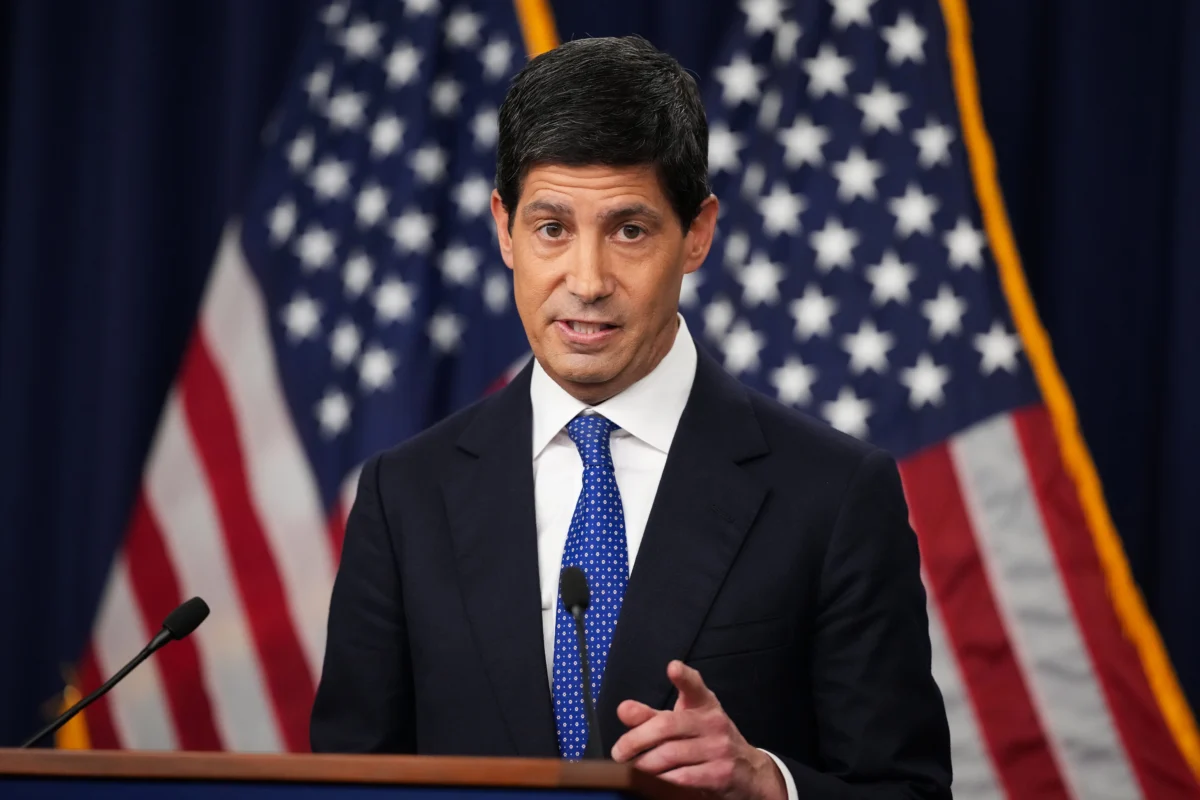
The cacophony emanating from the bond market is sending conflicting signals to the Federal Reserve, creating an acute dilemma for policymakers striving to engineer a delicate balance that tames inflation without derailing economic growth. Treasury yields have been on an unrelenting upward trajectory, reflecting investors’ complex calculus of factors ranging from persistently elevated inflation, a renewed surge in energy prices, and the unprecedented financial arms race among global hyperscalers driving substantial debt issuance. This intricate landscape challenges the traditional monetary policy playbook and forces the Fed to reconsider long-held assumptions about the nature of contemporary inflation.
Historically, the Federal Reserve has often demonstrated a willingness to "look through" temporary inflation spikes, particularly those driven by transient supply shocks such as volatile energy prices or tariffs. The prevailing narrative just a year or two prior suggested that the burgeoning artificial intelligence (AI) investment boom, while substantial, would be a short-to-medium-term phenomenon that would ultimately prove disinflationary through efficiency gains and technological advancement. However, recent economic data and market developments have compelled Fed officials to rethink these assumptions, increasingly recognizing the potential for these factors to contribute to a more durable and entrenched inflationary environment. The stakes are further heightened by a central bank that, under Chairman Kevin Warsh, appears to be deliberately moving away from explicit forward guidance, leaving market participants grappling with an uncertain calculus of influence between policymakers and market forces.
"The era of overlooking initial supply shocks as purely transitory has definitively concluded," stated Joseph Brusuelas, chief economist at RSM, emphasizing the gravity of the situation. "The imperative now is unequivocally towards restoring price stability, and the Federal Reserve must take current market signals with the utmost seriousness." Indeed, market sentiment has demonstrably shifted, with traders rapidly adjusting their expectations for central bank action. The odds of another rate hike in October have surged following recent hawkish comments from Fed officials and hotter-than-anticipated inflation data, coming on the heels of the quarter percentage point increase enacted just last week in September. Furthermore, market participants are now largely pricing in a third rate increase either late this year or early in 2027, with the distinct possibility of additional tightening measures extending into subsequent months.
A Significant Policy Pivot and Shifting Projections
This represents a profound reversal from the Federal Reserve’s projections just a few months ago. In June, the central bank’s dot plot, a graphical representation of individual FOMC members’ interest rate projections, indicated a consensus for potentially only one rate hike in 2026, followed by a period of stability before potential rate cuts in 2027 or 2028. This marked shift underscores the rapidly evolving economic landscape and the Fed’s responsive, albeit sometimes reactive, posture.
"My initial assessment following the September FOMC meeting was that we were likely to see three rate hikes in total," Brusuelas elaborated. However, his firm’s proprietary modeling, which incorporates the potential for significantly higher long-term yields alongside a protracted cycle of AI investment, altered this outlook dramatically. The modeling painted a stark picture: even a sharply higher 10-year Treasury yield, projected at 5.5% (compared to approximately 5.15% on Thursday, September 26, 2026), would likely only slow economic growth to a modest 1.5% and push the unemployment rate to 4.7%, yet core inflation would remain stubbornly elevated at 2.4%, still well above the Fed’s 2% target. "The Federal Reserve is underestimating the magnitude of intervention required to restore price stability," Brusuelas asserted. "We’re likely not talking about two or three hikes; we’re talking about five or six."
However, not all corners of Wall Street share this uniformly hawkish perspective. Some strategists contend that the market may be overreacting, suggesting that current elevated yields are primarily pricing in robust economic growth rather than solely reflecting inflation fears, and are overly sensitive to the inherent volatilities of global oil prices amid ongoing geopolitical tensions in the Middle East. "The increase in yields has not been driven by expectations of an overly dovish Fed tolerating persistent inflation above target," argued Citigroup economist Andrew Hollenhorst in a recent client note. "Instead, the rise has been predominantly in real yields, as investors factor in the Fed setting higher policy rates to accommodate a stronger economy. It should therefore come as no surprise that this dynamic has translated into higher yields across both shorter and longer maturities."
Indeed, while acknowledging the necessity of near-term rate hikes, several influential Fed officials have also urged caution and patience, advocating for a data-dependent approach rather than a predetermined tightening cycle.
The Case for Measured Restraint Amid Uncertainty
New York Fed President John Williams, whose permanent vice-chair position on the rate-setting Federal Open Market Committee (FOMC) grants him significant influence, stated on Thursday that it is "reasonable" to anticipate another rate hike before the year’s end. However, he concurrently underscored the importance of diligently monitoring incoming economic data, cautioning against locking into a pre-set "forward guidance" track of successive rate increases. Similarly, Philadelphia Fed President Anna Paulson also signaled that additional policy tightening is probable but characterized these potential moves as "modest." Her choice of language suggests a nuanced view, far from indicating an endorsement of a prolonged series of aggressive hikes.
This divergence of views, both within the market and among Fed officials, highlights the profound policy crossroads confronting the central bank. The risk of over-tightening monetary policy is considerable, potentially stifling economic expansion and pushing the economy into an unnecessary downturn. Conversely, an insufficient response to inflationary pressures risks eroding the market’s confidence in the Fed’s commitment and ability to achieve its mandated price stability goal, a hard-won credibility built over decades.
"The absence of clear guidance guardrails risks placing central banks in a predicament where they must choose between a sub-optimal hike and disappointing the market, thereby jeopardizing hard-won credibility," observed Krishna Guha, head of economics and central bank strategy at Evercore ISI, in a research note. "Moreover, this lack of explicit guidance means that any decision they ultimately make carries the potential to generate an outsized market reaction—either substantially further tightening or an unexpected easing of market rates." Guha, while acknowledging the Fed’s challenging predicament, leans towards the view that current market expectations for aggressive tightening are "too aggressive." He elaborated that "delivering back-to-back hikes—especially without clear forward guidance on how to interpret them—would risk sending a profoundly hawkish signal that could reprice the rates curve even further, and to an unpredictable extent. Yet, skipping a hike that is already priced as odds-on in the market could also trigger a substantial repricing in the opposite, dovish direction."
The Warsh Era: A New Paradigm of Market-Led Policy
The intensity of this policy conflict is particularly pronounced given Federal Reserve Chairman Kevin Warsh’s distinctive philosophy, which places a strong emphasis on allowing financial markets to help guide monetary policy decisions. This approach represents a notable departure from the central bank’s operational framework since the 2008 global financial crisis, when the Fed extensively utilized its "forward guidance" tool to clearly signal its intentions regarding the future path of interest rates to investors.
"Chairman Warsh’s framework appears significantly less rooted in granular economic measurement details and considerably more reflective of prevailing market narratives," wrote UBS economist Jonathan Pingle in an analysis. "No Chairman of the Board of Governors of the Federal Reserve has emphasized considering the signals from financial markets as an input into monetary policy decisions as strongly as Chairman Warsh." This unique approach means that the current surge in Treasury yields, which has seen the benchmark 30-year bond reach levels not observed since 2004 (e.g., nearing 5.3% on Thursday), holds exceptional weight for the current Fed leadership.
Indeed, the dramatic shift in market sentiment and economic data has seemingly transformed Chairman Warsh’s own outlook. Prior to assuming the chairmanship in May 2026, he was known for advocating for potential interest rate cuts. Now, he appears to have forged a hawkish coalition within the FOMC. Pingle, after analyzing Warsh’s post-meeting news conference following the September FOMC decision, speculated that the Chairman "left little doubt to us that his views more closely align" with Cleveland Fed President Beth Hammack, widely regarded as one of the most hawkish members of this year’s voting committee, "than anyone else on the FOMC."
This alignment suggests a predisposition towards a firmer stance on inflation, influenced by the market’s own aggressive pricing. For the immediate future, at least, markets are operating under the interpretation that Chairman Warsh will indeed permit the Treasury market’s signals to guide him toward progressively higher benchmark rates. The 10-year Treasury yield, a key barometer for borrowing costs across the economy, has consistently climbed, reflecting a market that is increasingly convinced the Fed will have to tighten more than previously expected. This upward pressure on yields impacts everything from mortgage rates to corporate bond issuance, raising the cost of capital across the board.
Broader Economic Implications and the AI Paradox
The broader economic implications of this policy tightrope are substantial. Higher interest rates, a direct consequence of the Fed’s tightening and market expectations, translate into increased borrowing costs for businesses and consumers alike. This can dampen corporate investment, particularly for smaller firms reliant on variable-rate loans, and cool the housing market by making mortgages less affordable. Consumer spending, a major driver of the U.S. economy, could also slow as credit card rates rise and discretionary income is squeezed. The risk of a "soft landing"—where inflation is tamed without triggering a recession—becomes increasingly precarious with each additional rate hike.
Moreover, the "global hyperscaler financial arms race" presents a unique economic paradox. While the long-term promise of AI investment is often cited as disinflationary due to efficiency gains and productivity boosts, the immediate reality is that the massive capital expenditures required for developing and deploying AI infrastructure (data centers, advanced chips, energy resources) are themselves inflationary. This demand surge creates bottlenecks in supply chains, drives up the cost of specialized labor, and necessitates significant debt issuance by tech giants, adding to overall financial system liquidity and potentially fueling asset price inflation. The energy price component is also critical; geopolitical tensions and supply constraints have repeatedly demonstrated their capacity to ignite broader inflationary pressures, complicating the Fed’s task of distinguishing between temporary and persistent price increases.
The Federal Reserve’s credibility is intrinsically linked to its ability to manage these complex dynamics effectively. A failure to control inflation could lead to a de-anchoring of inflation expectations, making the task of restoring price stability even more arduous and costly in terms of economic output and employment. Conversely, an overly aggressive approach, particularly one driven by market sentiment rather than a clear, data-driven strategy, risks inducing an unnecessary economic contraction, jeopardizing the livelihoods of millions.
"There’s a very sound reason why central bankers are beginning to express concern about potential overheating within the investment sector of the economy," Brusuelas concluded, underscoring the urgency. "Mr. Market is transmitting a clear signal to policymakers like Kevin Warsh, and it’s a signal they ought to heed carefully." The coming months will reveal whether the Federal Reserve can successfully navigate this treacherous terrain, balancing the demands of price stability with the imperative of sustainable economic growth, all while operating under a new, less predictable communication strategy that places unprecedented weight on the very markets it seeks to influence.