Reynand Wu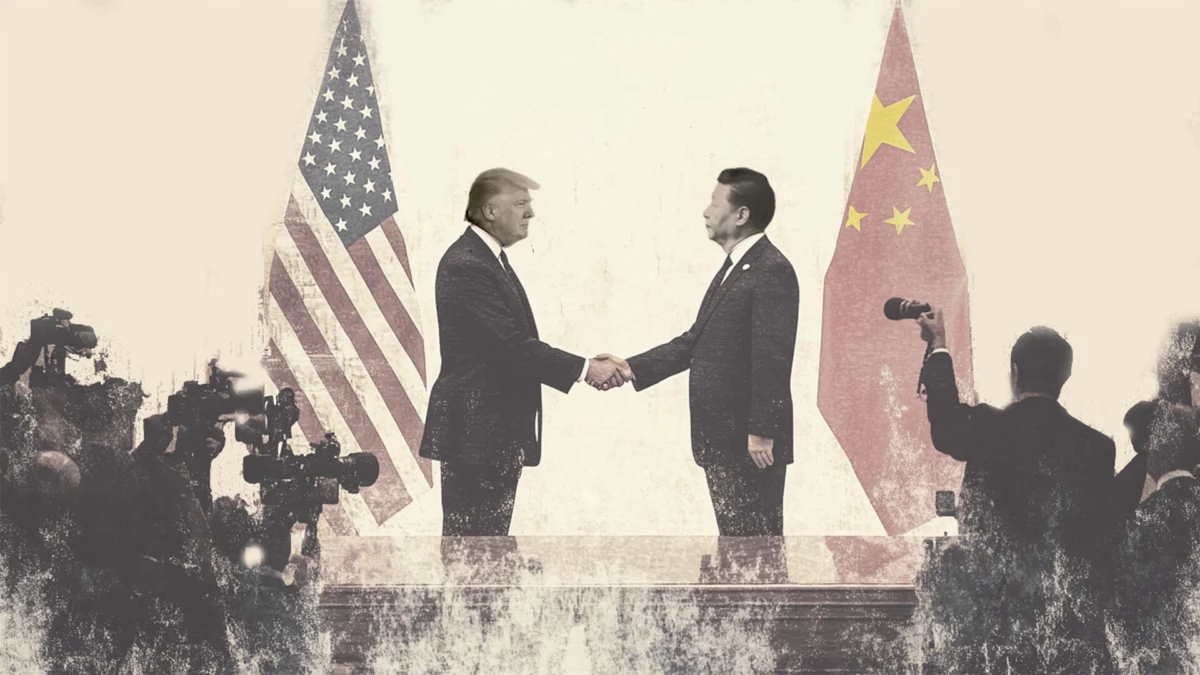
The United States and China have agreed to prolong a critical bilateral trade truce, originally known as the "Busan Agreement," from its impending November 10 expiration to January 10. This significant development, reported by Bloomberg on Wednesday, emerged following an unscheduled, high-level meeting in Washington between US Treasury Secretary Scott Bessent and China’s Vice Premier He Lifeng. The extension signals a cautious but tangible effort by the world’s two largest economies to foster stability amidst persistent geopolitical and economic friction, coinciding with Chinese President Xi Jinping’s arrival in the US for broader diplomatic discussions.
US Treasury Secretary Scott Bessent formally announced the extension, stating, "We will extend what we call the ‘Busan Agreement’ – the economic détente between the two countries that was scheduled to end on Nov. 10 – that is going to be extended until Jan. 10." Bessent further indicated that while a more comprehensive economic package remains a possibility for agreement by January, the option to "just roll the current deal" and extend it further also remains on the table, highlighting the ongoing flexibility and evolving nature of the dialogue. The announcement provided a backdrop to President Xi Jinping’s touchdown at Joint Base Andrews outside Washington shortly before 6 p.m. local time on Wednesday, where he expressed confidence that his trip would yield "fruitful results."
The "Busan Agreement" and its Strategic Significance
The term "Busan Agreement" refers to an understanding of economic de-escalation or détente between the United States and China, representing a period where both nations agreed to temper certain aspects of their economic competition or tariff disputes. While not a formal treaty or a comprehensive resolution to their trade differences, such informal agreements are nonetheless crucial in managing the complex and often contentious economic relationship between the two global powers. Its initial establishment aimed to provide a much-needed cooling-off period following years of escalating trade tensions. The original agreement, set to expire in November, provided a fragile framework for dialogue and prevented the imposition of new, punitive tariffs or the exacerbation of existing trade barriers. The extension through January 10 suggests a mutual recognition of the need for continued engagement and a desire to avoid disruptive economic actions, particularly ahead of potential high-level summits or critical economic data releases that could influence global markets. It underscores a pragmatic approach to preventing further deterioration of economic ties, even as fundamental disagreements persist.
A Historical Overview of US-China Trade Dynamics
The economic relationship between the United States and China has been a cornerstone of global trade for decades, yet it has also been a source of significant friction, particularly in recent years. The current landscape of trade tensions can be traced back to early 2018 when the administration of then-President Donald Trump initiated a "trade war" against China. Citing concerns over unfair trade practices, intellectual property theft, and forced technology transfers, the US imposed a series of escalating tariffs on Chinese imports, affecting hundreds of billions of dollars worth of goods. By the end of 2018, over $250 billion worth of Chinese goods faced US tariffs ranging from 10% to 25%, while China retaliated with tariffs on over $110 billion of US products.
China swiftly retaliated with its own tariffs on US products, including agricultural goods like soybeans, automobiles, and various manufactured items. This tit-for-tat escalation led to significant disruptions in global supply chains, increased costs for businesses and consumers in both countries, and injected considerable uncertainty into the global economic outlook. Major sectors, from technology to agriculture, felt the pinch as companies grappled with increased input costs, reduced market access, and the need to reconfigure supply chains. For instance, US farmers, heavily reliant on the Chinese market for soybeans (with China importing over $12 billion of US soybeans in 2017), faced substantial losses, prompting government aid packages to mitigate the impact. According to the US International Trade Commission, US imports from China declined by nearly 17% between 2018 and 2020.
The height of this conflict saw both economies experiencing headwinds, prompting intense negotiations. This culminated in the signing of the US-China Phase One trade deal in January 2020. This agreement, while not resolving all underlying issues, mandated structural reforms in China’s economic and trade regime, particularly regarding intellectual property, technology transfer, agriculture, financial services, and currency practices. China also committed to purchasing substantial additional US goods and services over two years, totaling at least $200 billion above 2017 levels. The Phase One deal offered a temporary reprieve, aiming to restore a semblance of stability and trust, though many of China’s purchase commitments were not fully met amidst the pandemic and other factors.
However, the onset of the global Coronavirus pandemic soon shifted global priorities, sidelining the full implementation and further negotiation of trade issues. When President Joe Biden took office, his administration largely maintained the tariffs imposed by his predecessor, signaling a continued strategic competition approach rather than a full reversal. While the rhetoric softened somewhat, the underlying structural issues and the desire to protect domestic industries and national security interests remained paramount. The Biden administration’s approach has often been characterized as "small yard, high fence," focusing on targeted restrictions in critical technology sectors like semiconductors, artificial intelligence, and quantum computing, while seeking to avoid broader economic decoupling.
Chronology of Recent High-Level Engagements
The decision to extend the trade truce did not occur in a vacuum but is part of a broader, more deliberate series of high-level diplomatic engagements between Washington and Beijing throughout 2023, aimed at stabilizing the often-turbulent relationship.
- February 2023: Secretary of State Antony Blinken postponed a planned visit to Beijing following the detection of a suspected Chinese spy balloon over US airspace, highlighting the fragility of diplomatic efforts and leading to a temporary chill in high-level communications.
- June 2023: Secretary Blinken eventually visited Beijing, holding extensive talks with Chinese Foreign Minister Qin Gang and President Xi Jinping. This marked the highest-level US visit to China in five years and was seen as a crucial step in re-establishing communication channels and lowering the temperature.
- July 2023: Treasury Secretary Janet Yellen traveled to Beijing, engaging in discussions with senior Chinese economic officials. Her visit focused on open communication, managing disagreements responsibly, and exploring areas of cooperation where mutual interests align, though no major breakthroughs were announced.
- August 2023: Commerce Secretary Gina Raimondo visited China, emphasizing the importance of a stable commercial relationship and establishing new working groups to address specific business concerns. Her discussions included issues related to export controls, investment restrictions, and intellectual property protection.
- October 2023: US Senate Majority Leader Chuck Schumer led a bipartisan delegation to China, meeting with President Xi Jinping and other top officials. The visit underscored congressional interest in fostering stability while addressing concerns about trade imbalances, human rights, and regional security.
- November 2023: The unscheduled meeting between Treasury Secretary Bessent and Vice Premier He Lifeng in Washington, preceding President Xi Jinping’s arrival for the APEC (Asia-Pacific Economic Cooperation) summit, directly led to the announcement of the trade truce extension. This meeting, occurring outside the formal APEC schedule, underscores the urgency and importance both sides placed on economic stability.
- November 2023 (anticipated): The broader APEC summit in San Francisco is expected to host a highly anticipated meeting between President Biden and President Xi Jinping, following up on their previous face-to-face discussions in Bali in late 2022. The trade truce extension is likely intended to create a more constructive atmosphere for these broader discussions, setting a baseline of economic stability for leaders to build upon.
Economic Motivations and Supporting Data
The extension of the "Busan Agreement" is rooted in pragmatic economic considerations for both the United States and China, as well as the broader global economy. The ongoing global economic slowdown, coupled with persistent inflationary pressures and geopolitical uncertainties, makes a period of trade stability particularly valuable.
For the United States, managing inflation remains a key priority for the Federal Reserve and the administration. While overall inflation has moderated from its peaks, persistent supply chain disruptions and increased import costs due to tariffs can exacerbate inflationary pressures. The US imported approximately $536 billion worth of goods from China in 2022, making China its largest goods trading partner. Maintaining stable trade relations helps prevent further cost increases for US businesses and consumers, who ultimately bear the burden of tariffs. Furthermore, American businesses, particularly those with complex global supply chains in sectors like electronics and apparel, benefit significantly from predictability. The uncertainty generated by tariff threats can deter investment, slow expansion plans, and lead to costly reconfigurations of manufacturing and distribution networks. The US also seeks to maintain its export markets, particularly for agricultural products and services, where China remains a vital customer; total US exports to China in 2022 reached about $154 billion.
For China, facing its own significant domestic economic challenges, including a property sector downturn, slowing GDP growth (projected by the IMF to be around 4.6% in 2024, down from previous years), and youth unemployment, a stable external trade environment is crucial. Exports remain a significant component of China’s economic engine. In 2022, China’s exports to the US amounted to roughly $581 billion, a testament to the deep integration of the two economies. Tariffs directly impact Chinese manufacturers, leading to reduced orders, factory closures, and job losses, particularly in export-oriented coastal regions. An extension of the truce provides breathing room, allowing Chinese firms to plan with greater certainty and potentially bolstering investor confidence, both domestic and foreign. It also signals a commitment to global economic cooperation, which aligns with China’s broader diplomatic goals of positioning itself as a responsible global economic player.
Globally, the US-China trade relationship profoundly influences the world economy. Together, these two nations account for over 40% of global GDP and are central to global supply chains, from raw materials to finished goods. A trade war between them sends ripple effects across continents, impacting commodity prices, shipping costs, and investment decisions in third countries. The International Monetary Fund (IMF) and World Bank have repeatedly warned that trade protectionism and geopolitical fragmentation pose significant risks to global economic growth and could lead to a fragmentation of the global economy, costing up to 7% of global GDP. The extension of this truce, therefore, offers a glimmer of stability in an otherwise volatile global economic climate, potentially easing concerns about a renewed trade war that could further dampen global growth prospects and exacerbate inflationary pressures worldwide.
Official Responses and Expert Commentary
Secretary Bessent’s direct statement provided the official US stance, emphasizing the practical extension of an existing understanding. The cautious phrasing regarding a "larger economic package" or merely "rolling the current deal" highlights the ongoing complexity and the incremental nature of progress in US-China economic relations. It suggests that while both sides are open to deeper engagement, they are also prepared for a slower, more pragmatic approach if comprehensive agreements prove elusive in the short term. The US administration aims to demonstrate its capacity for constructive engagement while maintaining its strategic competitive stance.
While specific Chinese official statements directly on the "Busan Agreement" extension were not immediately available, the broader context of Vice Premier He Lifeng’s presence in Washington and President Xi Jinping’s expressed confidence in "fruitful results" from his trip strongly implies a reciprocal desire for stability and a willingness to engage. Chinese state media and official commentary have consistently emphasized the importance of mutual respect, win-win cooperation, and the need to manage differences responsibly in the US-China relationship. The extension aligns with China’s long-standing call for dialogue over confrontation and for the stabilization of bilateral ties, especially as it seeks to project an image of reliability and openness to international trade and investment amidst its own economic slowdown.
Trade analysts and economists have largely welcomed the extension, viewing it as a positive, albeit incremental, step. "This truce extension is less about a grand breakthrough and more about preventing further deterioration," noted Dr. Eleanor Vance, a senior economist specializing in East Asian trade at the Global Trade Institute. "It buys both sides time, particularly ahead of a crucial leadership meeting, and signals a mutual desire to keep economic channels open rather than let them collapse entirely. It’s a pragmatic move in a challenging environment." Others highlighted the importance of avoiding fresh disruptions. "Businesses thrive on predictability," commented Mr. David Chen, an analyst at a leading financial consultancy. "Even a temporary extension of a trade truce offers a measure of relief from the specter of new tariffs, allowing companies to plan with slightly more confidence in their supply chains and market access strategies."
Market Reaction and Broader Implications
The immediate market reaction to the news was relatively contained but indicative of underlying sentiment. The AUD/USD pair, often considered a proxy for risk sentiment and China’s economic health due to Australia’s significant trade ties with China (China is Australia’s largest two-way trading partner), was observed to be down 0.06% on the day at 0.7034. This modest decline could be attributed to a multitude of factors influencing currency markets at the time of writing, including broader US dollar strength or specific data releases. However, the absence of a sharp negative reaction suggests that the extension was either largely anticipated by markets as a baseline expectation for the upcoming summit, or viewed as a positive signal for stability, preventing a more significant risk-off move that would typically see currencies sensitive to global trade and growth, like the AUD, depreciate more sharply. Broader equity markets also reacted with cautious optimism, as investors generally prefer stability over escalating trade conflicts.
More broadly, the extension of the trade truce carries several significant implications:
- De-escalation of Tensions: It signals a continued commitment by both nations to de-escalate economic tensions, providing a crucial buffer against the imposition of new tariffs or the intensification of existing trade barriers. This can foster a more stable environment for international trade and investment globally.
- Support for Global Supply Chains: For multinational corporations heavily reliant on complex global supply chains that often traverse the US and China, the truce offers a temporary reprieve from the uncertainty and potential disruptions caused by trade disputes. This can help stabilize production costs, reduce logistical headaches, and allow for more strategic planning.
- Confidence Building: The agreement, even if temporary, contributes to building a fragile layer of confidence between the two economic giants. It suggests that despite profound disagreements on various fronts—from technology competition to human rights—there is a shared understanding of the need to manage economic friction responsibly. This confidence can extend to broader diplomatic efforts, enabling discussions on more intractable issues.
- Political Timing: The extension, coming just ahead of President Xi Jinping’s visit for the APEC summit in San Francisco, is strategically timed. It creates a more conducive atmosphere for the anticipated high-stakes meeting between President Biden and President Xi, potentially allowing discussions to focus on broader strategic issues rather than immediate economic grievances or the threat of new tariffs.
- Flexibility for Future Negotiations: By extending the truce without committing to a larger, more complex deal, both sides retain flexibility. This allows for continued assessment of economic conditions, domestic political landscapes, and the outcomes of ongoing dialogues, before potentially committing to more permanent arrangements. The possibility of "just rolling the current deal" highlights a pragmatic, step-by-step approach rather than an all-or-nothing strategy.
The Path Forward and Remaining Hurdles
Looking ahead to the January 10 deadline, the prospect of a "larger