Gilang Muhammad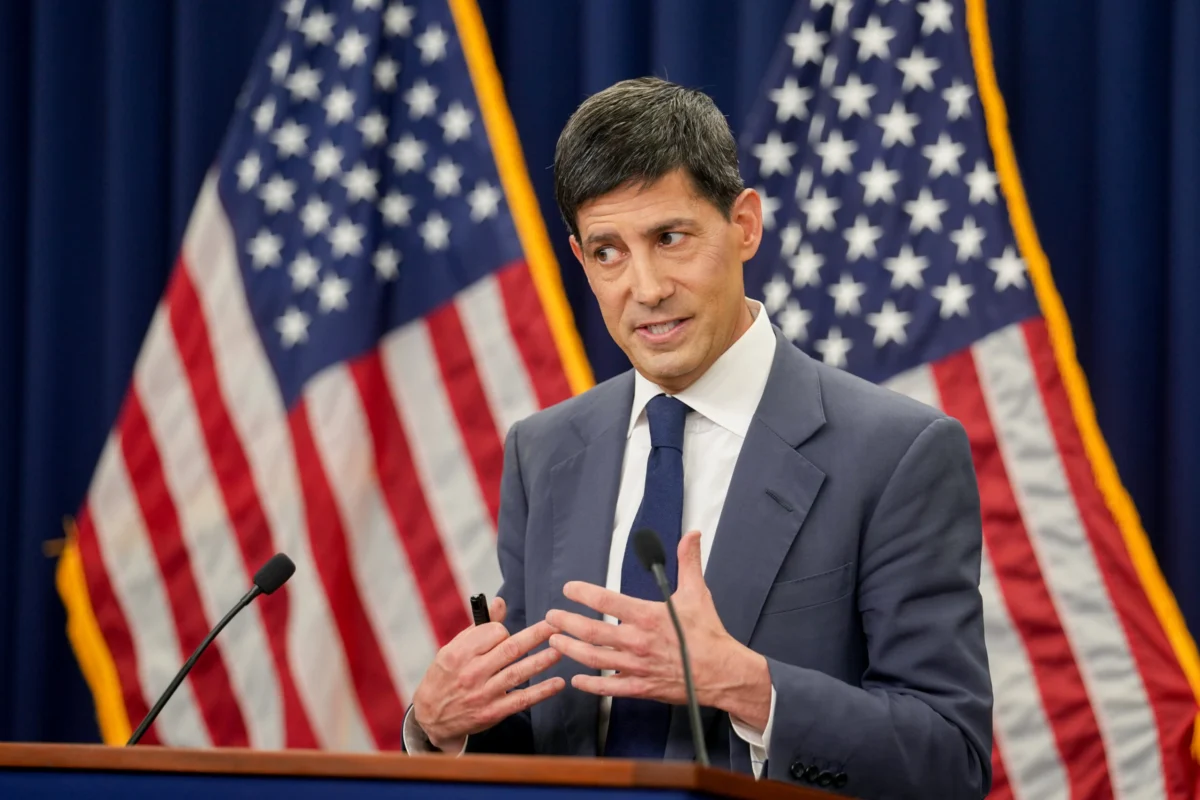
Federal Reserve Chairman Kevin Warsh finds himself at a critical juncture this week, tasked with guiding his fellow policymakers in a decision that will shape both the immediate trajectory and future outlook for U.S. interest rates. While financial markets have largely coalesced around the expectation of a quarter-percentage-point hike following Wednesday’s Federal Open Market Committee (FOMC) vote, the precise margin of consensus among the 12 voting members remains a subject of intense speculation. Beyond the quantitative decision, Chairman Warsh faces the equally delicate challenge of communicating the move effectively: whether to signal a potential "one-and-done" approach, imply further tightening, or maintain his characteristic reticence regarding forward guidance.
The prevailing market sentiment suggests that a rate hike is almost a foregone conclusion. As of Monday afternoon, futures traders were assigning a probability exceeding 92% to an increase this week, according to the CME Group’s FedWatch tool. Furthermore, the tool indicated a greater than 75% chance that the FOMC would implement a subsequent hike in December 2026. This strong market conviction underscores the pressure on the Fed to act, as failing to meet these expectations could severely undermine the central bank’s credibility. The benchmark overnight borrowing rate, the Fed funds rate, currently stands within a target range of 3.50% to 3.75%.
Mounting Inflationary Pressures and the Fed’s Dilemma
The heightened probabilities for a rate increase are largely a reaction to a recent surge in fuel prices and inflation data released last week, which confirmed a continued ascent in consumer prices during August 2026. These trends directly follow Chairman Warsh’s pronouncements at the Jackson Hole Economic Symposium a few weeks prior, where he indicated that the Fed would be compelled to take action unless more definitive signs emerged of inflation receding towards the central bank’s long-term 2% target.
However, the path forward is fraught with substantial complications, highlighting a deep internal debate within the FOMC. Historically, the Federal Reserve has often chosen to "look through" certain types of inflationary pressures, particularly those deemed temporary or exogenous. Many economists contend that a significant portion of this year’s inflation surge can be attributed to specific, non-enduring factors, such as the imposition of new tariffs and a pronounced energy supply shock stemming from the ongoing Iran war. The long-term impact of such events on the underlying trajectory of inflation remains highly uncertain.
David Mericle, an economist at Goldman Sachs, articulated this perspective in a recent client note: "We do not see a strong economic case for raising the funds rate. We think that all of the overshoot of 2% can be attributed to one-time factors whose impact is likely to fade." Despite this analytical stance, Goldman Sachs notably revised its own forecast from a "no change" call to a hike at this week’s meeting, primarily due to the firm’s assessment that overwhelming market expectations would ultimately compel the Fed to move. This illustrates the complex interplay between economic fundamentals, market sentiment, and central bank decision-making.
A Divided Committee: The "Wait or Act" Debate
The internal dynamics of the FOMC present a critical challenge to Chairman Warsh. The committee’s previous meeting in July 2026 saw a 9-3 vote in favor of holding rates steady. The three dissenters at that meeting – regional presidents Lorie Logan of Dallas, Beth Hammack of Cleveland, and Neel Kashkari of Minneapolis – all advocated for a quarter-point hike two months ago. Assuming their positions remain unchanged, which their public comments have not contradicted, at least four additional members would need to shift their votes from "hold" to "hike" for a majority to emerge for an increase this week.
One of the most closely watched voters is Federal Reserve Governor Christopher Waller. In public remarks delivered on September 3, Governor Waller expressed support for another hold at the upcoming meeting. While he included the customary caveats about monitoring incoming data for continued disinflationary trends, his overall message was one of patience rather than precipitous action. "What’s the cost of waiting one meeting? Hiking 25 basis points, one meeting right now, is not going to bring the [consumer price index] down to 2%," Waller stated, emphasizing the limited immediate impact of a single modest rate adjustment on broad price levels.
The August 2026 Consumer Price Index (CPI) report, which showed headline inflation running at a 3.4% annual rate, certainly provides fodder for those advocating for a hike. However, the core CPI, which strips out the more volatile food and energy components, presented a more subdued picture at 2.4%, registering a 0.1 percentage point decrease from July. This distinction between headline and core inflation often fuels the debate within the Fed, with some policymakers prioritizing the broader, more volatile measure and others focusing on the underlying trend reflected in core figures.
Governor Waller is not alone in his call for patience. New York Fed President John Williams, a traditionally influential voice within the central bank, echoed a "wait-and-see" approach less than two weeks ago. Earlier in the summer, Williams had even expressed a belief that inflation had peaked, suggesting that current rate levels might be appropriately positioned. His perspective carries significant weight, given the New York Fed’s critical role in market operations and its traditional inclusion in the "troika" of influence alongside the Chair and Vice Chair.
Conversely, other members have expressed greater concern about the potential for temporary inflationary pressures to become more deeply entrenched. Governor Michael Barr, for instance, indicated that he would be open to a rate hike if inflation did not show clear signs of easing, though he stopped short of committing to one. This reflects the delicate balancing act faced by policymakers: act too soon and risk stifling economic growth, or wait too long and risk inflation becoming persistent and harder to tame.
The Potential Vote Count: A Battle for Consensus
Dissecting the potential FOMC vote reveals a complex landscape. Chairman Warsh himself is widely expected to align with the hiking contingent, given his recent hawkish remarks at Jackson Hole, which effectively primed market expectations for a move. Governor Lisa Cook, in early August, also stated she was "prepared to act" to address inflation, signaling her likely support for a hike. This group, alongside the three July dissenters (Logan, Hammack, Kashkari), forms a solid base for a rate increase.
On the other side, Philadelphia Fed President Anna Paulson and Chicago Fed President Austan Goolsbee have both consistently advocated for a more patient, data-dependent approach, suggesting they might favor a hold. This leaves a crucial group of swing votes among the remaining Governors: Philip Jefferson, the Vice Chair; Jerome Powell, the former Chair, who has maintained a notably low profile since stepping down; and Michelle Bowman, whose last related public comments in May 2026 expressed concern about the risks of unnecessary rate hikes. Their positions will be pivotal in determining the final tally.
Beyond individual stances, a significant "wildcard" factor could influence the vote: the potential for a "united front." Should Chairman Warsh strongly press the case for a hike, there is a possibility that some members who are on the fence might choose to cross over to the majority, aiming to present a cohesive image of the central bank. This strategic alignment, as suggested by David Kelly, Chief Global Strategist at JPMorgan Asset Management, is not uncommon. "If a majority within the committee coalesces around a decision to hike, the other members may well join them to portray a more united front to the public and the President," Kelly noted in his weekly market commentary. In such a scenario, Kelly speculated, the final vote might feature only one, two, or even no dissents, despite underlying intellectual disagreements.
The vote margin will not merely be an arithmetic result; it will serve as a profound indicator of the intellectual divide within the committee. It will reveal the extent to which policymakers are split between those who perceive current inflation as largely transitory and those who fear that price pressures are becoming entrenched. Crucially, it will also provide an important signal regarding the effectiveness of Chairman Warsh’s leadership and his ability to forge consensus within the institution.
Beyond the Vote: The Dot Plot and Forward Guidance
Once the immediate rate decision is made, market attention will swiftly pivot to the updated "dot plot." This graphical representation, published anonymously, outlines the individual interest rate expectations of all 19 meeting participants for the current year, the next few years, and, for the first time, 2029. Notably, Chairman Warsh withheld his "dot" from the June update, adding another layer of uncertainty to how his personal outlook will be reflected.
Investors will scrutinize the dot plot for conviction regarding a second hike in 2026, as well as the overall trajectory for 2027 and beyond. The Fed rarely implements a single rate hike or cut; instead, it typically moves in cycles, viewing incremental, isolated adjustments as less effective in achieving its policy objectives. A close split, such as a 10-8 vote in favor of one hike (assuming Warsh’s continued disdain for explicit forward guidance and non-participation in the dot plot update), would suggest that "some participants might be ambivalent about the first hike and some might want to avoid pushing market expectations any higher," according to Mericle. However, he also acknowledged the risk of a majority favoring two hikes if more participants than anticipated view this week’s increase as a normal response to factors like higher oil prices and robust AI demand, potentially signaling the commencement of a more sustained series of rate adjustments.
The implications of the dot plot are significant for financial markets. A stronger signal for multiple hikes could lead to further tightening of financial conditions, impacting everything from mortgage rates to corporate borrowing costs. Conversely, a more dovish dot plot could ease concerns about aggressive tightening, potentially supporting equity markets but also raising questions about the Fed’s commitment to inflation control.
Chairman Warsh’s Press Conference: A Crucial Test of Communication
In the event of a closely divided committee, or indeed, regardless of the vote margin, attention will intensely focus on Chairman Warsh’s news conference on Wednesday afternoon. How he conveys the FOMC’s sentiment and articulates the rationale behind the decision will be paramount. Clear, consistent communication is vital for anchoring market expectations and preventing undue volatility.
Bill Dudley, the former New York Fed president, underscored this point, stating that "the Fed needs to explain how they’re thinking about the economy." Dudley added, referring to Warsh’s previous communication challenges, "Now [Warsh has] just got to follow that up with action. If he does that, I think he’s basically fixed the problem that he created in his first two press conferences." This sentiment highlights the importance of the Chairman’s ability to not only make the right policy decision but also to effectively communicate its nuances and implications to a global audience.
The challenges for Chairman Warsh are multifaceted. He must balance the immediate need to address inflationary pressures with the risk of over-tightening the economy. He must navigate a divided committee while projecting an image of unified purpose. And he must articulate the Fed’s strategy in a manner that is both transparent and effective, shaping market expectations without creating unnecessary rigidity. The outcomes of this week’s FOMC meeting will undoubtedly have profound consequences for the U.S. economy, financial markets, and the credibility of the Federal Reserve itself.