Lina Wu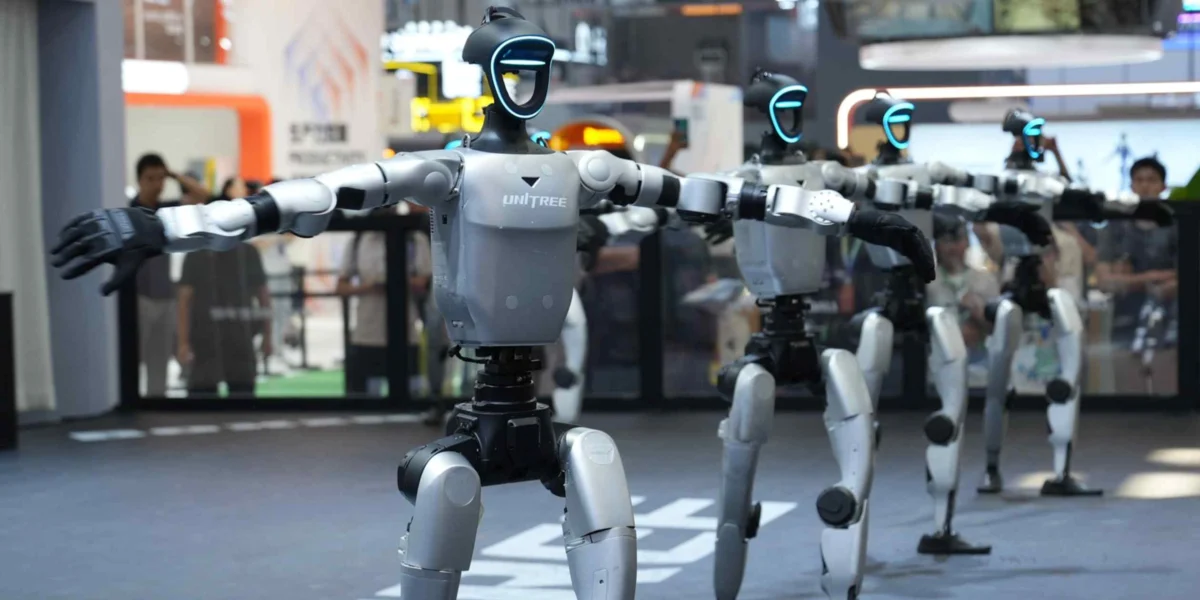
DALIAN, China — Unitree Robotics, a prominent Chinese startup specializing in advanced quadruped and humanoid robots, has witnessed a dramatic decline in its market valuation, with its shares falling by more than 50% from their opening price just one month after its highly anticipated debut on the Shanghai Stock Exchange. The initial surge of investor optimism, which propelled the company’s market capitalization to an impressive $66 billion at its IPO, appears to have waned as retail and institutional investors alike have begun to scrutinize the long-term economic viability and widespread adoption potential of humanoid robotics.
The company’s initial public offering on August 21, 2026, was met with considerable fanfare, positioning Unitree as a leading contender in the nascent but rapidly evolving field of advanced robotics. The IPO was seen as a significant indicator of investor confidence in China’s burgeoning artificial intelligence and robotics sectors, attracting substantial capital and generating considerable excitement. However, the subsequent market correction suggests a more sober assessment of the company’s immediate profitability and the broader market landscape for its flagship products, particularly its humanoid robots.
A Meteoric Rise and a Swift Correction: The Unitree IPO Trajectory
Unitree Robotics, founded in 2016 by Wang Xingxing, quickly established a reputation for developing sophisticated robotic platforms capable of impressive feats of agility and locomotion. Initially gaining recognition for its agile quadruped robots, such as the Go series, which demonstrated remarkable stability and maneuverability across various terrains, the company later pivoted to focus on humanoid robot development. This strategic shift culminated in the unveiling of its H1 humanoid robot, a dual-legged machine designed for a wide range of potential applications, from industrial assistance to domestic support.
The IPO was strategically timed to capitalize on global interest in advanced robotics and AI, with investors eager to participate in what was perceived as the next frontier of technological innovation. The opening price on the Shanghai Stock Exchange’s STAR Market, a segment designed for technology and innovation-driven companies, reflected this fervent anticipation. Initial trading saw Unitree’s shares surge, reflecting a belief in the company’s technological prowess and its potential to disrupt multiple industries. The peak valuation of $66 billion, based on the opening price, placed Unitree among the most valuable robotics companies globally, a testament to the speculative appetite for future-facing technologies.
However, the momentum proved unsustainable. Within weeks of the IPO, a significant sell-off began. By September 21, 2026, the stock price had fallen by over 50% from its initial high. This correction is not necessarily indicative of a fundamental flaw in Unitree’s technology but rather a recalibration of investor expectations concerning the timeline for mass commercialization and profitability in the humanoid robotics sector.
Underlying Factors Driving the Market Re-evaluation
Several key factors are likely contributing to the sharp decline in Unitree’s stock price.
The High Cost and Limited Current Applications of Humanoid Robots
While Unitree’s H1 robot is technologically impressive, showcasing advanced balance, agility, and object manipulation capabilities, the cost of producing and deploying such sophisticated machines remains prohibitively high for widespread adoption. Current applications are largely confined to research and development labs, specialized industrial settings, and demonstration purposes. The return on investment for most businesses and consumers is not yet clear or compelling enough to justify the substantial expenditure.
- Development Costs: The research and development expenditure required to create and refine humanoid robots is immense, encompassing advanced AI, sophisticated sensor technology, complex actuator systems, and robust mechanical engineering. These costs are reflected in the price of the final product, making it a luxury rather than a necessity for many.
- Manufacturing Scale: Achieving economies of scale in the manufacturing of highly complex humanoid robots is a significant challenge. Unlike mass-produced consumer electronics or automotive components, each unit requires intricate assembly and rigorous testing, limiting the ability to drive down per-unit costs quickly.
- Infrastructure and Integration: Deploying humanoid robots effectively requires significant investment in compatible infrastructure, including charging stations, maintenance protocols, and integration with existing operational workflows. This added layer of complexity further limits immediate uptake.
The Competitive Landscape and Future Market Dynamics
The robotics market, particularly for humanoid robots, is becoming increasingly crowded. Major technology giants and well-funded startups globally are investing heavily in this space. While Unitree has demonstrated early leadership, the long-term competitive advantage will depend on continuous innovation, cost reduction, and the ability to secure significant market share in a rapidly evolving environment.
- Global Competition: Companies like Boston Dynamics (owned by Hyundai Motor Group), Tesla with its Optimus robot, Agility Robotics, and numerous others are actively developing their own humanoid robot platforms. This intense competition necessitates constant technological advancement and strategic market positioning.
- Intellectual Property and Differentiation: Protecting intellectual property and clearly differentiating product offerings will be crucial for sustained success. Investors are likely assessing Unitree’s long-term competitive moat against these formidable rivals.
- Standardization and Interoperability: The lack of industry-wide standards for humanoid robot operation and communication could hinder widespread adoption. Companies that can contribute to or adapt to emerging standards may gain a significant advantage.
Investor Sentiment and the Hype Cycle
The initial IPO valuation likely reflected a degree of market exuberance, a common phenomenon for highly anticipated technology offerings. The subsequent correction may be a natural market adjustment as investors move beyond the initial hype and demand more concrete evidence of sustained revenue growth and profitability.
- "Hype Cycle" Effect: Technology sectors often experience a "hype cycle," characterized by rapid initial enthusiasm, followed by a period of disillusionment as the practical challenges of widespread adoption become apparent, and finally, a more realistic, sustained growth phase. Unitree’s current market trajectory may be indicative of the disillusionment phase.
- Focus on Profitability: Publicly traded companies face increased pressure to demonstrate profitability and deliver consistent financial results. The current market sentiment may be shifting towards companies with clearer, near-term revenue streams, leading investors to re-evaluate the long-term payoff of speculative growth areas like advanced robotics.
- Regulatory and Ethical Considerations: As humanoid robots become more prevalent, regulatory frameworks and ethical considerations surrounding their deployment, safety, and impact on employment will likely evolve. Investors may be factoring in the potential uncertainties and costs associated with these future developments.
Chronology of Key Events
- 2016: Unitree Robotics is founded in Dalian, China, initially focusing on advanced quadruped robots.
- 2020-2023: Unitree gains significant international recognition for its Go series of agile quadruped robots, showcasing impressive performance in various demonstrations and attracting early adopters in research and specialized industrial sectors.
- 2023-2024: The company strategically shifts focus towards humanoid robot development, culminating in the unveiling of its H1 humanoid robot, designed for broader applications.
- August 21, 2026: Unitree Robotics successfully launches its Initial Public Offering (IPO) on the Shanghai Stock Exchange’s STAR Market. The opening price leads to a market capitalization of approximately $66 billion, signaling strong investor confidence and market enthusiasm.
- August 22, 2026 – September 20, 2026: Following the initial surge, Unitree’s share price begins a steady decline.
- September 21, 2026: Unitree Robotics shares have fallen by more than 50% from their opening price, reflecting a significant re-evaluation of the company’s market valuation by investors.
Supporting Data and Market Context
The global market for robotics, including industrial, service, and emerging humanoid segments, is projected to experience substantial growth in the coming years. According to various market research reports, the overall robotics market is anticipated to grow from approximately $60 billion in 2024 to over $150 billion by 2030. Within this, the service robotics segment, which includes potential future applications for humanoid robots, is expected to be a key driver of this expansion.
- Service Robotics Market Growth: Projections indicate that the service robotics market, encompassing professional and personal service robots, could reach tens of billions of dollars annually by the end of the decade. Humanoid robots are expected to capture a significant portion of this market in the long term, particularly in areas like healthcare, logistics, elder care, and advanced manufacturing.
- Unitree’s Market Position: Before its IPO, Unitree was considered a leader in specific niches of advanced robotics, particularly with its quadruped platforms. Its move into humanoid robots positions it against larger, more established players and requires significant capital to scale production and market penetration.
- Venture Capital Investment: The broader robotics and AI sectors have seen substantial venture capital investment globally, indicating investor appetite for innovation. However, the successful transition from venture-backed growth to sustained public market profitability remains a critical hurdle.
Potential Official and Industry Responses
While no official statements from Unitree Robotics regarding the share price decline have been publicly released as of September 21, 2026, the company and its stakeholders are likely to be closely monitoring the market reaction. Potential responses could include:
- Investor Relations Engagement: Unitree’s management team may increase its engagement with investors, providing more detailed updates on product development roadmaps, commercialization strategies, and cost-reduction initiatives. This could involve investor calls, presentations, and the release of supplementary financial disclosures.
- Strategic Partnerships and Collaborations: To accelerate market adoption and reduce development costs, Unitree might seek strategic partnerships with larger industrial conglomerates, technology firms, or research institutions. Such collaborations could provide access to new markets, manufacturing capabilities, or advanced research.
- Focus on Specific Market Segments: The company might refine its go-to-market strategy by focusing on specific, high-potential market segments where the value proposition of humanoid robots is clearer and the barriers to adoption are lower. This could include specialized industrial automation or advanced research applications.
- Technological Milestones: Demonstrating significant technological advancements or securing key commercial contracts could help restore investor confidence. This might involve showcasing new capabilities of the H1 robot, achieving milestones in autonomous operation, or announcing substantial orders from enterprise clients.
Broader Impact and Implications
The trajectory of Unitree Robotics’ stock price offers valuable insights into the current state of the advanced robotics market and investor sentiment towards highly innovative but nascent technologies.
- Reality Check for the Robotics Sector: The market correction serves as a potential reality check for the broader robotics industry, particularly for companies focused on highly ambitious, long-term projects like general-purpose humanoid robots. It underscores the importance of demonstrating clear paths to profitability and scalable market adoption, rather than relying solely on technological novelty.
- Investor Risk Assessment: Investors may become more cautious in their valuations of companies in similar high-risk, high-reward sectors. The focus is likely to shift towards a more rigorous assessment of business models, competitive advantages, and realistic timelines for revenue generation.
- Innovation and Long-Term Vision: Despite the current market adjustment, the underlying technological progress in robotics remains undeniable. Companies like Unitree continue to push the boundaries of what is possible, laying the groundwork for future innovations. The long-term vision for humanoid robots, while facing immediate economic headwinds, is still considered by many to be a transformative force across various industries.
- China’s Role in Advanced Robotics: Unitree’s IPO and subsequent market performance also reflect the evolving landscape of China’s technological ambitions. While the country is a powerhouse in manufacturing and increasingly in AI, the success of its advanced technology companies on the global stage still hinges on their ability to translate innovation into sustainable commercial success and market leadership. The performance of Unitree will be closely watched as an indicator of the maturity and investment readiness of China’s cutting-edge robotics sector.
In conclusion, Unitree Robotics’ dramatic share price fall highlights the inherent volatility and high expectations surrounding the burgeoning field of humanoid robotics. While the company’s technological achievements are significant, the market’s immediate reaction underscores the critical need for a clear and achievable path to commercialization and profitability in a sector still in its early stages of development. The coming months will be crucial for Unitree as it navigates this period of market recalibration and seeks to regain investor confidence.