Clara Shinta
Global asset manager VanEck has issued a pointed critique of Metaplanet’s executive compensation structure, asserting that the recent measures undertaken by the Japanese Bitcoin treasury company to mitigate shareholder dilution are insufficient and fail to adequately align the interests of management with those of its investors. The firm’s assessment, detailed in a comprehensive report, positions Metaplanet as an outlier among its peers, highlighting a compensation framework deemed problematic in an evolving digital asset landscape.
In a detailed report published on Friday, VanEck meticulously examined the executive compensation practices across the ten largest digital asset treasury companies. Metaplanet was uniquely singled out, receiving a "Bad" rating—the lowest category assigned—for its compensation structure. VanEck’s analysis pinpointed a significant equity plan amounting to 14.7% of the company’s fully diluted shares and officer exposure standing at 8.2%. These figures, according to the asset manager, represent a stark divergence from industry norms, raising serious questions about governance and investor value protection.
The report underscored the magnitude of this disparity, noting that Metaplanet’s officer exposure is approximately ten times higher than the 0.8% average observed across the other nine companies included in the analysis. Similarly, its overall equity plan is nearly four times the peer average, indicating a deeply entrenched issue of potential dilution. This substantial difference suggests a compensation philosophy that, in VanEck’s view, disproportionately favors executives at the potential expense of broader shareholder interests.
Comparative Landscape: MicroStrategy as a Benchmark
To contextualize Metaplanet’s position, VanEck drew a direct comparison with MicroStrategy, the world’s largest corporate holder of Bitcoin (BTC). MicroStrategy’s compensation structure received a "Good" rating from VanEck, serving as a benchmark for sound governance in the Bitcoin treasury sector. MicroStrategy’s equity plan is equivalent to 2% of its fully diluted shares, with officer exposure at a mere 0.5%. Crucially, VanEck lauded MicroStrategy for its fixed equity reserve and the requirement for any plan increases to be approved by a shareholder vote, mechanisms designed to protect against undue dilution and ensure investor oversight. This comparison effectively illustrates what VanEck considers to be best practice versus the concerning deviations observed at Metaplanet.
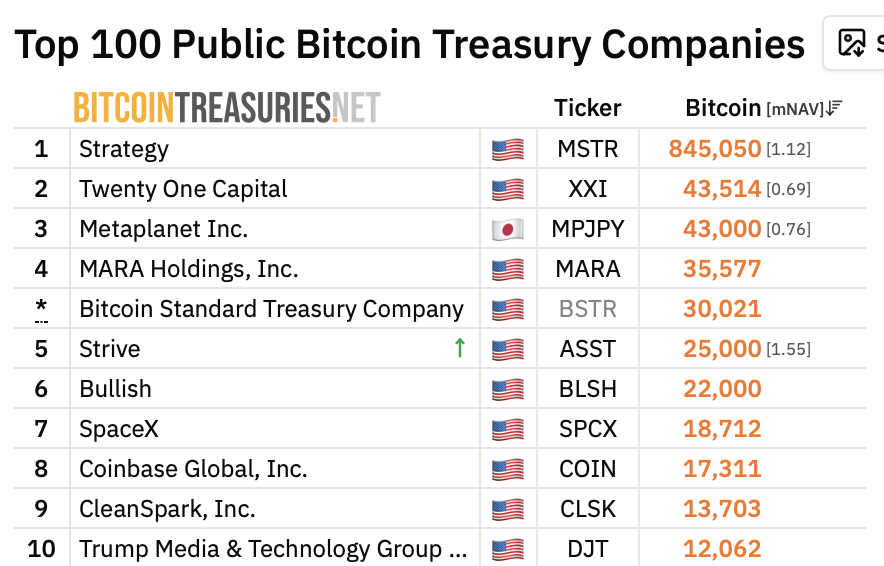
Metaplanet, a publicly traded Japanese company, has rapidly ascended to become the third-largest corporate Bitcoin holder globally, boasting a substantial treasury of 43,000 BTC, according to data from BitcoinTreasuries.net. Its strategic pivot to Bitcoin as a primary treasury asset has garnered significant attention, particularly within Japan, where the macroeconomic environment characterized by persistent yen depreciation and low interest rates has made alternative asset strategies increasingly attractive for corporations. However, its ambitious Bitcoin acquisition strategy has been inextricably linked to the ongoing controversy surrounding its executive compensation.

The Genesis of Dilution: Bitcoin Purchases and Option Pool Expansion
The core of VanEck’s criticism stems from Metaplanet’s former compensation structure, which contained an automatic adjustment mechanism that allowed its executive option pool to expand in direct correlation with the company’s issuance of new shares to finance its Bitcoin purchases. This mechanism, while seemingly designed to incentivize growth, inadvertently created a pathway for substantial shareholder dilution. As Metaplanet aggressively acquired Bitcoin, issuing new equity to fund these acquisitions, the executive option pool swelled dramatically. VanEck’s report highlighted that this mechanism caused the pool to balloon from an initial 46 million shares to an astonishing 319.5 million shares, effectively adding approximately 273 million potential shares that could be exercised by executives.
This automatic expansion mechanism did not go unnoticed by the market or by Metaplanet’s own shareholder base. The substantial increase in potential shares drew considerable criticism from various Metaplanet shareholders, who voiced concerns about the escalating dilution and called upon the company to revoke the additional potential shares created by this contentious adjustment mechanism. Such shareholder activism underscores the growing scrutiny over corporate governance, particularly in emerging sectors like digital assets, where rapid growth can sometimes overshadow traditional investor protection principles.
Metaplanet’s Response and VanEck’s Persistent Concerns
In response to the mounting shareholder pressure and public criticism, Metaplanet took steps to address the issue. In August, the company announced the termination of the automatic adjustment mechanism that had previously linked its executive option pool expansion to Bitcoin acquisition-related share issuances. Following this, in September, Metaplanet further moved to reduce the overall size of the option pool, cutting it by 41%—from the peak of 319.5 million shares down to 188.2 million shares. These actions were ostensibly aimed at curbing shareholder dilution and realigning executive incentives.
However, VanEck’s analysis indicates that these adjustments, while a step in the right direction, are far from sufficient. The asset manager unequivocally stated that the changes "fall well short of the mark," suggesting that the company has not adequately remedied the structural issues that led to the initial excessive dilution. VanEck’s continued dissatisfaction implies that the fundamental misalignment between executive compensation and shareholder interests persists, despite Metaplanet’s efforts to reform its policies. The firm’s critique suggests that the impact of the past expansion of the option pool remains a significant concern, even with the recent reductions.
VanEck’s Recommendations for Enhanced Governance
To truly address the pervasive dilution and improve corporate governance, VanEck put forth several concrete recommendations for Metaplanet. Foremost among these was the call for Metaplanet to reverse the roughly 273 million-share expansion that was generated by the now-defunct automatic adjustment clause. VanEck argued that this significant portion of potential shares represents an unjustifiable dilution of shareholder value. Furthermore, the asset manager recommended that any remaining rights from the existing compensation scheme be replaced with a new plan that is subject to explicit shareholder approval, mirroring the best practices observed at companies like MicroStrategy. The firm also cautioned that, unless past grants are "clawed back," a substantial portion of the dilution has already become a reality, making the reversal of prior expansions critical.
Beyond these structural changes, VanEck also advised Metaplanet to tie executive compensation directly to a performance metric that explicitly benefits shareholders, such as "Bitcoin per fully diluted share." This metric would align executive incentives with the company’s core strategy of accumulating and holding Bitcoin while simultaneously penalizing excessive share issuance. Additionally, the asset manager recommended the adoption of a formal, written grant-timing policy, which would enhance transparency and prevent the perception or reality of opportunistic option grants. These recommendations collectively aim to foster a more robust and equitable compensation framework that prioritizes long-term shareholder value.
Broader Implications for Corporate Governance in the Digital Asset Sector
The VanEck report on Metaplanet transcends a mere critique of one company’s compensation policy; it serves as a critical examination of corporate governance standards within the burgeoning digital asset sector. As more traditional companies and newly formed entities embrace Bitcoin as a treasury asset, the mechanisms of executive compensation and shareholder protection become increasingly vital. The rapid growth and often volatile nature of the cryptocurrency market can create unique pressures and opportunities for management, making robust governance frameworks all the more essential to maintain investor trust and capital.
The case of Metaplanet highlights the tension between aggressive growth strategies, such as significant Bitcoin acquisitions, and the need for prudent financial management that safeguards shareholder interests. Excessive dilution, whether through poorly structured equity plans or a lack of shareholder oversight, can erode the value of existing holdings, undermining the very premise of investing in a company that seeks to capitalize on Bitcoin’s potential. For Metaplanet, the ongoing scrutiny from a major asset manager like VanEck could have tangible consequences, potentially impacting investor confidence, its stock valuation, and its ability to attract future capital.
Furthermore, this report sets a precedent for how institutional investors will evaluate and engage with Bitcoin treasury companies. It signals that simply holding Bitcoin, no matter how substantial the amount, is not enough to satisfy discerning investors. Robust corporate governance, transparent compensation structures, and a clear alignment of management incentives with shareholder value creation will be paramount. The recommendations put forth by VanEck offer a roadmap for not only Metaplanet but also other companies in this space to adopt best practices, ensuring that the promise of digital asset adoption is not overshadowed by governance shortcomings.
The growing trend of companies incorporating Bitcoin into their balance sheets has opened new avenues for corporate finance and investment. However, as this industry matures, the spotlight will increasingly fall on the operational integrity and governance practices of these firms. VanEck’s "Bad" rating for Metaplanet’s compensation structure serves as a clear warning shot, emphasizing that while innovation in asset strategy is welcomed, adherence to fundamental principles of corporate responsibility and shareholder protection remains non-negotiable for sustainable success in the global financial markets. The resolution of this issue will be a crucial test for Metaplanet and a significant indicator for the evolving standards of corporate governance within the digital asset economy.