Putri Inara
The digital publishing landscape is increasingly defined by the "attention economy," a marketplace where the primary currency is the user’s cognitive engagement. Within this environment, the blog post title serves as the critical gateway, functioning as the primary determinant of a post’s reach, engagement, and eventual archival value. Industry analysis suggests that while a significant portion of digital resources is allocated to long-form content creation, the success of that investment is disproportionately tethered to the few words comprising the headline. The strategic development of these titles is not merely a creative endeavor but a foundational element of digital content strategy that influences Search Engine Optimization (SEO), social media virality, and user retention.
The Strategic Importance of the Headline in Modern Media
In the current media ecosystem, blog post titles are disseminated across a variety of high-impact channels, including search engine results pages (SERPs), Really Simple Syndication (RSS) feeds, social media platforms, and internal site archives. In many of these contexts, the title is the solitary piece of information available to a potential reader. Consequently, the headline bears the entire burden of the "click-through" decision. If a title is overly complex, ambiguous, or lacks a clear value proposition, the underlying content—regardless of its quality—remains unconsumed.
The foundational philosophy of modern headline writing often traces back to the mid-20th-century advertising boom. David Ogilvy, often cited as the "Father of Advertising," famously posited that the sole purpose of a headline is to compel the reader to engage with the first line of the body text. In the digital age, this principle has evolved into a data-driven discipline where titles must satisfy both human psychological triggers and machine-learning algorithms.
A Chronology of Headline Evolution
The methodology of crafting titles has undergone several distinct phases since the inception of professional copywriting.

- The Print Era (1950s–1980s): Headlines were designed for static consumption in newspapers and magazines. The focus was on "The Big Idea" and clever wordplay that appealed to a captive audience.
- The Early Digital Transition (1990s–2005): With the rise of the World Wide Web, titles became functional. The emergence of early search engines required titles to be literal and descriptive to ensure indexing.
- The Blogging Revolution (2006–2012): This period saw the rise of platforms like ProBlogger and the formalization of "blogging" as a profession. Strategies shifted toward a blend of utility and engagement, emphasizing listicles and "how-to" frameworks.
- The Social Media and Clickbait Surge (2013–2018): Platforms like Facebook and Twitter prioritized high-arousal emotions. Titles became increasingly sensationalist, leading to the "clickbait" phenomenon characterized by extreme curiosity gaps.
- The Modern Algorithmic Era (2019–Present): Current strategies prioritize "User Intent" and "Search Experience Optimization." Titles must now be authentic, authoritative, and optimized for mobile consumption and voice search.
The Eight Pillars of High-Performance Titles
To navigate this complex landscape, digital strategists employ an eight-point framework designed to maximize visibility and engagement.
1. Communication of Tangible Benefits
The most effective headlines often address a specific need or pain point within the target audience. By identifying a problem and promising a solution, a title creates an immediate value proposition. Data from digital marketing analytics suggests that utility-based headlines, such as those beginning with "How to" or "X Ways to," consistently achieve higher click-through rates (CTR) in search results compared to abstract or "clever" titles. This approach removes the cognitive friction of wondering what the article is about, providing a clear "What’s In It For Me" (WIIFM) signal to the reader.
2. Strategic Use of Controversy and Debate
Engagement often peaks when content challenges the status quo or invites a strong opinion. Titles that set the stage for debate can stimulate social sharing and comment section activity. However, industry experts caution that this technique requires high-quality supporting evidence within the post to maintain brand credibility. If the content fails to justify the controversial headline, the result is often a "bounce" (the user leaving the site immediately), which negatively impacts SEO rankings.
3. The Interrogative Structure
Asking a question in a title leverages the "Zeigarnik Effect," a psychological phenomenon where people remember uncompleted or interrupted tasks better than completed ones. A question creates an open loop in the reader’s mind that can only be closed by reading the content. Furthermore, when these questions utilize the second-person perspective (e.g., "Are You Making These Errors?"), they foster a direct connection with the reader.
4. Personalization and the ‘You’ Factor
Personalization has become a cornerstone of digital marketing. Incorporating the word "you" or "your" into a title shifts the perspective from a general broadcast to a personal communication. This linguistic shift makes the reader feel as though the content was specifically curated for their circumstances, significantly increasing the likelihood of engagement.

5. Optimization for Keyword Discovery
From a technical standpoint, keywords are the primary mechanism for discovery. Placing high-volume, relevant search terms at the beginning of a title serves a dual purpose: it informs the reader of the topic immediately and signals to search engine crawlers the primary focus of the page. Research indicates that keywords positioned within the first 65 characters of a title are more effective for SEO, as titles are often truncated in search results beyond that limit.
6. Psychological Triggers via Power Words
Certain words are known to evoke stronger emotional or cognitive responses. Terms such as "Secret," "Stunning," "Essential," or "Ultimate" act as psychological anchors. While effective, the use of power words must be balanced; over-saturation can lead to "headline fatigue" among audiences who may become skeptical of hyperbolic claims.
7. Authority through Big Claims and Promises
Making a substantial guarantee in a title can command attention in a crowded feed. This technique is often used to establish authority or thought leadership. The risk associated with this strategy is the "expectation gap." If the article does not deliver on the "big promise" made in the headline, the publisher risks long-term damage to their reputation and a loss of reader trust.
8. Humor and Brand Voice
Humorous titles can humanize a brand and make content more relatable. However, this is considered a high-risk, high-reward strategy. Humor is subjective and may not translate well across different demographics or through automated search algorithms. When successful, it encourages viral sharing; when it fails, it can render the content invisible to search engines.
Technical Specifications and Data-Driven Insights
Recent studies in digital consumer behavior provide concrete data on headline performance. According to a 2023 analysis of over 100 million headlines, titles with 12 to 18 words receive the highest number of social shares, while shorter titles (5 to 9 words) tend to perform better in email subject lines and search results.
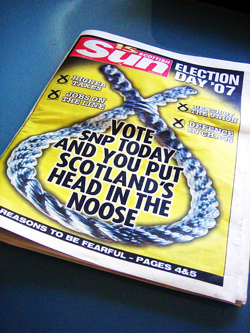
Furthermore, the avoidance of terminal punctuation, specifically periods (full stops), has become a standard recommendation among digital copywriters. The logic is rooted in "cognitive flow"; a period at the end of a title acts as a visual and mental stop sign, potentially discouraging the reader from proceeding to the first paragraph. In contrast, exclamation points and question marks are used sparingly to signal tone and intent without halting the reader’s momentum.
Expert Analysis and Industry Responses
Content strategists at major digital media outlets emphasize that the "destiny" of a post is often decided in the editorial room long before the content is published. "The headline is no longer just a label," says a senior SEO consultant. "It is a micro-content piece in itself. It must be able to stand alone on a Twitter feed or a LinkedIn notification and tell a complete story of value."
Responses from the broader blogging community indicate a shift toward "integrity-based" headline writing. As algorithms become more sophisticated at detecting low-quality content, the industry is moving away from deceptive "clickbait" toward "click-worthy" headlines—titles that are intriguing but fundamentally honest about the content they precede.
Broader Impact and Implications
The mastery of blog post titles has implications beyond individual site traffic. It affects the overall quality of information dissemination on the internet. As creators refine their ability to capture attention, the competition for the user’s "first click" intensifies. This has led to a more sophisticated understanding of user psychology and a greater emphasis on the technical aspects of metadata.
In the long term, the evolution of title crafting will likely be influenced by Artificial Intelligence (AI). AI tools are now capable of generating hundreds of headline variations based on historical performance data. However, the human element—the ability to understand nuance, humor, and deep-seated emotional needs—remains the distinguishing factor in creating titles that truly "set the internet ablaze." The future of digital content success lies in the synergy between data-driven optimization and the timeless principles of persuasive communication.