Putri Inara
The digital attention economy has transformed the humble headline from a mere summary into a critical gateway for information consumption. In a landscape where millions of blog posts are published daily, the title of a post serves as the primary determinant of its ultimate reach and engagement. Industry experts and digital strategists increasingly view the headline as the most influential component of content creation, noting that it often dictates whether a piece of writing achieves viral status or remains unnoticed in digital archives. This phenomenon underscores a fundamental shift in how information is prioritized by both human readers and algorithmic sorting systems.
The Strategic Importance of the Headline in Modern Media
The significance of a blog post title extends far beyond the top of a webpage. Titles serve as the primary metadata used by search engines, social media platforms, and RSS feeds to categorize and display content. When a link is shared on platforms such as X (formerly Twitter), LinkedIn, or Facebook, the title is frequently the only piece of information visible to the user before they decide to click. Consequently, the headline bears the heavy burden of "selling" the content in a matter of milliseconds.
Legendary advertising executive David Ogilvy famously noted that on average, five times as many people read the headline as read the body copy. In the context of modern digital marketing, this ratio has likely widened. When a headline is poorly constructed—whether it is too complex, overly cryptic, or lacking a clear value proposition—the quality of the underlying content becomes irrelevant, as the audience will never reach the first paragraph.
A Chronology of the Headline: From Print to Social Media
To understand the current state of digital titles, one must examine the evolution of headline writing over the last century. In the era of traditional print journalism, headlines were designed to fit specific physical spaces on a page while providing a factual summary of the news. The primary goal was informativeness within the constraints of column inches.
With the rise of direct-response advertising in the mid-20th century, pioneers like Ogilvy and Claude Hopkins shifted the focus toward psychological triggers and benefit-driven language. The headline became a hook designed to lead the reader into the first line of an advertisement.

The advent of the early web and the blogging boom of the 2000s introduced the necessity of Search Engine Optimization (SEO). Titles had to be written not just for humans, but for the "spiders" of Google and Yahoo. This led to a period of keyword-heavy, often clunky titles. By the 2010s, the "viral era" emerged, characterized by "curiosity gaps" and sensationalist phrasing popularized by outlets like BuzzFeed and Upworthy. Today, the industry has reached a point of synthesis, where effective titles must balance human psychology, algorithmic requirements, and brand integrity.
Eight Pillars of High-Performance Blog Titles
Analysis of high-performing digital content reveals eight recurring strategies used by successful creators to maximize engagement. While these techniques are distinct, they often overlap to create a multi-layered appeal to the potential reader.
1. The Communication of Tangible Benefits
The most effective headlines often answer the reader’s internal question: "What is in it for me?" Benefit-driven titles identify a specific pain point or need and promise a solution. For example, a title such as "10 Ways to Take Stunning Portraits" identifies a desire (better photography) and offers a clear path to achieving it. These titles act as a contract between the creator and the reader, establishing immediate value.
2. Strategic Use of Controversy and Debate
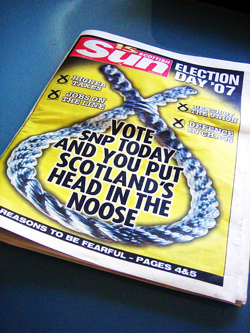
Titles that challenge conventional wisdom or take a firm stance on a polarizing topic naturally pique interest. By setting the stage for a debate, a creator can draw in readers who either agree with the sentiment or wish to find flaws in the argument. However, analysts warn that this approach requires high-quality supporting evidence within the post to maintain credibility and avoid being dismissed as "rage-bait."
3. The Interrogative Approach
Questions are psychologically compelling because they demand a mental response. When a headline asks a question—particularly one that uses the word "you"—it creates an immediate connection with the reader. This technique is especially effective for driving comments and social media interaction, as it invites the audience to participate in a dialogue rather than passively consume information.
4. Personalization and Direct Address
The use of the second-person pronoun "you" transforms a general piece of information into a personal message. Digital marketing data suggests that titles which personalize the experience—such as "21 Ways to Make Your Blog Sticky"—perform significantly better than those that use abstract or third-person language. This creates a sense of "laser-targeting," making the reader feel the content was written specifically for their circumstances.

5. Algorithmic Optimization through Keywords
From a technical standpoint, the inclusion of keywords remains a non-negotiable aspect of title crafting. Keywords help search engines understand the context of a post, ensuring it appears in relevant search results. Industry research indicates that "front-loading" keywords—placing them at the beginning of the title—can have a more significant impact on SEO and user scanability than placing them at the end.
6. Implementation of Power Words
Certain words are known to trigger stronger emotional or cognitive responses. Terms such as "Secret," "Stunning," "Surprising," or "Essential" can increase the perceived value of a post. However, experts caution that the overuse of power words can lead to "headline fatigue" among audiences, who may become skeptical of hyperbolic language if the content does not deliver on the promise.
7. The High-Stakes Promise
Similar to benefit-driven titles, "big claim" headlines make bold guarantees. These are designed to be so compelling that they are nearly impossible to ignore. The risk associated with this strategy is the "disappointment gap"; if the content is mediocre, the brand’s reputation for honesty is damaged.
8. The Integration of Levity
Humorous titles can break through the noise of a crowded feed by providing a moment of entertainment. If executed correctly, humor builds rapport and shows a human side to a brand or author. However, humor is subjective and difficult to optimize for search engines, making it a high-risk, high-reward strategy.
Supporting Data: The Quantitative Impact of Headlines
Recent studies by content marketing firms like CoSchedule and HubSpot provide empirical evidence for these strategies. Data shows that headlines between 6 and 12 words tend to receive the highest click-through rates (CTR). Furthermore, the inclusion of numbers—specifically odd numbers—in titles has been shown to increase engagement by as much as 20%, as they provide a clear structure for the reader’s expectations.
Research into eye-tracking patterns reveals that most users "scan" titles in an F-pattern, focusing heavily on the first three words and the last three words. This supports the "front-loading" keyword strategy and suggests that the middle of a long title is the least likely to be processed by the reader.
Industry Responses and Ethical Considerations
The rise of sophisticated headline strategies has sparked a debate within the journalism and marketing communities regarding the ethics of "clickbait." Critics argue that the pressure to generate clicks has led to a decline in the accuracy and sobriety of information. In response, platforms like Facebook and Google have updated their algorithms to penalize "click-gap" headlines—those that intentionally withhold crucial information to force a click.
Major digital publishers have responded by hiring dedicated "headline editors" whose sole job is to A/B test multiple titles for a single story to see which performs best in real-time. This data-driven approach allows organizations to maximize reach while theoretically maintaining the integrity of the reporting.
Broader Implications and Future Outlook
As artificial intelligence (AI) becomes more integrated into content creation, the process of crafting titles is becoming increasingly automated. AI tools can now generate hundreds of headline variations based on historical performance data and specific emotional targets. This shift suggests that the "art" of the headline may soon become a "science" of data optimization.
However, the human element remains vital. While an algorithm can identify which words trigger a click, it cannot yet replicate the nuanced understanding of culture, irony, and timing that a skilled writer brings to a title. The future of digital content will likely be defined by a hybrid approach: using data to inform the structure of a title while relying on human creativity to provide the "spark" that sets the internet ablaze.
In conclusion, the blog post title is the most powerful tool in a creator’s arsenal. It is the bridge between the creator’s effort and the audience’s attention. By mastering the balance of psychological triggers, technical optimization, and value delivery, writers can ensure their work survives and thrives in an increasingly competitive digital ecosystem. The destiny of a post is indeed written in its first few words.